Bonnie J. Blackburn – författare
Visar alla böcker från författaren Bonnie J. Blackburn. Handla med fri frakt och snabb leverans.
11 produkter
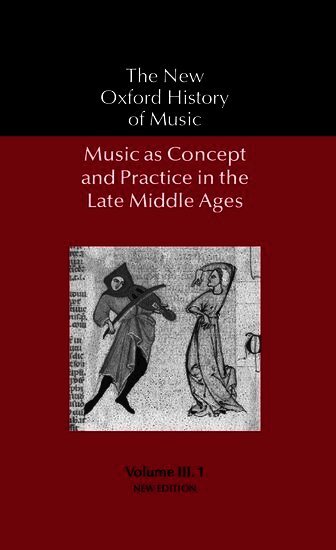
Music as Concept and Practice in the Late Middle Ages
Av Reinhard Strohm, Bonnie J. Blackburn
Inbunden, 2001
6090 kr
Lägg i varukorg
'Music as Concept and Practice in the Late Middle Ages' is an entirely new addition to the New Oxford History of Music series rather than a revision of the volume's predecessor published in 1960. It takes account not only of the developments in late-medieval music scholarship during the latter …
Book on Music
Av Florentius de Faxolis, Bonnie J. Blackburn m. fl.
Inbunden, 2010
315 kr
Lägg i varukorg
Between 1485 and 1492 Cardinal Ascanio Sforza was the recipient of a music treatise composed for him by “Florentius Musicus” (Florentius de Faxolis), who had served him in Naples and Rome. Now in Milan, the richly illuminated small parchment codex bears witness to the musical interests of the …
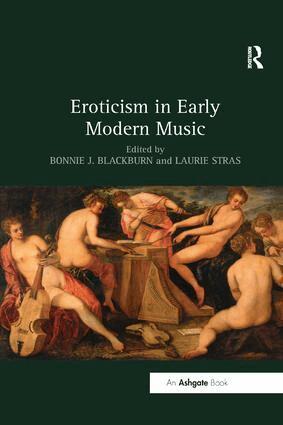
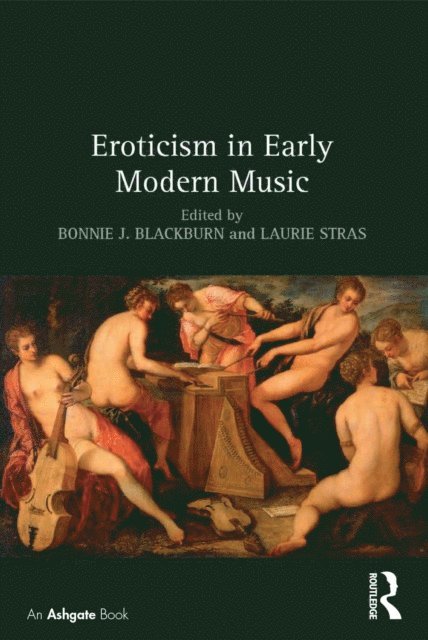
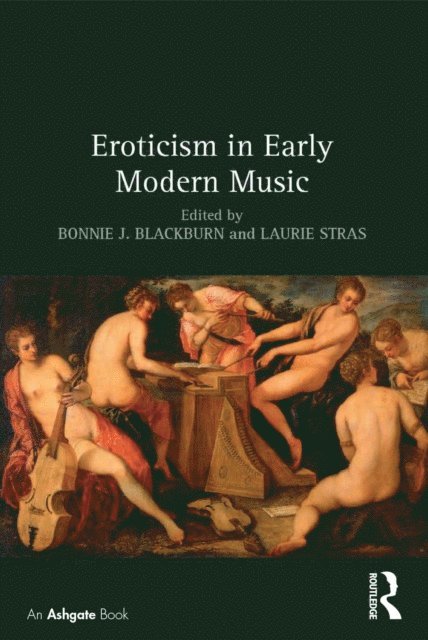
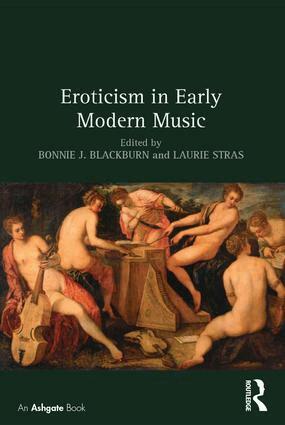
Eroticism in Early Modern Music
Av Bonnie J. Blackburn, Laurie Stras
Häftad, 2017
943 kr
Lägg i varukorg
Eroticism in Early Modern Music contributes to a small but significant literature on music, sexuality, and sex in sixteenth- and seventeenth-century Europe. Its chapters have grown from a long dialogue between a group of scholars, who employ a variety of different approaches to the repertoire: …
Composition, Printing and Performance
Studies in Renaissance Music
Inbunden, 2000
1263 kr
Lägg i varukorg
The first articles here focus on Johannes Tinctoris, the prominent late 15th-century music theorist. They deal with the discovery of his lost pedagogical motet, and his treatise on counterpoint; this forms the basis of a wide-ranging investigation of contemporary practices of improvisation and …
Composition, Printing and Performance
Studies in Renaissance Music
E-bok, 2024
1204 kr
Lägg i varukorg
The first articles here focus on Johannes Tinctoris, the prominent late 15th-century music theorist. They deal with the discovery of his lost pedagogical motet, and his treatise on counterpoint; this forms the basis of a wide-ranging investigation of contemporary practices of improvisation and …
Composition, Printing and Performance
Studies in Renaissance Music
E-bok, 2024
1231 kr
Lägg i varukorg
The first articles here focus on Johannes Tinctoris, the prominent late 15th-century music theorist. They deal with the discovery of his lost pedagogical motet, and his treatise on counterpoint; this forms the basis of a wide-ranging investigation of contemporary practices of improvisation and …
Eroticism in Early Modern Music
Av Laurie Stras, Bonnie J. Blackburn
E-bok, 2016
999 kr
Lägg i varukorg
Eroticism in Early Modern Music contributes to a small but significant literature on music, sexuality, and sex in sixteenth- and seventeenth-century Europe. Its chapters have grown from a long dialogue between a group of scholars, who employ a variety of different approaches to the repertoire: …
Eroticism in Early Modern Music
Av Laurie Stras, Bonnie J. Blackburn
E-bok, 2016
999 kr
Lägg i varukorg
Eroticism in Early Modern Music contributes to a small but significant literature on music, sexuality, and sex in sixteenth- and seventeenth-century Europe. Its chapters have grown from a long dialogue between a group of scholars, who employ a variety of different approaches to the repertoire: …
Eroticism in Early Modern Music
Av Bonnie J. Blackburn, Laurie Stras
Inbunden, 2015
2578 kr
Lägg i varukorg
Eroticism in Early Modern Music contributes to a small but significant literature on music, sexuality, and sex in sixteenth- and seventeenth-century Europe. Its chapters have grown from a long dialogue between a group of scholars, who employ a variety of different approaches to the repertoire: …
Music in the Culture of the Renaissance and Other Essays
Av Edward E. Lowinsky, Bonnie J. Blackburn
Inbunden, 1989
5281 kr
Tillfälligt slut
The writings gathered here finally make available in one place Lowinsky's major essays--including four previously unpublished ones--in two volumes that are lavishly provided with musical examples and illustrations. "Professor Lowinsky's method is the only kind of 'writing about music' that I …
Music for Treviso Cathedral in the Late Sixteenth Century
A Reconstruction of the Lost Manuscripts 29 and 30
Inbunden, 1987
1540 kr
Tillfälligt slut
One of the most extensive repertories of Renaissance sacred music to have come down to us was written for the Cathedral of Treviso. An Allied raid over the city on 7 April 1944 resulted in the destruction of 25 manuscripts of polyphonic music written prior to 1630. In this book, Bonnie Blackburn …