
Boris K. Vainshtein – författare
Visar alla böcker från författaren . Handla med fri frakt och snabb leverans.
8 produkter
8 produkter
Inbunden, Engelska, 1994
2 149 kr
Skickas inom 10-15 vardagar
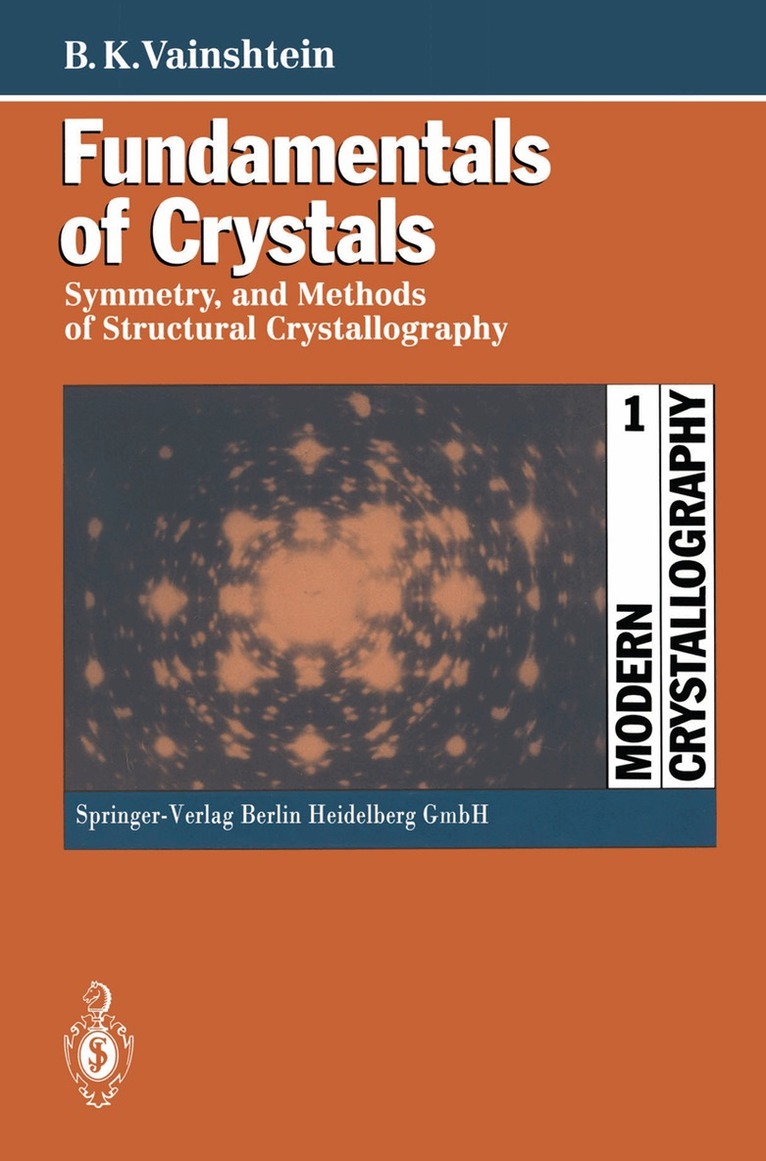
Early in this century, the newly discovered x-ray diffraction by crystals caused a complete change in crystallography and in the whole science of the atomic structure of matter, thus giving a new impetus to the development of solid-state physics. Crystallographic methods, primarily x-ray diffraction analysis, pene trated into materials sciences, molecular physics, and chemistry, and also into may other branches of science. Later, electron and neutron diffraction structure analyses became important since they not only complement x-ray data, but also supply new information on the atomic and the real structure of crystals. Electron microscopy and other modern methods of investigating matte- optical, electronic paramagnetic, nuclear magnetic, and other resonance tech niques - yield a large amount of information on the atomic, electronic, and real crystal structures. Crystal physics has also undergone vigorous development. Many remark able phenomena have been discovered in crystals and then found various practical applications. Other important factors promoting the development of crystallography were the elaboration of the theory of crystal growth (which brought crystallography closer to thermodynamics and physical chemistry) and the development of the various methods of growing synthetic crystals dictated by practical needs. Man made crystals became increasingly important for physical investigations, and they rapidly invaded technology. The production of synthetic crystals made a tremendous impact on the traditional branches: the mechanical treatment of materials, precision instrument making, and the jewelry industry.
Inbunden, Engelska, 2000
2 149 kr
Skickas inom 10-15 vardagar
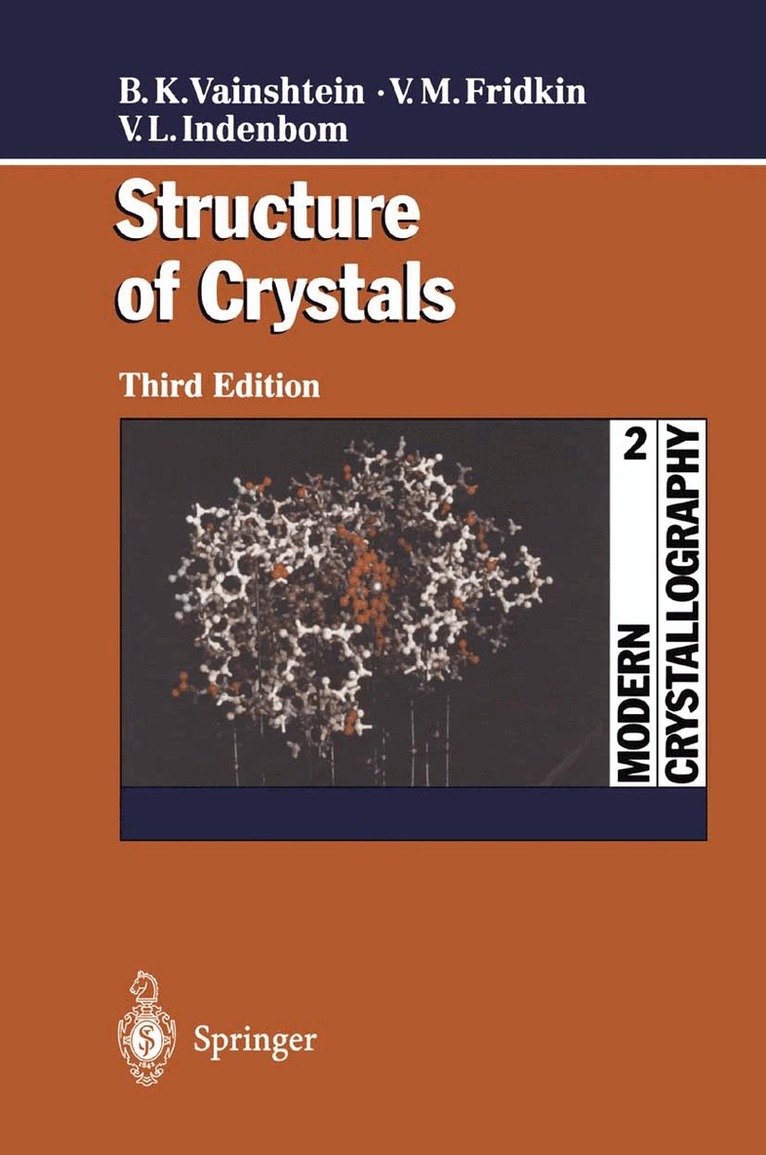
Structure of Crystals describes the ideal and real atomic structure of crystals as well as the electronic structures. The fundamentals of chemical bonding between atoms are given, and the geometric representations in the theory of crystal structure and crystal chemistry, as well as the lattice energy, are considered. The important classes of crystal structures in inorganic compounds as well as the structures of polymers, liquid crystals, biological crystals, and macromolecules are treated. This edition is complemented with recent data on many types of crystal structures - e.g., the structure of fullerenes, high-temperature superconductors, minerals, and liquid crystals.
Häftad, Engelska, 2010
1 667 kr
Skickas inom 10-15 vardagar
Early in this century, the newly discovered x-ray diffraction by crystals caused a complete change in crystallography and in the whole science of the atomic structure of matter, thus giving a new impetus to the development of solid-state physics. Crystallographic methods, primarily x-ray diffraction analysis, pene trated into materials sciences, molecular physics, and chemistry, and also into may other branches of science. Later, electron and neutron diffraction structure analyses became important since they not only complement x-ray data, but also supply new information on the atomic and the real structure of crystals. Electron microscopy and other modern methods of investigating matte- optical, electronic paramagnetic, nuclear magnetic, and other resonance tech niques - yield a large amount of information on the atomic, electronic, and real crystal structures. Crystal physics has also undergone vigorous development. Many remark able phenomena have been discovered in crystals and then found various practical applications. Other important factors promoting the development of crystallography were the elaboration of the theory of crystal growth (which brought crystallography closer to thermodynamics and physical chemistry) and the development of the various methods of growing synthetic crystals dictated by practical needs. Man made crystals became increasingly important for physical investigations, and they rapidly invaded technology. The production of synthetic crystals made a tremendous impact on the traditional branches: the mechanical treatment of materials, precision instrument making, and the jewelry industry.
E-bok
PDF, Engelska, 20122 044 kr
Läs direkt efter köp
Structure of Crystals describes the ideal and real atomic structure of crystals as well as the electronic structures. The fundamentals of chemical bonding between atoms are given, and the geometric representations in the theory of crystal structure and crystal chemistry, as well as the lattice energy, are considered. The important classes of crystal structures in inorganic compounds as well as the structures of polymers, liquid crystals, biological crystals, and macromolecules are treated. This edition is complemented with recent data on many types of crystal structures - e.g., the structure of fullerenes, high-temperature superconductors, minerals, and liquid crystals.
Häftad, Engelska, 2012
1 614 kr
Skickas inom 10-15 vardagar
Structure of Crystals describes the ideal and real atomic structure of crystals as well as the electronic structures. The fundamentals of chemical bonding between atoms are given, and the geometric representations in the theory of crystal structure and crystal chemistry, as well as the lattice energy, are considered. The important classes of crystal structures in inorganic compounds as well as the structures of polymers, liquid crystals, biological crystals, and macromolecules are treated. This edition is complemented with recent data on many types of crystal structures - e.g., the structure of fullerenes, high-temperature superconductors, minerals, and liquid crystals.
Del 21 - Springer Series in Solid-State Sciences
Modern Crystallography II
Structure of Crystals
Häftad, Engelska, 2012
1 078 kr
Skickas inom 10-15 vardagar
Early in this century, the newly discovered x-ray diffraction by crystals made a complete change in crystallography and in the whole science of the atomic structure of matter, thus giving a new impetus to the development of solid-state physics. Crystallographic methods, pri marily x-ray diffraction analysis, penetrated into materials sciences, mol ecular physics, and chemistry, and also into many other branches of science. Later, electron and neutron diffraction structure analyses be came important since they not only complement x-ray data, but also supply new information on the atomic and the real structure of crystals. Electron microscopy and other modern methods of investigating mat ter-optical, electronic paramagnetic, nuclear magnetic, and other res onance techniques-yield a large amount of information on the atomic, electronic, and real crystal structures. Crystal physics has also undergone vigorous development. Many re markable phenomena have been discovered in crystals and then found various practical applications. Other important factors promoting the development of crystallog raphy were the elaboration of the theory of crystal growth (which brought crystallography closer to thermodynamics and physical chem istry) and the development of the various methods of growing synthetic crystals dictated by practical needs. Man-made crystals became increas ingly important for physical investigations, and they rapidly invaded technology. The production of synthetic crystals made a tremendous impact on the traditional branches: the mechanical treatment of mate rials, precision instrument making, and the jewelry industry.
E-bok
PDF, Engelska, 20131 140 kr
Läs direkt efter köp
Modern Crystallography provides an encyclopedic exposition of the field in four volumes written by Russian scientists.Structures of Crystals describes the ideal and real atomic structure of crystals as well as their electronic structures. The fundamentals of chemical bonding between atoms are given, and geometric representations in the theory of crystal structure and crystal chemistry, as well as lattice energy, are considered. The important classes of crystal structures in inorganic compounds as well as the structure polymers, liquid crystals, biological crystals, and macromolecules are treated. This second edition is complemented with recent data on many types of crystal structures - fullerenes, high-temperature superconductors, minerals, liquid crystals, etc.
E-bok
PDF, Engelska, 20132 207 kr
Läs direkt efter köp
Early in this century, the newly discovered x-ray diffraction by crystals caused a complete change in crystallography and in the whole science of the atomic structure of matter, thus giving a new impetus to the development of solid-state physics. Crystallographic methods, primarily x-ray diffraction analysis, pene trated into materials sciences, molecular physics, and chemistry, and also into may other branches of science. Later, electron and neutron diffraction structure analyses became important since they not only complement x-ray data, but also supply new information on the atomic and the real structure of crystals. Electron microscopy and other modern methods of investigating matte- optical, electronic paramagnetic, nuclear magnetic, and other resonance tech niques - yield a large amount of information on the atomic, electronic, and real crystal structures. Crystal physics has also undergone vigorous development. Many remark able phenomena have been discovered in crystals and then found various practical applications. Other important factors promoting the development of crystallography were the elaboration of the theory of crystal growth (which brought crystallography closer to thermodynamics and physical chemistry) and the development of the various methods of growing synthetic crystals dictated by practical needs. Man made crystals became increasingly important for physical investigations, and they rapidly invaded technology. The production of synthetic crystals made a tremendous impact on the traditional branches: the mechanical treatment of materials, precision instrument making, and the jewelry industry.