Boritt - Böcker
Visar alla böcker från författaren Boritt. Handla med fri frakt och snabb leverans.
4 produkter
4 produkter
223 kr
Skickas inom 5-8 vardagar
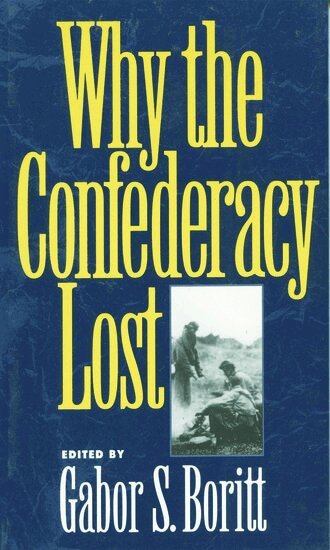
The essays in this volume are linked by their common assertion of the predominance of military factors in determining the outcome of the American Civil War. James McPherson, author of Battle Cry of Freedom (OUP, 1988) is among the contributors.
207 kr
Skickas inom 5-8 vardagar
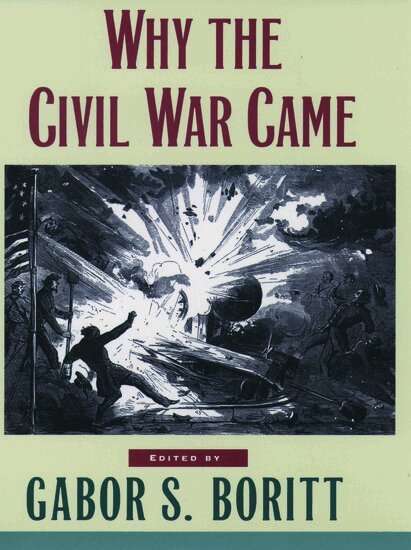
In the early morning of April 12, 1861, Captain George S. James ordered the bombardment of Fort Sumter, beginning a war that would last four horrific years and claim a staggering number of lives. Since that fateful day, the debate over the causes of the American Civil War has never ceased. What events were instrumental in bringing it about? How did individuals and institutions function? What did Northerners and Southerners believe in the decades of strife preceding the war? What steps did they take to avoid war? Indeed, was the great armed conflict avoidable at all?Why the Civil War Came brings a talented chorus of voices together to recapture the feel of a very different time and place, helping the reader to grasp more fully the commencement of America's bloodiest war. From William W. Freehling's discussion of the peculiarities of North American slavery to Charles Royster's disturbing piece on the combatants' savage readiness to fight, the contributors bring to life the climate of a country on the brink of disaster. Mark Summers, for instance, depicts the tragically jubilant first weeks of Northern recruitment, when Americans on both sides were as yet unaware of the hellish slaughter that awaited them. Glenna Matthews underscores the important war-catalysing role played by extraordinary public women, who proved that neither side of the Mason-Dixon line was as patriarchal as is thought. David Blight reveals an African-American world that "knew what time it was," and welcomed war. And Gabor Boritt examines the struggle's central figure, Lincoln himself, illuminating in the years leading up to the war a blindness on the future president's part, an unwillingness to confront the looming calamity that was about to smash the nation asunder.William E. Gienapp notes perhaps the most unsettling fact about the Civil War: that democratic institutions could not resolve the slavery issue without resorting to violence on an epic scale. With gripping detail, Why the Civil War Came takes readers back to a country fraught with bitterness, confusion, and hatred - a country ripe for a war of unprecedented bloodshed - to show why democracy failed, and violence reigned.
223 kr
Skickas inom 5-8 vardagar
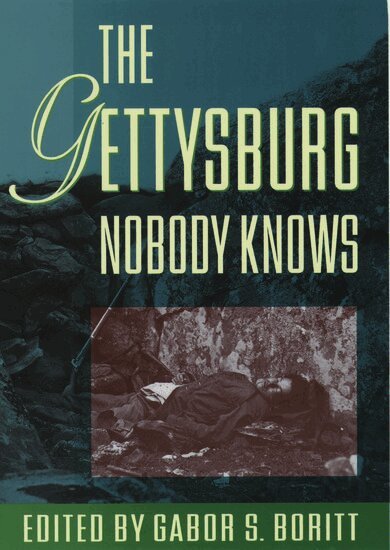
On the first three days of July in 1863, more than 160,000 Union and Rebel soldiers fought a monumental battle in Gettysburg, a bloody contest that has been hailed as "the turning point of the Civil War". It is without a doubt the best known engagement of the war and may in fact be the best known battle in American military history. It is certainly the most studied battle Americans have ever fought in. And yet, for all its prominence, this singular moment in our history still stirs heated debate. Did Jeb Stuart's absence leave General Lee blind? Should Ewell have attacked Cemetery Hill? Was Joshua Chamberlain really the hero of Little Round Top? How close did the Confederates come to winning at Gettysburg? And if the Confederates had won, how would history have been different? Now, Gabor Boritt has invited nine leading authorities to shed new light on the greatest battle in our history. The Gettysburg Nobody Knows offers a marvellous reconsideration of this epic event. It will be must reading for the legions of Civil War buffs around the country and for everyone interested in American history.
207 kr
Skickas inom 5-8 vardagar
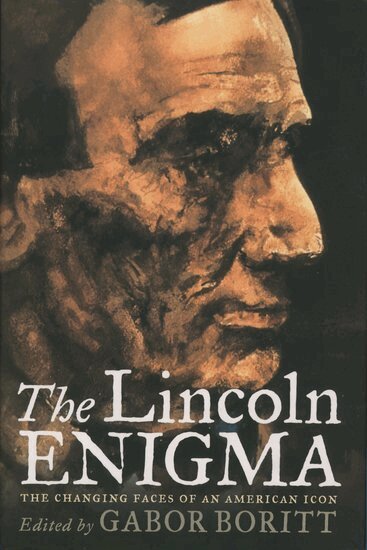
Nearly a century and a half after his death, Abraham Lincoln remains an intrinsic part of the American consciousness, yet his intentions as president and his personal character continue to stir debate.Now, in The Lincoln Enigma, Gabor Boritt invites renowned Lincoln scholars, and rising new voices, to take a look at much-debated aspects of Lincoln's life, including his possible gay relationships, his plan to send blacks back to Africa, and his high-handed treatment of the Constitution. Boritt explores Lincoln's proposals that looked to a lily-white America. Jean Baker marvels at Lincoln's loves and marriage. David Herbert Donald highlights the similarities and differences of the Union and Confederate presidents' roles as commanders-in-chief. Douglas Wilson shows us the young Lincoln--not the strong leader of popular history, but a young man who questions his own identity and struggles to find his purpose. Gerald Prokopowicz searches for the military leader, William C. Harris for the peacemaker, and Robert Bruce meditates on Lincoln and death. In a final chapter Boritt and Harold Holzer offer a fascinating portfolio of Lincoln images in modern art.Acute and thought-provoking in their observations, this all-star cast of historians--including two Pulitzer and three Lincoln Prize winners--questions our assumptions of Lincoln, and provides a new vitality to our ongoing reflections on his life and legacy.