Boyd Taylor Coolman - Böcker
Visar alla böcker från författaren Boyd Taylor Coolman. Handla med fri frakt och snabb leverans.
4 produkter
4 produkter
1 396 kr
Skickas inom 7-10 vardagar
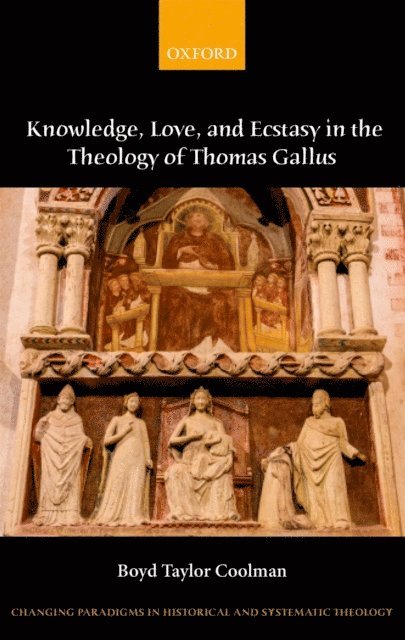
Knowledge, Love, and Ecstasy in the Theology of Thomas Gallus provides the first full study of Thomas Gallus (d. 1246) in English and represents a significant advance in his distinctive theology. Boyd Taylor Coolman argues that Gallus distinguishes, but never separates and intimately relates two international modalities in human consciousness: the intellective and the affective, both of which are forms of cognition. Coolman shows that Gallus conceives these two cognitive modalities as co-existing in an interdependent manner, and that this reciprocity is given a particular character by Gallus anthropological appropriation of the Dionysian concept of hierarchy. Because Gallus conceives of the soul as hierarchized on the model of the angelic hierarchy, the intellect-affect relationship is fundamentally governed by the dynamism of a Dionysian hierarchy, which has two simultaneous trajectories: ascending and descending. Two crucial features are noteworthy in this regard: in ascending, firstly, the lower is subsumed by the higher; in descending, secondly, the higher communicates with the lower, according to the nature of the lower. When Gallus posits a higher, affective cognitio above an intellective cognitio at the highest point in the ascent, accordingly, this higher affective form both builds upon and sublimates the lower intellective form. At the same time, this affective cognitio descends back down into the soul, both enriching its properly intellective capacity and also renewing the ascending movement in love. For Gallus, then, in the hierarchized soul a dynamic mutuality between intellect and affect emerges, which he construes as a spiralling motion, by which the soul unceasingly stretches beyond itself, ecstatically, in knowing and loving God.
1 245 kr
Skickas inom 7-10 vardagar
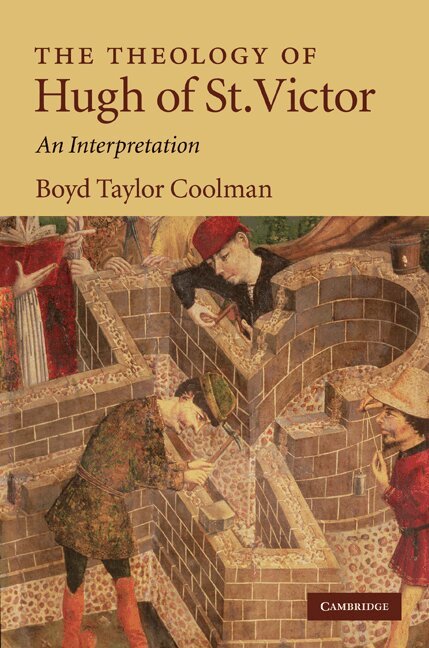
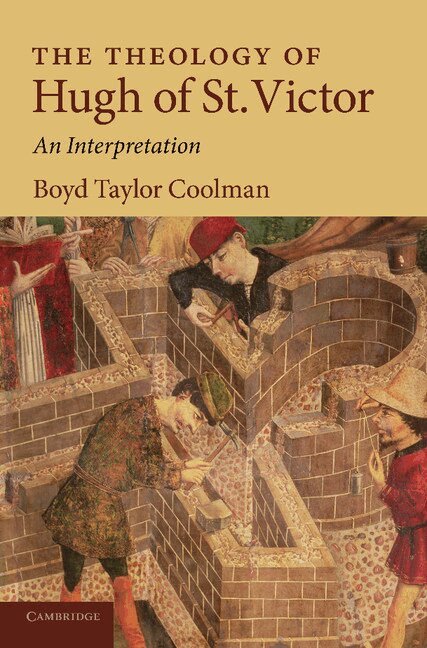
In the context of the early twelfth-century urbanization of Paris, Hugh of St Victor developed a pioneering program of intellectual and moral practices focused on reforming the soul. Boyd Taylor Coolman identifies the signature theme of spiritual re-formation as the unifying motif to Hugh's theology and analyzes the symbolic and aesthetic dimensions of re-formation conceived as 'soul-construction', in the manner of Gothic cathedrals being built at the time. This study places Hugh of St Victor within the context of the profound economic, political and cultural changes characteristic of the twelfth century. Drawing on the majority of Hugh's writings, it reveals links between various aspects of his theology - exegesis and spirituality; theology and cultivation of virtue - and highlights the practical nature of his reforming program, aimed both at restoring the beauty of the soul and re-forming the human person into a dwelling place for the presence of God.
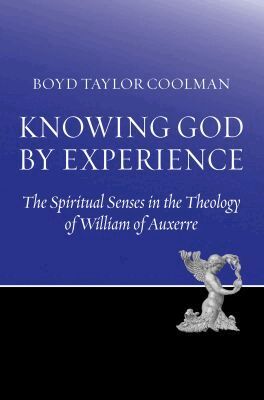
Knowing God by Experience
The Spiritual Senses in the Theology of William of Auxerre
Häftad, Engelska, 2016
368 kr
Skickas inom 10-15 vardagar
Author of the first true summa of theology, William of Auxerre (d. 1231), early magister at the University of Paris, is considered a seminal figure in early thirteenth-century scholasticism. From the uncertain climate of the late twelfth century, William's Summa Aurea emerges with impressive originality and scope. Scholars have long recognized his contribution to the evolution of scholastic thought and his influence on later figures, such as Bonaventure and Aquinas. Yet, until now, William has been largely unstudied, his theological achievement and pervasive influence thus remaining shrouded.For William, the end of human life is an experiential apprehension of God. To capture the fullness of this encounter, he employs the ancient doctrine of the soul's spiritual senses. Not only will the blessed see divine beauty, they will also hear its symphony, smell its odor, taste its sweetness, and touch its suavity. A striking feature of William's theology, though, is that he integrates this spiritual aesthetic within a scholastic view of theology as a science, involving conceptual rigor and intellectual cognition. Knowledge of God proceeds from simple affirmation of creedal doctrine, through deeper understanding, and culminates in pleasurable spiritual sensation. The result is ""wisdom,"" connoting both understanding and savoring, and thus evoking this ""tasted knowledge,"" which unites scholastic speculation and spiritual experience.This book, the first English-language monograph on William of Auxerre, traces the motif of the spiritual senses through his Summa Aurea, using it as an illuminating and unifying lens through which to appreciate his theology. Given William's importance and his neglect, much commends this study to scholars of medieval theology, philosophy, and spirituality. Bridging a pivotal phase in medieval theology, William incorporates certain twelfth century monastic sensibilities, while at the same time grappling with the Aristotelian philosophy rapidly gaining currency. This study also highlights William's initiation of scholastic use of the doctrine of the spiritual senses and, finally, it sets the stage for a fuller appreciation of William's wide-ranging influence on later scholastic luminaries.
560 kr
Skickas inom 7-10 vardagar
In the context of the early twelfth-century urbanization of Paris, Hugh of St Victor developed a pioneering program of intellectual and moral practices focused on reforming the soul. Boyd Taylor Coolman identifies the signature theme of spiritual re-formation as the unifying motif to Hugh's theology and analyzes the symbolic and aesthetic dimensions of re-formation conceived as 'soul-construction', in the manner of Gothic cathedrals being built at the time. This study places Hugh of St Victor within the context of the profound economic, political and cultural changes characteristic of the twelfth century. Drawing on the majority of Hugh's writings, it reveals links between various aspects of his theology - exegesis and spirituality; theology and cultivation of virtue - and highlights the practical nature of his reforming program, aimed both at restoring the beauty of the soul and re-forming the human person into a dwelling place for the presence of God.