Brad King – författare
Visar alla böcker från författaren Brad King. Handla med fri frakt och snabb leverans.
9 produkter
9 produkter
156 kr
Skickas inom 5-8 vardagar
211 kr
Skickas inom 5-8 vardagar
180 kr
Skickas inom 5-8 vardagar
260 kr
Skickas inom 5-8 vardagar
Frankenstein's Legacy
Four Conversations about Artificial Intelligence, Machine Learning, and the Modern World
Häftad, Engelska, 2017
99 kr
Skickas inom 5-8 vardagar
1 619 kr
Skickas inom 10-15 vardagar
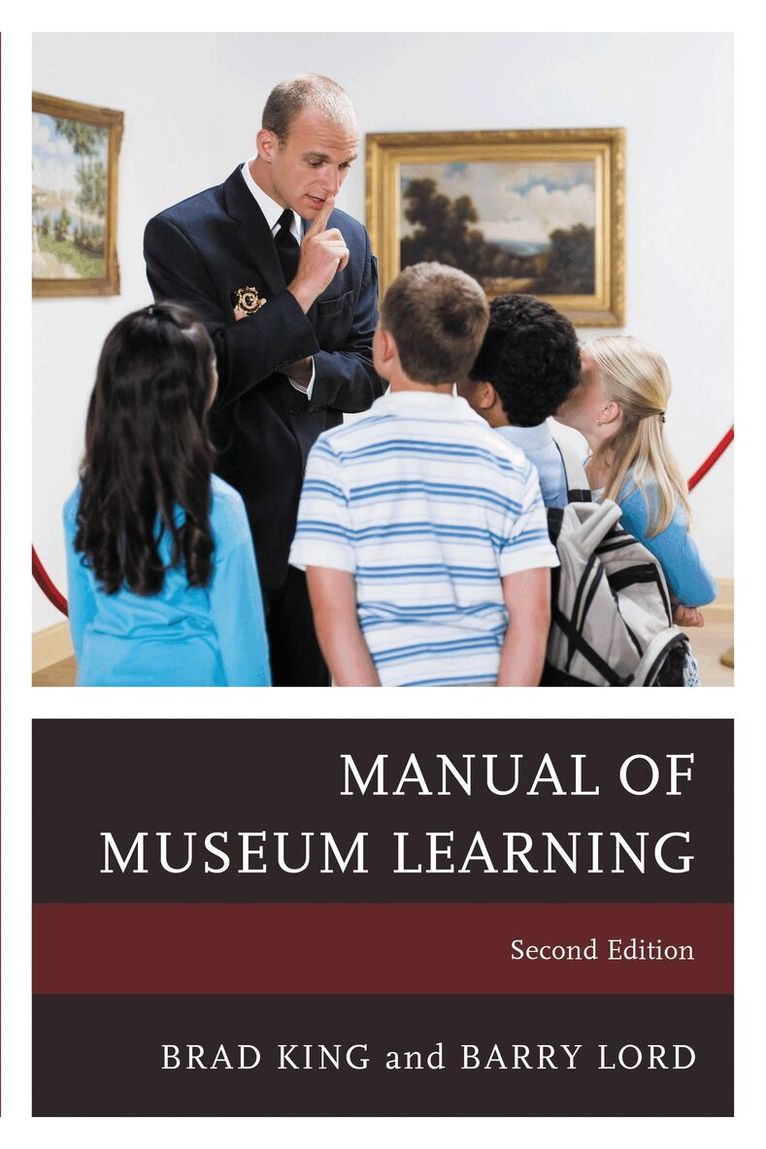
Museum learning is a vital component of the lifelong-learning process.In this new edition of The Manual of Museum Learning, leading museum education professionals offer practical advice for creating successful learning experiences in museums and related institutions (such as galleries, zoos, and botanic gardens) that can attract and intrigue diverse audiences.The original Manual of Museum Learning was published in 2007. The editors have totally rethought this new edition. This second edition focuses on the ways museum staffs (and the departments for which they work) can facilitate the experience in a way that capitalizes on their individual institutional strengths. The goal of this new edition is to provide museums with guidance in developing a strategic approach to their learning programs. There is a close connection between institution-wide strategic planning – where an institution decides what course and direction it will take for a five to seven-year period – and its approach to museum learning. One size does not fit all, and what each museum is (or aspires to be) will affect its individual approach.Thus there are many routes for museums to take, many alternative ways for them to play this role. No one museum can be all things to all prospective learners; they will be better suited to some approaches than to others. This new edition identifies these approaches and enables museums to find the paths for which they are individually best suited, to help them identify their own unique approaches to facilitating museum learning. Each one’s mission and vision, its relationships with institutional and public stakeholders, local cultural and market factors, its individual collection and programmatic strengths, its financial position – all of these things matter. This second edition aims to help each museum find the right approach to learning for its unique situation by showing them the range of museum “personalities” in terms of their being learning institutions, what constitutes each type, and what the implications are of choosing one or another approach for a particular museum.A major theme of the 2nd edition of The Manual of Museum Learning is museum as connector; the ways in which museums are facilitating self-directed learning by connecting people with resources. Not all will connect audiences with learning vehicles in the same way. If museum learning is affective learning, then it is the role of the museum to connect its visitors, program participants and others who benefit from its knowledge to the learning resources that best suit the institution’s strengths and matches them to the learning needs of the museum’s audiences. By connecting users to the resources they are most interested in, or which best suit each individual’s particular learning styles, museums are at their best when they empower individuals to design their own learning experience in ways that resonate best with each individual.
833 kr
Skickas inom 10-15 vardagar
Museum learning is a vital component of the lifelong-learning process.In this new edition of The Manual of Museum Learning, leading museum education professionals offer practical advice for creating successful learning experiences in museums and related institutions (such as galleries, zoos, and botanic gardens) that can attract and intrigue diverse audiences.The original Manual of Museum Learning was published in 2007. The editors have totally rethought this new edition. This second edition focuses on the ways museum staffs (and the departments for which they work) can facilitate the experience in a way that capitalizes on their individual institutional strengths. The goal of this new edition is to provide museums with guidance in developing a strategic approach to their learning programs. There is a close connection between institution-wide strategic planning – where an institution decides what course and direction it will take for a five to seven-year period – and its approach to museum learning. One size does not fit all, and what each museum is (or aspires to be) will affect its individual approach.Thus there are many routes for museums to take, many alternative ways for them to play this role. No one museum can be all things to all prospective learners; they will be better suited to some approaches than to others. This new edition identifies these approaches and enables museums to find the paths for which they are individually best suited, to help them identify their own unique approaches to facilitating museum learning. Each one’s mission and vision, its relationships with institutional and public stakeholders, local cultural and market factors, its individual collection and programmatic strengths, its financial position – all of these things matter. This second edition aims to help each museum find the right approach to learning for its unique situation by showing them the range of museum “personalities” in terms of their being learning institutions, what constitutes each type, and what the implications are of choosing one or another approach for a particular museum.A major theme of the 2nd edition of The Manual of Museum Learning is museum as connector; the ways in which museums are facilitating self-directed learning by connecting people with resources. Not all will connect audiences with learning vehicles in the same way. If museum learning is affective learning, then it is the role of the museum to connect its visitors, program participants and others who benefit from its knowledge to the learning resources that best suit the institution’s strengths and matches them to the learning needs of the museum’s audiences. By connecting users to the resources they are most interested in, or which best suit each individual’s particular learning styles, museums are at their best when they empower individuals to design their own learning experience in ways that resonate best with each individual.
1 528 kr
Skickas inom 10-15 vardagar
New Directions for University Museums is intended to help university museum leaders to help them plan strategically in the context of the issues and needs of the 2020s by examining trends affecting them and directions in response to those forces. It will lay out a series of potential directions for university museums in the 21st century using examples from the field. Although university museums are similar to other museums in their topic areas (art, natural history, archaeology, etc.) they are a unique category that requires special consideration. Today university museums are grappling with new forces that are affecting their future: University museums still have a dual responsibility to campus and community, and they still try to mount exhibitions that are attractive to the communities in which they are embedded. But they are rethinking the nature of service to town and gown in response to larger trends around accessibility. It is no longer enough to try to attract visitors; these museums are becoming much more active and outgoing in their outreach to the broader public. They have unparalleled access to academic firepower, but university museum research is no longer the sole province of academics, intended for publication in scholarly journals. In the 2020s, research is being made much more relevant to existential problems of the world. For example, some are bridging the gap between academic research and teaching and the most pressing social issues of our time, such as climate change, the fight against racism and the interface between humans and technology. University museum research is no longer cloistered, and these institutions are finding ways to better leverage the new knowledge yielded by collections-based research for both the university’s and for public benefit. Student engagement and education is still important, but communication is no longer unidirectional (from faculty and museum staff to students). Now student input and co-curation is now invited as learning becomes a two-way street. Moreover, public science communication has become a much more important role for university museums. These are, in effect, the “new directions” to which the title refers. The main thesis of the book is therefore that university museums are becoming much more outward-facing. They are engaging with the public and with the world at large as never before. In effect, they matter more than ever. This is the overarching “new direction”. Within this general approach, there are a number of questions that the book addresses: What are the expectations of university museums in the 21st century from their key stakeholders – university administrations, faculties and students, and the communities in which they are embedded? How are those expectations changing and how are the museums evolving to meet them? How are university museums navigating the minefields of political polarization, “cancel culture” or heightened activism on campus and in society at large? What is the nature of the relationship between the university’s research and teaching mission and the university museum? What trends can we identify, and how can we help the university museum director navigate those trends? The university-donor relationship: what can we learn from a study of donor expectations and the dynamics of university-donor relationships in contemporary society? How is the relationship between the university museum and the broader external community changing? How is the university museum contributing to (or detracting from) the overall relationship between the university and the community? What role is the university museum playing in terms of public communication of research, especially public science communication? This book is for all those who work in, benefit from or are interested in university museums. In particular, it is hoped that the book will help university museum leaders who are embarking on strategic plans understand the common issues that are currently affecting their peers, and provide some context and guidance to those leaders as they chart their own paths for the future and to advance larger goals. For faculty, it will show how the museum can help improve undergraduate teaching and graduate student training via highlights and illustrations of new ways in which faculty departments are cooperating and partnering with their campus museums, and from a university administration point of view, how the museum can help the university achieve its bigger strategic goals (such as helping increase the percentage of successful faculty grant applications).
721 kr
Skickas inom 10-15 vardagar
New Directions for University Museums is intended to help university museum leaders to help them plan strategically in the context of the issues and needs of the 2020s by examining trends affecting them and directions in response to those forces. It will lay out a series of potential directions for university museums in the 21st century using examples from the field. Although university museums are similar to other museums in their topic areas (art, natural history, archaeology, etc.) they are a unique category that requires special consideration. Today university museums are grappling with new forces that are affecting their future: University museums still have a dual responsibility to campus and community, and they still try to mount exhibitions that are attractive to the communities in which they are embedded. But they are rethinking the nature of service to town and gown in response to larger trends around accessibility. It is no longer enough to try to attract visitors; these museums are becoming much more active and outgoing in their outreach to the broader public. They have unparalleled access to academic firepower, but university museum research is no longer the sole province of academics, intended for publication in scholarly journals. In the 2020s, research is being made much more relevant to existential problems of the world. For example, some are bridging the gap between academic research and teaching and the most pressing social issues of our time, such as climate change, the fight against racism and the interface between humans and technology. University museum research is no longer cloistered, and these institutions are finding ways to better leverage the new knowledge yielded by collections-based research for both the university’s and for public benefit. Student engagement and education is still important, but communication is no longer unidirectional (from faculty and museum staff to students). Now student input and co-curation is now invited as learning becomes a two-way street. Moreover, public science communication has become a much more important role for university museums. These are, in effect, the “new directions” to which the title refers. The main thesis of the book is therefore that university museums are becoming much more outward-facing. They are engaging with the public and with the world at large as never before. In effect, they matter more than ever. This is the overarching “new direction”. Within this general approach, there are a number of questions that the book addresses: What are the expectations of university museums in the 21st century from their key stakeholders – university administrations, faculties and students, and the communities in which they are embedded? How are those expectations changing and how are the museums evolving to meet them? How are university museums navigating the minefields of political polarization, “cancel culture” or heightened activism on campus and in society at large? What is the nature of the relationship between the university’s research and teaching mission and the university museum? What trends can we identify, and how can we help the university museum director navigate those trends? The university-donor relationship: what can we learn from a study of donor expectations and the dynamics of university-donor relationships in contemporary society? How is the relationship between the university museum and the broader external community changing? How is the university museum contributing to (or detracting from) the overall relationship between the university and the community? What role is the university museum playing in terms of public communication of research, especially public science communication? This book is for all those who work in, benefit from or are interested in university museums. In particular, it is hoped that the book will help university museum leaders who are embarking on strategic plans understand the common issues that are currently affecting their peers, and provide some context and guidance to those leaders as they chart their own paths for the future and to advance larger goals. For faculty, it will show how the museum can help improve undergraduate teaching and graduate student training via highlights and illustrations of new ways in which faculty departments are cooperating and partnering with their campus museums, and from a university administration point of view, how the museum can help the university achieve its bigger strategic goals (such as helping increase the percentage of successful faculty grant applications).