
Bradley E. Ensor – författare
Visar alla böcker från författaren Bradley E. Ensor. Handla med fri frakt och snabb leverans.
3 produkter
3 produkter
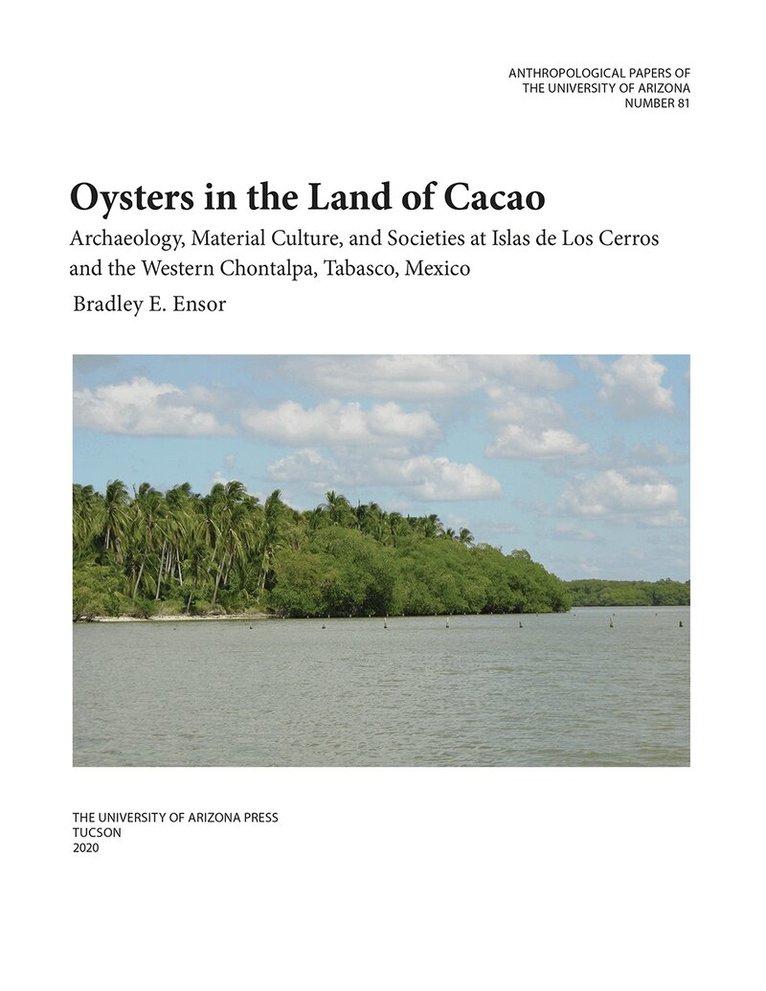
Oysters in the Land of Cacao
Archaeology, Material Culture, and Societies at Islas De Los Cerros and the Western Chontalpa, Tabasco, Mexico
Häftad, Engelska, 2020
226 kr
Skickas inom 11-20 vardagar
For decades, the Chontalpa region of Tabasco, Mexico, conjured images of the possible origins of the ItzÁ, who migrated, conquered, or otherwise influenced much of Mesoamerica. In Oysters in the Land of Cacao, archaeologist Bradley E. Ensor provides an important resource for Mesoamerican Gulf Coast archaeology by offering a new and detailed picture of the coastal sites vital to understanding regional interactions and social dynamics.This book synthesizes data from multiyear investigations at a coastal site complex in Tabasco-Islas de Los Cerros (ILC)-providing the first modern, systematic descriptions and analyses of material culture that challenge preconceptions while enabling new perspectives on cultural developments from the Formative to Late Classic periods through the lens of regional comparisons and contemporary theoretical trends. Ensor introduces a political ecological understanding of the environment and archaeological features, overturns a misconception that the latter were formative shell middens, provides an alternative pottery classification more appropriate for the materials and for contemporary theory, and introduces new approaches for addressing formation processes and settlement history.Building on the empirical analyses and discussions of problems in Mesoamerican archaeology, this book contributes new approaches to practice and agency perspectives, holistically integrating intra- and interclass agency, kinship strategies, gender and age dynamics, layered cultural identities, landscapes, social memory, and foodways and feasting. Oysters in the Land of Cacao addresses issues important to coastal archaeology within and beyond Mesoamerica. It delivers an overdue regional synthesis and new observations on settlement patterns, elite power, and political economies.
405 kr
Skickas inom 5-8 vardagar
Archaeology has been subjected to a wide range of misunderstandings of kinship theory and many of its central concepts. Demonstrating that kinship is the foundation for past societies' social organization, particularly in non-state societies, Bradley E. Ensor offers a lucid presentation of kinship principles and theories accessible to a broad audience. He provides not only descriptions of what the principles entail but also an understanding of their relevance to past and present topics of interest to archaeologists. His overall goal is always clear: to illustrate how kinship analysis can advance archaeological interpretation and how archaeology can advance kinship theory. The Archaeology of Kinship supports Ensor's objectives: to demonstrate the relevance of kinship to major archaeological questions, to describe archaeological methods for kinship analysis independent of ethnological interpretation, to illustrate the use of those techniques with a case study, and to provide specific examples of how diachronic analyses address broader theory. As Ensor shows, archaeological diachronic analyses of kinship are independently possible, necessary, and capable of providing new insights into past cultures and broader anthropological theory. Although it is an old subject in anthropology, The Archaeology of Kinship can offer new and exciting frontiers for inquiry. Kinship research in general - and prehistoric kinship in particular - is rapidly reemerging as a topical subject in anthropology. This book is a timely archaeological contribution to that growing literature otherwise dominated by ethnology.
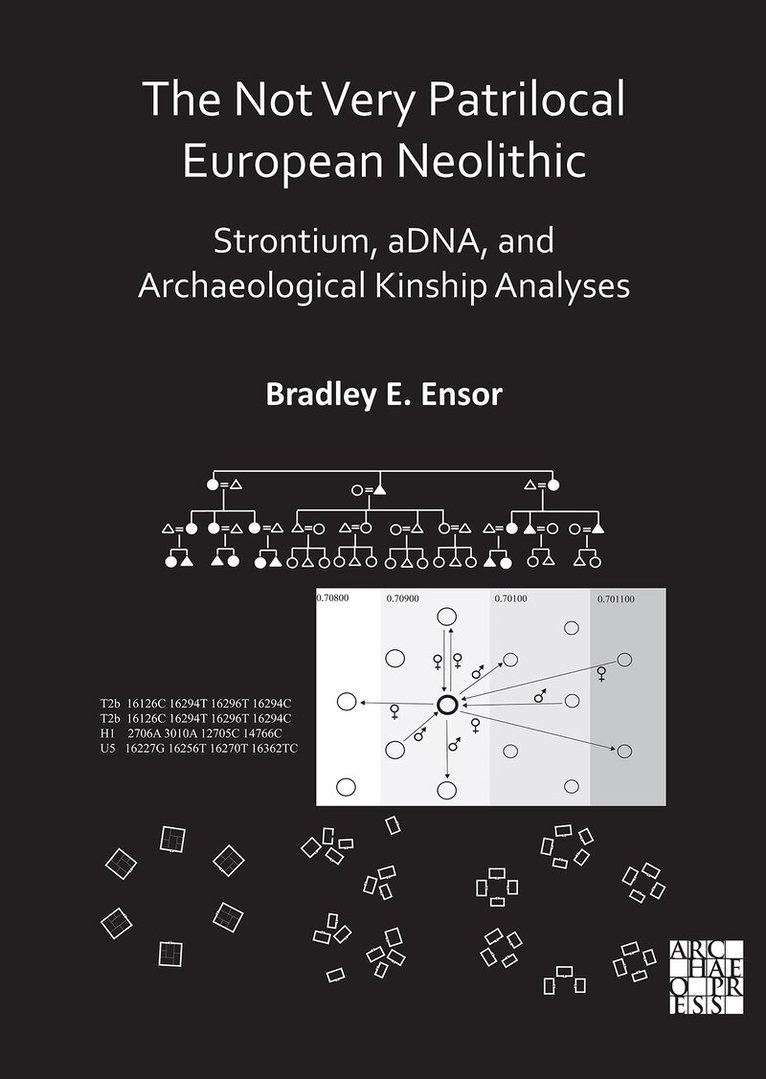
Not Very Patrilocal European Neolithic
Strontium, aDNA, and Archaeological Kinship Analyses
Häftad, Engelska, 2021
572 kr
Skickas
Two decades of strontium isotope research on Neolithic European burials – reinforced by high-profile ancient DNA studies – has led to widespread interpretations that these were patrilocal societies, implying significant residential mobility for women. The Not Very Patrilocal European Neolithic questions that narrative from a social anthropological perspective on kinship. It introduces models for inferring residence and descent with isotope and genetic data and provides in-depth descriptions of archaeological kinship analysis. From social anthropological insights to reassessments of data, an alternative perspective on the social dynamics of Neolithic European societies emerges from this new guide for prehistorians working with biological and archaeological materials.