Bradley Folsom – författare
Visar alla böcker från författaren Bradley Folsom. Handla med fri frakt och snabb leverans.
5 produkter
5 produkter
348 kr
Skickas inom 3-6 vardagar
In this biography of Joaquín de Arredondo, historian Bradley Folsom brings to life one of the most influential and ruthless leaders in North American history. Arredondo (1776-1837), a Bourbon loyalist who governed Texas and the other interior provinces of northeastern New Spain during the Mexican War of Independence, contended with attacks by revolutionaries, U.S. citizens, generals who had served in Napoleon's army, pirates, and various American Indian groups, all attempting to wrest control of the region. Often resorting to violence to deal with the provinces' problems, Arredondo was for ten years the most powerful official in northeastern New Spain.Folsom's lively account shows the challenges of governing a vast and inhospitable region and provides insight into nineteenth-century military tactics and Spanish viceregal realpolitik. When Arredondo and his army - which included Arredondo's protégé, future president of Mexico Antonio López de Santa Anna - arrived in Nuevo Santander in 1811, they quickly suppressed a revolutionary upheaval. Arredondo went on to expel an army of revolutionaries and invaders from the United States who had taken over Texas and declared it an independent republic. In the Battle of Medina, the bloodiest battle ever fought in Texas, he crushed the insurgents and followed his victory with a purge that reduced Texas's population by half. Over the following eight years, Arredondo faced fresh challenges to Spanish sovereignty ranging from Comanche and Apache raids to continued American incursion. In response, Arredondo ignored his superiors and ordered his soldiers to terrorize those who disagreed with him.Arredondo's actions had dramatic repercussions in Texas, Mexico, and the United States. His decision to allow Moses Austin to colonize Texas with Americans would culminate in the defeat of Santa Anna in 1836, but not before Santa Anna had made good use of the lessons in brutality he had learned so well from his mentor.
639 kr
Skickas inom 10-15 vardagar
Since the early 1800s, the violent exploits of “El Indio” Rafael through the settlements of northern New Spain have become the stuff of myth and legend. For some, the fabled Apache was a hero, an indigenous Robin Hood who fought oppressive Spaniards to help the dispossessed and downtrodden. For others, he was little more than a merciless killer. In Son of Vengeance, Bradley Folsom sets out to find the real Rafael—to extract the true story from the scant historical record and superabundance of speculation. What he uncovers is that many of the legends about Rafael were true: he was both daring and one of the most prolific serial killers in North American history.Rafael was born into an Apache family, but from a young age he was raised by Spanish chaplain Rafael Nevares, who took his indigenous prodigy out on patrol with local soldiers and taught him to speak Spanish and practice Catholicism. Rafael’s forced assimilation heightened the tension between his ancestry and the Hispanic environment and spurred him to violence. Sifting Spanish military and government documents, church records, contemporary newspapers, and eyewitness accounts, Folsom reveals a three-dimensional historical figure whose brutality was matched and abetted by great ingenuity—and by a deep, long-standing hostility between the Spanish and the Apaches of New Spain. The early years of tutelage under Nevares also, perversely, contributed to Rafael’s brutal success. Rather than leading to a life of Christian piety and Spanish loyalty, the knowledge Rafael gained from his mentor served instead to help him evade his pursuers and the law, at least for a time.In Son of Vengeance, we see the real El Indio Rafael for the first time—the man behind the cultural myth, and the historical forces and circumstances that framed and propelled his feats of violence.
280 kr
Skickas inom 10-15 vardagar
Since the early 1800s, the violent exploits of “El Indio” Rafael through the settlements of northern New Spain have become the stuff of myth and legend. For some, the fabled Apache was a hero, an indigenous Robin Hood who fought oppressive Spaniards to help the dispossessed and downtrodden. For others, he was little more than a merciless killer. In Son of Vengeance, Bradley Folsom sets out to find the real Rafael—to extract the true story from the scant historical record and superabundance of speculation. What he uncovers is that many of the legends about Rafael were true: he was both daring and one of the most prolific serial killers in North American history.Rafael was born into an Apache family, but from a young age he was raised by Spanish chaplain Rafael Nevares, who took his indigenous prodigy out on patrol with local soldiers and taught him to speak Spanish and practice Catholicism. Rafael’s forced assimilation heightened the tension between his ancestry and the Hispanic environment and spurred him to violence. Sifting Spanish military and government documents, church records, contemporary newspapers, and eyewitness accounts, Folsom reveals a three-dimensional historical figure whose brutality was matched and abetted by great ingenuity—and by a deep, long-standing hostility between the Spanish and the Apaches of New Spain. The early years of tutelage under Nevares also, perversely, contributed to Rafael’s brutal success. Rather than leading to a life of Christian piety and Spanish loyalty, the knowledge Rafael gained from his mentor served instead to help him evade his pursuers and the law, at least for a time.In Son of Vengeance, we see the real El Indio Rafael for the first time—the man behind the cultural myth, and the historical forces and circumstances that framed and propelled his feats of violence.
214 kr
Skickas inom 5-8 vardagar
In this biography of Joaquín de Arredondo, historian Bradley Folsom brings to life one of the most influential and ruthless leaders in North American history. Arredondo (1776–1837), a Bourbon loyalist who governed Texas and the other interior provinces of northeastern New Spain during the Mexican War of Independence, contended with attacks by revolutionaries, U.S. citizens, generals who had served in Napoleon’s army, pirates, and various American Indian groups, all attempting to wrest control of the region. Often resorting to violence to deal with the provinces’ problems, Arredondo was for ten years the most powerful official in northeastern New Spain. Folsom’s lively account shows the challenges of governing a vast and inhospitable region and provides insight into nineteenth-century military tactics and Spanish viceregal realpolitik. When Arredondo and his army—which included Arredondo’s protégé, future president of Mexico Antonio López de Santa Anna—arrived in Nuevo Santander in 1811, they quickly suppressed a revolutionary upheaval. Arredondo went on to expel an army of revolutionaries and invaders from the United States who had taken over Texas and declared it an independent republic. In the Battle of Medina, the bloodiest battle ever fought in Texas, he crushed the insurgents and followed his victory with a purge that reduced Texas’s population by half. Over the following eight years, Arredondo faced fresh challenges to Spanish sovereignty ranging from Comanche and Apache raids to continued American incursion. In response, Arredondo ignored his superiors and ordered his soldiers to terrorize those who disagreed with him. Arredondo’s actions had dramatic repercussions in Texas, Mexico, and the United States. His decision to allow Moses Austin to colonize Texas with Americans would culminate in the defeat of Santa Anna in 1836, but not before Santa Anna had made good use of the lessons in brutality he had learned so well from his mentor.
480 kr
Kommande
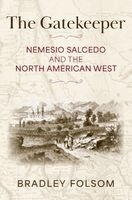
From 1802 to 1813, Nemesio Salcedo served as commandant general of the Spanish Internal Provinces, making him the preeminent military and civil authority over a roughly 1.5 million square mile region that stretched from the western bank of the Mississippi River to the eastern border of modern California and south to what is today north-central Mexico. As commandant general, Salcedo's duty was to keep the peace with indigenous peoples, promote economic and population growth, and maintain Spanish sovereignty over western North America during the most tumultuous time in the history of western North America.Trouble began in 1803 when the Louisiana Purchase placed an ambitious and expansionist United States on the doorstep of the Internal Provinces. With inadequate resources Salcedo was forced to oppose what the Spanish regarded as illegal expeditions by the likes of Lewis and Clark and Zebulon Pike, led by American General James Wilkinson. Smugglers, escaped enslaved people, hostile Native American tribes, and even the subversive efforts of agents sent by Napoleon and former US Vice President Aaron Burr further destabilized the border and threatened Salcedo's rule.Amid crises, Salcedo pursued progressive initiatives that placed him among the most forward-thinking people of his day. He initiated a smallpox inoculation program that saved incalculable lives, established the first school for girls in western North America, and sponsored scientific expeditions meant to map, measure, and better understand the lands and peoples under Spanish claim.On a level with Thomas Jefferson, Miguel Hidalgo, and Napoleon Bonaparte, Nemesio Salcedo reshaped the geopolitics of the American west in the early nineteenth century. The Gatekeeper: Nemesio Salcedo and the North American West introduces readers to an important, yet heretofore less recognized leader during a period of profound change.