Bradley M. Richardson - Böcker
Visar alla böcker från författaren Bradley M. Richardson. Handla med fri frakt och snabb leverans.
5 produkter
5 produkter
1 009 kr
Skickas inom 10-15 vardagar
1 014 kr
Skickas inom 5-8 vardagar
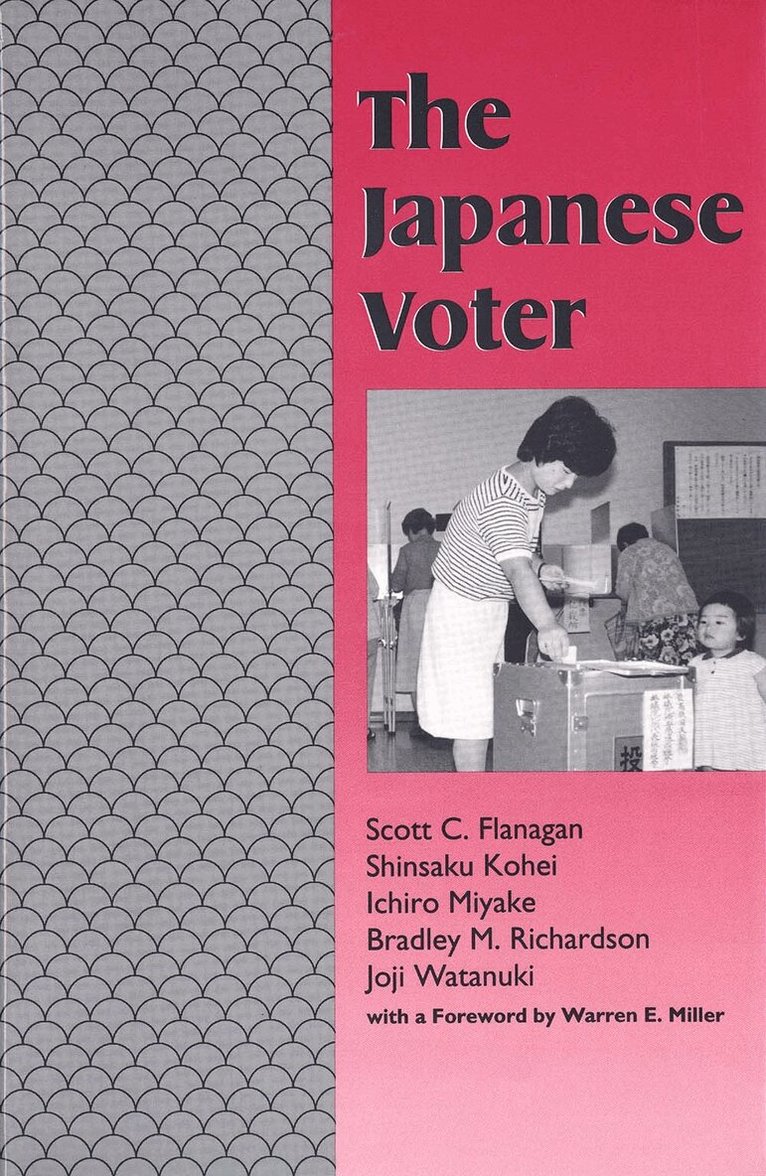
This landmark work surveys the major factors that influence voting behavior in Japan. It is the first comprehensive study of the Japanese voter to be written for English-speaking audiences. It is commonly believed that Japanese voting behavior cannot be compared to voting behavior in the West because it is not determined by the same kinds of group loyalties, interests, and attitudes but rather by unique patterns of personalistic networks and group mobilization. However this book demonstrates through a wide range of examples that there are recognizable bases of comparison between Japanese and Western voting behavior. It also produces a number of fascinating contrasts with voting in the West, because Japan is different, even if it is not unique. Thus we learn about the relative absence of economic voting, the weak role of the media, the continuing importance of cultural values, the enormous stability in voting patterns, and the effects of the unusual Japanese electoral system. Drawing on data from the 1950s onward, the book includes coverage of the most recent national elections in Japan.
554 kr
Skickas inom 5-8 vardagar
In this new analysis of democracy in Japan, Bradley Richardson refutes the widely accepted hypothesis that postwar Japan has been a semiauthoritarian and consensual state, heavily influenced by corporations and led by the government bureaucracy. On the contrary, Richardson's extensive newspaper and documentary research shows that Japanese political life has been extremely fragmented and discordant at all levels--in the bureaucracy, legislatures, parties, and interest groups, and in business and industry. Even the seemingly invulnerable Liberal Democratic Party (LDP), which ruled Japan for thirty-eight years, experienced rampant internal conflict. Now, the author contends, despite changes in political alignments since the collapse of the LDP in 1993, politics continues much as before.In Japanese Democracy, Richardson explores power relationships and demonstrates how Japan's political system is unlike Great Britain's and similar to those of the United States and Italy, where politics is decentralized and decisions are made at many levels. He draws some important conclusions: that Japan's postwar industrial policy has not always been successful, that the country is as much an economic welfare state as it is an economic "miracle," and that the lack of strong leadership has kept Japan from playing a more assertive role in the international arena. As in the United States, private interests hold central policymaking processes hostage, and weak leadership prevails.
684 kr
Skickas inom 3-6 vardagar
The Political Culture of Japan delves into the evolving political attitudes of the Japanese populace in the postwar period, focusing on the influence of democratization efforts introduced during the American occupation. This study aims to document the shifts in mass political attitudes rather than elite or group behaviors, offering a lens into the broader impacts of societal and institutional upheavals. By comparing prewar and postwar political cultures, the author sheds light on how democratic reforms have reshaped public opinion and contributed to Japan's modern political framework. Relying on nearly 300 public opinion surveys conducted between 1958 and 1967, the book identifies general trends and patterns that capture the transformation of Japan’s political landscape during a pivotal era.A central theme of the book is the contrast between the fragmented understanding of prewar political culture and the more systematic evaluation of postwar attitudes. The author carefully critiques the limitations of available historical data while using comparative insights from surveys to bridge this gap. By emphasizing methodological rigor and the significance of longitudinal patterns, the study not only provides a nuanced understanding of Japan's political evolution but also contributes to broader discussions on mass attitudinal changes in societies undergoing rapid democratization. This work serves as a valuable resource for scholars of political science and Japanese history, illuminating the enduring influence of societal reforms on political behavior.This title is part of UC Press's Voices Revived program, which commemorates University of California Press’s mission to seek out and cultivate the brightest minds and give them voice, reach, and impact. Drawing on a backlist dating to 1893, Voices Revived makes high-quality, peer-reviewed scholarship accessible once again using print-on-demand technology. This title was originally published in 1974.
776 kr
Skickas inom 7-10 vardagar
The Political Culture of Japan delves into the evolving political attitudes of the Japanese populace in the postwar period, focusing on the influence of democratization efforts introduced during the American occupation. This study aims to document the shifts in mass political attitudes rather than elite or group behaviors, offering a lens into the broader impacts of societal and institutional upheavals. By comparing prewar and postwar political cultures, the author sheds light on how democratic reforms have reshaped public opinion and contributed to Japan's modern political framework. Relying on nearly 300 public opinion surveys conducted between 1958 and 1967, the book identifies general trends and patterns that capture the transformation of Japan’s political landscape during a pivotal era.A central theme of the book is the contrast between the fragmented understanding of prewar political culture and the more systematic evaluation of postwar attitudes. The author carefully critiques the limitations of available historical data while using comparative insights from surveys to bridge this gap. By emphasizing methodological rigor and the significance of longitudinal patterns, the study not only provides a nuanced understanding of Japan's political evolution but also contributes to broader discussions on mass attitudinal changes in societies undergoing rapid democratization. This work serves as a valuable resource for scholars of political science and Japanese history, illuminating the enduring influence of societal reforms on political behavior.This title is part of UC Press's Voices Revived program, which commemorates University of California Press’s mission to seek out and cultivate the brightest minds and give them voice, reach, and impact. Drawing on a backlist dating to 1893, Voices Revived makes high-quality, peer-reviewed scholarship accessible once again using print-on-demand technology. This title was originally published in 1974.