
Brandi Denison – författare
Visar alla böcker från författaren Brandi Denison. Handla med fri frakt och snabb leverans.
3 produkter
3 produkter
709 kr
Skickas inom 10-15 vardagar
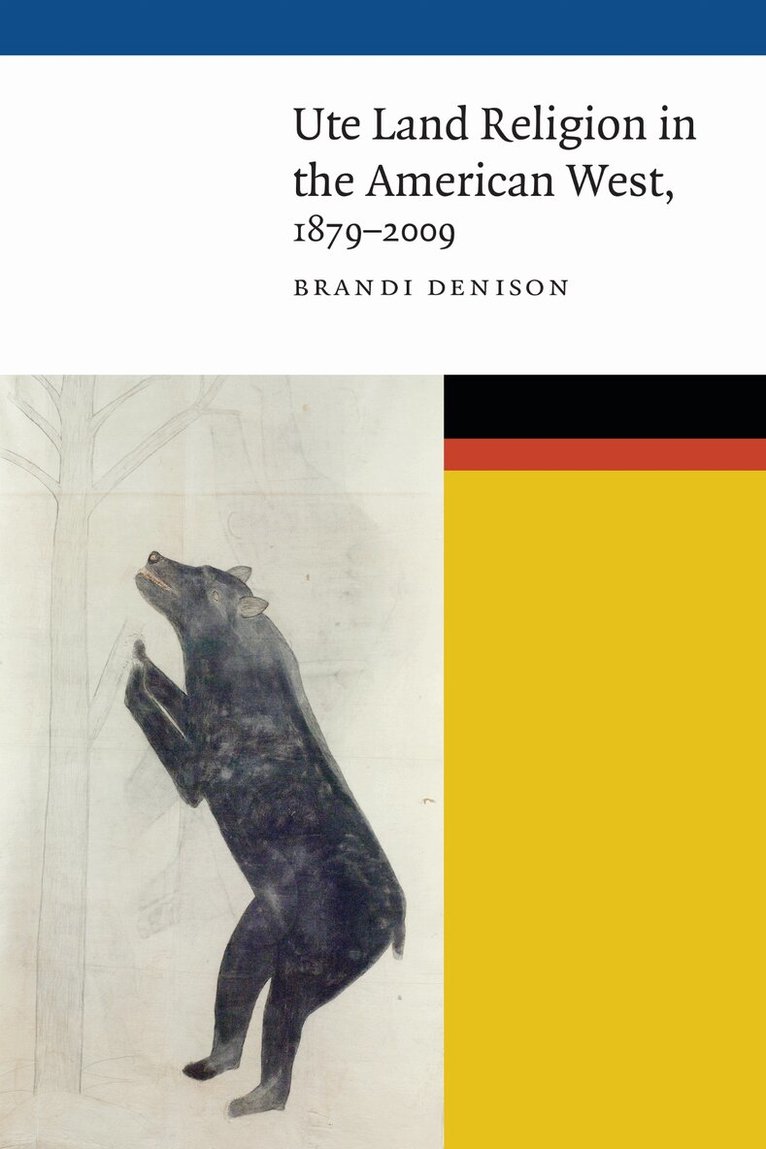
Ute Land Religion in the American West, 1879–2009 is a narrative of American religion and how it intersected with land in the American West. Prior to 1881, Utes lived on the largest reservation in North America-twelve million acres of western Colorado. Brandi Denison takes a broad look at the Ute land dispossession and resistance to disenfranchisement by tracing the shifting cultural meaning of dirt, a physical thing, into land, an abstract idea. This shift was made possible through the development and deployment of an idealized American religion based on Enlightenment ideals of individualism, Victorian sensibilities about the female body, and an emerging respect for diversity and commitment to religious pluralism that was wholly dependent on a separation of economics from religion. As the narrative unfolds, Denison shows how Utes and their Anglo-American allies worked together to systematize a religion out of existing ceremonial practices, anthropological observations, and Euro-American ideals of nature. A variety of societies then used religious beliefs and practices to give meaning to the land, which in turn shaped inhabitants’ perception of an exclusive American religion. Ultimately, this movement from the tangible to the abstract demonstrates the development of a normative American religion, one that excludes minorities even as they are the source of the idealized expression.
1 072 kr
Kommande
As the United States expanded westward during the nineteenth and twentieth centuries, religion played a key role in US imperial desires—whether a particular religious tradition thwarted these desires, worked to uphold them, or fell somewhere in between. Illuminating how religious institutions, leaders, and practitioners tended to their communities in the face of land dispossession, settlement, and resettlement, Crisis of Care contends that training an eye on care—intentional attentiveness to the welfare of individuals, communities, or whole societies—complicates the narrative of inevitable westward expansion and reveals the fragility of identities anchored in dominance. In this carefully curated volume, contributors highlight the many ways religious peoples of the American West looked after themselves and their communities despite the burden of—and their participation in—state violence. This collection may perhaps guide us to do the same as we face contemporary, tumultuous change. Contributors include James B. Bennett, Carleigh Beriont, Thomas S. Bremer, Jon Garcia, Lynne Gerber, Jennifer Graber, Max Greenberg, Brennan Keegan, Nicole C. Kirk, Andrew Klumpp, Chrissy Yee Lau, Quincy D. Newell, and Joshua Paddison.
370 kr
Kommande
As the United States expanded westward during the nineteenth and twentieth centuries, religion played a key role in US imperial desires—whether a particular religious tradition thwarted these desires, worked to uphold them, or fell somewhere in between. Illuminating how religious institutions, leaders, and practitioners tended to their communities in the face of land dispossession, settlement, and resettlement, Crisis of Care contends that training an eye on care—intentional attentiveness to the welfare of individuals, communities, or whole societies—complicates the narrative of inevitable westward expansion and reveals the fragility of identities anchored in dominance. In this carefully curated volume, contributors highlight the many ways religious peoples of the American West looked after themselves and their communities despite the burden of—and their participation in—state violence. This collection may perhaps guide us to do the same as we face contemporary, tumultuous change. Contributors include James B. Bennett, Carleigh Beriont, Thomas S. Bremer, Jon Garcia, Lynne Gerber, Jennifer Graber, Max Greenberg, Brennan Keegan, Nicole C. Kirk, Andrew Klumpp, Chrissy Yee Lau, Quincy D. Newell, and Joshua Paddison.