Branislav Jakovljevic - Böcker
Visar alla böcker från författaren Branislav Jakovljevic. Handla med fri frakt och snabb leverans.
4 produkter
4 produkter
429 kr
Skickas inom 7-10 vardagar
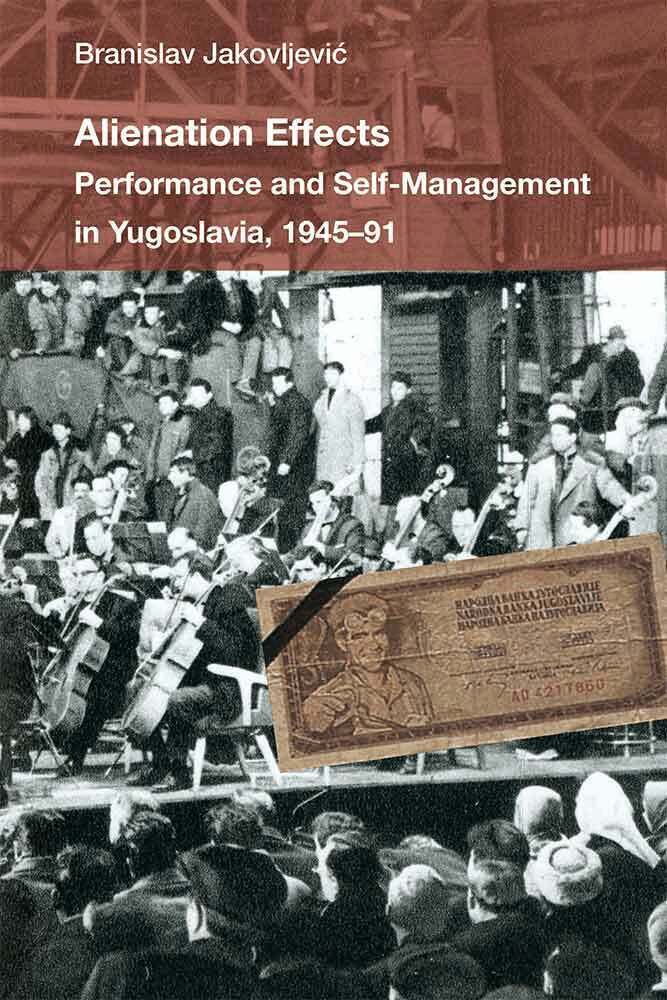
In the 1970s, Yugoslavia emerged as a dynamic environment for conceptual and performance art. At the same time, it pursued its own form of political economy of socialist self-management. Alienation Effects argues that a deep relationship existed between the democratization of the arts and industrial democracy, resulting in a culture difficult to classify. The book challenges the assumption that the art emerging in Eastern Europe before 1989 was either “official” or “dissident” art; and shows that the break up of Yugoslavia was not a result of “ancient hatreds” among its peoples but instead came from the distortion and defeat of the idea of self-management.The case studies include mass performances organized during state holidays; proto-performance art, such as the 1954 production of Waiting for Godot in a former concentration camp in Belgrade; student demonstrations in 1968; and body art pieces by Gina Pane, Joseph Beuys, Marina Abramovic, and others. Alienation Effects sheds new light on the work of well-known artists and scholars, including early experimental poetry by Slavoj Žižek, as well as performance and conceptual artists that deserve wider, international attention.
371 kr
Skickas inom 7-10 vardagar
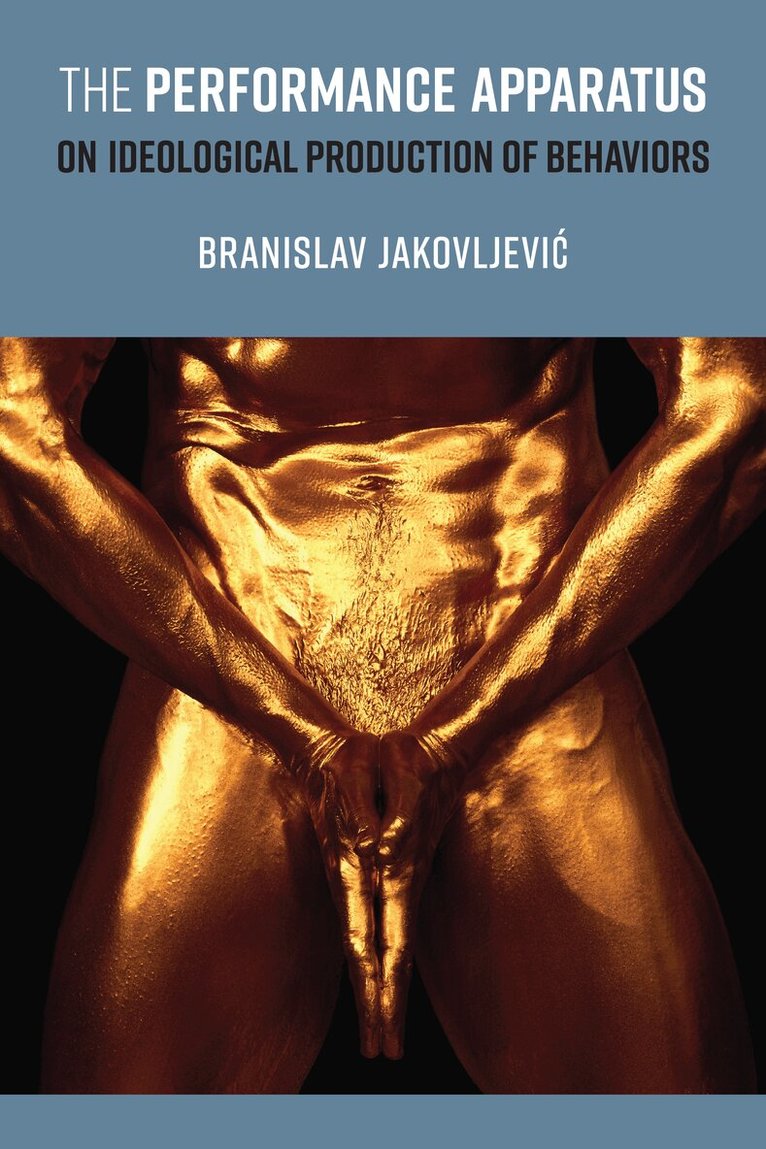
The publication of Louis Althusser’s 1969 article “Ideology and Ideological State Apparatuses,” made a deep impact on cultural studies and was instrumental in the formation of the apparatus theory in film studies. While contemporaneous with the emergence of performance art, this article and the questions of ideology and apparatus it raises barely registered in the field of performance studies, which was then in its formative phase. Jakovljević takes this absence of Althusser’s apparatus theory from performance studies as an indicator of the ideological position of the field at the moment of its emergence, arguing that, while theories of ideology played no major role in early performance studies, performance art itself offered a number of incisive critiques of ideology. Jakovljević looks at permutations of the apparatus by investigating the work of theorists such as Louis Althusser, Michel Foucault, Gilles Deleuze, and Judith Butler, and engagements with the apparatus by a number of artists, such as Amiri Baraka, Philippe Thomas, New York Art & Language, Terry Fox, Every house has a door, Clive Robertson, and Cassils.Jakovljević suggests that the centrality of behavior in early performance theory is important for the understanding of contemporary society, which is dominated by surveillance capitalism. If ideology is lodged in behaviors, and if surveillance capitalism thrives on the monetization of the behavioral surplus, then performance theory can make significant contributions to our understanding of the moment in which we live and the future we are facing. The Performance Apparatus argues for the importance of continuing attention to the question of ideology in contemporary, neoliberal order.
1 023 kr
Skickas inom 7-10 vardagar
In the 1970s, Yugoslavia emerged as a dynamic environment for conceptual and performance art. At the same time, it pursued its own form of political economy of socialist self-management. Alienation Effects argues that a deep relationship existed between the democratization of the arts and industrial democracy, resulting in a culture difficult to classify. The book challenges the assumption that the art emerging in Eastern Europe before 1989 was either “official” or “dissident” art; and shows that the break up of Yugoslavia was not a result of “ancient hatreds” among its peoples but instead came from the distortion and defeat of the idea of self-management.The case studies include mass performances organized during state holidays; proto-performance art, such as the 1954 production of Waiting for Godot in a former concentration camp in Belgrade; student demonstrations in 1968; and body art pieces by Gina Pane, Joseph Beuys, Marina Abramovic, and others. Alienation Effects sheds new light on the work of well-known artists and scholars, including early experimental poetry by Slavoj Žižek, as well as performance and conceptual artists that deserve wider, international attention.
1 023 kr
Skickas inom 7-10 vardagar
The publication of Louis Althusser’s 1969 article “Ideology and Ideological State Apparatuses,” made a deep impact on cultural studies and was instrumental in the formation of the apparatus theory in film studies. While contemporaneous with the emergence of performance art, this article and the questions of ideology and apparatus it raises barely registered in the field of performance studies, which was then in its formative phase. Jakovljević takes this absence of Althusser’s apparatus theory from performance studies as an indicator of the ideological position of the field at the moment of its emergence, arguing that, while theories of ideology played no major role in early performance studies, performance art itself offered a number of incisive critiques of ideology. Jakovljević looks at permutations of the apparatus by investigating the work of theorists such as Louis Althusser, Michel Foucault, Gilles Deleuze, and Judith Butler, and engagements with the apparatus by a number of artists, such as Amiri Baraka, Philippe Thomas, New York Art & Language, Terry Fox, Every house has a door, Clive Robertson, and Cassils.Jakovljević suggests that the centrality of behavior in early performance theory is important for the understanding of contemporary society, which is dominated by surveillance capitalism. If ideology is lodged in behaviors, and if surveillance capitalism thrives on the monetization of the behavioral surplus, then performance theory can make significant contributions to our understanding of the moment in which we live and the future we are facing. The Performance Apparatus argues for the importance of continuing attention to the question of ideology in contemporary, neoliberal order.