Brent Hayes Edwards - Böcker
Visar alla böcker från författaren Brent Hayes Edwards. Handla med fri frakt och snabb leverans.
9 produkter
9 produkter
112 kr
Skickas inom 5-8 vardagar
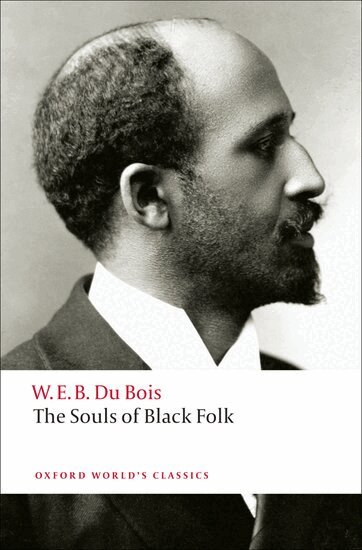
'The problem of the twentieth-century is the problem of the color-line.'Originally published in 1903, The Souls of Black Folk is a classic study of race, culture, and education at the turn of the twentieth century. With its singular combination of essays, memoir, and fiction, this book vaulted W. E. B. Du Bois to the forefront of American political commentary and civil rights activism. The Souls of Black Folk is an impassioned, at times searing account of the situation of African Americans in the United States. Du Bois makes a forceful case for the access of African Americans to higher education, memorably extols the achievements of black culture (above all the spirituals or 'sorrow songs'), and advances the provocative and influential argument that due to the inequalities and pressures of the 'race problem', African American identity is characterized by 'double consciousness'.This edition includes a valuable appendix of other writing by Du Bois, which sheds light on his attitudes and intentions. ABOUT THE SERIES: For over 100 years Oxford World's Classics has made available the widest range of literature from around the globe. Each affordable volume reflects Oxford's commitment to scholarship, providing the most accurate text plus a wealth of other valuable features, including expert introductions by leading authorities, helpful notes to clarify the text, up-to-date bibliographies for further study, and much more.
The Ordeal of Mansart (The Oxford W. E. B. Du Bois)
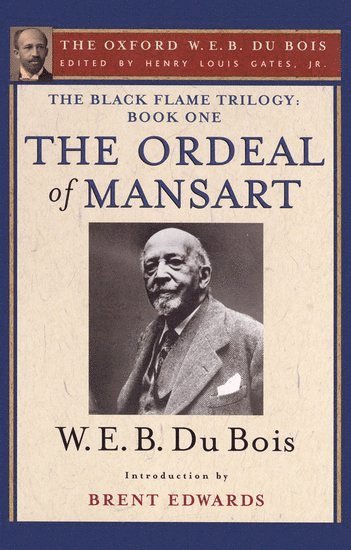
The Black Flame Trilogy: Book One, The Ordeal of Mansart (The Oxford W. E. B. Du Bois)
Häftad, Engelska, 2014
300 kr
Skickas inom 7-10 vardagar
W. E. B. Du Bois was a public intellectual, sociologist, and activist on behalf of the African American community. He profoundly shaped black political culture in the United States through his founding role in the NAACP, as well as internationally through the Pan-African movement. Du Bois's sociological and historical research on African-American communities and culture broke ground in many areas, including the history of the post-Civil War Reconstruction period. Du Bois was also a prolific author of novels, autobiographical accounts, innumerable editorials and journalistic pieces, and several works of history.Du Bois called his epic Black Flame trilogy a fiction of interpretation. It acts as a representative biography of African American history by following one man, Manuel Mansart, from his birth in 1876 until his death. The Black Flame attempts to use this historical fiction of interpretation to recast and revisit the African American experience. Readers will appreciate The Black Flame trilogy as a clear articulation of Du Bois's perspective at the end of his life.The first book in this profound trilogy, The Ordeal of Mansart, chronicles Mansart's early life during the time of Reconstruction through his involvement in black education in Atlanta. Written with lyrical, vivid prose and with accurate historical context, The Ordeal of Mansart offers readers a peek into African American life and struggle through the lens of Mansart's humble life. With a series introduction by editor Henry Louis Gates, Jr., and an introduction by Brent Hayes Edwards, this edition is essential for anyone interested in African American literature.
The Black Flame Trilogy: Book Two, Mansart Builds a School(The Oxford W. E. B. Du Bois)
Häftad, Engelska, 2014
300 kr
Skickas inom 7-10 vardagar
W. E. B. Du Bois was a public intellectual, sociologist, and activist on behalf of the African American community. He profoundly shaped black political culture in the United States through his founding role in the NAACP, as well as internationally through the Pan-African movement. Du Bois's sociological and historical research on African-American communities and culture broke ground in many areas, including the history of the post-Civil War Reconstruction period. Du Bois was also a prolific author of novels, autobiographical accounts, innumerable editorials and journalistic pieces, and several works of history.Du Bois called his epic Black Flame trilogy a fiction of interpretation. It acts as a representative biography of African American history by following one man, Manuel Mansart, from his birth in 1876 until his death. The Black Flame attempts to use this historical fiction of interpretation to recast and revisit the African American experience. Readers will appreciate The Black Flame trilogy as a clear articulation of Du Bois's perspective at the end of his life.The second book in this profound trilogy, Mansart Builds a School, opens with Mansart's election to superintendent of Negro schools in Atlanta and follows him as he ascends to the position of president of Georgia State A&M College. The book provides a damning portrait of the state of education for African Americans in the south. Building upon the drama and intrigue of The Ordeal of Mansart in Du Bois's signature lyrical style, Mansart Builds a School delves into the realities of the ordinary southern black experience of the early twentieth century. With a series introduction by editor Henry Louis Gates, Jr., and an introduction by Brent Hayes Edwards, this edition is essential for anyone interested in African American literature.
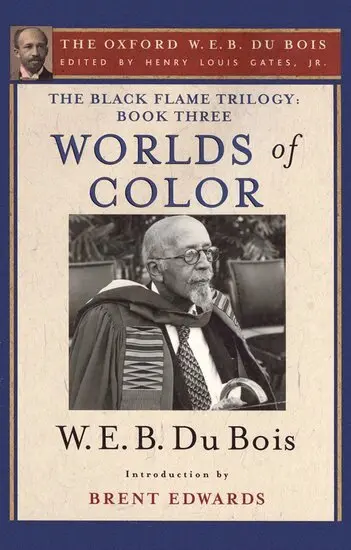
The Black Flame Trilogy: Book Three, Worlds of Color (The Oxford W. E. B. Du Bois)
Häftad, Engelska, 2014
300 kr
Skickas inom 7-10 vardagar
W. E. B. Du Bois was a public intellectual, sociologist, and activist on behalf of the African American community. He profoundly shaped black political culture in the United States through his founding role in the NAACP, as well as internationally through the Pan-African movement. Du Bois's sociological and historical research on African-American communities and culture broke ground in many areas, including the history of the post-Civil War Reconstruction period. Du Bois was also a prolific author of novels, autobiographical accounts, innumerable editorials and journalistic pieces, and several works of history.Du Bois called his epic Black Flame trilogy a fiction of interpretation. It acts as a representative biography of African American history by following one man, Manuel Mansart, from his birth in 1876 until his death. The Black Flame attempts to use this historical fiction of interpretation to recast and revisit the African American experience. Readers will appreciate The Black Flame trilogy as a clear articulation of Du Bois's perspective at the end of his life.The last book in this profound trilogy, Worlds of Color, opens when Mansart is sixty and a successful and established college president. Packed with political intrigue, romance, and social commentary, the book provides a dark, cynical view of the world and its relationship to the "Black Flame," or the potential of black civilization. Building upon the drama of the previous two books, Worlds of Color delves into a more sinister, bleak, and doubtful future. With a series introduction by editor Henry Louis Gates, Jr., and an introduction by Brent Hayes Edwards, this edition is essential for anyone interested in African American literature.
1 264 kr
Skickas
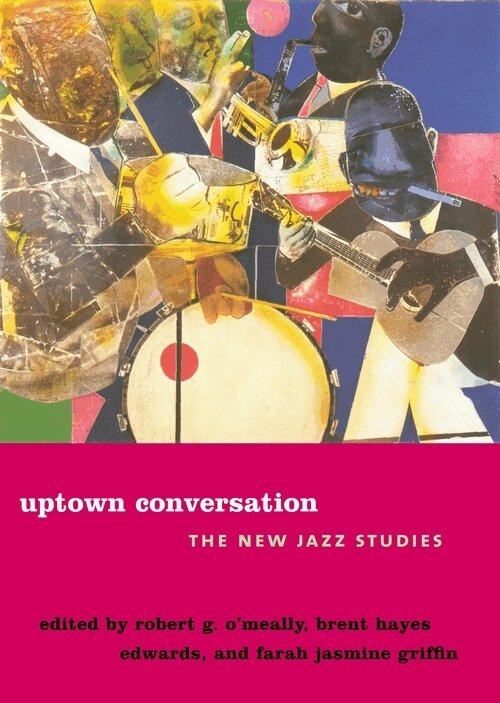
Jackson Pollock dancing to the music as he painted; Romare Bearden's stage and costume designs for Alvin Ailey and Dianne McIntyre; Stanley Crouch stirring his high-powered essays in a room where a drumkit stands at the center: from the perspective of the new jazz studies, jazz is not only a music to define-it is a culture. Considering musicians and filmmakers, painters and poets, the intellectual improvisations in Uptown Conversation reevaluate, reimagine, and riff on the music that has for more than a century initiated a call and response across art forms, geographies, and cultures. Building on Robert G. O'Meally's acclaimed Jazz Cadence of American Culture, these original essays offer new insights in jazz historiography, highlighting the political stakes in telling the story of the music and evaluating its cultural import in the United States and worldwide.Articles contemplating the music's experimental wing-such as Salim Washington's meditation on Charles Mingus and the avant-garde or George Lipsitz's polemical juxtaposition of Ken Burns's documentary Jazz and Horace Tapscott's autobiography Songs of the Unsung-share the stage with revisionary takes on familiar figures in the canon: Thelonious Monk, Miles Davis, Duke Ellington, and Louis Armstrong.
685 kr
Skickas inom 3-6 vardagar
Jackson Pollock dancing to the music as he painted; Romare Bearden's stage and costume designs for Alvin Ailey and Dianne McIntyre; Stanley Crouch stirring his high-powered essays in a room where a drumkit stands at the center: from the perspective of the new jazz studies, jazz is not only a music to define-it is a culture. Considering musicians and filmmakers, painters and poets, the intellectual improvisations in Uptown Conversation reevaluate, reimagine, and riff on the music that has for more than a century initiated a call and response across art forms, geographies, and cultures. Building on Robert G. O'Meally's acclaimed Jazz Cadence of American Culture, these original essays offer new insights in jazz historiography, highlighting the political stakes in telling the story of the music and evaluating its cultural import in the United States and worldwide.Articles contemplating the music's experimental wing-such as Salim Washington's meditation on Charles Mingus and the avant-garde or George Lipsitz's polemical juxtaposition of Ken Burns's documentary Jazz and Horace Tapscott's autobiography Songs of the Unsung-share the stage with revisionary takes on familiar figures in the canon: Thelonious Monk, Miles Davis, Duke Ellington, and Louis Armstrong.
194 kr
Skickas
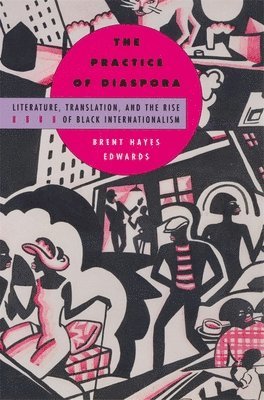
Practice of Diaspora
Literature, Translation, and the Rise of Black Internationalism
Häftad, Engelska, 2003
388 kr
Skickas inom 7-10 vardagar
A pathbreaking work of scholarship that will reshape our understanding of the Harlem Renaissance, The Practice of Diaspora revisits black transnational culture in the 1920s and 1930s, paying particular attention to links between intellectuals in New York and their Francophone counterparts in Paris. Brent Edwards suggests that diaspora is less a historical condition than a set of practices: the claims, correspondences, and collaborations through which black intellectuals pursue a variety of international alliances.Edwards elucidates the workings of diaspora by tracking the wealth of black transnational print culture between the world wars, exploring the connections and exchanges among New York–based publications (such as Opportunity, The Negro World, and The Crisis) and newspapers in Paris (such as Les Continents, La Voix des Nègres, and L'Etudiant noir). In reading a remarkably diverse archive--the works of writers and editors from Langston Hughes, René Maran, and Claude McKay to Paulette Nardal, Alain Locke, W. E. B. Du Bois, George Padmore, and Tiemoko Garan Kouyaté--The Practice of Diaspora takes account of the highly divergent ways of imagining race beyond the barriers of nation and language. In doing so, it reveals the importance of translation, arguing that the politics of diaspora are legible above all in efforts at negotiating difference among populations of African descent throughout the world.
453 kr
Skickas inom 10-15 vardagar
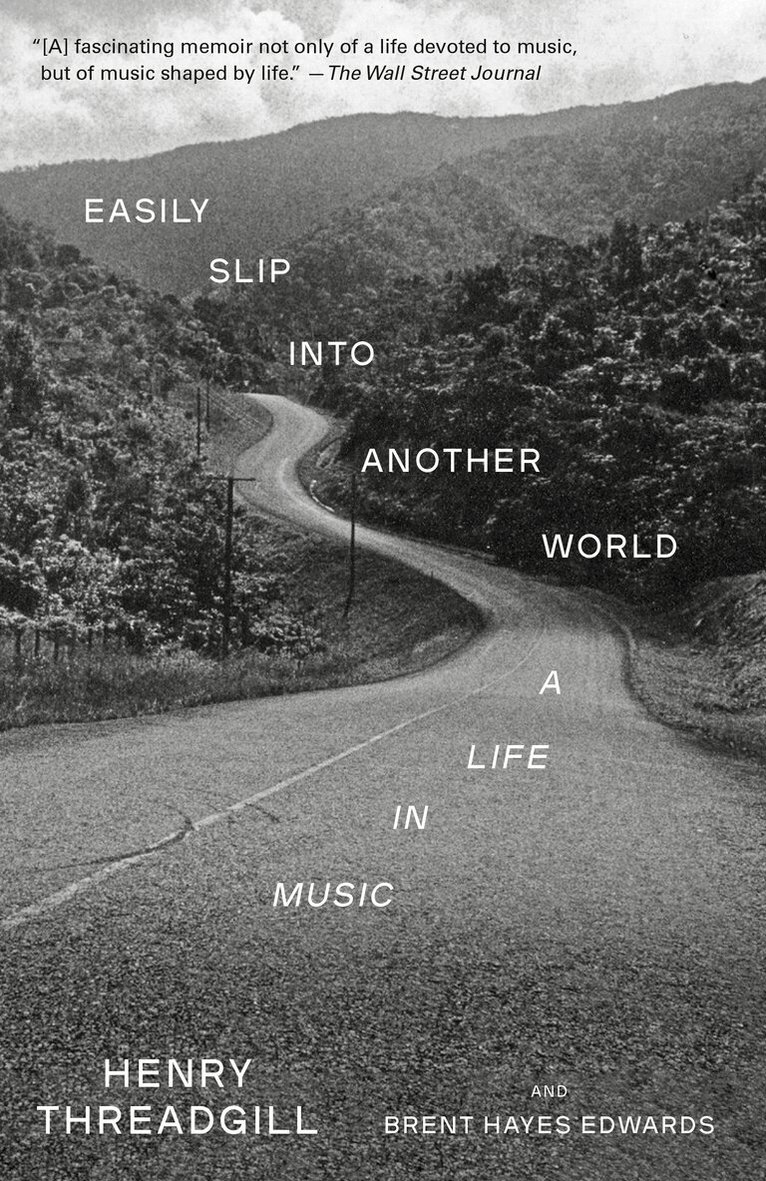
In 1941 Thelonious Monk and Kenny Clarke copyrighted “Epistrophy,” one of the best-known compositions of the bebop era. The song’s title refers to a literary device—the repetition of a word or phrase at the end of successive clauses—that is echoed in the construction of the melody. Written two decades later, Amiri Baraka’s poem “Epistrophe” alludes slyly to Monk’s tune. Whether it is composers finding formal inspiration in verse or a poet invoking the sound of music, hearing across media is the source of innovation in black art.Epistrophies explores this fertile interface through case studies in jazz literature—both writings informed by music and the surprisingly large body of writing by jazz musicians themselves. From James Weldon Johnson’s vernacular transcriptions to Sun Ra’s liner note poems, from Henry Threadgill’s arresting song titles to Nathaniel Mackey’s “Song of the Andoumboulou,” there is an unending back-and-forth between music that hovers at the edge of language and writing that strives for the propulsive energy and melodic contours of music.At times this results in art that gravitates into multiple media. In Duke Ellington’s “social significance” suites, or in the striking parallels between Louis Armstrong’s inventiveness as a singer and trumpeter on the one hand and his idiosyncratic creativity as a letter writer and collagist on the other, one encounters an aesthetic that takes up both literature and music as components of a unique—and uniquely African American—sphere of art-making and performance.