Brian A. Stewart - Böcker
Visar alla böcker från författaren Brian A. Stewart. Handla med fri frakt och snabb leverans.
4 produkter
4 produkter
Del 85 - Monographs
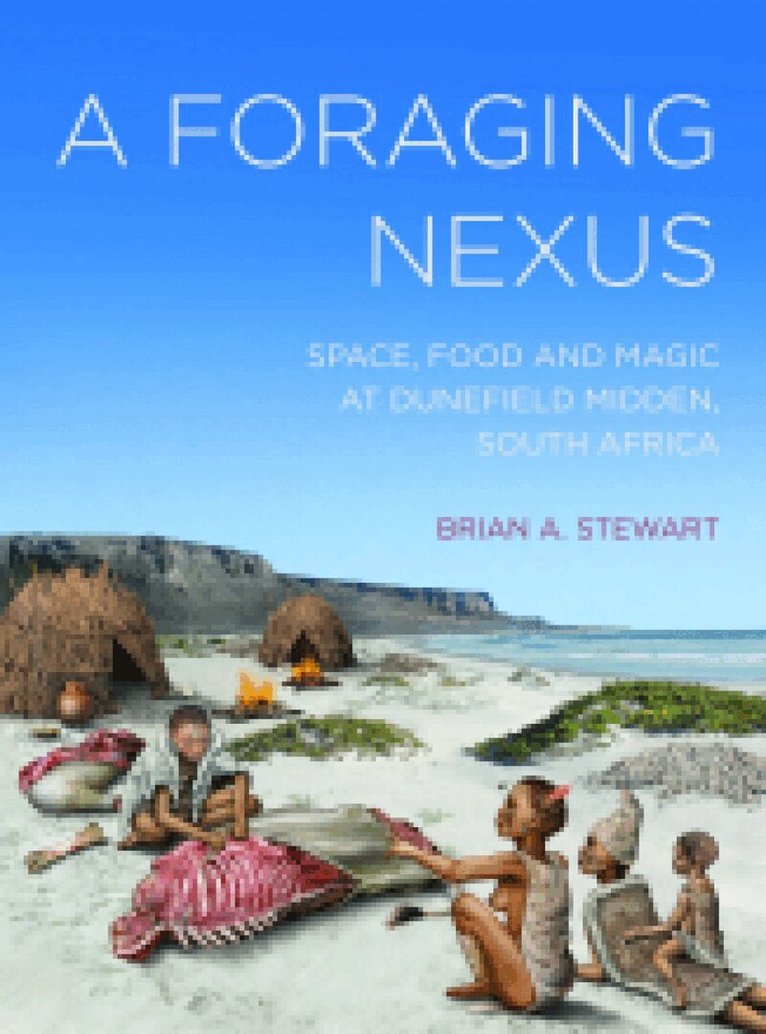
Foraging Nexus
Space, Food, and Magic at Dunefield Midden, South Africa
Inbunden, Engelska, 2026
1 167 kr
Kommande
Dunefield Midden on South Africa’s west coast is one of the world’s largest and best-preserved campsites of past foragers. Covered by windblown sand soon after abandonment, it provides a snapshot of domestic life for some of the subcontinent’s last precolonial peoples. The site’s shallow, intact deposits encouraged an emphasis on horizontal exposure and spatial resolution on the part of its excavators, John Parkington and his students at the University of Cape Town. Those efforts spanned more than a decade and resulted in the recovery of nearly 1,000 square meters of Later Stone Age archaeology, including over 100 features interspersed with diverse shell, bone, and artifact assemblages. Twenty-seven radiocarbon dates on charcoal and marine shells constrain the site’s occupation to between AD 1300 and 1400, with a cumulative duration of no more than a few months.This book presents the results of a comprehensive spatial analysis and refitting program of an array of meticulously mapped subsistence materials from Dunefield Midden. Ceramic cooking vessels, ostrich eggshell flasks, tortoiseshell bowls, and the bones of three differently sized ungulates, both wild and domesticated, are reassembled and their distributions compared to understand the cultural flows and natural forces that structured this exceptional site. Resulting patterns are interpreted with reference to diverse ethnoarchaeological, ethnographic, and ethnohistoric observations from Africa and beyond. What emerges is a uniquely detailed spatial reconstruction of hunter-gatherer material use-histories, social organization, group identity, and spirituality.
100 Years of Archaeology at the University of Michigan
Essays on the Past, Present, and Future of the Discipline
Häftad, Engelska, 2025
546 kr
Skickas inom 7-10 vardagar
The University of Michigan has been at the forefront of archaeological research for more than 100 years, since 1922, when the Museum of Anthropology (now the Museum of Anthropological Archaeology) was established on the Ann Arbor campus. The goal of its curators for many decades was to create a research and teaching program that emphasized methodological rigor in the analysis of archaeological materials, attempting to solve grand questions about human behavior through fieldwork, collections, and laboratory work. About fifty years ago, the Museum's emphasis shifted to developing archaeological theory when a new generation of curators with processualist leanings made Ann Arbor a testing ground for the so-called New Archaeology. Now, archaeology stands at a crossroads. Some archaeologists refer to the death of archaeological theory. Others stake out opposed camps of generalists and particularists. At U-M, as at many other universities, the past decade has seen a new commitment to collaborative archaeology, working with descendant communities and acknowledging the discipline's roots in colonialism and extraction. In 2022, to celebrate a century of existence, the University of Michigan Museum of Anthropological Archaeology (UMMAA) hosted an international conference to explore possibilities for a middle way: an archaeology for the next 100 years, combining humanistic and scientific approaches, which allows for both agents and systems, description and explanation, science and heritage. This volume is meant to be a snapshot of that conference and this moment in the development of the discipline. Included are most of the papers and posters presented, as well as photographs of the panels and the proceedings.
1 101 kr
Skickas inom 10-15 vardagar
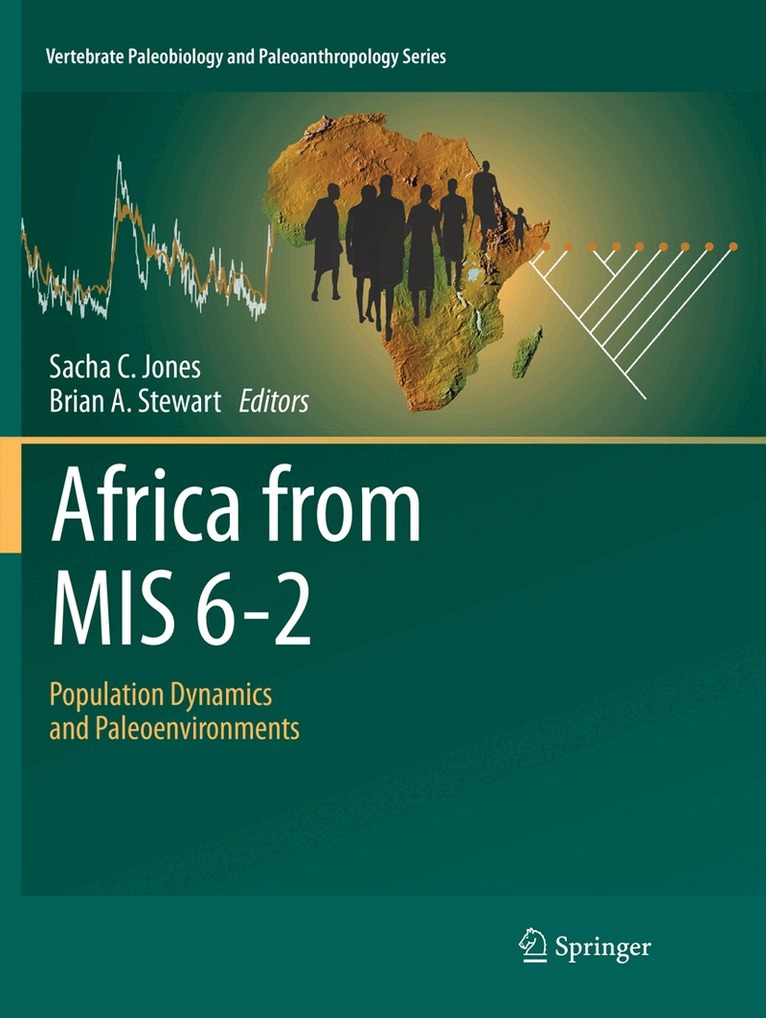
Bringing together archaeological, paleoenvironmental, paleontological and genetic data, this book makes a first attempt to reconstruct African population histories from out species' evolution to the Holocene. Africa during Marine Isotope Stages (MIS) 6 to 2 (~190-12,000 years ago) witnessed the biological development and behavioral florescence of our species. Modern human population dynamics, which involved multiple population expansions, dispersals, contractions and extinctions, played a central role in our species’ evolutionary trajectory. So far, the demographic processes – modern human population sizes, distributions and movements – that occurred within Africa during this critical period have been consistently under-addressed. The authors of this volume aim at (1) examining the impact of this glacial-interglacial- glacial cycle on human group sizes, movements and distributions throughout Africa; (2) investigating the macro- and micro-evolutionary processes underpinning our species’ anatomical and behavioral evolution; and (3) setting an agenda whereby Africa can benefit from, and eventually contribute to, the increasingly sophisticated theoretical and methodological palaeodemographic frameworks developed on other continents.
1 101 kr
Skickas inom 10-15 vardagar
Bringing together archaeological, paleoenvironmental, paleontological and genetic data, this book makes a first attempt to reconstruct African population histories from out species' evolution to the Holocene.