Brian D. Laslie - Böcker
Visar alla böcker från författaren Brian D. Laslie. Handla med fri frakt och snabb leverans.
8 produkter
8 produkter
720 kr
Skickas inom 10-15 vardagar
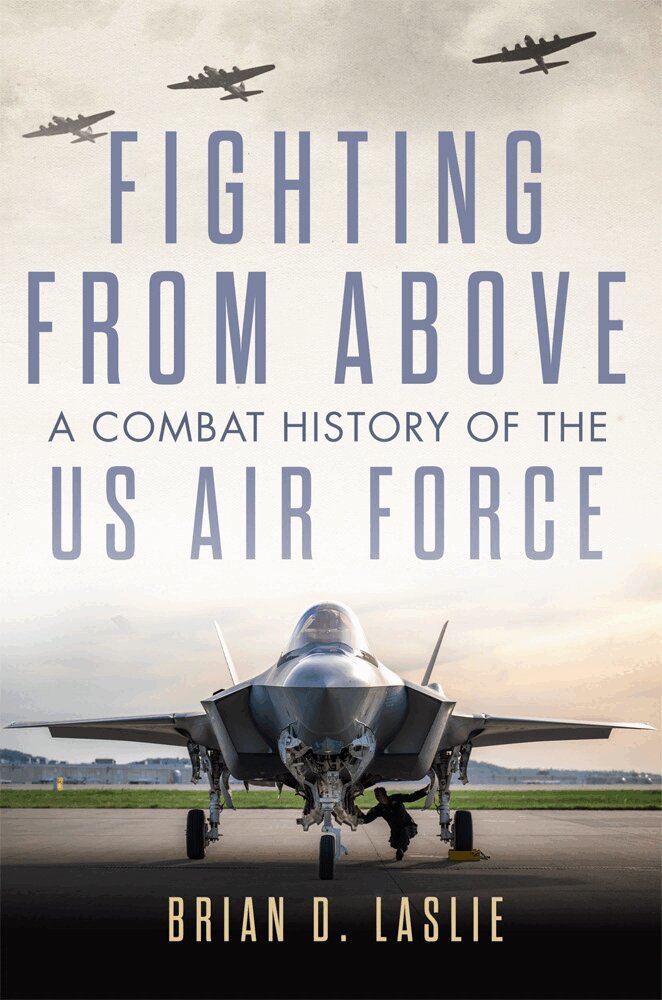
The story of the United States Air Force (USAF) stretches back to aerial operations prior to the First World War—well before the USAF became a separate service—and looks forward to a new era of airpower in space. Fighting from Above presents a concise account of this expansive history, offering a new perspective on how the air forces of the United States created an independent way of warfare over time.From the earliest battles of the USAF’s predecessor organizations to its modern incarnation, Brian D. Laslie identifies four distinct and observable ways of war that developed over four distinct epochs. Beginning with the development of early air power (1906–1941), he highlights the creation of roles and missions, with bombardment theory and practice ascendant. An era of strategic dominance (1942–1975) followed in which the ideas of strategic bombardment ruled the air force; when such notions were unceremoniously proven false during the Vietnam-era conflicts, a period of tactical ascendancy (1975–2019) began. Finally, Laslie considers the current environment, where much of the story of the USAF remains unwritten as it grapples with the prospects and challenges posed by drones and the U.S. Space Force.While detailing combat operations, Fighting from Above also pays close attention to technology, politics, rivalries, logistics, policy, organization, equipping, and training. Thorough, concise, and innovative in its approach, it is an authoritative, exceptionally readable history of the development of American airpower.
322 kr
Skickas inom 10-15 vardagar
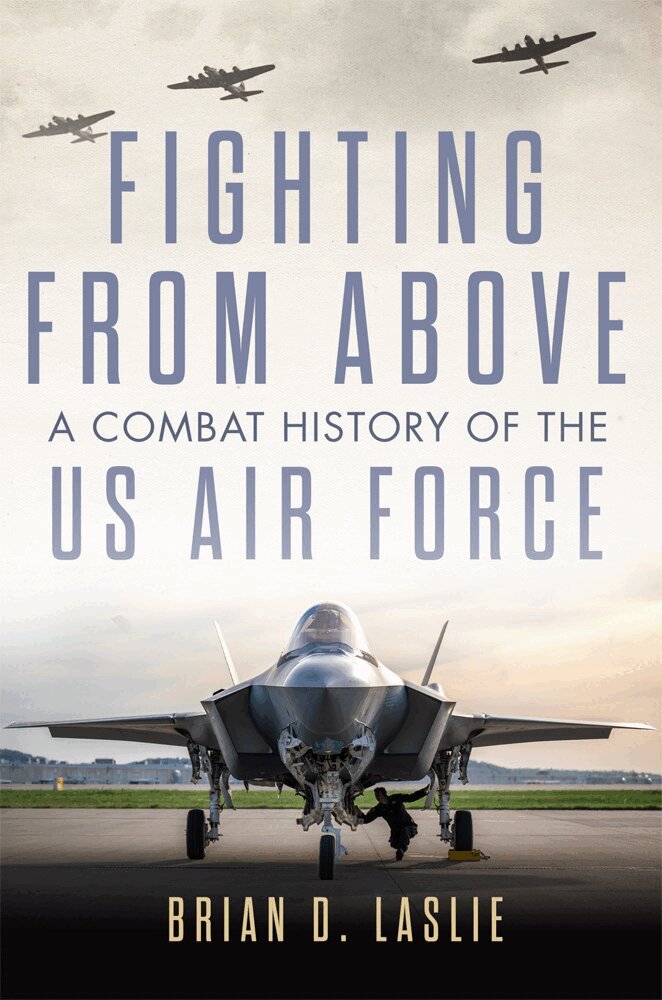
The story of the United States Air Force (USAF) stretches back to aerial operations prior to the First World War—well before the USAF became a separate service—and looks forward to a new era of airpower in space. Fighting from Above presents a concise account of this expansive history, offering a new perspective on how the air forces of the United States created an independent way of warfare over time.From the earliest battles of the USAF’s predecessor organizations to its modern incarnation, Brian D. Laslie identifies four distinct and observable ways of war that developed over four distinct epochs. Beginning with the development of early air power (1906–1941), he highlights the creation of roles and missions, with bombardment theory and practice ascendant. An era of strategic dominance (1942–1975) followed in which the ideas of strategic bombardment ruled the air force; when such notions were unceremoniously proven false during the Vietnam-era conflicts, a period of tactical ascendancy (1975–2019) began. Finally, Laslie considers the current environment, where much of the story of the USAF remains unwritten as it grapples with the prospects and challenges posed by drones and the U.S. Space Force.While detailing combat operations, Fighting from Above also pays close attention to technology, politics, rivalries, logistics, policy, organization, equipping, and training. Thorough, concise, and innovative in its approach, it is an authoritative, exceptionally readable history of the development of American airpower.
655 kr
Skickas inom 3-6 vardagar
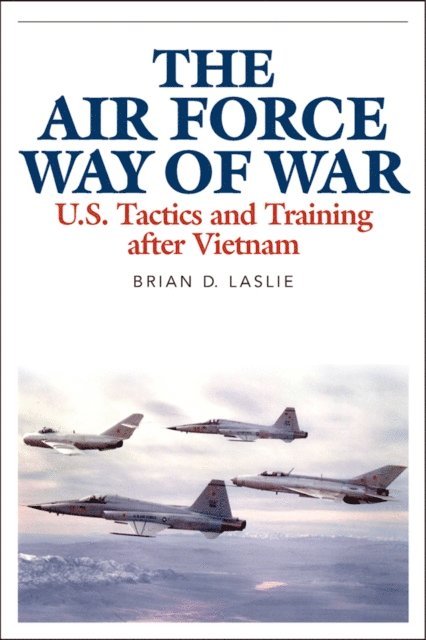
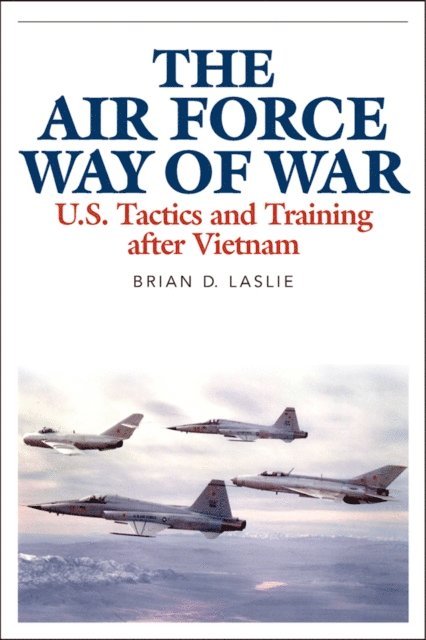
On December 18, 1972, more than one hundred U.S. B-52 bombers flew over North Vietnam to initiate Operation Linebacker II. During the next eleven days, sixteen of these planes were shot down and another four suffered heavy damage. These losses soon proved so devastating that Strategic Air Command was ordered to halt the bombing. The U.S. Air Force's poor performance in this and other operations during Vietnam was partly due to the fact that they had trained their pilots according to methods devised during World War II and the Korean War, when strategic bombers attacking targets were expected to take heavy losses. Warfare had changed by the 1960s, but the USAF had not adapted. Between 1972 and 1991, however, the Air Force dramatically changed its doctrines and began to overhaul the way it trained pilots through the introduction of a groundbreaking new training program called "Red Flag."In The Air Force Way of War, Brian D. Laslie examines the revolution in pilot instruction that Red Flag brought about after Vietnam. The program's new instruction methods were dubbed "realistic" because they prepared pilots for real-life situations better than the simple cockpit simulations of the past, and students gained proficiency on primary and secondary missions instead of superficially training for numerous possible scenarios. In addition to discussing the program's methods, Laslie analyzes the way its graduates actually functioned in combat during the 1980s and '90s in places such as Grenada, Panama, Libya, and Iraq. Military historians have traditionally emphasized the primacy of technological developments during this period and have overlooked the vital importance of advances in training, but Laslie's unprecedented study of Red Flag addresses this oversight through its examination of the seminal program.
Architect of Air Power
General Laurence S. Kuter and the Birth of the US Air Force
Inbunden, Engelska, 2017
655 kr
Skickas inom 3-6 vardagar
At age 36, Laurence S. Kuter (1905--1979) became the youngest general officer since William T. Sherman. He served as deputy commander of allied tactical air forces in North Africa during World War II and helped devise the American bombing strategy in Europe. Although his combat contributions were less notable than other commanders in the Eighth Air Force, few officers saw as many theaters of operation as he did or were as highly sought-after. After World War II, he led the Military Air Transport Service, Air University, Far East Air Forces, and served as commander-in-chief of the North American Air Defense Command (NORAD). Despite these accomplishments and others, however, Kuter remains widely underappreciated.In Architect of Air Power, Brian D. Laslie offers the first biography of this important but unsung pioneer whose influence can be found in every stage of the development of an independent US Air Force. From his early years at West Point to his days at the Air Corps Tactical School to his leadership role at NORAD, Kuter made his mark with quiet efficiency. He was an early advocate of strategic bombardment rather than pursuit or fighter aviation -- fundamentally changing the way air power was used -- and later helped implement the Berlin airlift in 1948. In what would become a significant moment in military history, he wrote Field Manual 100-20, which is considered the Air Force's "declaration of independence" from the Army.Drawing on diaries, letters, and scrapbooks, Laslie offers a complete portrait of this influential soldier. Architect of Air Power illuminates Kuter's pivotal contributions and offers new insights into critical military policy and decision-making during the Second World War and the Cold War.
330 kr
Skickas
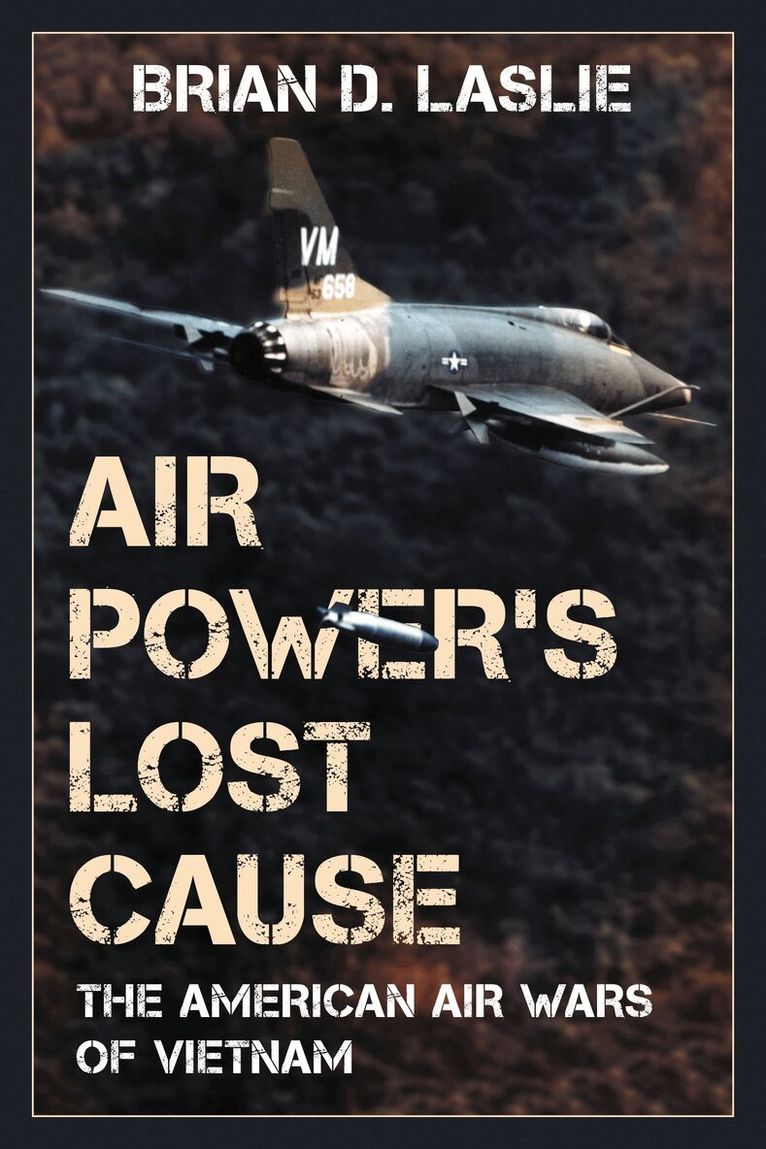
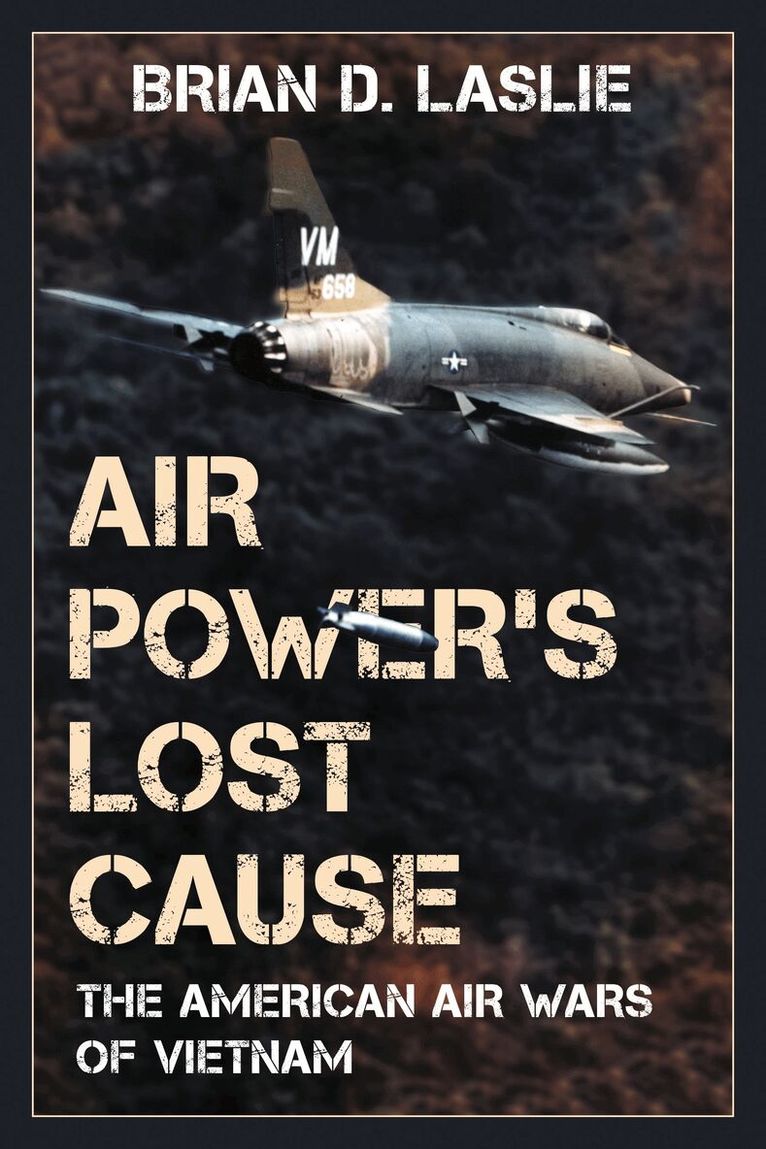
The first comprehensive treatment of the air wars in Vietnam.Filling a substantial void in our understanding of the history of airpower in Vietnam, this book provides the first comprehensive treatment of the air wars in Vietnam. Brian Laslie traces the complete history of these air wars from the beginning of American involvement until final withdrawal. Detailing the competing roles and actions of the air elements of the United States Army, Navy, and Air Force, the author considers the strategic, operational, and tactical levels of war. He also looks at the air war from the perspective of the North Vietnamese Air Force. Most important for understanding the US defeat, Laslie illustrates the perils of a nation building a one-dimensional fighting force capable of supporting only one type of war. ,
Del 45 - Air Campaign
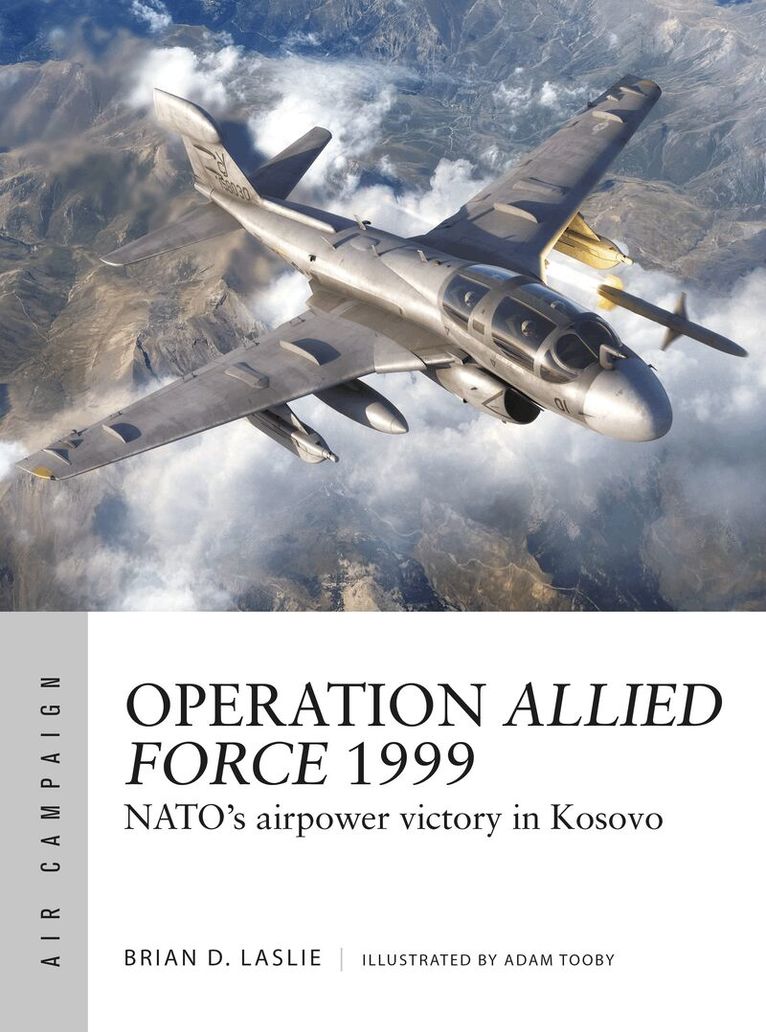
Operation Allied Force 1999
NATO's airpower victory in Kosovo
Häftad, Engelska, 2024
194 kr
Skickas inom 7-10 vardagar
A focused, illustrated history of NATO's war against Serbian forces over Kosovo. [THE CORRECT VERSION OF THIS EBOOK IS NOW AVAILABLE TO DOWNLOAD.]On the night of March 24, 1999, NATO forces began military action to stop Serbia's campaign of repression during the Kosovo War. Initially planned to be a 72-hour operation, it took 78 days of sustained air warfare for Operation Allied Force to cause Slobodan Milosevic to withdraw his forces. Despite such setbacks as the loss of an F-117 stealth fighter and the bombing of the Chinese embassy in Belgrade, Allied Force ended with perhaps the most complete airpower victory of modern times. However, there is a dearth of written histories on NATO’s air war over Kosovo. In this book Dr Brian D. Laslie, one of the leading scholars of modern air power operations, offers a complete history of the campaign, based on a wide range of primary and secondary sources. Although predominantly a USAF effort, the campaign also featured multinational contributions as well as significant naval aviation. Using spectacular original battlescenes, maps and 3D diagrams, Dr Laslie examines the aircraft, weapons and doctrine used, the Serbian air defenses, how the Allied forces planned and launched their air campaign, and how NATO had to rapidly adapt its initial plans to achieve success.
310 kr
Skickas inom 10-15 vardagar
The first comprehensive treatment of the air wars in Vietnam.Filling a substantial void in our understanding of the history of airpower in Vietnam, this book provides the first comprehensive treatment of the air wars in Vietnam. Brian Laslie traces the complete history of these air wars from the beginning of American involvement until final withdrawal. Detailing the competing roles and actions of the air elements of the United States Army, Navy, and Air Force, the author considers the strategic, operational, and tactical levels of war. He also looks at the air war from the perspective of the North Vietnamese Air Force. Most important for understanding the US defeat, Laslie illustrates the perils of a nation building a one-dimensional fighting force capable of supporting only one type of war. ,
Sundowners, Pegasus, and Little Butch
Carrier Air Group 11 and the War in the Pacific, 1943-1945
Inbunden, Engelska, 2025
388 kr
Skickas inom 3-6 vardagar
The Pacific theater is often discussed in terms of its most famous battles: from Coral Sea and Midway to Guadalcanal and Leyte Gulf. The Sundowners, Pegasus, and Little Butch provides a new perspective on the Pacific War by following the exploits of a single Navy unit, Carrier Air Group 11 (CVG-11), beginning in 1943. Author Brian D. Laslie tells the riveting story of how the unit produced several aces, built a storied combat record, and played an important role in the defeat of Japan. Like other Carrier Air Groups, CVG-11 comprised three aircraft squadrons: fighter (VF-11), bomber (VB-11), and torpedo (VT-11). The fighter squadron’s “Sundowners” nickname references both the “downing” of Japan’s Rising Sun and a hard-working sailor. The bomber group’s “Pegasus” nickname is believed to be related to Pegasus, the winged horse of the Muses in Greek mythology. The “Little Butch” nickname was bestowed on the torpedo group after the war when Walt Disney designed their insignia, which consisted of a black torpedo with a skull and crossbones on it and a winged cherub wearing a green helmet nicknamed “Little Butch.” CVG-11 saw its first action on Guadalcanal in 1943. It was then deployed on the aircraft carrier USS Hornet (CV 12) and fought throughout the Central and Southwest Pacific areas, including Luzon, Mindanao, Mindoro, French Indochina, and Okinawa from 1944 to 1945. The air group’s achievements during World War II were laudable, amassing 103 air-to-air victories, destroying 272 grounded planes, and sinking more than 100,000 tons of Japanese shipping. During its time on the Hornet, CVG-11 also produced four aces, with top ace Charlie Stimpson shooting down an impressive sixteen enemy planes. VF-11 took great pride in protecting their shipmates and other squadron members in VB-11 and VT-11 and logged a perfect escort record, losing no bombers or torpedo planes to Japanese aircraft during the entire conflict. Laslie weaves together diaries, interviews, archival research, and official battle reports to present CVG-11’s compelling story. The book offers fascinating insight on how most units contended with the daily challenges of war in the Pacific—both ordinary and extraordinary, from rough weather to kamikaze attacks. The Sundowners, Pegasus, and Little Butch tells an exhilarating tale of men and machines at war that adds to the collective memory of World War II.