Brian Hannan – författare
Visar alla böcker från författaren Brian Hannan. Handla med fri frakt och snabb leverans.
6 produkter
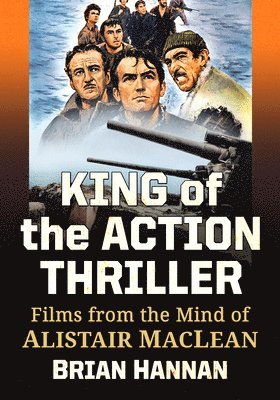
King of the Action Thriller
Films from the Mind of Alistair MacLean
Av Brian Hannan
Häftad, 2026
463 kr
Lägg i varukorg
The Scottish novelist Alistair MacLean didn't speak English until he was six, but he went on to become one of the world's best-selling authors (over 150 million copies sold) and Hollywood's highest-paid. His films are the very portrait of action. Where Eagles Dare , The Guns of Navarone , Puppet on …
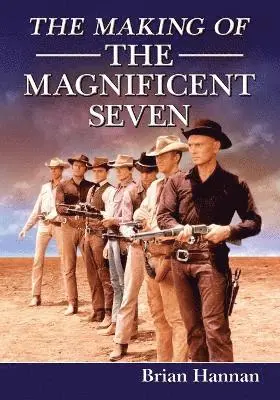
Making of The Magnificent Seven
Behind the Scenes of the Pivotal Western
Av Brian Hannan
Häftad, 2015
384 kr
Lägg i varukorg
The story behind The Magnificent Seven could have been a movie in itself. It had everything--actors' strike, writers' strike, Mexican government interference and a row between the screenwriters that left one removing his name from the credits, all under the lingering gloom of post-McCarthy era …
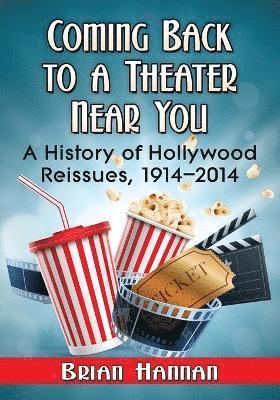
Coming Back to a Theater Near You
A History of Hollywood Reissues, 1914-2014
Av Brian Hannan
Häftad, 2016
625 kr
Lägg i varukorg
In the Silent Era, film reissues were a battle between rival studios--every Mary Pickford new release in 1914 was met with a Pickford re-release. For 50 years after the Silent Era, reissues were a battle between the studios, who considered old movies "found money," and cinema owners, who often saw …
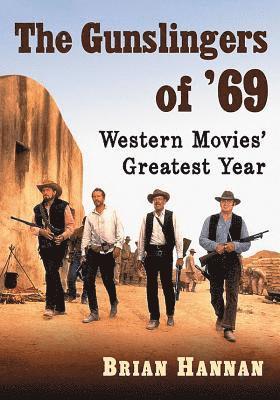
Gunslingers of '69
Western Movies' Greatest Year
Av Brian Hannan
Häftad, 2019
517 kr
Lägg i varukorg
In 1969--the counter-cultural moment when Easy Rider triggered a "youthquake" in audience interests--Westerns proved more dominant than ever at the box office and at the Oscars.It was a year of masterpieces--The Wild Bunch, Butch Cassidy and the Sundance Kid, Once Upon a Time in the West and True …
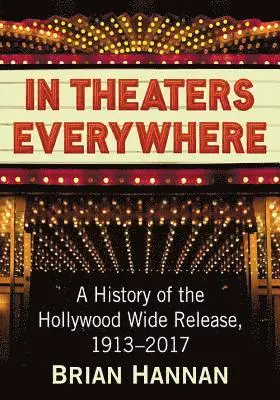
In Theaters Everywhere
A History of the Hollywood Wide Release, 1913-2017
Av Brian Hannan
Häftad, 2019
686 kr
Lägg i varukorg
Conflicts among Hollywood studios and exhibitors have been going on for years. At their heart are questions about how films should be released--where, when and at what speed. Both sides of this disagreement are losers, with exhibitors using the law via various Consent Decrees and studios …
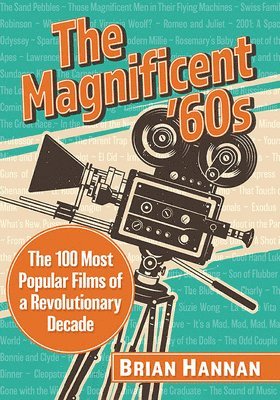
Magnificent '60s
The 100 Most Popular Films of a Revolutionary Decade
Av Brian Hannan
Häftad, 2022
506 kr
Lägg i varukorg
Hollywood in the 1960s walked a tightrope between boom and bust. Yet the decade spawned many of the greatest films ever made, saw the advent of the spy thriller, the revival of science fiction and horror, and represented the Golden Era of the 70mm roadshow. Blockbusters like Lawrence of Arabia and …