Brian Ireland - Böcker
Visar alla böcker från författaren Brian Ireland. Handla med fri frakt och snabb leverans.
6 produkter
6 produkter
207 kr
Skickas inom 5-8 vardagar
344 kr
Skickas
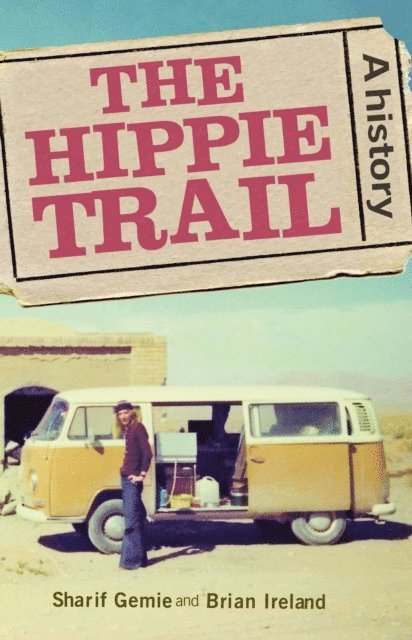
This is the first history of the Hippie Trail. It records the joys and pains of budget travel to Kathmandu, India, Afghanistan and other ‘points east’ in the 1960s and 1970s. Written in a clear, simple style, it provides detailed analysis of the motivations and the experiences of hundreds of thousands of hippies who travelled eastwards. The book is structured around four key debates: were the travellers simply motivated by a search for drugs? Did they encounter love or sexual freedom on the road? Were they basically just tourists? Did they resemble pilgrims? It also considers how the travellers have been represented in films, novels and autobiographical accounts, and will appeal to those interested in the Trail or the 1960s counterculture, as well as students taking courses relating to the 1960s.
214 kr
Skickas
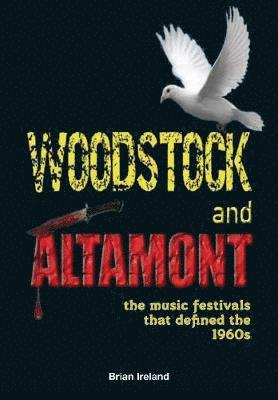
Published to tie in with the 50th anniversary of these festivals, Brian Ireland revisits the events, taking stock of their historical importance, and to note their influence not just on popular culture and society, but as part of a new musical culture that developed in the late 1960s and which saw young, similarly-minded people engage about multiple rights issues such as military draft, free speech, civil rights, gender equality, drug use, spirituality, capitalism - even revolution. It explores the festivals' organisation, promotion, and unfolding, as well as their immediate and enduring impact. The book is also about the 1960s, particularly the political, social, and cultural changes that provided the context for these festivals. A catalyst for these changes was the `baby boom' that provided the `foot soldiers' for both the Vietnam War and the counterculture that opposed it. It also provided the audiences for music festivals such as the annually recurring Newport Folk Festival, and for one-off events like 1967's Monterey and of course 1969's Woodstock, and Altamont.The activism of this young generation, the `New Left', looked to American values of freedom and democracy, but found them undermined by rampant consumerism, political assassinations, and by the horrors of the Vietnam War. All of this is explored behind the backdrop of the music festivals to form a broad social agenda for change that, by the time of Woodstock, transformed how Americans viewed themselves and their society. The Altamont Speedway Free Festival occurred just a few months later. Meant to be a `Woodstock West' it is nevertheless remembered as the antithesis of Woodstock, mainly because of the violence that unfolded and especially the tragic death of Meredith Hunter - killed by Hells Angels who were employed to provide security at the festival. Country Joe McDonald, a notable performer at Woodstock, sums up the popular memory of both festivals: "Woodstock and Altamont seem like bookends to the great social experiment of the late sixties.' The former seems proof that hippie idealism about peace and love was possible; Altamont, however, seems to reflect the dark side of the hippie dream - the flip side of the coin which has Charles Manson's face upon it.
183 kr
Skickas
Time marches on: by 2022 it will have been fifty years since the release of the Rolling Stones' Exile on Main St. and the epic, infamous American tour the band undertook to promote that album. 2022 also marks the 60th anniversary year of the formation of the band. The Rolling Stones In America is published in time to mark both of these anniversaries.Why were the Stones so successful in the States when so many other English bands failed to make their mark? Why was the band so drawn towards American blues music? What was their relationship with the burgeoning American counter-culture? What really happened at Altamont, and why? It could be argued that a marker for the end of the Sixties era might be the Stones' infamous 1972 American tour. So much had changed in the three years since their last American tour that the 1972 tour might deserve deeper attention than it had previously been given; perhaps it might even be as significant as other events that cultural historians traditionally identify to mark the end of the long 1960s - such as Richard Nixon's re-election for a second Presidential term in November 1971, the Watergate scandal and impeachment of 1973 that ended Nixon's presidency, or the American military withdrawal from Vietnam in 1973, with the war ending in defeat in 1975. This hugely detailed tome addresses those questions, making this a unique addition to the Rolling Stones' bibliography.
324 kr
Skickas inom 3-6 vardagar
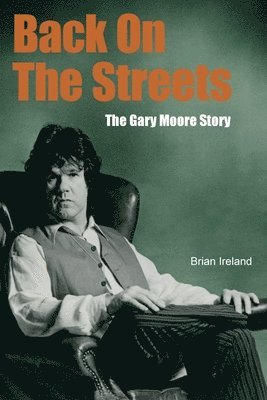
Over a decade after his untimely death, Gary Moore remains something of an enigma. A private, sometimes troubled man, he nevertheless chose a profession that exposed him to public scrutiny. He coped with that contradiction by channelling his energies into his songwriting and guitar playing, expressing himself almost entirely through his music.This biography focuses on Moore's public life. It traces his five decade long musical journey from his early amateur gigs in Belfast, joining his first professional band in Dublin and meeting Phil Lynott, touring with Thin Lizzy and helping the band record one of their most accomplished albums, 1979’s Black Rose: A Rock Legend, experimenting with jazz-rock fusion in Colosseum II, and then pursuing a solo career which saw him transform from heavy rock ‘guitar hero’ to modern-day blues legend. This book explores Moore’s musical heritage. It provides analysis of his creative process and provides context for his album releases and live tours. It discusses album and single releases, as well as live performances. There are chapters on his collaborations with Skid Row, Colosseum II, and Thin Lizzy, and on his solo career. A chapter on Moore’s blues albums addresses charges of imitation and appropriation by contextualising that music within the history of the genre. Rather than being an imitator, Moore was actually a trailblazer, becoming the first hard rock and heavy metal guitarist to successfully bridge the gap between those genres and the blues.Written in accessible fashion and based mainly on primary source magazine and newspaper articles, Back On The Streets: The Gary Moore Story is a highly detailed and thoroughly researched tribute to the man who gave us ‘Parisienne Walkways‘, ‘Róisín Dubh (Black Rose): A Rock Legend’, and ‘Still Got the Blues (For You)’, and who was perhaps the greatest guitarist of his era.
220 kr
Skickas
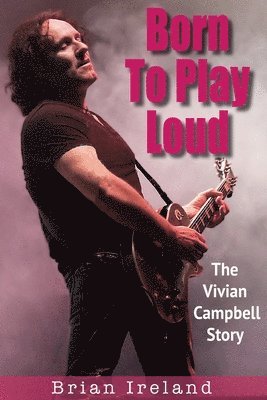
Born to Play Loud is the first biography of Irish guitarist Vivian Campbell. Campbell's full career is chronicled, from his early influences (Marc Bolan, Rory Gallagher and Gary Moore), his first semi-professional band, Sweet Savage, through to his first real musical break and success with Dio. Followed by a tumultuous breakup with Ronnie James Dio, Campbell toured with Whitesnake on the strength of their multi-platinum selling 1987 album. In 1992 Campbell started what has become his decades-long relationship with Def Leppard. Campbell's work with Lou Gramm in the band Shadow King, and his time spent with Riverdogs is also explored, all of which helps to shed light on Campbell's evolution from heavy rock 'guitar hero' to a more nuanced player who would rather serve the song with his playing than bring down the house with a 20-minute guitar solo. Campbell also created Last In Line, basically a rebirth of the Dio band minus it's frontman. In summing up, when Campbell received the Oh Yeah Legend Award in 2017, he said 'I am not used to getting awards. I am not a celebrity, the only people who know me are the hard rock fans and guitar junkies.' The 2017 award marked some belated recognition for Campbell in his hometown. This book is an attempt to build on that acknowledgement and to introduce Campbell to a wider, modern audience.