Brian J. Arnold – författare
665 kr
Skickas inom 5-8 vardagar
95 kr
Skickas
1 739 kr
Skickas inom 5-8 vardagar
1 759 kr
Läs direkt efter köp
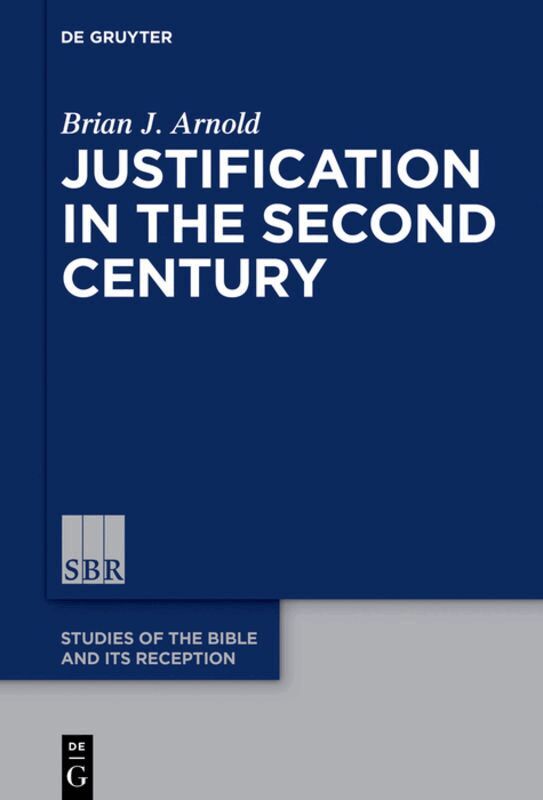
This book seeks to answer the following question: how did the doctrine of justification fare one hundred years after Paul’s death (c. AD 165)? This book argues that Paul’s view of justification by faith is present in the second century, a thesis that particularly challenges T. F. Torrance’s long-held notion that the Apostolic Fathers abandoned this doctrine (The Doctrine of Grace in the Apostolic Fathers, 1948). In the wake of Torrance’s work there has been a general consensus that the early fathers advocated works righteousness in opposition to Paul’s belief that an individual is justified before God by faith alone, but second-century writings do not support this claim. Each author examined—Clement of Rome, Ignatius of Antioch, Epistle to Diognetus, Odes of Solomon, and Justin Martyr—contends that faith is the only necessary prerequisite for justification, even if they do indicate the importance of virtuous living.
This is the first major study on the doctrine of justification in the second century, thus filling a large lacuna in scholarship. With the copious amounts of research being conducted on justification, it is alarming that no work has been done on how the first interpreters of Paul received one of his trademark doctrines. It is assumed, wrongly, that the fathers were either uninterested in the doctrine or that they misunderstood the Apostle. Neither of these is the case. This book is timely in that it enters the fray of the justification debate from a neglected vantage point.
1 759 kr
Läs direkt efter köp
This book seeks to answer the following question: how did the doctrine of justification fare one hundred years after Paul’s death (c. AD 165)? This book argues that Paul’s view of justification by faith is present in the second century, a thesis that particularly challenges T. F. Torrance’s long-held notion that the Apostolic Fathers abandoned this doctrine (The Doctrine of Grace in the Apostolic Fathers, 1948). In the wake of Torrance’s work there has been a general consensus that the early fathers advocated works righteousness in opposition to Paul’s belief that an individual is justified before God by faith alone, but second-century writings do not support this claim. Each author examined—Clement of Rome, Ignatius of Antioch, Epistle to Diognetus, Odes of Solomon, and Justin Martyr—contends that faith is the only necessary prerequisite for justification, even if they do indicate the importance of virtuous living.
This is the first major study on the doctrine of justification in the second century, thus filling a large lacuna in scholarship. With the copious amounts of research being conducted on justification, it is alarming that no work has been done on how the first interpreters of Paul received one of his trademark doctrines. It is assumed, wrongly, that the fathers were either uninterested in the doctrine or that they misunderstood the Apostle. Neither of these is the case. This book is timely in that it enters the fray of the justification debate from a neglected vantage point.
2 620 kr
Skickas inom 3-6 vardagar
1 176 kr
Skickas inom 5-8 vardagar
1 995 kr
Skickas inom 5-8 vardagar
2 290 kr
Skickas inom 5-8 vardagar
1 948 kr
Läs direkt efter köp
Comparative Income Taxation
A Structural Analysis
Fifth Edition
Edited by Hugh J. Ault, Brian J. Arnold & Graeme S. Cooper
In complex national income tax systems, structural and design variations from one country to another present major obstacles to the kind of comparative understanding that economic globalization requires—hence, the great significance of this outstanding book, highly acclaimed through four previous editions and now thoroughly updated to encompass the latest changes and trends. In it, leading authorities from 11 of the world’s most important national taxation systems—Australia, Canada, China, France, Germany, India, Japan, The Netherlands, Sweden, the United Kingdom and the United States—each contribute their particular expertise to a study of major structural issues of income tax design.
Individually authored country descriptions outline the climate and institutional framework in which each of the 11 national taxation systems’ substantive tax rules operate. All the country descriptions are analyzed in accordance with a common format to facilitate comparisons of the ways in which the countries’ tax systems are similar and in which they differ. They form the background to an expertly informed comparative analysis focusing on three major areas: basic income taxation, taxation of business organizations and international taxation. Most of the rules especially important for international business and investment are dealt with here, including (among many others) rules on the following:
classification of business entities;
taxation of corporations and their shareholders;
corporate organization and restructuring;
taxation of partnerships;
residence and source taxation;
controlled foreign company rules;
restrictions on the deduction of interest;
courts dealing with tax matters; and
effects of tax treaties.
In addition to the updating of the entire book, several new topics—including the treatment of hybrid mismatch arrangements, Pillar One, the 15% Pillar Two Global Minimum Tax, and digital services taxes—have been added.
This new edition of a classic source of information and analysis for students, professors, researchers, tax practitioners and tax policy officials on the different ways that countries design their income tax systems will be widely welcomed by the international tax community.
1 948 kr
Läs direkt efter köp
Comparative Income Taxation
A Structural Analysis
Fifth Edition
Edited by Hugh J. Ault, Brian J. Arnold & Graeme S. Cooper
In complex national income tax systems, structural and design variations from one country to another present major obstacles to the kind of comparative understanding that economic globalization requires—hence, the great significance of this outstanding book, highly acclaimed through four previous editions and now thoroughly updated to encompass the latest changes and trends. In it, leading authorities from 11 of the world’s most important national taxation systems—Australia, Canada, China, France, Germany, India, Japan, The Netherlands, Sweden, the United Kingdom and the United States—each contribute their particular expertise to a study of major structural issues of income tax design.
Individually authored country descriptions outline the climate and institutional framework in which each of the 11 national taxation systems’ substantive tax rules operate. All the country descriptions are analyzed in accordance with a common format to facilitate comparisons of the ways in which the countries’ tax systems are similar and in which they differ. They form the background to an expertly informed comparative analysis focusing on three major areas: basic income taxation, taxation of business organizations and international taxation. Most of the rules especially important for international business and investment are dealt with here, including (among many others) rules on the following:
classification of business entities;
taxation of corporations and their shareholders;
corporate organization and restructuring;
taxation of partnerships;
residence and source taxation;
controlled foreign company rules;
restrictions on the deduction of interest;
courts dealing with tax matters; and
effects of tax treaties.
In addition to the updating of the entire book, several new topics—including the treatment of hybrid mismatch arrangements, Pillar One, the 15% Pillar Two Global Minimum Tax, and digital services taxes—have been added.
This new edition of a classic source of information and analysis for students, professors, researchers, tax practitioners and tax policy officials on the different ways that countries design their income tax systems will be widely welcomed by the international tax community.
1 340 kr
Skickas inom 5-8 vardagar
1 135 kr
Läs direkt efter köp
Tax practitioners, multinational companies and national tax authorities have relied on this indispensable resource since its first edition over two decades ago. The Primer provides the reader with an introductory analysis of the major issues that a country must confront in designing its international tax rules and coordinating those rules with the tax systems of its trading partners, with numerous examples drawn from the practices of both developed and developing countries. This fifth edition follows the format and sequence of earlier editions, with updates on ongoing developments with respect to the Organisation for Economic Co-operation and Development’s (OECD) base erosion and profit shifting project, the revisions to the OECD Guidelines on Transfer Pricing, and updates to the OECD and UN Model Conventions.
Several new sections have been added to the fifth edition. Unquestionably, the most important development in international tax since the publication of the fourth edition in 2018 has been the OECD Inclusive Framework’s Pillar One and Pillar Two proposals for dealing with the tax challenges posed by the digital economy. This edition explores in detail both Pillar One, which proposes new nexus and profit-allocation rules for the residual profits of the largest and most profitable digital multinationals, and Pillar Two, which proposes a global minimum tax on large multinationals. Also new to the fifth edition are sections dealing with digital services taxes, hybrid arrangements, and new Article 12B of the UN Model Convention dealing with automated digital services, as well as a brief history of international tax.
The book strikes a balance between the specific and the general by illustrating the fundamental principles and structure of international tax with frequent reference to actual practice in a variety of countries. Coverage includes the following:
taxation of residents on foreign income and nonresidents on domestic income;
mechanisms used to mitigate the risks to taxpayers of international double taxation;
transfer pricing rules to prevent the avoidance of tax by multinational corporations;
anti-avoidance measures dealing with tax havens, treaty shopping, and other offensive tax planning activities;
overview and analysis of the provisions of bilateral tax treaties and the OECD and UN Model Treaties on which they are generally based; and
challenges posed by taxation of income derived from the digital economy.
An extensive glossary of international tax terms is included.
With examples of typical international tax planning techniques and descriptions of the work of the major international organizations that play an important role with respect to international tax, the Primer remains the preeminent first recourse for professionals in the field. Although of greatest value to students, tax practitioners and government officials confronting international tax for the first time, this book is sure to continue in use by tax professionals at every level of experience and on a worldwide basis.
1 135 kr
Läs direkt efter köp
Tax practitioners, multinational companies and national tax authorities have relied on this indispensable resource since its first edition over two decades ago. The Primer provides the reader with an introductory analysis of the major issues that a country must confront in designing its international tax rules and coordinating those rules with the tax systems of its trading partners, with numerous examples drawn from the practices of both developed and developing countries. This fifth edition follows the format and sequence of earlier editions, with updates on ongoing developments with respect to the Organisation for Economic Co-operation and Development’s (OECD) base erosion and profit shifting project, the revisions to the OECD Guidelines on Transfer Pricing, and updates to the OECD and UN Model Conventions.
Several new sections have been added to the fifth edition. Unquestionably, the most important development in international tax since the publication of the fourth edition in 2018 has been the OECD Inclusive Framework’s Pillar One and Pillar Two proposals for dealing with the tax challenges posed by the digital economy. This edition explores in detail both Pillar One, which proposes new nexus and profit-allocation rules for the residual profits of the largest and most profitable digital multinationals, and Pillar Two, which proposes a global minimum tax on large multinationals. Also new to the fifth edition are sections dealing with digital services taxes, hybrid arrangements, and new Article 12B of the UN Model Convention dealing with automated digital services, as well as a brief history of international tax.
The book strikes a balance between the specific and the general by illustrating the fundamental principles and structure of international tax with frequent reference to actual practice in a variety of countries. Coverage includes the following:
taxation of residents on foreign income and nonresidents on domestic income;
mechanisms used to mitigate the risks to taxpayers of international double taxation;
transfer pricing rules to prevent the avoidance of tax by multinational corporations;
anti-avoidance measures dealing with tax havens, treaty shopping, and other offensive tax planning activities;
overview and analysis of the provisions of bilateral tax treaties and the OECD and UN Model Treaties on which they are generally based; and
challenges posed by taxation of income derived from the digital economy.
An extensive glossary of international tax terms is included.
With examples of typical international tax planning techniques and descriptions of the work of the major international organizations that play an important role with respect to international tax, the Primer remains the preeminent first recourse for professionals in the field. Although of greatest value to students, tax practitioners and government officials confronting international tax for the first time, this book is sure to continue in use by tax professionals at every level of experience and on a worldwide basis.