Brian McAllister Linn - Böcker
Visar alla böcker från författaren Brian McAllister Linn. Handla med fri frakt och snabb leverans.
7 produkter
7 produkter
295 kr
Skickas inom 10-15 vardagar
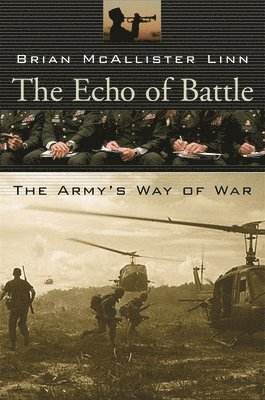
From Lexington and Gettysburg to Normandy and Iraq, the wars of the United States have defined the nation. But after the guns fall silent, the army searches the lessons of past conflicts in order to prepare for the next clash of arms. In the echo of battle, the army develops the strategies, weapons, doctrine, and commanders that it hopes will guarantee a future victory.In the face of radically new ways of waging war, Brian Linn surveys the past assumptions--and errors--that underlie the army's many visions of warfare up to the present day. He explores the army's forgotten heritage of deterrence, its long experience with counter-guerrilla operations, and its successive efforts to transform itself. Distinguishing three martial traditions--each with its own concept of warfare, its own strategic views, and its own excuses for failure--he locates the visionaries who prepared the army for its battlefield triumphs and the reactionaries whose mistakes contributed to its defeats.Discussing commanders as diverse as Dwight D. Eisenhower, George S. Patton, and Colin Powell, and technologies from coastal artillery to the Abrams tank, he shows how leadership and weaponry have continually altered the army's approach to conflict. And he demonstrates the army's habit of preparing for wars that seldom occur, while ignoring those it must actually fight. Based on exhaustive research and interviews, The Echo of Battle provides an unprecedented reinterpretation of how the U.S. Army has waged war in the past and how it is meeting the new challenges of tomorrow.
406 kr
Skickas inom 10-15 vardagar
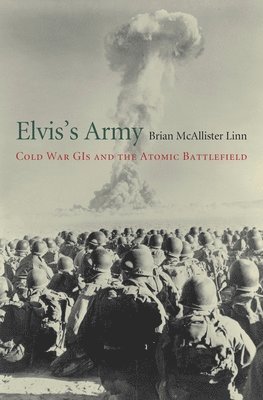
When the U.S. Army drafted Elvis Presley in 1958, it quickly set about transforming the King of Rock and Roll from a rebellious teen idol into a clean-cut GI. Trading in his gold-trimmed jacket for standard-issue fatigues, Elvis became a model soldier in an army facing the unprecedented challenge of building a fighting force for the Atomic Age.In an era that threatened Soviet-American thermonuclear annihilation, the army declared it could limit atomic warfare to the battlefield. It not only adopted a radically new way of fighting but also revamped its equipment, organization, concepts, and training practices. From massive garrisons in Germany and Korea to nuclear tests to portable atomic weapons, the army reinvented itself. Its revolution in warfare required an equal revolution in personnel: the new army needed young officers and soldiers who were highly motivated, well trained, and technologically adept. Drafting Elvis demonstrated that even this icon of youth culture was not too cool to wear the army’s uniform.The army of the 1950s was America’s most racially and economically egalitarian institution, providing millions with education, technical skills, athletics, and other opportunities. With the cooperation of both the army and the media, military service became a common theme in television, music, and movies, and part of this generation’s identity. Brian Linn traces the origins, evolution, and ultimate failure of the army’s attempt to transform itself for atomic warfare, revealing not only the army’s vital role in creating Cold War America but also the experiences of its forgotten soldiers.
565 kr
Skickas inom 10-15 vardagar
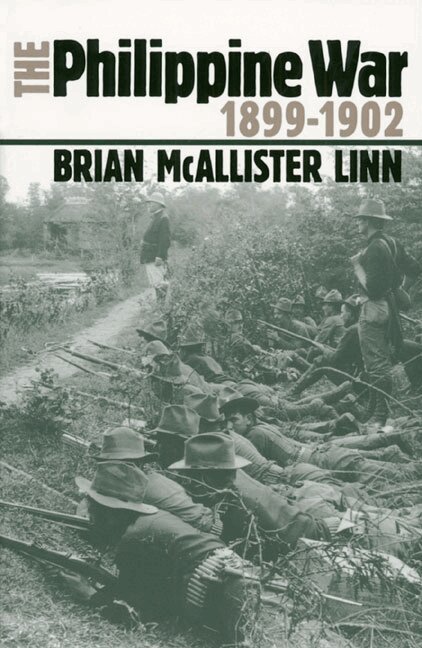
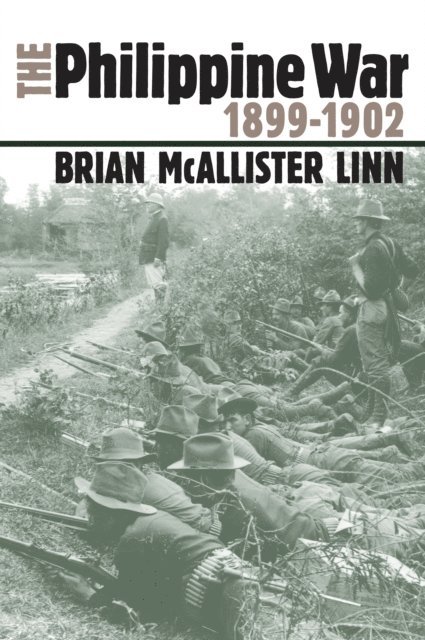
A study of the often misunderstood Philippine War, which took place between 1899 and 1902. From the pitched battles of the early war to the final campaigns against guerrillas, it traces the entire course of the war, one of the most controversial events in American history. The text is grounded in original documents, including the letters and diaries of soldiers from both sides.
603 kr
Skickas inom 7-10 vardagar
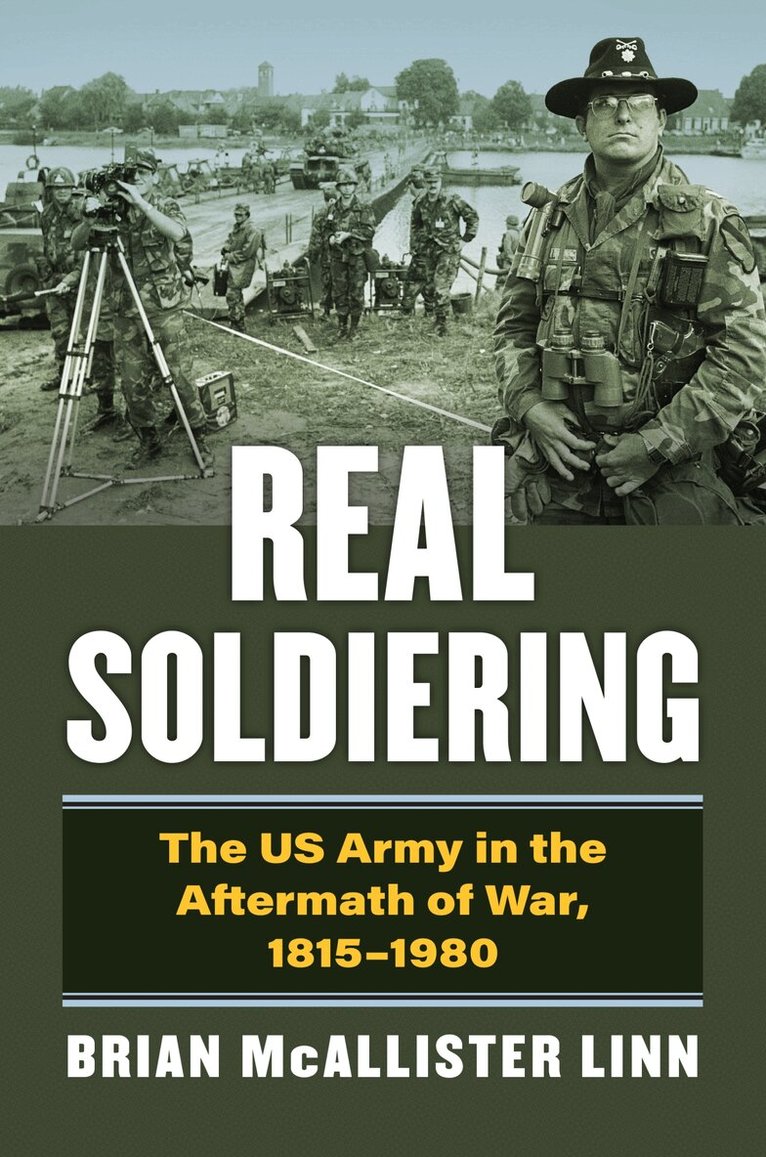
What happens to the US Army after the battles are over, the citizen soldiers depart, and all that remains is the Regular Army? In this pathbreaking work, Brian Linn argues that in each decade following every major conflict since the War of 1812 the postwar army has undergone a long, painful, and remarkably consistent recovery process as it struggled to build a new model force to replace the “Old Army” that entered the conflict. Departing from the Washington-centric institutional histories of the past, Linn sets his focus on soldiering in the field, distilling the lived experiences of officers and troopers who were responsible for cleaning up the messes left in the wake of war. Real Soldiering provides the first comprehensive study of the US Army’s transition from war to peace. It is both a wide-ranging history of the army’s postwar experience and a work detailing the commonalities of American soldiering over almost two centuries. Linn challenges three common historical interpretations: confusing Washington policy with implementation in the field; conflating postwar armies with prewar armies; and describing certain postwar eras as distinct and transformational. Rather, Linn examines the postwar force as a distinct entity worthy of study as a unique and important part of US Army history. He identifies the common dilemmas faced by the service in the aftermath of every war. These problems included such military priorities as defense legislation, preparing for the next war, and adapting to new missions. But they also incorporated often overlooked—but for those who lived through them more important—consistencies such as officer acquisition and career management, personnel turbulence, insufficient personnel and equipment, and many others.Real Soldiering represents over four decades of research into the US Army and is deeply informed by Linn’s experiences teaching and working with soldiers. It breaks new ground in lifting out the similarities of each postwar army while still appreciating their individual complexities. It identifies the leaders and the methods the service employed to escape the inevitable postwar drawdowns. Insightful and entertaining, provocative and empathetic, and a work of history with immediate relevance, Real Soldiering will resonate with military historians, defense analysts, and those who have proudly worn the US Army uniform.
461 kr
Skickas inom 10-15 vardagar
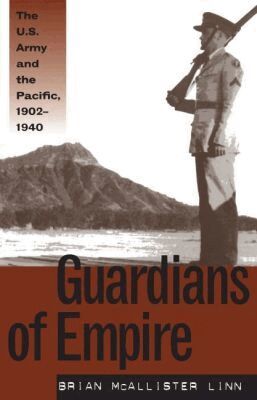
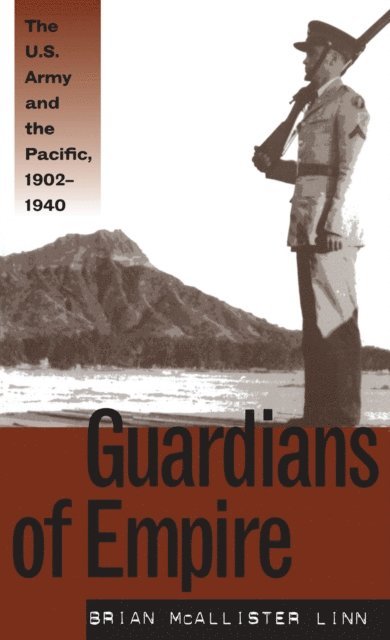
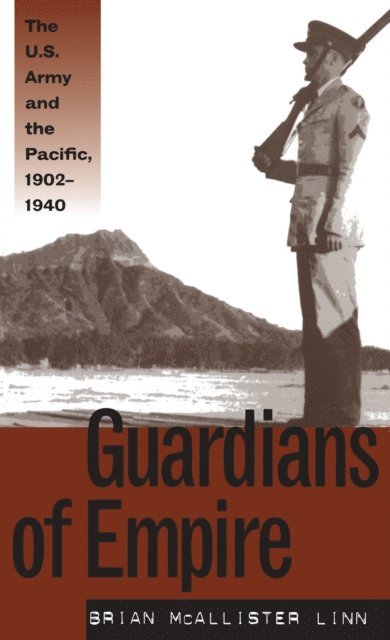
In a comprehensive study of four decades of military policy, Brian McAllister Linn offers a detailed history of the US Army in Hawaii and the Philippines between 1902 and 1940. Most accounts focus on the months preceding the Japanese attack on Pearl Harbour. By examining the years prior to the outbreak of war, Linn provides a perspective on the complex evolution of events in the Pacific. ""Guardians of Empire"" traces the development of US defence policy in the region, concentrating on strategy, tactics, internal security, relations with local communities and military technology. Linn challenges earlier studies which argue that army officers either ignored or denigrated the Japanese threat and remained unprepared for war. He demonstrates instead that from 1907 onward military commanders in both Washington and the Pacific were vividly aware of the danger, that they developed a series of plans to avert it, and that they in fact identified - even if they could not solve - many of the problems that would become tragically apparent on 7 December 1941.
584 kr
Skickas inom 10-15 vardagar
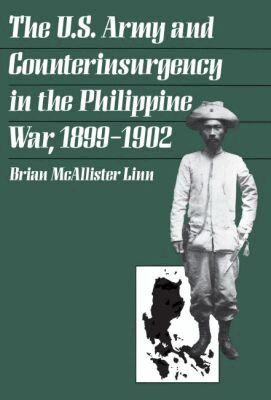
After defeating the Philippine Republic's conventional forces in 1899, the U.S. Army was broken up into small garrisons to prepare Luzon for colonial rule. The Filipino nationalists transformed their resistance into a guerrilla warfare that varied so greatly from region to region in its organization, strategy, and tactics that early American attempts at centralization and nonmilitary pacification were useless. The study offers new insights for counterinsurgency theory and for the study of America's military experience in Asia.
1 362 kr
Skickas inom 7-10 vardagar
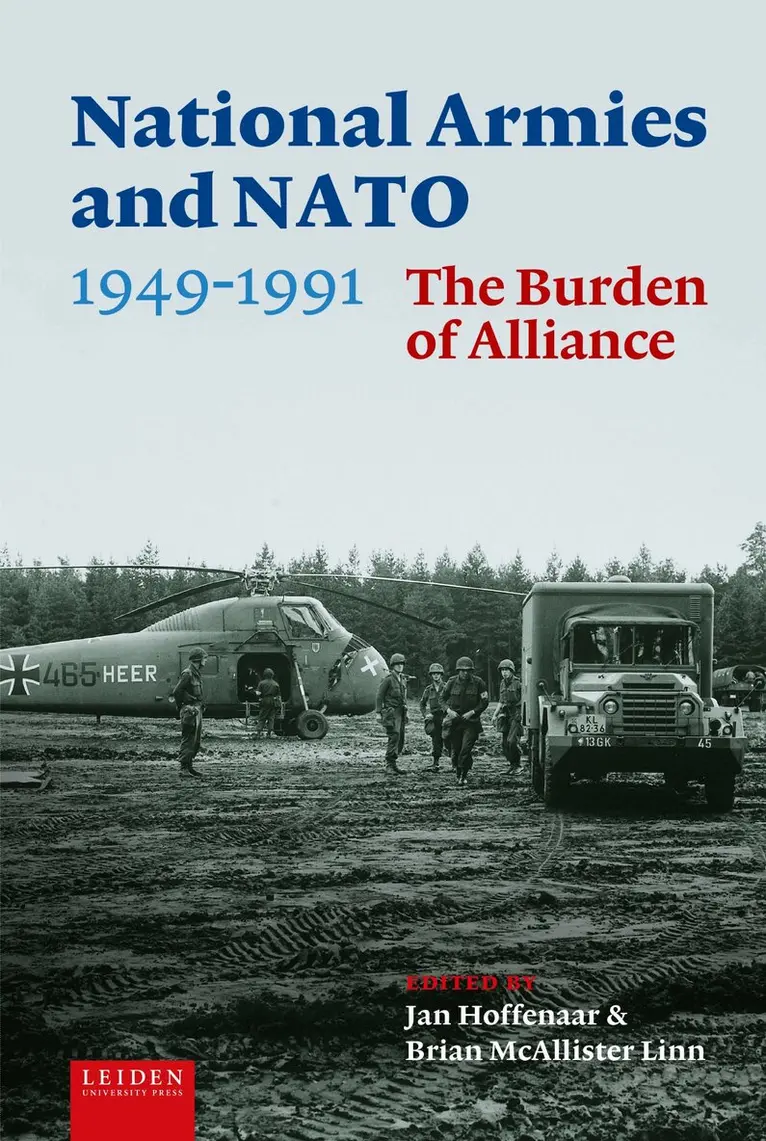
For almost half a century, NATO's armies deterred a Soviet attack on Western Europe. Today, they once again provide a check on Russia's revanchist agenda. As in the Cold War, if Russia's aggression escalates to armed conflict, the Alliance's armies will likely bear the brunt of the fighting. Thus, a study of the national armies that comprised NATO during the Cold War has both historical and current relevance. Each chapter offers an analysis of how the respective constituent NATO army balanced its commitments to the alliance with other, often more pressing national priorities. Both individually and collectively, these chapters address questions that are still important today. How did national armies benefit from membership in NATO, and how did NATO membership impede their national obligations? How did NATO membership effect its constituent armies' strategy, force structure, doctrine, and procurement? How did national armies reconcile disagreements with other national forces, some of which long predated NATO membership? By providing a comparative study of NATO's armies, this volume provides both a long-needed historical assessment and essential understanding of the problems facing the alliance and its members today.