Brian Steel Wills - Böcker
Visar alla böcker från författaren Brian Steel Wills. Handla med fri frakt och snabb leverans.
8 produkter
8 produkter
300 kr
Skickas inom 7-10 vardagar
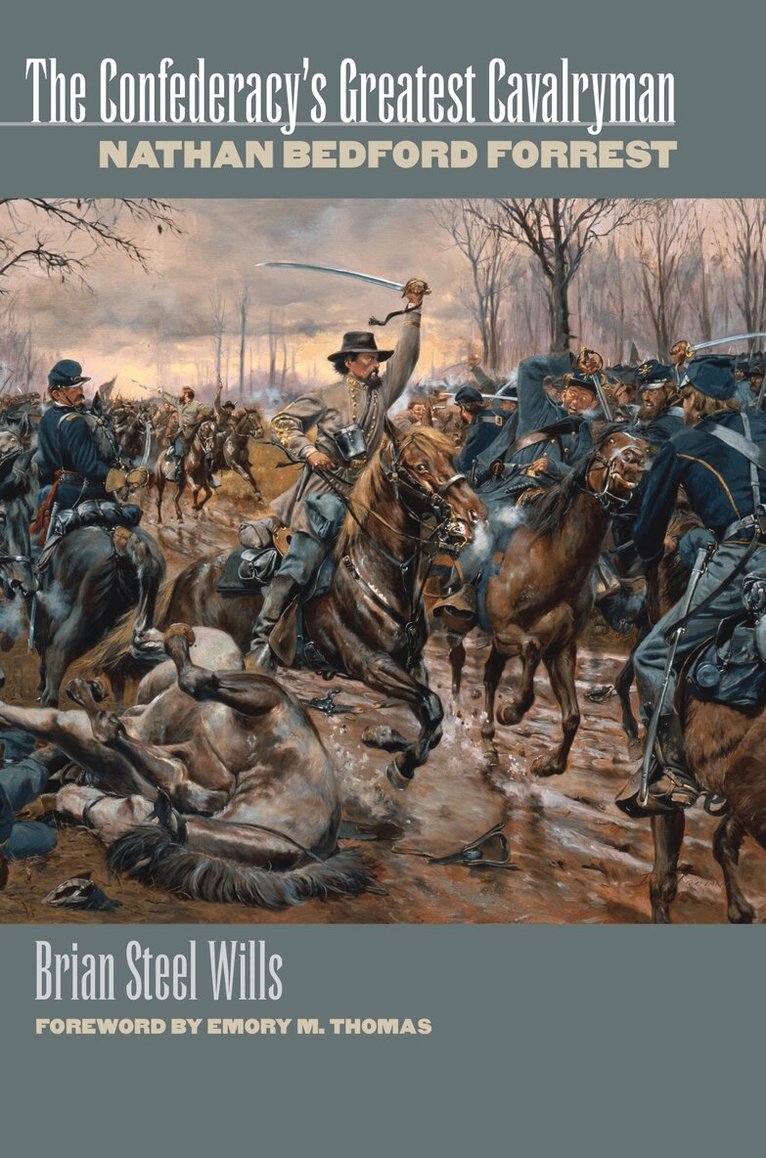
Nathan Bedford Forrest was a renowned cavalryman who fought during the American Civil War. This book presents an analysis of his life, from childhood in Mississippi, to wealth from the slave trade, his role as founder and Grand Wizard of the first Ku Klux Klan, and his death.
730 kr
Skickas inom 3-6 vardagar
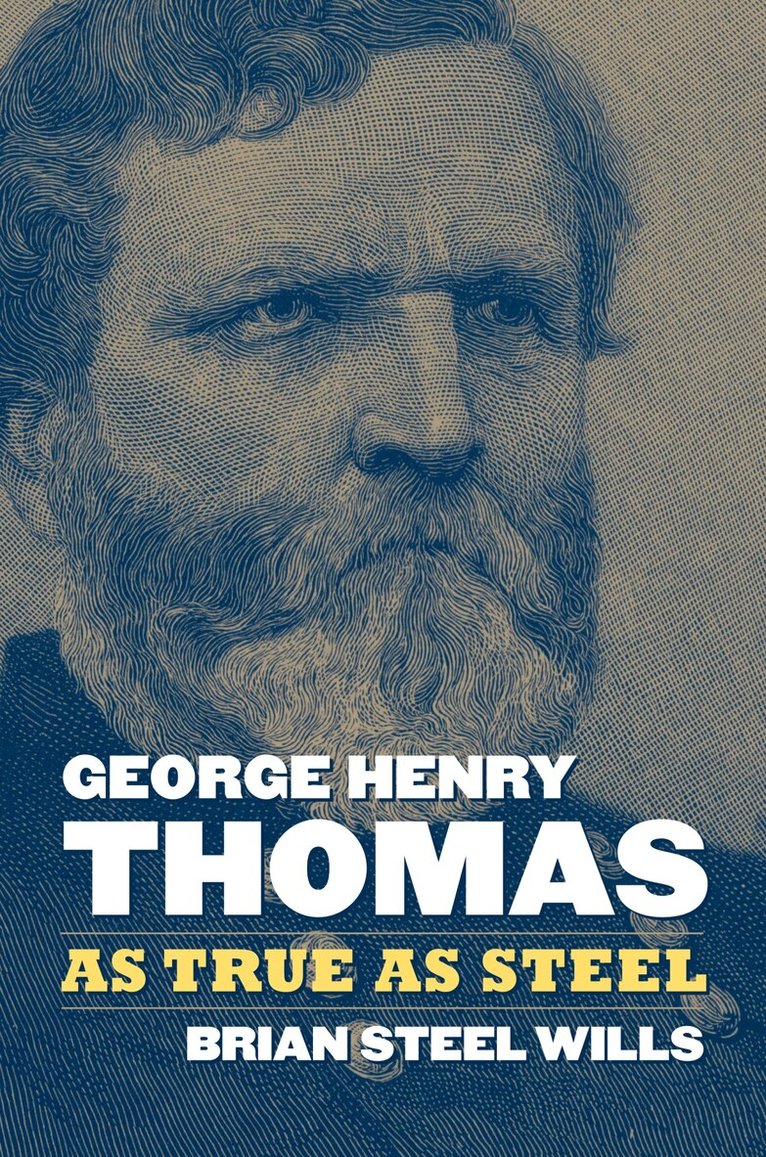
Richard B. Harwell AwardAlthough often counted among the Union's top five generals, George Henry Thomas has still not received his due. A Virginian who sided with the North in the Civil War, he was a more complicated commander than traditional views have allowed. Brian Wills now provides a new and more complete look at the life of a man known to history as "The Rock of Chickamauga," to his troops as "Old Pap," and to General William T. Sherman as a soldier who was "as true as steel."While biographers have long been hampered by Thomas's lack of personal papers, Wills has drawn on previously untapped sources-notably the correspondence of Thomas's contemporaries-to offer new insights into what made him tick. Focusing on Thomas's personality and motivations, Wills contributes revealing discussions of his style and approach to command and successfully captures his troubled interactions with other Union commanders, providing a particularly more evenhanded evaluation of his relationship with Grant. He also gives a more substantial account of battlefield action than can be found in other biographies, capturing the ebb and flow of key encounters—Chickamauga and Missionary Ridge, Chattanooga and Atlanta, Stones River and Mill Springs, Peachtree Creek and Nashville—to help readers better understand Thomas's contributions to their outcomes.Throughout Wills presents a well-rounded individual whose complex views embraced the worlds of professional military service and scientific inquisitiveness, a man known for attention to detail and compassion to subordinates. We also meet a sharp-tempered person whose disdain for politics hurt his prospects for advancement as much as it reflected positively on his character, and Wills offers new insight into why Thomas might not have progressed as quickly up the ladder of command as he might have liked.More deeply researched than other biographies, Wills's work situates Thomas squarely in his own time to provide readers with a more thorough and balanced life story of this enigmatic Union general. It is a definitive military history that gives us a new and needed picture of the Rock of Chickamauga—a man whose devotion to duty and ideals made him as true as steel.
365 kr
Skickas inom 10-15 vardagar
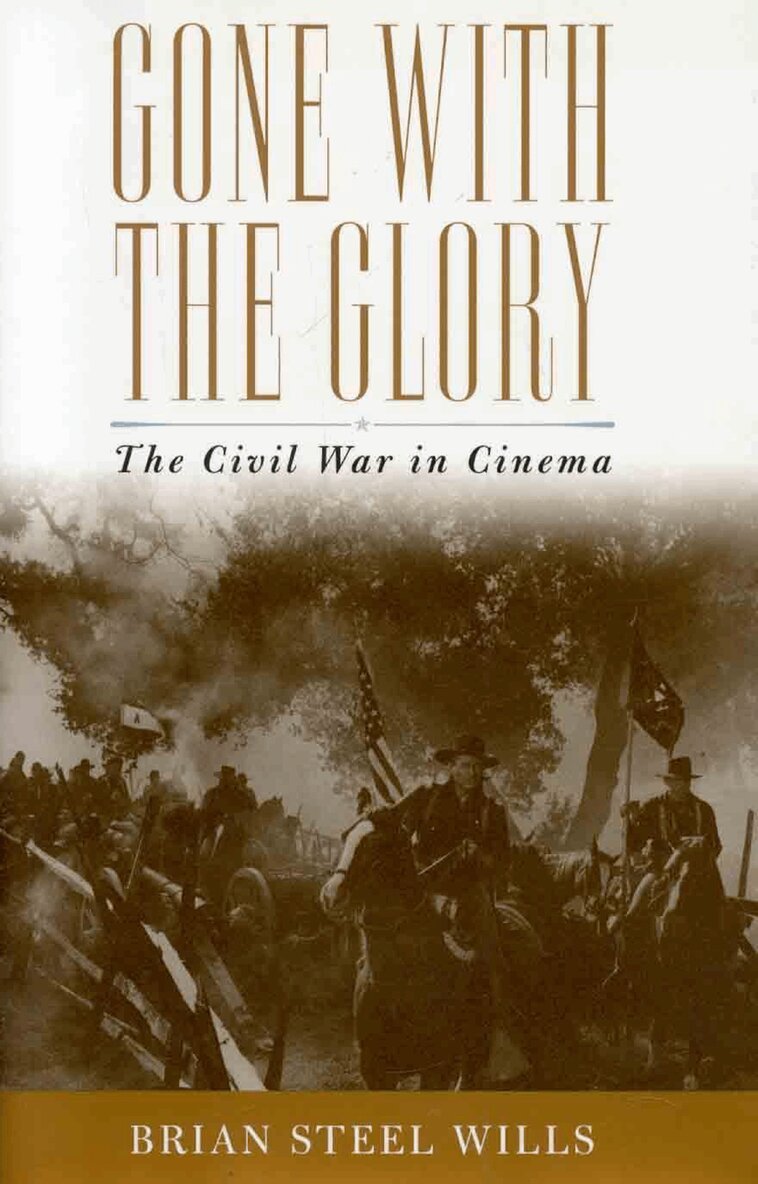
From Birth of a Nation to Cold Mountain, hundreds of directors, actors, and screenwriters have used the Civil War to create compelling cinema. However, each generation of moviemakers has resolved the tug of war between entertainment value and historical accuracy differently. Historian Brian Steel Wills takes readers on a journey through the portrayal of the war in film, exploring what Hollywood got right and wrong, how the films influenced each other, and, ultimately, how the movies reflect America's changing understandings of the conflict and of the nation.
285 kr
Skickas inom 5-8 vardagar
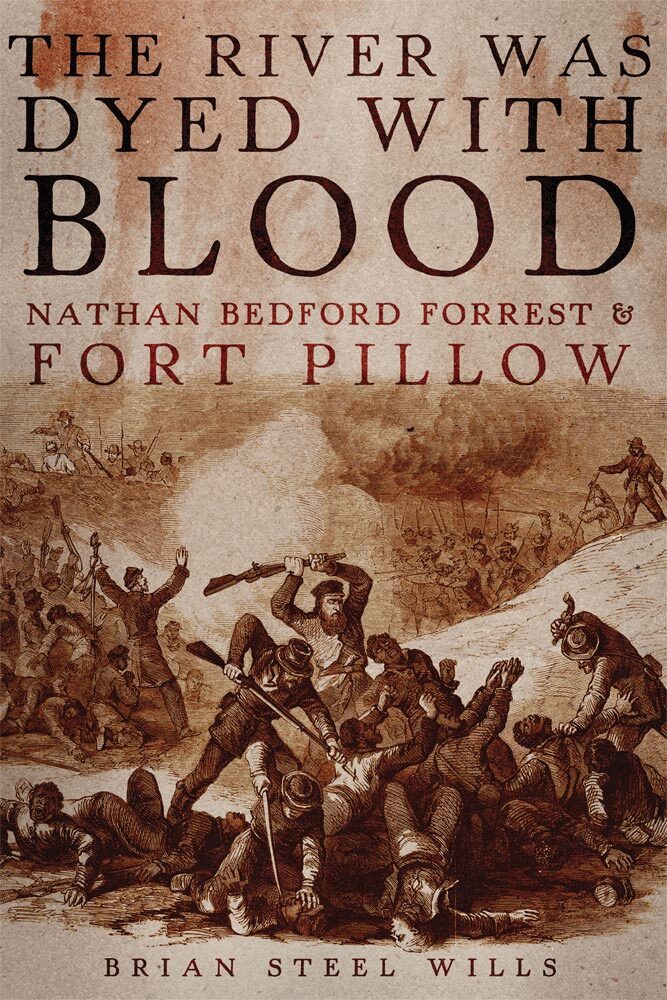
The battlefield reputation of Confederate general Nathan Bedford Forrest, long recognized as a formidable warrior, has been shaped by one infamous wartime incident. At Fort Pillow in 1864, the attack by Confederate forces under Forrest's command left many of the Tennessee Unionists and black soldiers garrisoned there dead in a confrontation widely labeled as a ""massacre."" In The River Was Dyed with Blood, best-selling Forrest biographer Brian Steel Wills argues that although atrocities did occur after the fall of the fort, Forrest did not order or intend a systematic execution of its defenders. Rather, the general's great failing was losing control of his troops.A prewar slave trader and owner, Forrest was a controversial figure throughout his lifetime. Because the attack on Fort Pillow - which, as Forrest wrote, left the nearby waters ""dyed with blood"" - occurred in an election year, Republicans used him as a convenient Confederate scapegoat to marshal support for the war. After the war he also became closely associated with the spread of the Ku Klux Klan. Consequently, the man himself, and the truth about Fort Pillow, has remained buried beneath myths, legends, popular depictions, and disputes about the events themselves.Wills sets what took place at Fort Pillow in the context of other wartime excesses from the American Revolution to World War II and Vietnam, as well as the cultural transformations brought on by the Civil War. Confederates viewed black Union soldiers as the embodiment of slave rebellion and reacted accordingly. Nevertheless, Wills concludes that the engagement was neither a massacre carried out deliberately by Forrest, as charged by a congressional committee, nor solely a northern fabrication meant to discredit him and the Confederate States of America, as pro-Southern apologists have suggested. The battle-scarred fighter with his homespun aphorisms was neither an infallible warrior nor a heartless butcher, but a product of his time and his heritage.
214 kr
Skickas inom 5-8 vardagar
The battlefield reputation of Confederate general Nathan Bedford Forrest, long recognized as a formidable warrior, has been shaped by one infamous wartime incident. At Fort Pillow in 1864, the attack by Confederate forces under Forrest's command left many of the Tennessee Unionists and black soldiers garrisoned there dead in a confrontation widely labeled as a 'massacre.' In The River Was Dyed with Blood, best-selling Forrest biographer Brian Steel Wills argues that although atrocities did occur after the fall of the fort, Forrest did not order or intend a systematic execution of its defenders. Rather, the general's great failing was losing control of his troops.A prewar slave trader and owner, Forrest was a controversial figure throughout his lifetime. Because the attack on Fort Pillow - which, as Forrest wrote, left the nearby waters 'dyed with blood' - occurred in an election year, Republicans used him as a convenient Confederate scapegoat to marshal support for the war. After the war he also became closely associated with the spread of the Ku Klux Klan. Consequently, the man himself, and the truth about Fort Pillow, has remained buried beneath myths, legends, popular depictions, and disputes about the events themselves.Wills sets what took place at Fort Pillow in the context of other wartime excesses from the American Revolution to World War II and Vietnam, as well as the cultural transformations brought on by the Civil War. Confederates viewed black Union soldiers as the embodiment of slave rebellion and reacted accordingly. Nevertheless, Wills concludes that the engagement was neither a massacre carried out deliberately by Forrest, as charged by a congressional committee, nor solely a northern fabrication meant to discredit him and the Confederate States of America, as pro-Southern apologists have suggested. The battle-scarred fighter with his homespun aphorisms was neither an infallible warrior nor a heartless butcher, but a product of his time and his heritage.
432 kr
Skickas inom 3-6 vardagar
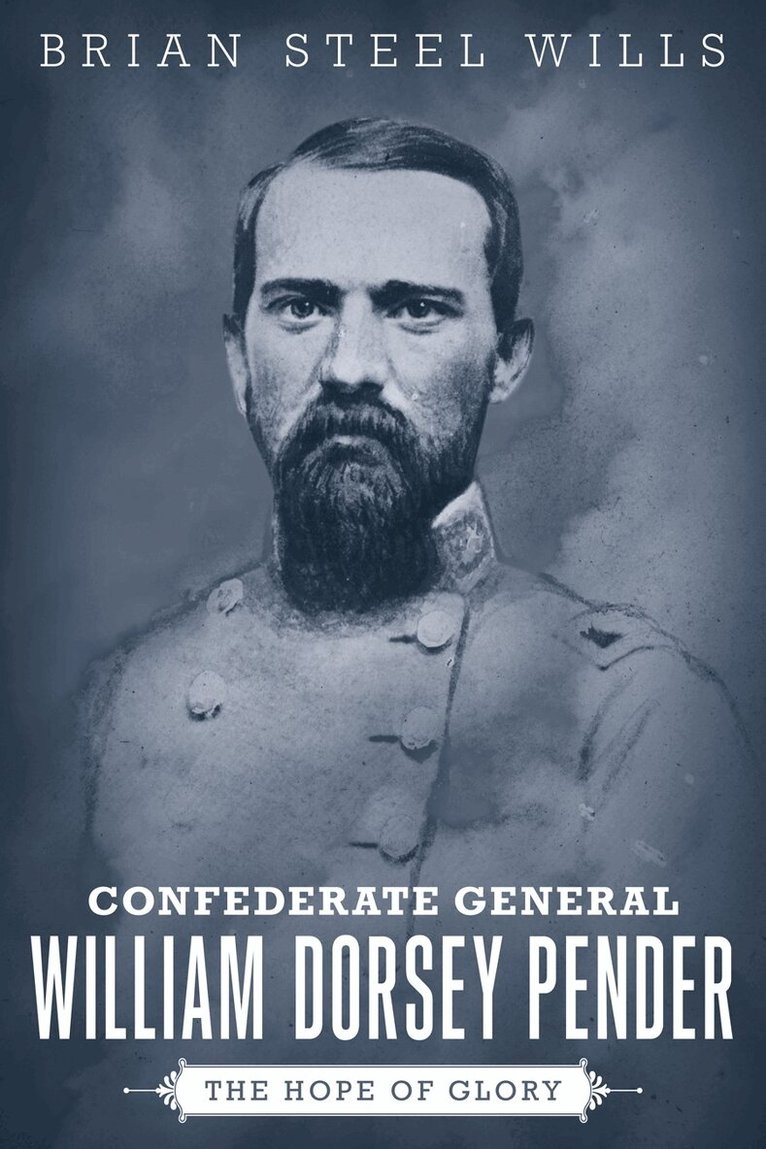
During the Civil War, North Carolinian William Dorsey Pender established himself as one of the Confederate Army of Northern Virginia's best young generals. He served in most of the significant engagements of the war in the eastern theater while under the command of Joseph E. Johnston at Seven Pines and Robert E. Lee from the Seven Days to Gettysburg. His most crucial contributions to Confederate success came at the battles of Second Manassas, Shepherdstown, Fredericksburg, and Chancellorsville. After an effective first day at Gettysburg, Pender was struck by a shell and disabled, necessitating his return to Virginia for what he hoped would be only an extended convalescence. Although Pender initially survived the wound, he died soon thereafter due to complications from his injury.In this thorough biography of Pender, noted Civil War historian Brian Steel Wills examines both the young general's military career and his domestic life. While Pender devoted himself to military service, he also embraced the Episcopal Church and was baptized before his command in the field. According to Wills, Pender had an insatiable quest for "glory" in both earthly and heavenly realms, and he delighted in his role as a husband and father. In Pender's voluminous correspondence with his wife, Fanny, he shared his beliefs and offered views and opinions on a vast array of subjects. In the end, Wills suggests that Pender's story captures both the idealistic promise and the despair of a war that cost the lives of many Americans and changed the nation forever.
172 kr
Skickas inom 10-15 vardagar
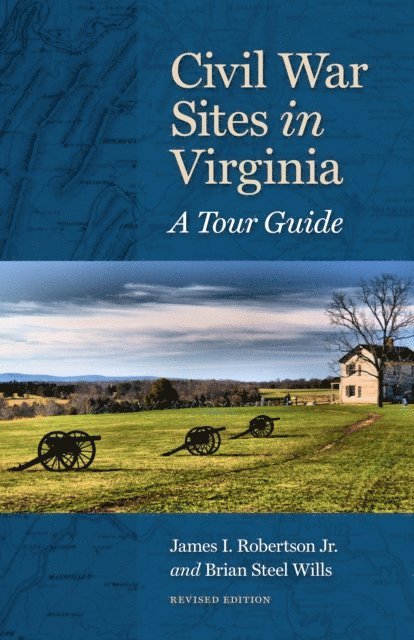
Since 1982, the renowned Civil War historian James I. ""Bud"" Robertson’s Civil War Sites in Virginia: A Tour Guide has enlightened and informed Civil War enthusiasts and scholars alike. The book expertly explores the commonwealth’s Civil War sites for those hoping to gain greater insight and understanding of the conflict. But in the years since the book’s original publication, accessibility to many sites and the interpretive material available have improved dramatically. In addition, new historical markers have been erected, and new historically significant sites have been developed, while other sites have been lost to modern development or other encroachments. The historian Brian Steel Wills offers here a revised and updated edition that retains the core of the original guide, with its rich and insightful prose, but that takes these major changes into account, introducing especially the benefits of expanded interpretation and of improved accessibility. The guide incorporates new information on the lives of a broad spectrum of soldiers and citizens while revisiting scenes associated with the era’s most famous personalities. New maps and a list of specialized tour suggestions assist in planning visits to sites, while three dozen illustrations, from nineteenth-century drawings to modern photographs, bring the war and its impact on the Old Dominion vividly to life. With the sesquicentennial remembrances of the American Civil War heightening interest and spurring improvements, there may be no better time to learn about and visit these important and moving sites than now.
432 kr
Skickas inom 10-15 vardagar
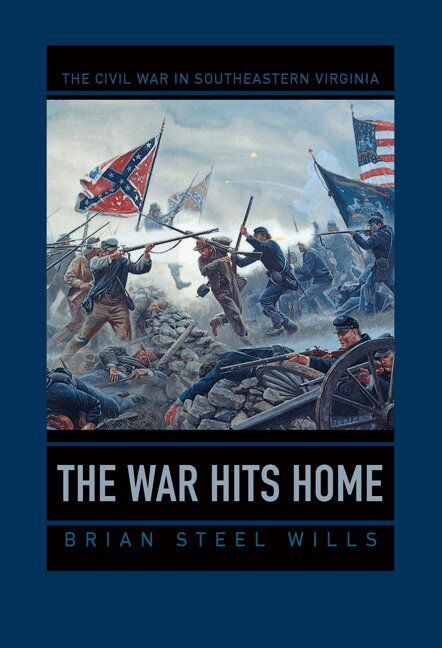
In 1863 Confederate forces under Lieutenant General James Longstreet, while scouring Southside Virginia for badly needed supplies, threatened the Union garrison in Suffolk. For the residents of surrounding Nansemond, Isle of Wight, and Southampton Counties, the Suffolk campaign followed an exhausting and deadly pattern. Already subjected to the demands of waves of soldiers, first Southern recruits and then Union occupation troops, the people of the region faced the severest tests the Civil War could impose upon human beings.In The War Hits Home, Brian Steel Wills tells the story of these real people in the crucible of war. Reconstructing life for soldiers from the region on the battlefield and for civilians in the homes of southeastern Virginia, Wills provides a full depiction of what life was like for the ordinary person-black, white, soldier, citizen, Unionist, or secessionist-contending with domestic, economic, social, and military hardship in the contest of sectionalism and war. Wills employs their individual experiences to illustrate the impact of the war on a human scale, on soldiers and their relatives, North and South. We witness battlefield horror and family despair, African Americans' embrace of freedom, and the persistence of Confederate nationalism among most whites in the region.Taken as a whole, The War Hits Home is a sweeping but extraordinarily detailed canvas of a fractured American South.