James I. Robertson Jr. – författare
777 kr
Läs direkt efter köp
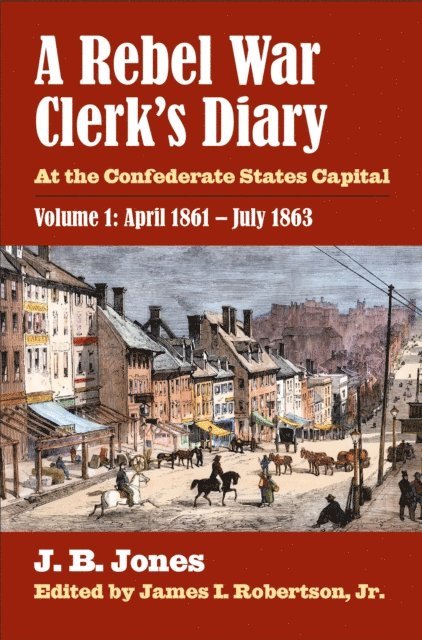
Amidst the vast literature of the Civil War, one of the most significant and enlightening documents remains largely unknown. A day-by-day, uninterrupted, four-year chronicle by a mature, keenly observant clerk in the War Department of the Confederacy, the wartime diary of John Beauchamp Jones was first published in two volumes of small type in 1866. Over the years, the diary was republished three more times—but never with an index or an editorial apparatus to guide a reader through the extraordinary mass of information it contained. Published here with an authoritative editorial framework, including an extensive introduction and endnotes, this unique record of the Civil War takes its rightful place as one of the best basic reference tools in Civil War history, absolutely critical to study the Confederacy.
A Maryland journalist/novelist who went south at the outbreak of the war, Jones took a job as a senior clerk in the Confederate War Department, where he remained to the end, a constant observer of men and events in Richmond, the heart of the Confederacy and the principal target of Union military might. As a high-level clerk at the center of military planning, Jones had an extraordinary perspective on the Southern nation in action—and nothing escaped his attention. Confidential files, command-level conversations, official correspondence, revelations, rumors, statistics, weather reports, and personal opinions: all manner of material, found nowhere else in Civil War literature, made its meticulous way into the diary. Jones quotes scores of dispatches and reports by both military and civilian authorities, including letters from Robert E. Lee never printed elsewhere, providing an invaluable record of documents that would later find their way into print only in edited form. His notes on such ephemera as weather and prices create a backdrop for the military movements and political maneuverings he describes, all with the judicious eye of a seasoned writer and observer of southern life.
James I. Robertson Jr., provides introductions to each volume, over 2,700 endnotes that identify, clarify, and expand on Jones’s material, and a first ever index which makes Jones’s unique insights and observations accessible to interested readers, who will find in the pages of A Rebel War Clerk’s Diary one of the most complete and richly textured accounts of the Civil War ever to be composed at the very heart of the Confederacy.
877 kr
Läs direkt efter köp
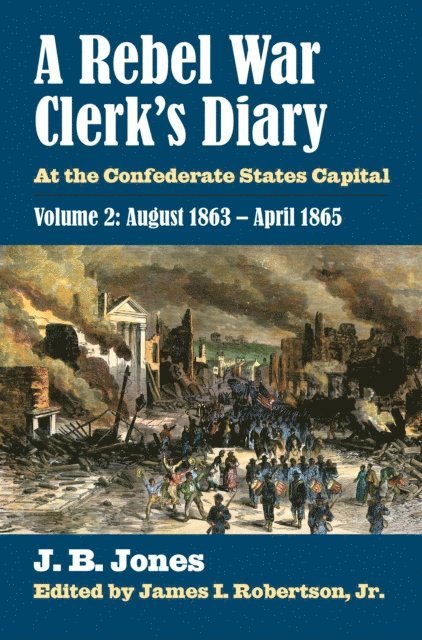
Amidst the vast literature of the Civil War, one of the most significant and enlightening documents remains largely unknown. A day-by-day, uninterrupted, four-year chronicle by a mature, keenly observant clerk in the War Department of the Confederacy, the wartime diary of John Beauchamp Jones was first published in two volumes of small type in 1866. Over the years, the diary was republished three more times—but never with an index or an editorial apparatus to guide a reader through the extraordinary mass of information it contained. Published here with an authoritative editorial framework, including an extensive introduction and endnotes, this unique record of the Civil War takes its rightful place as one of the best basic reference tools in Civil War history, absolutely critical to study the Confederacy.
A Maryland journalist/novelist who went south at the outbreak of the war, Jones took a job as a senior clerk in the Confederate War Department, where he remained to the end, a constant observer of men and events in Richmond, the heart of the Confederacy and the principal target of Union military might. As a high-level clerk at the center of military planning, Jones had an extraordinary perspective on the Southern nation in action—and nothing escaped his attention. Confidential files, command-level conversations, official correspondence, revelations, rumors, statistics, weather reports, and personal opinions: all manner of material, found nowhere else in Civil War literature, made its meticulous way into the diary. Jones quotes scores of dispatches and reports by both military and civilian authorities, including letters from Robert E. Lee never printed elsewhere, providing an invaluable record of documents that would later find their way into print only in edited form. His notes on such ephemera as weather and prices create a backdrop for the military movements and political maneuverings he describes, all with the judicious eye of a seasoned writer and observer of southern life.
James I. Robertson Jr., provides introductions to each volume, over 2,700 endnotes that identify, clarify, and expand on Jones’s material, and a first ever index which makes Jones’s unique insights and observations accessible to interested readers, who will find in the pages of A Rebel War Clerk’s Diary one of the most complete and richly textured accounts of the Civil War ever to be composed at the very heart of the Confederacy.
287 kr
Skickas inom 10-15 vardagar
465 kr
Läs direkt efter köp
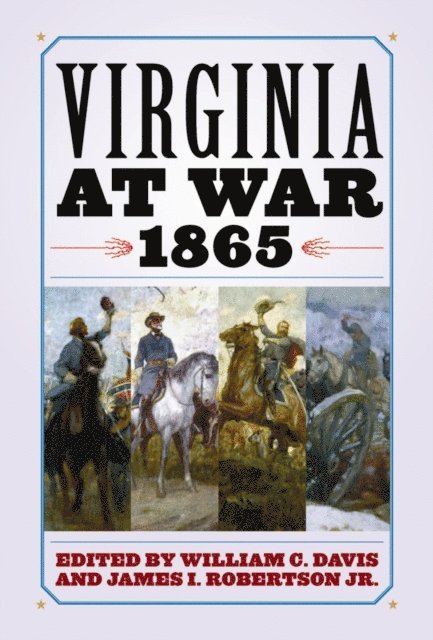
By January 1865, most of Virginia''s schools were closed, many newspapers had ceased publication, businesses suffered, and food was scarce. Having endured major defeats on their home soil and the loss of much of the state''s territory to the Union army, Virginia''s Confederate soldiers began to desert at higher rates than at any other time in the war, returning home to provide their families with whatever assistance they could muster. It was a dark year for Virginia.
Virginia at War, 1865 closely examines the end of the Civil War in the Old Dominion, delivering a striking depiction of a state ravaged by violence and destruction. In the final volume of the Virginia at War series, editors William C. Davis and James I. Robertson Jr. have once again assembled an impressive collection of essays covering topics that include land operations, women and families, wartime economy, music and entertainment, the demobilization of Lee''s army, and the war''s aftermath. The volume ends with the final installment of Judith Brockenbrough McGuire''s popular and important Diary of a Southern Refugee during the War. Like the previous four volumes in the series, Virginia at War, 1865 provides valuable insights into the devastating effects of the war on citizens across the state.
398 kr
Läs direkt efter köp
958 kr
Läs direkt efter köp
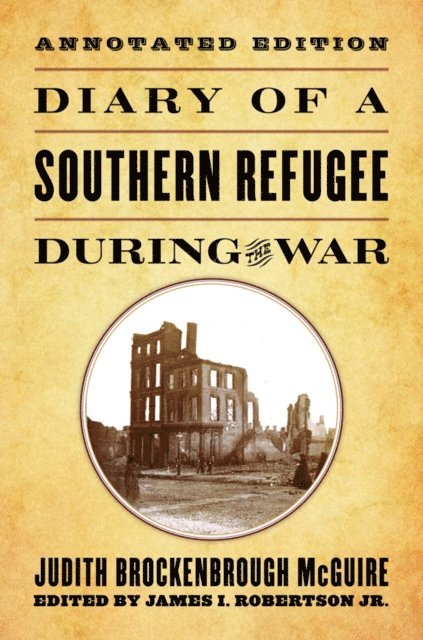
Judith Brockenbrough McGuire''s Diary of a Southern Refugee during the War is among the first of such works published after the Civil War. Although it is one of the most-quoted memoirs by a Confederate woman, James I. Robertson''s edition is the first to present vital details not given in the original text. His meticulous annotations furnish references for poems and quotations, supply the names of individuals whom McGuire identifies by their initials alone, and provide an in-depth account of McGuire''s extraordinary life.
Throughout the war years, McGuire made poignant entries in her diary. She wrote incisive commentaries on society, ruminated on past glories, and detailed her hardships. Her entries are a highly personal, highly revealing mixture of family activities; military reports and rumors; conditions behind the battle lines; and her observations on life, faith, and the future. In providing illuminating background and references that significantly enhance the text, Robertson''s edition adds considerably to our understanding of this important work.
465 kr
Läs direkt efter köp
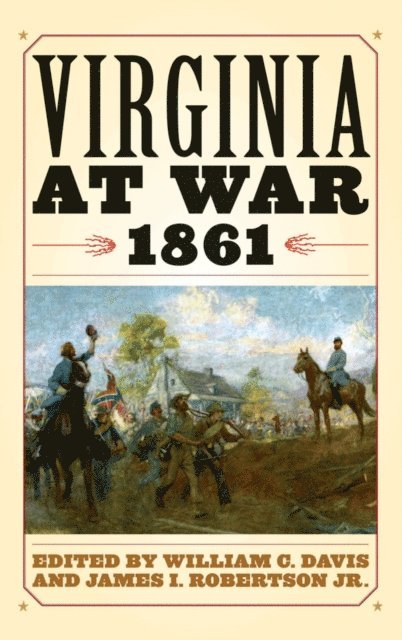
Although nine of the former British colonies joined the United States before Virginia, the fate of the new republic depended heavily on the Commonwealth. With four of the first five American presidents, and many other founding fathers and framers of the Constitution, calling Virginia their home, the roots of American democracy are firmly planted within the borders of the Old Dominion. Similarly, several Southern states preceded Virginia in seceding from the Union, but until Virginia joined them in April 1861, the Confederacy lacked cohesion. Richmond was immediately named the capital of the fledgling nation, and by the end of spring, Virginia had become the primary political and military theater in which the grand tragedy of the Civil War was enacted. Virginia at War, 1861, edited by acclaimed historians William C. Davis and James I. Robertson Jr., vividly portrays the process of secession, the early phases of conflict, and the struggles of Virginians to weather the brutal storms of war. Virginia at War, 1861 is the first in a series of volumes on each of Virginia''s five years as a Confederate state. Essays by eight noted Civil War scholars provide a three-dimensional view of Virginians'' experiences during the first year of the War Between the States. In addition to recounting the remarkable military events taking place in Virginia in 1861, this collection examines a civilian population braced for war but divided on crucial questions, an economy pressed to cope with the demands of combat, and a culture that strained to reconcile its proud heritage with its uncertain future. In 1861, the outcome of the Civil War was far from determined, but for Virginians there was little doubt that the war experience would alter nearly everything they had known before the outbreak of hostilities. In exacting detail, Virginia at War, 1861 examines the earliest challenges of the Civil War, the changes war wrought, and the ways in which Virginians withstood and adapted to this profound, irrevocable upheaval.
465 kr
Läs direkt efter köp
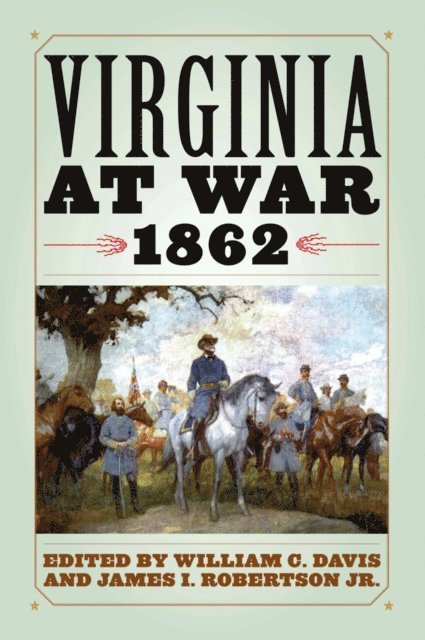
As the Civil War entered its first full calendar year for the Old Dominion, Virginians began to experience the full ramifications of the conflict. Their expectations for the coming year did not prepare them for what was about to happen; in 1862 the war became earnest and real, and the state became then and thereafter the major battleground of the war in the East. Virginia emerged from the year 1861 in much the same state of uncertainty and confusion as the rest of the Confederacy. While the North was known to be rebuilding its army, no one could be sure if the northern people and government were willing to continue the war. The landscape and the people of Virginia were a part of the battlefield. Virginia at War, 1862 demonstrates how no aspect of life in the Commonwealth escaped the war''s impact. The collection of essays examines topics as diverse as daily civilian life and the effects of military occupation, the massive influx of tens of thousands of wounded and sick into Richmond, and the wartime expansion of Virginia''s industrial base, the largest in the Confederacy. Out on the field, Robert E. Lee''s army was devastated by the Battle of Antietam, and Lee strove to rebuild the army with recruits from the interior of the state. Many Virginians, however, were far behind the front lines. A growing illustrated press brought the war into the homes of civilians and allowed them to see what was happening in their state and in the larger war beyond their borders. To round out this volume, indefatigable Richmond diarist Judith McGuire continues her day-by-day reflections on life during wartime. The second in a five-volume series examining each year of the war, Virginia at War, 1862 illuminates the happenings on both homefront and battlefield in the state that served as the crucible of America''s greatest internal conflict.
465 kr
Läs direkt efter köp
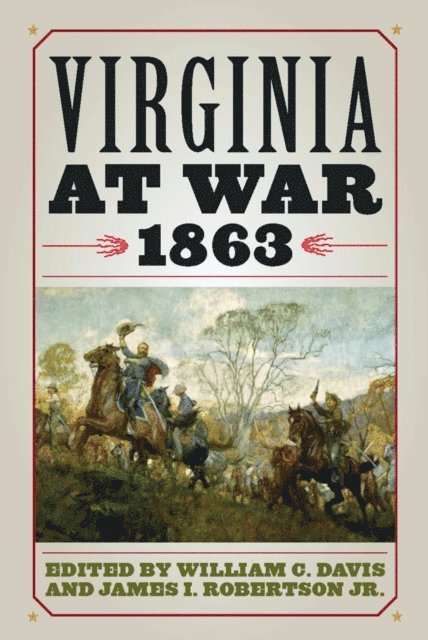
Between the epic battles of 1862 and the grueling and violent military campaigns that would follow, the year 1863 was oddly quiet for the Confederate state of Virginia. Only one major battle was fought on its soil, at Chancellorsville, and the conflict was one of the Army of Northern Virginia''s greatest victories. Yet the pressures of the Civil War turned the daily lives of Virginians -- young and old, men and women, civilians and soldiers -- into battles of their own. Despite minimal combat, 1863 was an eventful year in Virginia history -- Stonewall Jackson died within its borders and Abraham Lincoln delivered the Gettysburg Address. In Virginia at War, 1863, editors William C. Davis and James I. Robertson Jr. present these and other key events, as well as a discussion of the year''s military land operations to reveal the political, social, and cultural ramifications of the ongoing national conflict. By this time, the war had profoundly transformed nearly every aspect of Virginia life and culture, from education to religion to commerce. Mounting casualties and depleted resources made the citizens of the Commonwealth feel the deprivations of war more deeply than ever. Virginia at War, 1863 surveys these often overlooked elements of the conflict. Contributors focus on the war''s impact on Virginia''s children and its newly freed slaves. They shed light on the origins of the Hatfield-McCoy feud, explore the popularity of scrapbooking as a form of personal recordkeeping, and consider the changing role of religion during wartime and the uncertain faith of Virginia''s Christians. The book concludes with the 1863 entries of the Diary of a Southern Refugee by Richmond''s Judith Brockenbrough McGuire. At the midpoint of the Civil War, the hostility of this great American struggle had become an ingrained part of Virginia life. Virginia at War, 1863 is the third volume of a five-book series that reexamines the Commonwealth''s history as an integral part of the Confederacy. The series looks beyond military campaigns and tactics to consider how the war forever changed the people, culture, and society of Virginia.
465 kr
Läs direkt efter köp
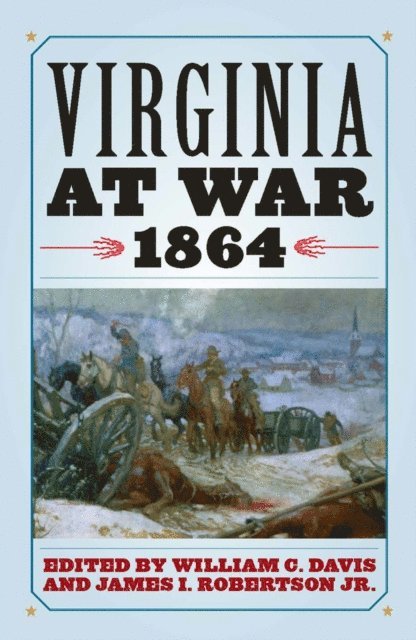
The fourth book in the Virginia at War series casts a special light on vital home front matters in Virginia during 1864. Following a year in which only one major battle was fought on Virginia soil, 1864 brought military campaigning to the Old Dominion. For the first time during the Civil War, the majority of Virginia''s forces fought inside the state''s borders. Yet soldiers were a distinct minority among the Virginians affected by the war. In Virginia at War, 1864, scholars explore various aspects of the civilian experience in Virginia including transportation and communication, wartime literature, politics and the press, higher education, patriotic celebrations, and early efforts at reconstruction in Union-occupied Virginia. The volume focuses on the effects of war on the civilian infrastructure as well as efforts to maintain the Confederacy. As in previous volumes, the book concludes with an edited and annotated excerpt of the Judith Brockenbrough McGuire diary.
176 kr
Skickas inom 10-15 vardagar
319 kr
Lyssna direkt efter köp
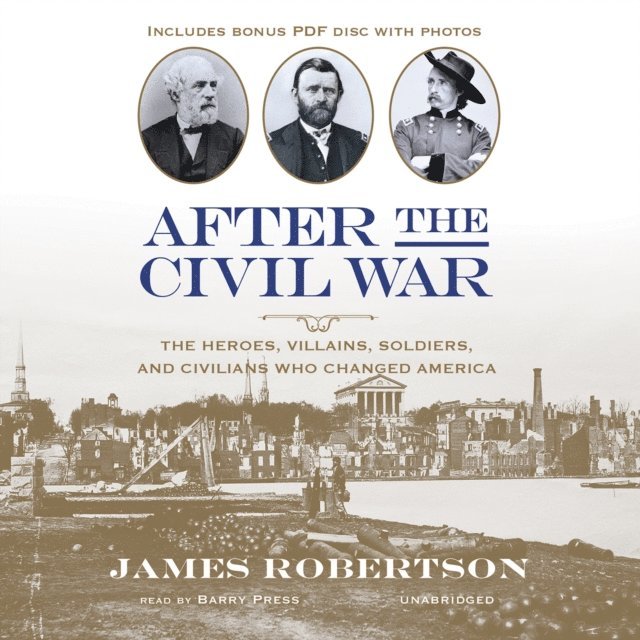
Returning to the turbulent days of a nation divided, bestselling author and acclaimed historian James Robertson explores seventy fascinating figures who shaped America during Reconstruction and beyond.
Relentless politicians, intrepid fighters, cunning innovators—the times called for bold moves, and this resilient generation would not disappoint. From William Tecumseh Sherman, a fierce leader who would revolutionize modern warfare, to Thomas Nast, whose undefeatable weapon was his stirring cartoons, these are the people who weathered the turmoil to see a nation reborn.
Following these extraordinary legends from the battle lines to the White House, from budding metropolises to the wooly west, we rediscover the foundation of this great country.
710 kr
Skickas inom 10-15 vardagar