Brianne McGonigle Leyh - Böcker
Visar alla böcker från författaren Brianne McGonigle Leyh. Handla med fri frakt och snabb leverans.
5 produkter
5 produkter
1 921 kr
Skickas inom 10-15 vardagar
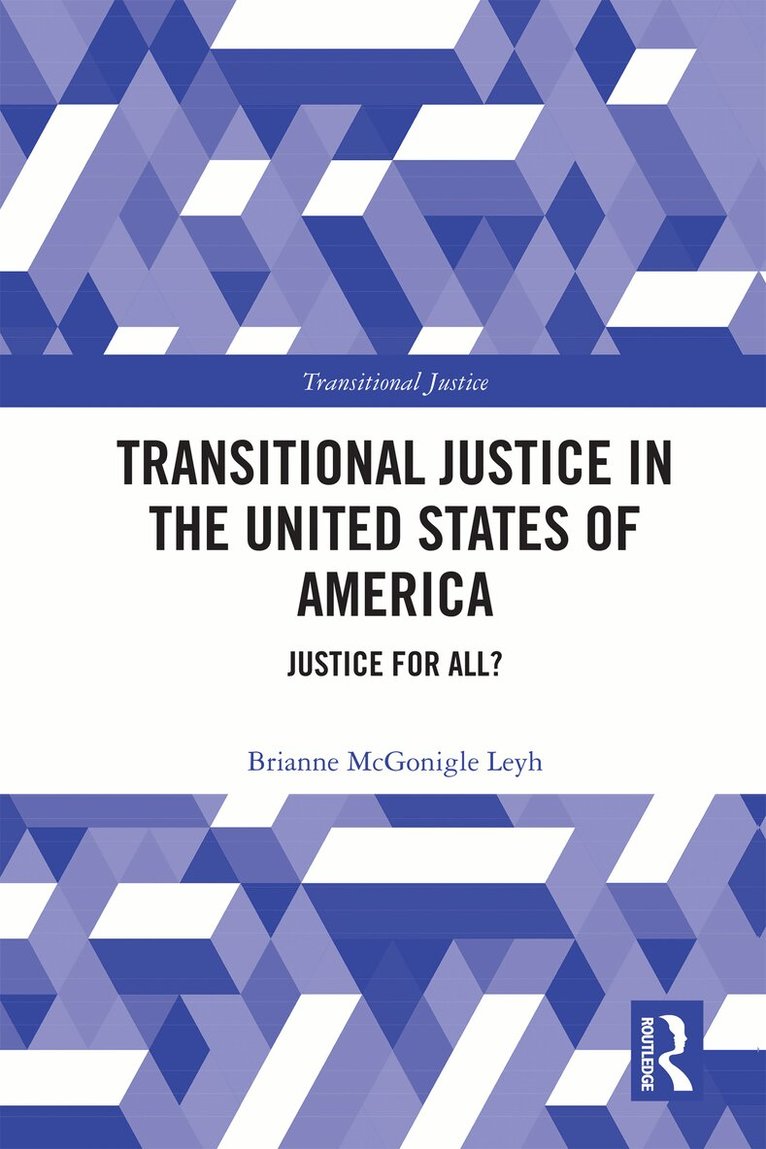
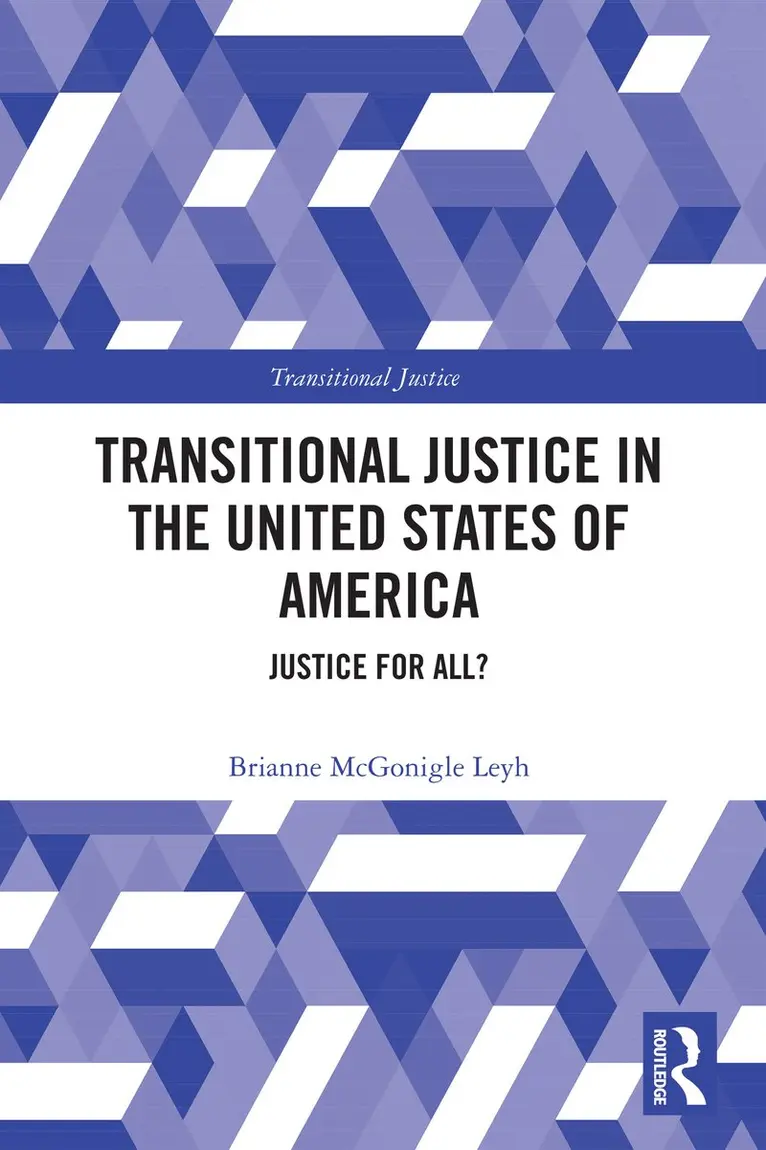
This book employs a transitional justice lens in order to explore justice initiatives in the United States of America.Transitional justice developed out of societal demands to better address serious abuse, injustice, and atrocities – initially in South American post-authoritarian contexts transitioning to democratic states and later elsewhere, but especially within post-conflict contexts. The lens of transitional justice has only rarely been extended to the United States and never in a comprehensive way. This book aims to provide a contemporary and critical analysis of relevant developments and debates within the United States related to transitional justice. Using the framework of the five main ‘pillars’ of transitional justice – truth, reparation, accountability, guarantee of non-repetition, and memory – the book identifies and explores relevant justice initiatives, both historical and contemporary, across federal, state, and local levels in the United States. The empirical examples taken up show how a broad array of civil society actors are driving transitional justice processes across the country. By recognizing both extraordinary and ordinary justice processes as transitional justice, the book offers a broader understanding of how groups navigate transitions to more democratic, peaceful, and socially just societies. The examples further shed light on the expansion of the field to nontraditional contexts, the relationship between global norms and local practices, and the role of law and political compromise. The book concludes by emphasizing the value and power of the plurality of initiatives taking shape across the United States but calls for a more coherent transitional justice policy at the national level.This book is relevant for scholars and students with interests in transitional justice, conflict resolution, human rights, Indigenous studies, culture, and race.
Del 42 - School of Human Rights Research
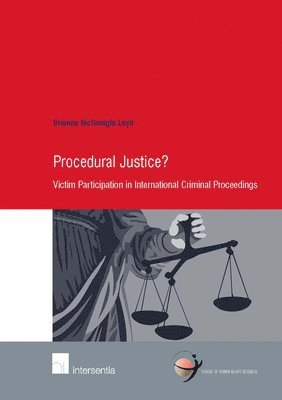
Procedural Justice?
Victim Participation in International Criminal Proceedings
Häftad, Engelska, 2011
968 kr
Skickas inom 5-8 vardagar
Special Mention from the Jury of the Max van der Stoel Human Rights Award 2012 In early 2006, the Office of the High Commissioner for Human Rights called for more detailed research into the relevant international standards and national and international practices concerning the role of victims in criminal proceedings. In response to this call and the increased attention paid to victims at international criminal institutions, this study explores the role of victims in international criminal proceedings. As such, the aim of this study is threefold: (i) to describe, explain and clarify the procedural role afforded to victims in international criminal proceedings; (ii) to evaluate whether the current approaches to victim participation in international criminal proceedings are consistent with human rights standards; and (iii) to determine the proper scope and content of victim participation in international criminal proceedings. To structure the analysis, the framework focuses on two central concepts, namely the unique characteristics of international criminal proceedings and human rights standards.Broken up into two main parts, the first part of the study covers criminal law theories and the current role afforded to victims in domestic jurisdictions. It further examines the development of their procedural rights both domestically and internationally. The second part of the study then deals exclusively with international criminal justice institutions and the participatory rights afforded to victims therein. Using two case studies, one on the Extraordinary Chambers in the Courts of Cambodia and the other on the International Criminal Court, the research highlights how these courts have approached the issue of victim participation. The study concludes with general recommendations. It is hoped that the findings of this study may contribute to a better understanding of competing rights within international criminal justice and that they provide those involved in the shaping of international criminal justice a means through which to view the participatory rights of victims.
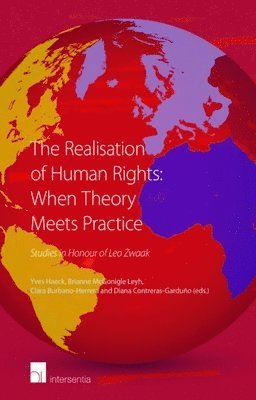
Realisation of Human Rights: When Theory Meets Practice
Studies in Honour of Leo Zwaak
Häftad, Engelska, 2014
975 kr
Tillfälligt slut
Human rights are not aspirational, rather they are meant to be realised. Since the adoption of the Universal Declaration of Human Rights, a growing number of treaties, declarations, resolutions and other materials has been produced and a wide array of international institutions have been created to monitor the implementation of human rights. Through these documents and institutions the realisation of human rights begins. However, the struggle to ensure the rights and freedoms of individuals is never an easy one. It requires the commitment of those who believe in the core nature of human rights. One such person has been Leo Zwaak. The idea behind The Realization of Human Rights: When Theory Meets Practice is that throughout Leo Zwaak's professional life he dedicated himself to the realisation of human rights. Whether acting as an encylopaedia of knowledge when teaching human rights at the university or providing judicial trainings on the five continents, Leo Zwaak has impacted the world of human rights in many ways.This book is organised into six parts: International Human Rights Law in General; European Human Rights Law; Inter-American and African Human Rights Law; International Human Rights Law, International Criminal Law and International Humanitarian Law; International Human Rights Law, Extraordinary Rendition and Forced Disappearances; and the International and National Protection of Human Rights. As the book reflects, Leo Zwaak's work has touched on a wide range of fields, spanning the universal, regional and national levels.
540 kr
Skickas inom 7-10 vardagar
This pioneering book explores the intersections of law and culture at the International Criminal Court (ICC), offering insights into how notions of culture affect the Court's legal foundations, functioning and legitimacy, both in theory and in practice.Leading scholars and legal practitioners take a multidisciplinary approach to challenge the view that international law is not limited or bound by a particular culture, arguing instead that law and culture are intertwined. Analysing how culture influences views of the law, the facts to which it applies, and the fairness of the outcome, the contributors consider the implications of culture and law for the ICC and its international reach. Chapters discuss important intersections of law and culture, from religion and politics to the definition of international crimes and their interpretation by judges. Highlighting the inherent but often overlooked role of 'culture' at the ICC, the book puts forward recommendations to aid the Court s future considerations.This book is a valuable resource for academics and students in a variety of fields including law, criminology, anthropology, international relations and political science. Its practical focus is also beneficial for legal practitioners and civil society organisations working in international criminal justice.
2 277 kr
Skickas inom 7-10 vardagar
This pioneering book explores the intersections of law and culture at the International Criminal Court (ICC), offering insights into how notions of culture affect the Court's legal foundations, functioning and legitimacy, both in theory and in practice.Leading scholars and legal practitioners take a multidisciplinary approach to challenge the view that international law is not limited or bound by a particular culture, arguing instead that law and culture are intertwined. Analysing how culture influences views of the law, the facts to which it applies, and the fairness of the outcome, the contributors consider the implications of culture and law for the ICC and its international reach. Chapters discuss important intersections of law and culture, from religion and politics to the definition of international crimes and their interpretation by judges. Highlighting the inherent but often overlooked role of 'culture' at the ICC, the book puts forward recommendations to aid the Court s future considerations.This book is a valuable resource for academics and students in a variety of fields including law, criminology, anthropology, international relations and political science. Its practical focus is also beneficial for legal practitioners and civil society organisations working in international criminal justice.