Bridget M. Marshall - Böcker
Visar alla böcker från författaren Bridget M. Marshall. Handla med fri frakt och snabb leverans.
6 produkter
6 produkter
2 490 kr
Skickas inom 10-15 vardagar
Tracing the use of legal themes in the gothic novel, Bridget M. Marshall shows these devices reflect an outpouring of anxiety about the nature of justice. On both sides of the Atlantic, novelists like William Godwin, Mary Shelley, Charles Brockden Brown, and Hannah Crafts question the foundations of the Anglo-American justice system through their portrayals of criminal and judicial procedures and their use of found documents and legal forms as key plot devices. As gothic villains, from Walpole's Manfred to Godwin's Tyrrell to Stoker's Dracula, manipulate the law and legal system to expand their power, readers are confronted with a legal system that is not merely ineffective at stopping villains but actually enables them to inflict ever greater harm on their victims. By invoking actual laws like the Black Act in England or the Fugitive Slave Act in America, gothic novels connect the fantastic horrors that constitute their primary appeal with much more shocking examples of terror and injustice. Finally, the gothic novel's preoccupation with injustice is just one element of many that connects the genre to slave narratives and to the horrors of American slavery.
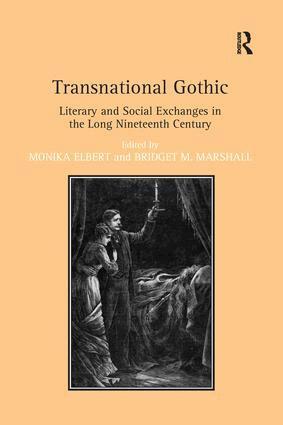
Transnational Gothic
Literary and Social Exchanges in the Long Nineteenth Century
Häftad, Engelska, 2016
885 kr
Skickas inom 10-15 vardagar
Offering a variety of critical approaches to late eighteenth- and nineteenth-century Gothic literature, this collection provides a transnational view of the emergence and flowering of the Gothic. The essays expand on now well-known approaches to the Gothic (such as those that concentrate exclusively on race, gender, or nation) by focusing on international issues: religious traditions, social reform, economic and financial pitfalls, manifest destiny and expansion, changing concepts of nationhood, and destabilizing moments of empire-building. By examining a wide array of Gothic texts, including novels, drama, and poetry, the contributors present the Gothic not as a peripheral, marginal genre, but as a central mode of literary exchange in an ever-expanding global context. Thus the traditional conventions of the Gothic, such as those associated with Ann Radcliffe and Monk Lewis, are read alongside unexpected Gothic formulations and lesser-known Gothic authors and texts. These include Mary Rowlandson and Bram Stoker, Frances and Anthony Trollope, Louisa May Alcott, Elizabeth Gaskell, Theodore Dreiser, Rudyard Kipling, and Lafcadio Hearn, as well as the actors Edmund Kean and George Frederick Cooke. Individually and collectively, the essays provide a much-needed perspective that eschews national borders in order to explore the central role that global (and particularly transatlantic) exchange played in the development of the Gothic. British, American, Continental, Caribbean, and Asian Gothic are represented in this collection, which seeks to deepen our understanding of the Gothic as not merely a national but a global aesthetic.
885 kr
Skickas inom 10-15 vardagar
Tracing the use of legal themes in the gothic novel, Bridget M. Marshall shows these devices reflect an outpouring of anxiety about the nature of justice. On both sides of the Atlantic, novelists like William Godwin, Mary Shelley, Charles Brockden Brown, and Hannah Crafts question the foundations of the Anglo-American justice system through their portrayals of criminal and judicial procedures and their use of found documents and legal forms as key plot devices. As gothic villains, from Walpole's Manfred to Godwin's Tyrrell to Stoker's Dracula, manipulate the law and legal system to expand their power, readers are confronted with a legal system that is not merely ineffective at stopping villains but actually enables them to inflict ever greater harm on their victims. By invoking actual laws like the Black Act in England or the Fugitive Slave Act in America, gothic novels connect the fantastic horrors that constitute their primary appeal with much more shocking examples of terror and injustice. Finally, the gothic novel's preoccupation with injustice is just one element of many that connects the genre to slave narratives and to the horrors of American slavery.
Transnational Gothic
Literary and Social Exchanges in the Long Nineteenth Century
Inbunden, Engelska, 2013
2 490 kr
Skickas inom 10-15 vardagar
Offering a variety of critical approaches to late eighteenth- and nineteenth-century Gothic literature, this collection provides a transnational view of the emergence and flowering of the Gothic. The essays expand on now well-known approaches to the Gothic (such as those that concentrate exclusively on race, gender, or nation) by focusing on international issues: religious traditions, social reform, economic and financial pitfalls, manifest destiny and expansion, changing concepts of nationhood, and destabilizing moments of empire-building. By examining a wide array of Gothic texts, including novels, drama, and poetry, the contributors present the Gothic not as a peripheral, marginal genre, but as a central mode of literary exchange in an ever-expanding global context. Thus the traditional conventions of the Gothic, such as those associated with Ann Radcliffe and Monk Lewis, are read alongside unexpected Gothic formulations and lesser-known Gothic authors and texts. These include Mary Rowlandson and Bram Stoker, Frances and Anthony Trollope, Louisa May Alcott, Elizabeth Gaskell, Theodore Dreiser, Rudyard Kipling, and Lafcadio Hearn, as well as the actors Edmund Kean and George Frederick Cooke. Individually and collectively, the essays provide a much-needed perspective that eschews national borders in order to explore the central role that global (and particularly transatlantic) exchange played in the development of the Gothic. British, American, Continental, Caribbean, and Asian Gothic are represented in this collection, which seeks to deepen our understanding of the Gothic as not merely a national but a global aesthetic.
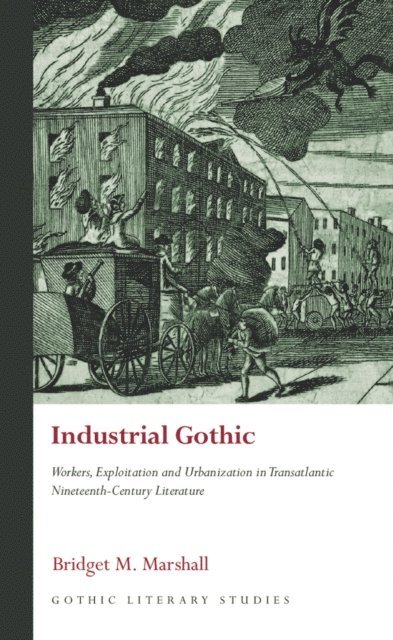
Industrial Gothic
Workers, Exploitation and Urbanization in Transatlantic Nineteenth-Century Literature
Inbunden, Engelska, 2021
1 169 kr
Tillfälligt slut
This study carves out a new area of study, the 'industrial Gothic', placing the literature of the Industrial Revolution in dialogue with the Gothic. It explores a significant subset of transatlantic nineteenth-century literature that employs the tropes, themes and rhetoric of the Gothic to portray the real-life horrors of factory life, framing the Industrial Revolution as a site of Gothic excess and horror. Using archival materials from the nineteenth century, localised incidences of Gothic industrialisation (in specific cities like Lowell and Manchester) are considered alongside transnational connections and comparisons. The book argues that stories about the real horrors of factory life frequently employed the mode of the Gothic, while nineteenth century Gothic writing (stories, novels, poems and stage adaptations) began to use new settings - factories, mills, and industrial cities - as backdrops for the horrors that once populated Gothic castles.
1 169 kr
Skickas inom 5-8 vardagar
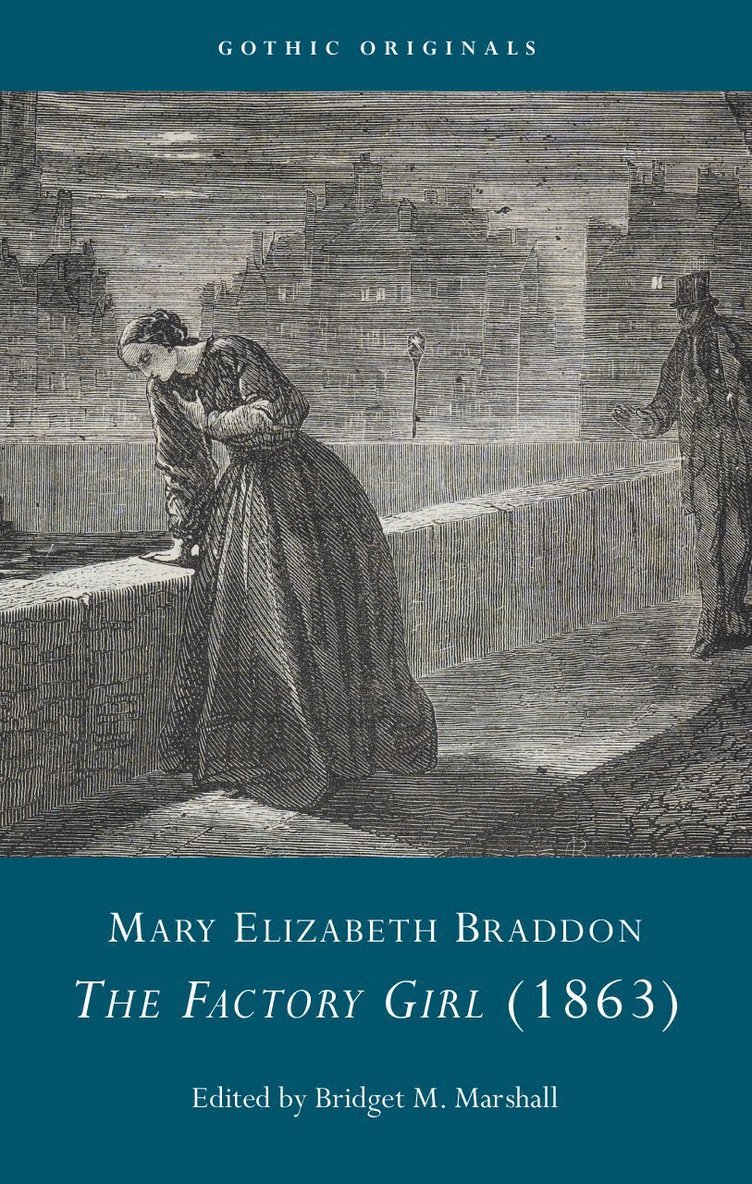
Mary Elizabeth Braddon’s The Factory Girl (1863) was a cheap serial intended for working-class readers. The sprawling plot centres on Laura Leslie and her daughter, Dora, who are the targets of a diverse cast of villains. After Laura’s tragic death, Dora and her adoptive mother start a new life working in a cotton mill, but Dora’s beauty attracts unwelcome attention, putting them in danger. Dora is the classic factory girl, a nineteenth-century revision of the Gothic heroine. Republished in the US in both newspapers and as a book, and translated into French, the novel has been out of print since the 1860s. This edition reproduces the original Halfpenny Journal text and illustrations, and adds a scholarly introduction placing the novel in numerous cultural contexts, including the rise of sensation fiction; nineteenth-century popular theatre; the transformation of the genre of the Gothic; and the backdrop of the Industrial Revolution.