Brigitte Granville - Böcker
Visar alla böcker från författaren Brigitte Granville. Handla med fri frakt och snabb leverans.
6 produkter
6 produkter
1 076 kr
Skickas inom 7-10 vardagar
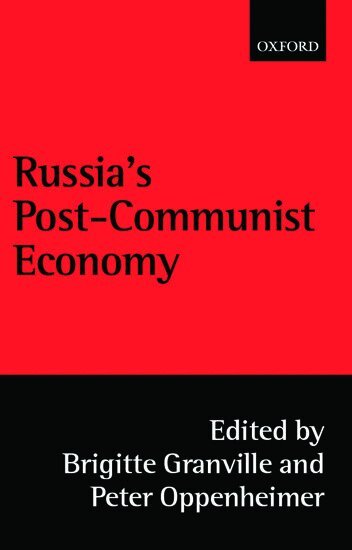
This volume offers a multi-author survey and analysis of economic developments in the Russian Federation since the collapse of Communism and the break-up of the Soviet Union in 1989--91. It covers the period 1991--98 and in some areas extends to 1999-2000.Russia, the core of the former Soviet Union, is at once the largest transition economy of Eastern Europe and also, arguably, the one most burdened by its own past---not only of Communism, but of Tsarist absolutism and territorial aggrandizement in earlier centuries. Its present-day assets of natural-resource wealth and a well-educated labour force are offset by hypertrophied defence industries, unhelpful location of manufacturing capacity, and excessive preponderance of large enterprises.Russia has shared with other transition economies the problems of macro-economic stabilization and reconstruction of economic institutions following the disappearance of the command-administrative system which set guidelines for production under Communism. Economic progress has been held back by misappropriation of business funds and massive associated export of capital to western financial markets. Stabilization and welfare services alike have been handicapped by the difficulty of raising adequate tax revenue---or alternatively of cutting public expenditure commitments sufficiently. Arrears and offset arrangements have proliferated, providing disorderly sources of flexibility in the face of immobile resources and inadequate financial mechanisms, including total failure hitherto to establish a viable commercial banking system.In the consumer sector, income distribution has become (as in other transition economies) markedly more unequal, with regional disparities playing a significant role. State assistance to the worse off has been patchy at best. Mortality and morbidity statistics have deteriorated. But, at the same time, living standards have been supported by continuing non-payment of housing costs and subsidization of household utilities, and have benefitted from external economic liberalization, which has given households access to foreign consumption goods and to dollar bills as a key savings medium and liquidity reserve. Altogether, average living standards have changed little in Russia's first post-Communist decade, despite the massive drop in industrial production and consequential underutilization of capacity. These and other features of Russia's economy are explained by an international team of expert authors in the most comprehensive and objective overview of the subject to date.
1 379 kr
Skickas inom 7-10 vardagar
This volume offers a multi-author survey and analysis of economic developments in the Russian Federation since the collapse of Communism and the break-up of the Soviet Union in 1989-91. It covers the period 1991--98 and in some areas extends to 1999-2000. Russia, the core of the former Soviet Union, is at once the largest transition economy of Eastern Europe and also, arguably, the one most burdened by its own past---not only of Communism, but of Tsarist absolutism and territorial aggrandizement in earlier centuries. Its present-day assets of natural-resource wealth and a well-educated labour force are offset by hypertrophied defence industries, unhelpful location of manufacturing capacity, and excessive preponderance of large enterprises. Russia has shared with other transition economies the problems of macro-economic stabilization and reconstruction of economic institutions following the disappearance of the command-administrative system which set guidelines for production under Communism. Economic progress has been held back by misappropriation of business funds and massive associated export of capital to western financial markets. Stabilization and welfare services alike have been handicapped by the difficulty of raising adequate tax revenue - or alternatively of cutting public expenditure commitments sufficiently. Arrears and offset arrangements have proliferated, providing disorderly sources of flexibility in the face of immobile resources and inadequate financial mechanisms, including total failure hitherto to establish a viable commercial banking system. In the consumer sector, income distribution has become (as in other transition economies) markedly more unequal, with regional disparities playing a significant role. State assistance to the worse off has been patchy at best. Mortality and morbidity statistics have deteriorated. But, at the same time, living standards have been supported by continuing non-payment of housing costs and subsidization of household utilities, and have benefitted from external economic liberalization, which has given households access to foreign consumption goods and to dollar bills as a key savings medium and liquidity reserve. Altogether, average living standards have changed little in Russia's first post-Communist decade, despite the massive drop in industrial production and consequential underutilization of capacity. These and other features of Russia's economy are explained by an international team of expert authors in the most comprehensive and objective overview of the subject to date.
508 kr
Skickas inom 7-10 vardagar
As evidenced by the yellow vests protest movement that began in France in 2018, the state of the French nation inspires gloom among many of its citizens. Brigitte Granville views this malaise as a peculiarly French symptom of the difficulties experienced by many advanced industrial democracies in the face of globalization, technology, and mass immigration.Granville brings trenchant criticism to bear in this wide-ranging survey of the political economy of contemporary France, building her case for the prosecution on the self-reinforcing rigidity produced by a narrow Parisian oligarchy that is both entitled and intellectually hidebound. What Ails France? applies an economist's vision to the monetary and fiscal pathologies flowing from this ideologically motivated technocratic rule, reflected in Europe's flawed monetary union, runaway indebtedness, and chronically high structural unemployment. The author marshals academic research from a wide range of disciplines to fuel a provocative and at times contentious analysis, proposing various treatments for French ailments that would reinvigorate the republican value of liberté with a new local slant.A refreshing, ideologically freewheeling discussion, What Ails France? provides a positive take on the innovations of our digital age, exploring their potential to bring about a more representative democracy and a fairer society.
2 155 kr
Skickas inom 10-15 vardagar
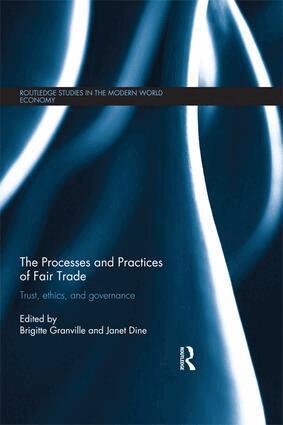
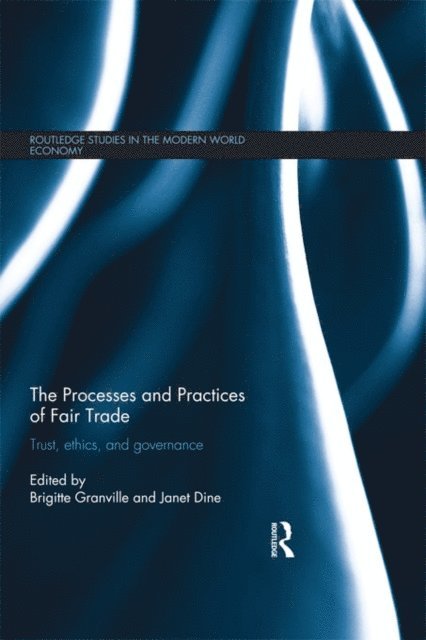
This book analyzes the factors behind the recent expansion of Fairtrade and questions whether the trust given to the scheme by "ethical" shoppers is warranted. It goes about this assessment by analyzing the claim of ethical shopping and by scrutinizing the specific contribution of the Fairtrade Certification Mark to producer’s welfare. This assessment is based on information gathered in a mixture of desk-based research and fieldwork carried out in Argentina, Bolivia, Chile, Peru, Tanzania and South Africa. This book comprises separate chapters written by academics of various backgrounds, who have worked together on Fairtrade, it should however be noted that the authors do not necessarily hold a common set of views in respect to Fairtrade.
412 kr
Skickas inom 7-10 vardagar
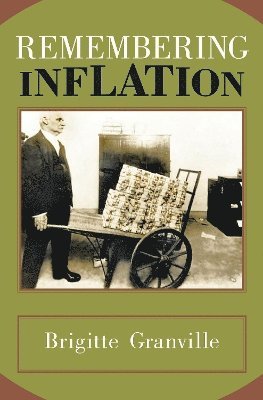
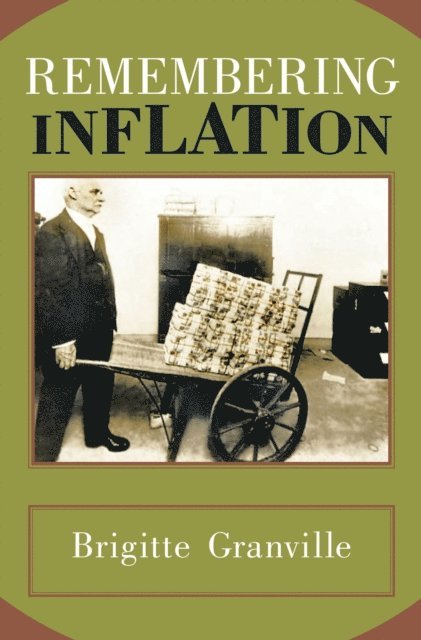
Today's global economy, with most developed nations experiencing very low inflation, seems a world apart from the "Great Inflation" that spanned the late 1960s to early 1980s. Yet, in this book, Brigitte Granville makes the case that monetary economists and policymakers need to keep the lessons learned during that period very much in mind, lest we return to them by making the same mistakes we made in the past. Granville details the advances in macroeconomic thinking that gave rise to the "Great Moderation"--a period of stable inflation and economic growth, which lasted from the mid-1980s through the most recent financial crisis. She makes the case that the central banks' management of monetary policy--hinging on expectations and credibility--brought about this period of stability, and traces the roots of this success back to the eighteenth-century foundations of modern monetary thought.Tackling fundamental questions such as the causes of inflation and its relation to unemployment and growth, the natural rate of inflation hypothesis, the fiscal theory of the price level, and the proper goals of central banks, the book aims above all to demonstrate the dangers of forgetting the role of credibility in establishing sound monetary policy. With the lessons of the past firmly in mind, Granville presents stimulating ideas and proposals about inflation-targeting principles, which provide tools for present-day monetary authorities dealing with the forces of globalization, mercantilism, and reserve accumulation.
901 kr
Skickas inom 10-15 vardagar
This book analyzes the factors behind the recent expansion of Fairtrade and questions whether the trust given to the scheme by "ethical" shoppers is warranted. It goes about this assessment by analyzing the claim of ethical shopping and by scrutinizing the specific contribution of the Fairtrade Certification Mark to producer’s welfare. This assessment is based on information gathered in a mixture of desk-based research and fieldwork carried out in Argentina, Bolivia, Chile, Peru, Tanzania and South Africa. This book comprises separate chapters written by academics of various backgrounds, who have worked together on Fairtrade, it should however be noted that the authors do not necessarily hold a common set of views in respect to Fairtrade.