Britta McEwen - Böcker
Visar alla böcker från författaren Britta McEwen. Handla med fri frakt och snabb leverans.
2 produkter
2 produkter
Del 13 - Austrian and Habsburg Studies
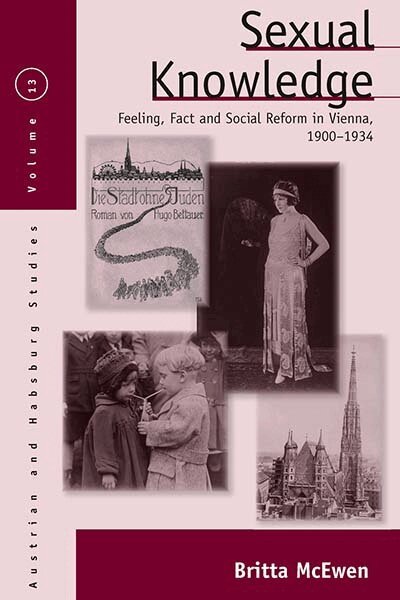
Sexual Knowledge
Feeling, Fact, and Social Reform in Vienna, 1900-1934
Inbunden, Engelska, 2012
2 014 kr
Skickas inom 3-6 vardagar
Vienna’s unique intellectual, political, and religious traditions had a powerful impact on the transformation of sexual knowledge in the early twentieth century. Whereas turn-of-the-century sexology, as practiced in Vienna as a medical science, sought to classify and heal individuals, during the interwar years, sexual knowledge was employed by a variety of actors to heal the social body: the truncated, diseased, and impoverished population of the newly created Republic of Austria. Based on rich source material, this book charts cultural changes that are hallmarks of the modern era, such as the rise of the companionate marriage, the role of expert advice in intimate matters, and the body as a source of pleasure and anxiety. These changes are evidence of a dramatic shift in attitudes from a form of scientific inquiry largely practiced by medical specialists to a social reform movement led by and intended for a wider audience that included workers, women, and children.
Del 13 - Austrian and Habsburg Studies
Sexual Knowledge
Feeling, Fact, and Social Reform in Vienna, 1900-1934
Häftad, Engelska, 2015
583 kr
Skickas inom 3-6 vardagar
Vienna's unique intellectual, political, and religious traditions had a powerful impact on the transformation of sexual knowledge in the early twentieth century. Whereas turn-of-the-century sexology, as practiced in Vienna as a medical science, sought to classify and heal individuals, during the interwar years, sexual knowledge was employed by a variety of actors to heal the social body: the truncated, diseased, and impoverished population of the newly created Republic of Austria. Based on rich source material, this book charts cultural changes that are hallmarks of the modern era, such as the rise of the companionate marriage, the role of expert advice in intimate matters, and the body as a source of pleasure and anxiety. These changes are evidence of a dramatic shift in attitudes from a form of scientific inquiry largely practiced by medical specialists to a social reform movement led by and intended for a wider audience that included workers, women, and children.