Brook Thomas - Böcker
Visar alla böcker från författaren Brook Thomas. Handla med fri frakt och snabb leverans.
7 produkter
7 produkter
932 kr
Skickas inom 3-6 vardagar
In American Literary Realism and the Failed Promise of Contract, the author explores the interplay between contract law and literary realism in late nineteenth-century America, a time when both contract law and realism shaped cultural, legal, and social landscapes. The text argues that while contract law in theory emphasized the freedom to negotiate obligations among individuals, it fell short in practice by failing to dismantle deeply entrenched inequalities associated with race, class, and gender. The era’s literature mirrored this dynamic, as authors highlighted the gap between the idealized promises of contractual freedom and the enduring constraints of status. Through this lens, literary realism not only reflected society’s inequities but also critiqued the legal and social systems that perpetuated them.Realism, which sought to represent everyday life in a grounded, unembellished way, intersected with the contract’s promise by portraying social relations as complex and negotiated, yet constrained by systemic hierarchies. Works like Twain's Adventures of Huckleberry Finn and James’s The American evoke moments where relationships of status could theoretically transform into equitable, "contractual" interactions. However, these fictional moments of promise often falter, reflecting contract's inability to establish a truly egalitarian social order. The rise of corporate capitalism further complicated contract’s promise, as corporations fostered a form of economic structure that subordinated individual agency, reinforcing rather than alleviating social inequities.The text also considers how these issues resonate today, especially as contractual ideals influence contemporary notions of social justice. While the promise of contract continues to appeal to a vision of equal opportunity, the persistent influence of race, class, and gender hierarchies complicates its realization. The author suggests that revisiting works of realism offers valuable insights into these ongoing tensions, challenging readers to reimagine a society where individuals might genuinely be “free and equal,” not just in theory but in practice. In doing so, this book presents realism not as an endorsement of the status quo but as a field of critical inquiry, urging us to address the unresolved questions about equity that persist in American society.This title is part of UC Press's Voices Revived program, which commemorates University of California Press’s mission to seek out and cultivate the brightest minds and give them voice, reach, and impact. Drawing on a backlist dating to 1893, Voices Revived makes high-quality, peer-reviewed scholarship accessible once again using print-on-demand technology. This title was originally published in 1997.
868 kr
Skickas inom 7-10 vardagar
In American Literary Realism and the Failed Promise of Contract, the author explores the interplay between contract law and literary realism in late nineteenth-century America, a time when both contract law and realism shaped cultural, legal, and social landscapes. The text argues that while contract law in theory emphasized the freedom to negotiate obligations among individuals, it fell short in practice by failing to dismantle deeply entrenched inequalities associated with race, class, and gender. The era’s literature mirrored this dynamic, as authors highlighted the gap between the idealized promises of contractual freedom and the enduring constraints of status. Through this lens, literary realism not only reflected society’s inequities but also critiqued the legal and social systems that perpetuated them.Realism, which sought to represent everyday life in a grounded, unembellished way, intersected with the contract’s promise by portraying social relations as complex and negotiated, yet constrained by systemic hierarchies. Works like Twain's Adventures of Huckleberry Finn and James’s The American evoke moments where relationships of status could theoretically transform into equitable, "contractual" interactions. However, these fictional moments of promise often falter, reflecting contract's inability to establish a truly egalitarian social order. The rise of corporate capitalism further complicated contract’s promise, as corporations fostered a form of economic structure that subordinated individual agency, reinforcing rather than alleviating social inequities.The text also considers how these issues resonate today, especially as contractual ideals influence contemporary notions of social justice. While the promise of contract continues to appeal to a vision of equal opportunity, the persistent influence of race, class, and gender hierarchies complicates its realization. The author suggests that revisiting works of realism offers valuable insights into these ongoing tensions, challenging readers to reimagine a society where individuals might genuinely be “free and equal,” not just in theory but in practice. In doing so, this book presents realism not as an endorsement of the status quo but as a field of critical inquiry, urging us to address the unresolved questions about equity that persist in American society.This title is part of UC Press's Voices Revived program, which commemorates University of California Press’s mission to seek out and cultivate the brightest minds and give them voice, reach, and impact. Drawing on a backlist dating to 1893, Voices Revived makes high-quality, peer-reviewed scholarship accessible once again using print-on-demand technology. This title was originally published in 1997.
Del 21 - Cambridge Studies in American Literature and Culture
Cross-Examinations of Law and Literature
Cooper, Hawthorne, Stowe, and Melville
Inbunden, Engelska, 1987
1 431 kr
Skickas inom 7-10 vardagar
In Cross Examinations of Law and Literature Brook Thomas uses legal thought and legal practice as a lens through which to read some of the important fictions of antebellum America. The lens reflects both ways, and we learn as much about the literature in the context of contemporary legal concerns as we do about the legal ideologies that the fiction subverts or reveals. Successive chapters deal with Cooper's Pioneers and Hawthorne's The House of Seven Gables (property law and the image of the judiciary), Melville's 'Benito Cereno' and Stowe's Uncle Tom's Cabin (slavery), Melville's White Jacket, Pierre and 'Bartleby' (worker exploitation or wage slavery), The Confidence-Man (contracts), and finally, 'Billy Budd', which examines a number of issues illustrative of the triumph of legal formalism after the Civil War.
Del 21 - Cambridge Studies in American Literature and Culture
Cross-Examinations of Law and Literature
Cooper, Hawthorne, Stowe, and Melville
Häftad, Engelska, 1991
493 kr
Skickas inom 7-10 vardagar
In Cross Examinations of Law and Literature Brook Thomas uses legal thought and legal practice as a lens through which to read some of the important fictions of antebellum America. The lens reflects both ways, and we learn as much about the literature in the context of contemporary legal concerns as we do about the legal ideologies that the fiction subverts or reveals. Successive chapters deal with Cooper's Pioneers and Hawthorne's The House of Seven Gables (property law and the image of the judiciary), Melville's 'Benito Cereno' and Stowe's Uncle Tom's Cabin (slavery), Melville's White Jacket, Pierre and 'Bartleby' (worker exploitation or wage slavery), The Confidence-Man (contracts), and finally, 'Billy Budd', which examines a number of issues illustrative of the triumph of legal formalism after the Civil War.
578 kr
Skickas inom 7-10 vardagar
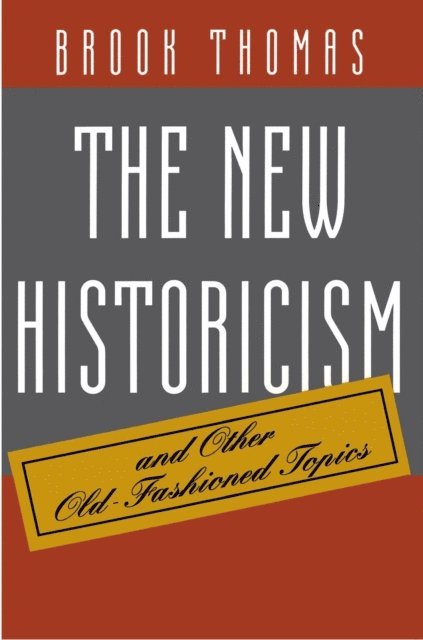
Brook Thomas explores the new historicism and the challenges posed to it by a postmodern world that questions the very possibility of newness. He considers new historicism's engagement with poststructuralism and locates the former within a tradition of pragmatic historiography in the United States.
483 kr
Skickas inom 10-15 vardagar
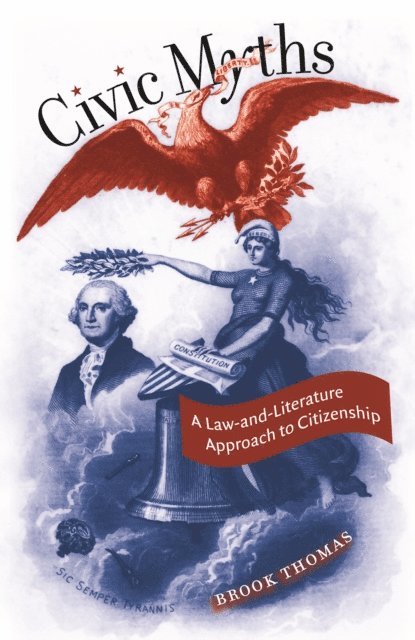
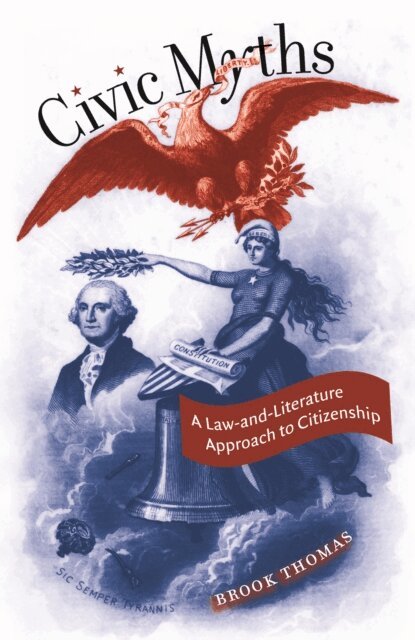
As questions of citizenship generate new debates for this generation of Americans, Brook Thomas argues for revitalizing the role of literature in civic education. Thomas defines civic myths as compelling stories about national origin, membership, and values that are generated by conflicts within the concept of citizenship itself. Selected works of literature, he claims, work on these myths by challenging their terms at the same time that they work with them by relying on the power of narrative to produce compelling new stories. ""Civic Myths"" consists of four case studies: Nathaniel Hawthorne's ""The Scarlet Letter"" and ""the good citizen""; Edward Everett Hale's ""The Man without a Country"" and ""the patriotic citizen""; Mark Twain's ""Adventures of Huckleberry Finn"" and ""the independent citizen""; and Maxine Hong Kingston's ""China Men"" and ""the immigrant citizen."" Thomas also provides analysis of the civic mythology surrounding Abraham Lincoln and the case of Ex parte Milligan. Engaging current debates about civil society, civil liberties, civil rights, and immigration, Thomas draws on the complexities of law and literature to probe the complexities of U.S. citizenship.
526 kr
Skickas inom 7-10 vardagar
In this powerful book, Brook Thomas revisits the contested era of Reconstruction. He evokes literature's immediacy to recreate arguments still unresolved today about state versus federal authority, the government's role in education, the growing power of banks and corporations, the paternalism of social welfare, efforts to combat domestic terrorism, and the difficult question of who should rightly inherit the nation's past. Literature, Thomas argues, enables us to re-experience how Reconstruction was-and remains-a moral, economic, and political debate about which world should have emerged after the Civil War to mark the birth of a new nation. Drawing on neglected nineteenth-century historiographies and recent scholarship that extends the dates of Reconstruction in time while stretching its geographic reach beyond the South, The Literature of Reconstruction uses literary works to trace the complicated interrelations among the era's forces. Thomas also explores how these works bring into dialogue competing visions of possible worlds through chapters on reconciliation, federalism, the Ku Klux Klan, railroads, and inheritance. He contrasts well-known writers, including W. E. B.Du Bois, Thomas Dixon, and Charles W. Chesnutt, with relatively neglected ones, including Albion W. Tourgee, Maria Amparo Ruiz de Burton, and Constance Fenimore Woolson. Some authors opposed Reconstruction; others supported it; and still others struggled with mixed feelings. The world Thomas conjures up in this groundbreaking new study is one in which successful remedies to racial wrongs remain to be imagined.