Bruce A. Kimball – författare
Visar alla böcker från författaren Bruce A. Kimball. Handla med fri frakt och snabb leverans.
7 produkter
7 produkter
439 kr
Skickas inom 7-10 vardagar
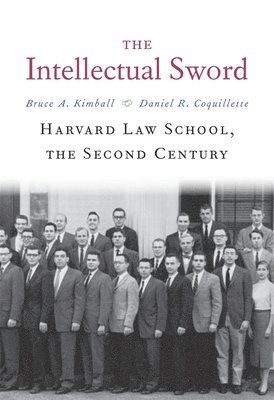
A history of Harvard Law School in the twentieth century, focusing on the school’s precipitous decline prior to 1945 and its dramatic postwar resurgence amid national crises and internal discord.By the late nineteenth century, Harvard Law School had transformed legal education and become the preeminent professional school in the nation. But in the early 1900s, HLS came to the brink of financial failure and lagged its peers in scholarly innovation. It also honed an aggressive intellectual culture famously described by Learned Hand: “In the universe of truth, they lived by the sword. They asked no quarter of absolutes, and they gave none.” After World War II, however, HLS roared back. In this magisterial study, Bruce Kimball and Daniel Coquillette chronicle the school’s near collapse and dramatic resurgence across the twentieth century.The school’s struggles resulted in part from a debilitating cycle of tuition dependence, which deepened through the 1940s, as well as the suicides of two deans and the dalliance of another with the Nazi regime. HLS stubbornly resisted the admission of women, Jews, and African Americans, and fell behind the trend toward legal realism. But in the postwar years, under Dean Erwin Griswold, the school’s resurgence began, and Harvard Law would produce such major political and legal figures as Chief Justice John Roberts, Justice Elena Kagan, and President Barack Obama. Even so, the school faced severe crises arising from the civil rights movement, the Vietnam War, Critical Legal Studies, and its failure to enroll and retain people of color and women, including Justice Ruth Bader Ginsburg.Based on hitherto unavailable sources—including oral histories, personal letters, diaries, and financial records—The Intellectual Sword paints a compelling portrait of the law school widely considered the most influential in the world.
297 kr
Skickas inom 7-10 vardagar
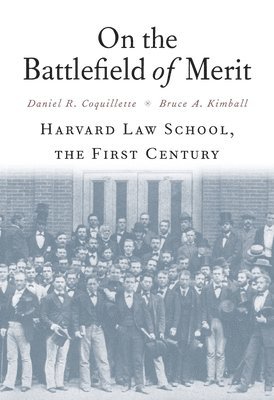
Harvard Law School is the oldest and, arguably, the most influential law school in the nation. U.S. presidents, Supreme Court justices, and foreign heads of state, along with senators, congressional representatives, social critics, civil rights activists, university presidents, state and federal judges, military generals, novelists, spies, Olympians, film and TV producers, CEOs, and one First Lady have graduated from the school since its founding in 1817.During its first century, Harvard Law School pioneered revolutionary educational ideas, including professional legal education within a university, Socratic questioning and case analysis, and the admission and training of students based on academic merit. But the school struggled to navigate its way through the many political, social, economic, and legal crises of the century, and it earned both scars and plaudits as a result. On the Battlefield of Merit offers a candid, critical, definitive account of a unique legal institution during its first century of influence.Daniel R. Coquillette and Bruce A. Kimball examine the school’s ties with institutional slavery, its buffeting between Federalists and Republicans, its deep involvement in the Civil War, its reluctance to admit minorities and women, its anti-Catholicism, and its financial missteps at the turn of the twentieth century. On the Battlefield of Merit brings the story of Harvard Law School up to 1909—a time when hard-earned accomplishment led to self-satisfaction and vulnerabilities that would ultimately challenge its position as the leading law school in the nation. A second volume will continue this history through the twentieth century.
1 009 kr
Skickas inom 10-15 vardagar
Ranging from Plato in antiquity to Martha Nussbaum in the present era, the authors of the seventy readings included in The Liberal Arts Tradition present significant and exemplary views addressing liberal arts education over the course of its history, particularly in the United States. Most of the documents are newly translated or no longer available in print. Arranged chronologically, each selection is accompanied by an informative introduction and extensive explanatory notes discussing its place within the liberal arts tradition. Based upon the author's twenty-five years of experience leading seminars concerning the history of liberal education, this collection presents a uniquely comprehensive and salient set of documents, while incorporating the neglected portrayal and discussion of women within the history of the liberal arts.
519 kr
Skickas inom 7-10 vardagar
Colleges and universities are richer than ever—so why has the price of attending them risen so much?As endowments and fundraising campaigns have skyrocketed in recent decades, critics have attacked higher education for steeply increasing its production cost and price and the snowballing debt of students. In Wealth, Cost, and Price in American Higher Education, Bruce A. Kimball and Sarah M. Iler reveal how these trends began 150 years ago and why they have intensified in recent decades.In the late nineteenth century, American colleges and universities began fiercely competing to expand their revenue, wealth, and production cost in order to increase their quality and prestige and serve the soaring number of students. From that era through today, the rising wealth and cost of higher education have continued to reinforce each other and spiral upward, increasing the heavily subsidized price paid by students. Kimball and Iler explain the strategy and reasoning that drove this wealth-cost double helix, the new tactics in fundraising and endowment investing that fueled it, and economists' efforts to understand it.Using extensive archival, documentary, and quantitative research, Kimball and Iler trace the shifting public perception of higher education and its correlation with rising costs, stagnating wages, and explosive student debt. They show how stratification of wealth in higher education became tightly interwoven with wealth inequality in American society. This relationship raises fundamental questions about equity in US higher education and its contribution to social mobility and democracy.
572 kr
Skickas inom 10-15 vardagar
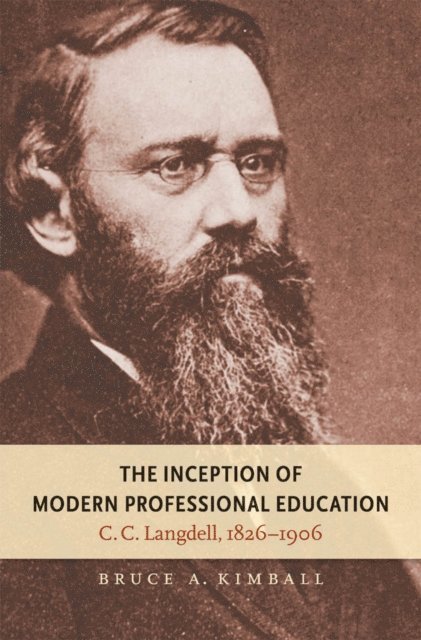
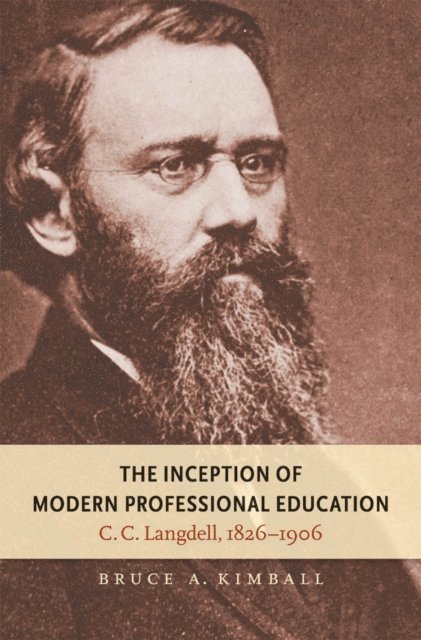
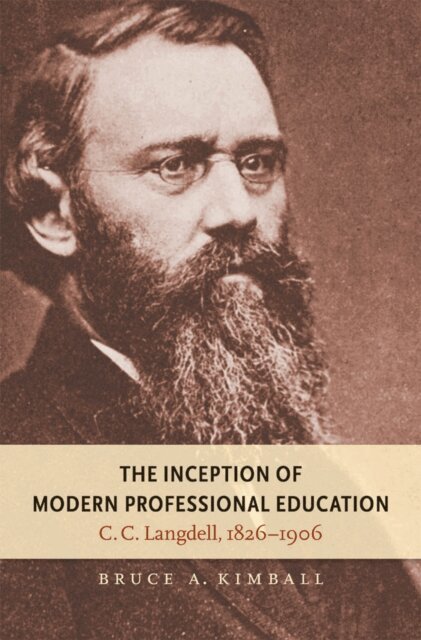
Christopher C. Langdell (1826-1906) is one of the most influential figures in the history of American professional education. As dean of Harvard Law School from 1870 to 1895, he conceived, designed, and built the educational model that leading professional schools in virtually all fields subsequently emulated. In this first full-length biography of the educator and jurist, Bruce Kimball explores Langdell's controversial role in modern professional education and in jurisprudence.Langdell founded his model on the idea of academic meritocracy. According to this principle, scholastic achievement should determine one's merit in professional life. Despite fierce opposition from students, faculty, alumni, and legal professionals, he designed and instituted a formal system of innovative policies based on meritocracy. This system's components included the admission requirement of a bachelor's degree, the sequenced curriculum and its extension to three years, the hurdle of annual examinations for continuation and graduation, the independent career track for professional faculty, the transformation of the professional library into a scholarly resource, the inductive pedagogy of teaching from cases, the organization of alumni to support the school, and a new, highly successful financial strategy.Langdell's model was subsequently adopted by leading law schools, medical schools, business schools, and the schools of other professions. By the time of his retirement as dean at Harvard, Langdell's reforms had shaped the future model for professional education throughout the United States.
Philosophy and History of Education
Diverse Perspectives on Their Value and Relationship
Inbunden, Engelska, 2017
721 kr
Skickas inom 10-15 vardagar
The studies of philosophy and history of education are under siege. These studies do not attract large grant funds and, to many, do not seem useful, even while much of educational research is dismissed as inconsequential or self-evident and the crisis in American education deepens. Philosophy and history of education have therefore been pushed to the margin--or beyond--in colleges and schools of education, commensurate with the "decline of the humanities" in higher education generally. Philosophy and History of Education examines the complex relationship between these studies, and the value of these related studies for improving educational knowledge, policy, and practice. From diverse perspectives, the philosophers and historians in this volume explore how bringing these disciplines together yields insights about unacknowledged or occult aspects of education problems that neither could achieve on their own.
Philosophy and History of Education
Diverse Perspectives on Their Value and Relationship
Häftad, Engelska, 2017
344 kr
Skickas inom 10-15 vardagar
The studies of philosophy and history of education are under siege. These studies do not attract large grant funds and, to many, do not seem useful, even while much of educational research is dismissed as inconsequential or self-evident and the crisis in American education deepens. Philosophy and history of education have therefore been pushed to the margin--or beyond--in colleges and schools of education, commensurate with the "decline of the humanities" in higher education generally. Philosophy and History of Education examines the complex relationship between these studies, and the value of these related studies for improving educational knowledge, policy, and practice. From diverse perspectives, the philosophers and historians in this volume explore how bringing these disciplines together yields insights about unacknowledged or occult aspects of education problems that neither could achieve on their own.