Bruce J. Hunt - Böcker
Visar alla böcker från författaren Bruce J. Hunt. Handla med fri frakt och snabb leverans.
7 produkter
7 produkter
699 kr
Skickas inom 10-15 vardagar
"The Maxwellians is a remarkable achievement.... Hunt combines the highest level of professional historical scholarship with a narrative that is lively and compelling throughout."― NatureJames Clerk Maxwell published the Treatise on Electricity and Magnetism in 1873. At his death, six years later, his theory of the electromagnetic field was neither well understood nor widely accepted. By the mid-1890s, however, it was regarded as one of the most fundamental and fruitful of all physical theories. Bruce J. Hunt examines the joint work of a group of young British physicists-G. F. FitzGerald, Oliver Heaviside, and Oliver Lodge-along with a key German contributor, Heinrich Hertz. It was these "Maxwellians" who transformed the fertile but half-finished ideas presented in the Treatise into the concise and powerful system now known as "Maxwell's theory."
393 kr
Skickas inom 10-15 vardagar
"The Maxwellians is a remarkable achievement.... Hunt combines the highest level of professional historical scholarship with a narrative that is lively and compelling throughout."― NatureJames Clerk Maxwell published the Treatise on Electricity and Magnetism in 1873. At his death, six years later, his theory of the electromagnetic field was neither well understood nor widely accepted. By the mid-1890s, however, it was regarded as one of the most fundamental and fruitful of all physical theories. Bruce J. Hunt examines the joint work of a group of young British physicists-G. F. FitzGerald, Oliver Heaviside, and Oliver Lodge-along with a key German contributor, Heinrich Hertz. It was these "Maxwellians" who transformed the fertile but half-finished ideas presented in the Treatise into the concise and powerful system now known as "Maxwell's theory."
Pursuing Power and Light
Technology and Physics from James Watt to Albert Einstein
Inbunden, Engelska, 2010
470 kr
Tillfälligt slut
In the nineteenth century, science and technology developed a close and continuing relationship. The most important advancements in physics-the science of energy and the theory of the electromagnetic field-were deeply rooted in the new technologies of the steam engine, the telegraph, and electric power and light. Bruce J. Hunt here explores how the leading technologies of the industrial age helped reshape modern physics. This period marked a watershed in how human beings exerted power over the world around them. Sweeping changes in manufacturing, transportation, and communications transformed the economy, society, and daily life in ways never before imagined. At the same time, physical scientists made great strides in the study of energy, atoms, and electromagnetism. Hunt shows how technology informed science and vice versa, examining the interaction between steam technology and the formulation of the laws of thermodynamics, for example, and that between telegraphy and the rise of electrical science. Hunt's groundbreaking introduction to the history of physics points to the shift to atomic and quantum physics.It closes with a brief look at Albert Einstein's work at the Swiss patent office and the part it played in his formulation of relativity theory. Hunt translates his often-demanding material into engaging and accessible language suitable for undergraduate students of the history of science and technology.
Pursuing Power and Light
Technology and Physics from James Watt to Albert Einstein
Häftad, Engelska, 2010
325 kr
Skickas inom 5-8 vardagar
In the nineteenth century, science and technology developed a close and continuing relationship. The most important advancements in physics-the science of energy and the theory of the electromagnetic field-were deeply rooted in the new technologies of the steam engine, the telegraph, and electric power and light. Bruce J. Hunt here explores how the leading technologies of the industrial age helped reshape modern physics. This period marked a watershed in how human beings exerted power over the world around them. Sweeping changes in manufacturing, transportation, and communications transformed the economy, society, and daily life in ways never before imagined. At the same time, physical scientists made great strides in the study of energy, atoms, and electromagnetism. Hunt shows how technology informed science and vice versa, examining the interaction between steam technology and the formulation of the laws of thermodynamics, for example, and that between telegraphy and the rise of electrical science. Hunt's groundbreaking introduction to the history of physics points to the shift to atomic and quantum physics.It closes with a brief look at Albert Einstein's work at the Swiss patent office and the part it played in his formulation of relativity theory. Hunt translates his often-demanding material into engaging and accessible language suitable for undergraduate students of the history of science and technology.
2 325 kr
Kommande
This book traces the historical development of key sites of knowledge creation in science and technology and the robust traditions of scholarship around their origins, exploring commonalities, divergences, and transnational features of knowledge-making cultures from the 18th century to the present.The “space of inquiry” is a meeting of knowledge, labor, and public policy that explodes beyond the confines of lab, campus, and corporation. It is a distinct site connected, formally or informally, to pursuing, teaching, or sharing knowledge – practices which have taken many different shapes across time and around the globe. The space of inquiry ranges from microchips on one scientist’s computer to the factory that builds and sells those microchips around the world. In the Internet age, the spatial aspect of inquiry approaches immateriality, yet knowledge is still produced by people, in communities, in specific places. Through vivid case studies of place-making from East Asia to Europe to North America, this volume documents the historical processes of modernization via scientific and technological intensification in new spaces for knowledge production.Scholars of science, technology, and institutional practices will find this book essential, and its Open Access chapters are accessible for use in a variety of undergraduate and graduate classrooms.
Imperial Science
Cable Telegraphy and Electrical Physics in the Victorian British Empire
Häftad, Engelska, 2022
333 kr
Skickas inom 7-10 vardagar
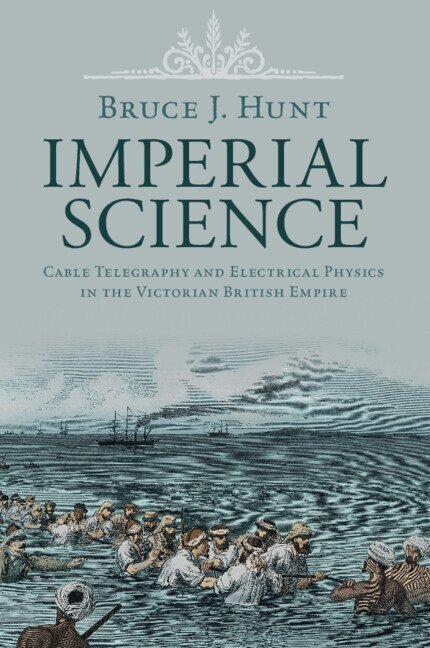
In the second half of the nineteenth century, British firms and engineers built, laid, and ran a vast global network of submarine telegraph cables. For the first time, cities around the world were put into almost instantaneous contact, with profound effects on commerce, international affairs, and the dissemination of news. Science, too, was strongly affected, as cable telegraphy exposed electrical researchers to important new phenomena while also providing a new and vastly larger market for their expertise. By examining the deep ties that linked the cable industry to work in electrical physics in the nineteenth century - culminating in James Clerk Maxwell's formulation of his theory of the electromagnetic field - Bruce J. Hunt sheds new light both on the history of the Victorian British Empire and on the relationship between science and technology.
Imperial Science
Cable Telegraphy and Electrical Physics in the Victorian British Empire
Inbunden, Engelska, 2021
1 133 kr
Skickas inom 7-10 vardagar
In the second half of the nineteenth century, British firms and engineers built, laid, and ran a vast global network of submarine telegraph cables. For the first time, cities around the world were put into almost instantaneous contact, with profound effects on commerce, international affairs, and the dissemination of news. Science, too, was strongly affected, as cable telegraphy exposed electrical researchers to important new phenomena while also providing a new and vastly larger market for their expertise. By examining the deep ties that linked the cable industry to work in electrical physics in the nineteenth century - culminating in James Clerk Maxwell's formulation of his theory of the electromagnetic field - Bruce J. Hunt sheds new light both on the history of the Victorian British Empire and on the relationship between science and technology.