Bruce L. McCormack - Böcker
Visar alla böcker från författaren Bruce L. McCormack. Handla med fri frakt och snabb leverans.
10 produkter
10 produkter
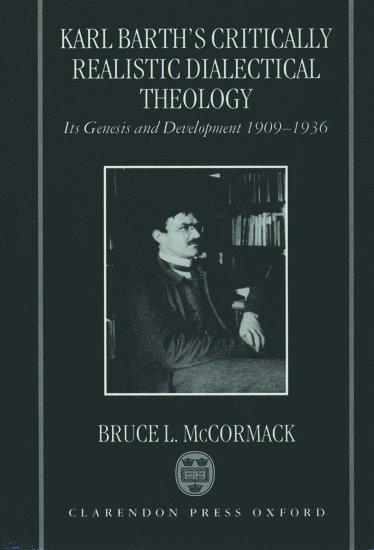
Karl Barth's Critically Realistic Dialectical Theology
Its Genesis and Development 1909-1936
Häftad, Engelska, 1997
2 186 kr
Skickas inom 7-10 vardagar
`McCormack is master of this voluminous material. He is scrupulously at home in the intricate, dramatic background of Swiss socialist politics ...The result is a masterly study, often as compelling as its theme.'George Steiner, Times Literary Supplement`This meticulous and definitive study ... supersedes most previous interpretations.'Colin Gunton, Theological Book Review`it should quickly attain classic status. It is an exceptionally fine and erudite piece of work....The results of this painstaking attention to detail are truly ground-breaking. This is a major intellectual achievement, an interpretative act of great courage, and Barth studies will never look the same.'Graham Ward, Expository Times This book is a new, major intellectual biography of perhaps the most influential theologian of the twentieth century, Karl Barth. It offers the first full-scale revision of the well-known theologian Hans Urs Balthasar's seminal interpretation of Barth, which was first published in 1951. Drawing on a wealth of material, much of it unpublished during Barth's lifetime, as well as a thorough acquaintance with the best of recent German scholarship, Professor McCormack demonstrates that the fundamental decision which would control the whole of Barth's development - the turn to a new, critically realistic form of theological objectivism - was already made during the years in which Barth was at work on his first commentary on Romans. Professor McCormack further argues that the most significant subsequent decisions - both material and methodological - were made in Barth's Gottingen Dogmatics of 1924/5, and not later in the 1931 book on Anselm, as has often been alleged. Finally, he seeks to show that von Balthasar's description of a turn from dialectic to analogy, which provided the foundation for the neo-orthodox reading of Barth in the English-speaking world, fails to take seriously enough the extent to which dialectic remained a constitutive feature of Barth's outlook in the Church Dogmatics. This unique and important work provides not simply a fresh interpretation of Barth's development, but also a new paradigm for understanding the whole of Barth's theology.
309 kr
Skickas
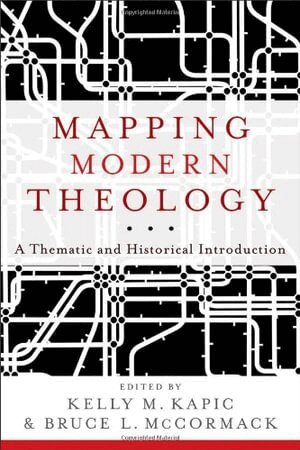
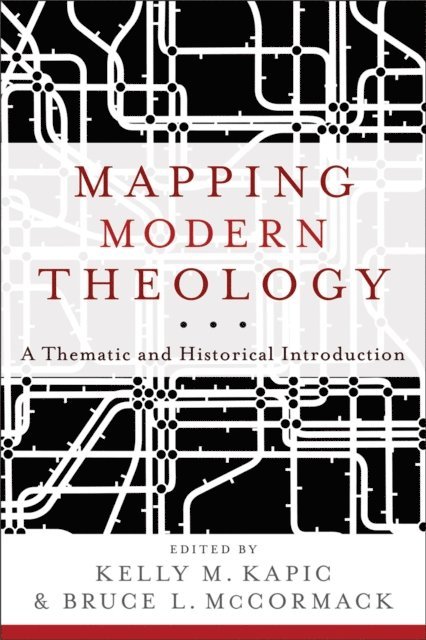
This textbook offers a fresh approach to modern theology by approaching the field thematically, covering classic topics in Christian theology over the last two hundred years. The editors, leading authorities on the history of nineteenth- and twentieth-century theology, have assembled a respected team of international scholars to offer substantive treatment of important doctrines and key debates in modern theology. Contributors include Kevin Vanhoozer, John Webster, Veli-Matti Kärkkäinen, and Michael Horton. The volume enables readers to trace how key doctrinal questions were discussed, where the main debates lie, and how ideas developed. Topics covered include the Trinity, divine attributes, creation, the atonement, ethics, practical theology, and ecclesiology.
386 kr
Skickas inom 3-6 vardagar
402 kr
Skickas inom 7-10 vardagar
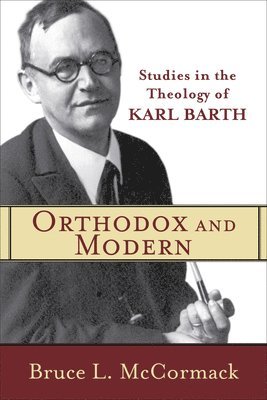
In this enlightening study, Bruce McCormack reconsiders the importance of Karl Barth's theology. McCormack begins with Barth's relation to nineteenth-century theologians and then turns to critique the works of contemporary authors within postmodern circles who have attempted to reinterpret Barth to fit their categories. The later sections of McCormack's study probe more deeply into Barth's theology and consider European perspectives. As the title affirms, McCormack suggests that Barth was, in fact, both orthodox and modern in his theology.McCormack has established a reputation as a thoughtful scholar, and his study of Barth will certainly find a broad audience in academic circles. But serious readers and clergy will also find it a helpful guide to Barth's theology and his continuing importance.
437 kr
Skickas inom 3-6 vardagar
420 kr
Skickas inom 3-6 vardagar
362 kr
Skickas inom 7-10 vardagar
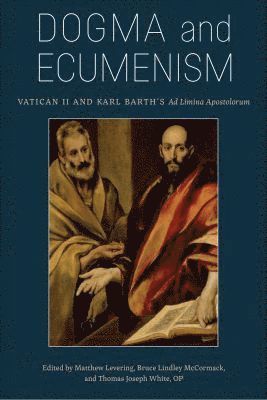
The conversation of this book is structured around five major documents from the Second Vatican Council, each of which Barth commented upon in his short but penetrating response to the Council, published as Ad Limina Apostolorum. In the two opening essays, Thomas Joseph White reflects upon the contribution that this book seeks to make to contemporary ecumenism rooted in awareness of the value of dogmatic theology; and Matthew Levering explores the way in which Barth’s Ad Limina Apostolorum flows from his preconciliar dialogues with Catholic representatives of the nouvelle théologie and remain relevant to the issues facing Catholic theology today. The next two essays turn to Dei Verbum, the Dogmatic Constitution on Divine Revelation; here Katherine Sonderegger (Protestant) reflects on scripture and Lewis Ayres (Catholic) reflects on tradition. The next two essays address the Dogmatic Constitution on the Church, Lumen Gentium, which touches upon central differences of Catholic and Protestant self-understanding. Christoph Schwöbel (Protestant) analyzes visible ecclesial identity as conceived in a Protestant context, while Thomas Joseph White (Catholic) engages Barth’s Reformed criticisms of the Catholic notion of the Church. The next two essays take up Nostra Aetate: Bruce McCormack (Protestant) asks whether it is true to say that Muslims worship the same God as Christians, and Bruce D. Marshall (Catholic) explores the implications of the Council’s reflections on the Jewish people. The next two essays take up the Pastoral Constitution on the Church in the Modern World, Gaudium et Spes: John Bowlin (Protestant) makes use of the thought of Aquinas to consider the promise and perils of the document, while Francesca Aran Murphy (Catholic) engages critically with George Lindbeck’s analysis of the document. The next two essays explore Unitatis Redintegratio: Hans Boersma (Protestant) asks whether the ecumenical intention of the document is impaired by its insistence that the unity of the Church is already present in the Catholic Church, and Reinhard Hütter (Catholic) systematically addresses Barth’s questions regarding the document. The noted ecumenist and Catholic theologian Richard Schenk brings the volume to a close by reflecting on “true and false ecumenism” in the post-conciliar period.
1 432 kr
Skickas inom 5-8 vardagar
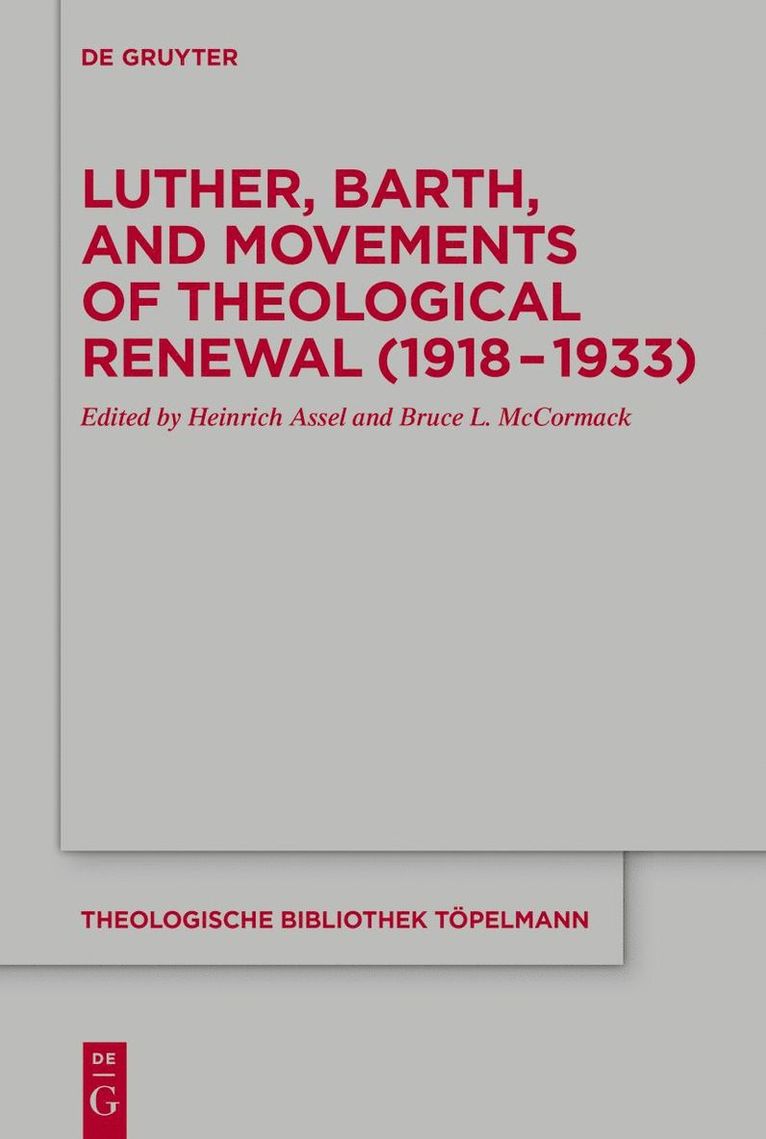
The essays contained in this book originated as lectures at an international conference held in Princeton organized by Christine Helmer (Northwestern) and the editors of this book. This book itself illuminates in a fresh way the formation, cross-fertilization, break-up, and re-organization of movements of theological renewal during the tumultuous years of the Weimar Republic. Three Protestant movements, in particular, demand our attention: the dialectical theology (Karl Barth, Friedrich Gogarten, Rudolf Bultmann); the Luther Renaissance which found adherents amongst the students of Karl Holl (Hans Joachim Iwand, Rudolf Herrmann and Emmanuel Hirsch) and Lutheran confessional movement (Werner Elert and Paul Althaus). Attention is also given to Bultmann’s close conversation-partner Martin Heidegger. Rounding out the picture thus drawn is Martin Buber, representing the Jewish Renaissance that flourished briefly in the Weimar years. The goal of this book is twofold: to trace the most significant developments that occurred within and across these movements and, most importantly, to assess the uses made of Luther’s theology in all phases of these developments and in relation to dramatically different sets of issues (ranging from the doctrines of revelation, reconciliation and sin to theories of the state). We find Luther at the heart of a number of debates. So important was he that the divergences between and within the various movements can rightly be seen as a dispute over his legacy. Most of the theologians and philosophers treated in this book were educated in the pre-war years - and some at least of what they learned survived in a transfigured form the impact of the collapse of the Wilhelminian Empire. That is especially clear in the impact of the Jeiwsh philosopher of religion Hermann Cohen on K. Barth, R. Bultmann, and R. Hermann. During the years of peace (prior to the stock market crash in 1929), divergences could be accepted with some degree of equanimity by most of those engaged in renewal. To be sure, tensions already existed which could, at any time, have led to splits within the dialectical theology most especially - but did not have to do so. The commentary of R. Bultmann on F. Gogarten’s Ich glaube an den dreieinigen Gott, which is published for the first time in this volume, gives vivid expression to these latent tendencies. For the time being, however, a spirit of cooperation and rigorous academic engagement prevailed. That changed with the onset of the Great Depression. After the national election held on 14 September1930 (which saw the National Socialists become the second largest party in the Reichstag, the fortunes of all movements were increasingly held hostage to the uses made of theology to devise theological accounts of the state which stood in differing degrees of support or open resistance to government policy. The result was a realignment of forces within church and theology
286 kr
Skickas inom 5-8 vardagar
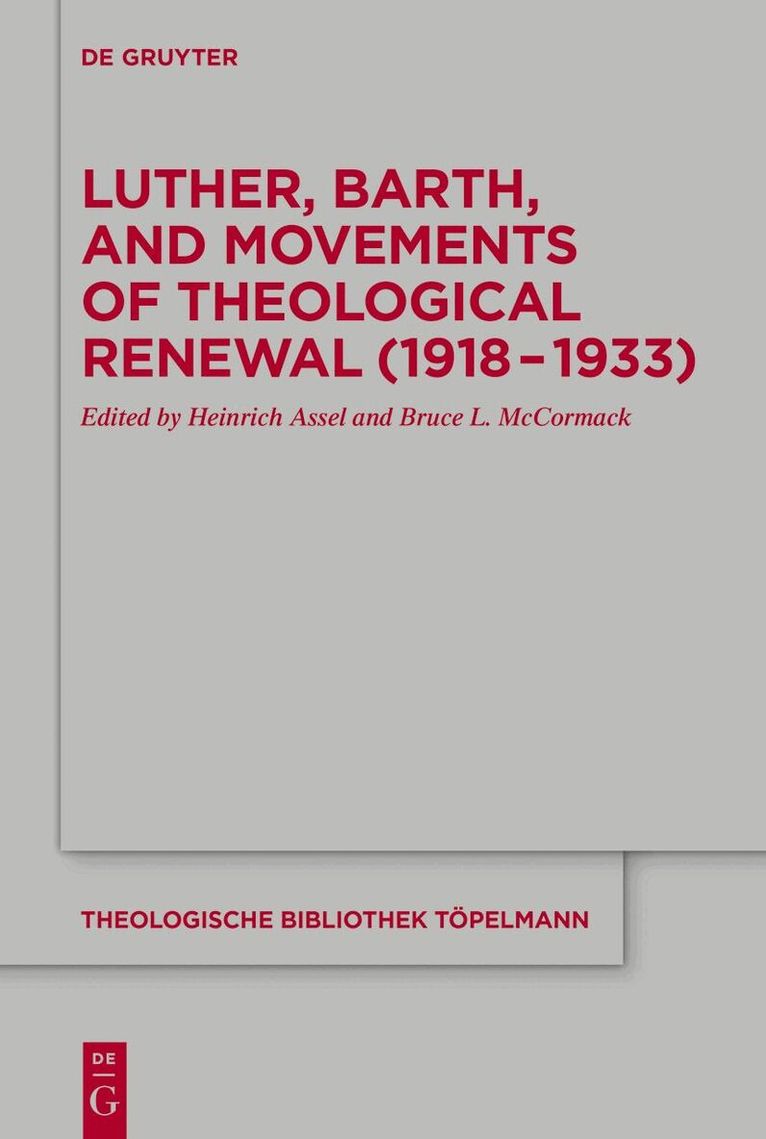
The essays contained in this book originated as lectures at an international conference held in Princeton organized by Christine Helmer (Northwestern) and the editors of this book. This book itself illuminates in a fresh way the formation, cross-fertilization, break-up, and re-organization of movements of theological renewal during the tumultuous years of the Weimar Republic. Three Protestant movements, in particular, demand our attention: the dialectical theology (Karl Barth, Friedrich Gogarten, Rudolf Bultmann); the Luther Renaissance which found adherents amongst the students of Karl Holl (Hans Joachim Iwand, Rudolf Herrmann and Emmanuel Hirsch) and Lutheran confessional movement (Werner Elert and Paul Althaus). Attention is also given to Bultmann’s close conversation-partner Martin Heidegger. Rounding out the picture thus drawn is Martin Buber, representing the Jewish Renaissance that flourished briefly in the Weimar years. The goal of this book is twofold: to trace the most significant developments that occurred within and across these movements and, most importantly, to assess the uses made of Luther’s theology in all phases of these developments and in relation to dramatically different sets of issues (ranging from the doctrines of revelation, reconciliation and sin to theories of the state). We find Luther at the heart of a number of debates. So important was he that the divergences between and within the various movements can rightly be seen as a dispute over his legacy. Most of the theologians and philosophers treated in this book were educated in the pre-war years - and some at least of what they learned survived in a transfigured form the impact of the collapse of the Wilhelminian Empire. That is especially clear in the impact of the Jeiwsh philosopher of religion Hermann Cohen on K. Barth, R. Bultmann, and R. Hermann. During the years of peace (prior to the stock market crash in 1929), divergences could be accepted with some degree of equanimity by most of those engaged in renewal. To be sure, tensions already existed which could, at any time, have led to splits within the dialectical theology most especially - but did not have to do so. The commentary of R. Bultmann on F. Gogarten’s Ich glaube an den dreieinigen Gott, which is published for the first time in this volume, gives vivid expression to these latent tendencies. For the time being, however, a spirit of cooperation and rigorous academic engagement prevailed. That changed with the onset of the Great Depression. After the national election held on 14 September1930 (which saw the National Socialists become the second largest party in the Reichstag, the fortunes of all movements were increasingly held hostage to the uses made of theology to devise theological accounts of the state which stood in differing degrees of support or open resistance to government policy. The result was a realignment of forces within church and theology
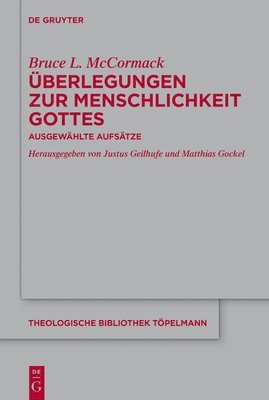
Del 212 - Theologische Bibliothek Töpelmann
Überlegungen Zur Menschlichkeit Gottes
Ausgewählte Aufsätze
Inbunden, Tyska, 2024
1 531 kr
Skickas inom 3-6 vardagar