Bruno Currie – författare
Visar alla böcker från författaren Bruno Currie. Handla med fri frakt och snabb leverans.
8 produkter
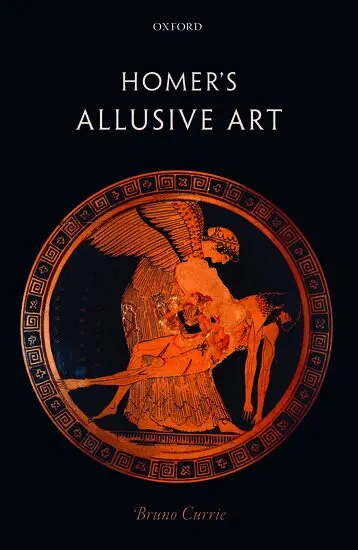
Homer's Allusive Art
Av Bruno Currie
E-bok, 2016
1771 kr
Lägg i varukorg
What kind of allusion is possible in a poetry derived from a centuries-long oral tradition, and what kind of oral-derived poetry are the Homeric epics? Comparison of Homeric epic with South Slavic heroic song has suggested certain types of answers to these questions, yet the South Slavic paradigm …
Homer's Allusive Art
Av Bruno Currie
E-bok, 2016
1771 kr
Lägg i varukorg
What kind of allusion is possible in a poetry derived from a centuries-long oral tradition, and what kind of oral-derived poetry are the Homeric epics? Comparison of Homeric epic with South Slavic heroic song has suggested certain types of answers to these questions, yet the South Slavic paradigm …
Pindar and the Cult of Heroes
Av Bruno Currie
E-bok, 2005
956 kr
Lägg i varukorg
Pindar and the Cult of Heroes combines a study of Greek culture and religion (hero cult) with a literary-critical study of Pindar''s epinician poetry. It looks at hero cult generally, but focuses especially on heroization in the 5th century BC. There are individual chapters on the heroization of …
Pindar and the Cult of Heroes
Av Bruno Currie
E-bok, 2010
956 kr
Lägg i varukorg
Pindar and the Cult of Heroes combines a study of Greek culture and religion (hero cult) with a literary-critical study of Pindar''s epinician poetry. It looks at hero cult generally, but focuses especially on heroization in the 5th century BC. There are individual chapters on the heroization of …
Homer's Allusive Art
Av Bruno Currie
Inbunden, 2016
2652 kr
Lägg i varukorg
What kind of allusion is possible in a poetry derived from a centuries-long oral tradition, and what kind of oral-derived poetry are the Homeric epics? Comparison of Homeric epic with South Slavic heroic song has suggested certain types of answers to these questions, yet the South Slavic paradigm …
Pindar and the Cult of Heroes
Av Bruno Currie
Inbunden, 2005
4918 kr
Lägg i varukorg
Pindar and the Cult of Heroes combines a study of Greek culture and religion (hero cult) with a literary-critical study of Pindar's epinician poetry. It looks at hero cult generally, but focuses especially on heroization in the 5th century BC. There are individual chapters on the heroization of war …
Pindar and the Cult of Heroes
Av Bruno Currie
Häftad, 2010
1257 kr
Lägg i varukorg
Pindar and the Cult of Heroes combines a study of Greek culture and religion (hero cult) with a literary-critical study of Pindar's epinician poetry. It looks at hero cult generally, but focuses especially on heroization in the 5th century BC. There are individual chapters on the heroization of war …
Reception of Greek Lyric Poetry in the Ancient World: Transmission, Canonization and Paratext
Studies in Archaic and Classical Greek Song, Vol. 5
Av Bruno Currie
Inbunden, 2019
2491 kr
Lägg i varukorg
In The Reception of Greek Lyric Poetry in the Ancient World: Transmission, Canonization and Paratext, a team of international scholars consider the afterlife of early Greek lyric poetry (iambic, elegiac, and melic) up to the 12th century CE, from a variety of intersecting perspectives: …