Bryan Karetnyk – Författare
Visar alla böcker från författaren Bryan Karetnyk. Handla med fri frakt och snabb leverans.
2 produkter
2 produkter
170 kr
Skickas
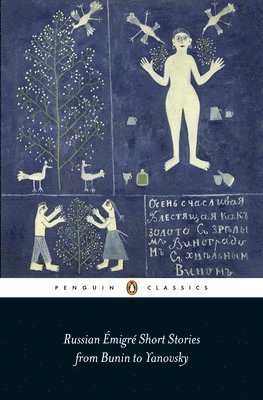
SHORTLISTED FOR THE READ RUSSIA PRIZE 2018LONGLISTED FOR THE GLOBAL READ RUSSIA PRIZE 2018Fleeing Russia amid the chaos of the 1917 revolution and subsequent Civil War, many writers went on to settle in Paris, Berlin and elsewhere. In exile, they worked as taxi drivers, labourers and film extras, and wrote some of the most brilliant and imaginative works of Russian literature.This new collection includes stories by the most famous émigré writers, Vladimir Nabokov and Ivan Bunin, and introduces powerful lesser known voices, some of whom have never been available in English before. Here is Yuri Felsen's evocative, impressionistic account of a night of debauchery in Paris; Teffi's witty and timely reflections on refugee experience; and Mark Aldanov's sparkling story of an elderly astrologer who unexpectedly finds himself in Hitler's bunker in Berlin. Exploring displacement, loss and new beginnings, their short stories vividly evoke the experience of life in exile and also return obsessively to the Russia that has been left behind - whether as a beautiful dream or terrifying nightmare. By turns experimental, funny, exciting, poignant and haunting, these works reveal the full range of émigré writing and are presented here in masterly translations by Bryan Karetnyk and others.
1 625 kr
Skickas inom 10-15 vardagar
This book presents a sustained and systematic analysis of the totalitarian topos across Vladimir Nabokov’s life and career. Contributing to the ongoing reappraisal of Nabokov’s writing in its engagement with politics and ideology, this study contends that the rise of totalitarianism constituted one of the most urgent, substantial and complex issues with which Nabokov and his peers in emigration had to contend. Yet while the precarious exilic status of the Russian diaspora not only made the spread of totalitarian ideologies and dictatorships an acute and tangible danger, it also, perversely, afforded its members exceptionally free scope to respond intellectually and creatively, as individuals outside and on the limits of these systems. This is the first book that critically and comprehensively examines Nabokov’s literary and intellectual responses to the rise of totalitarian systems and ideologies, contextualizing them within those of his peers in the first wave of Russian emigration.