Bryan R. Warnick - Böcker
Visar alla böcker från författaren Bryan R. Warnick. Handla med fri frakt och snabb leverans.
7 produkter
7 produkter
807 kr
Skickas inom 7-10 vardagar
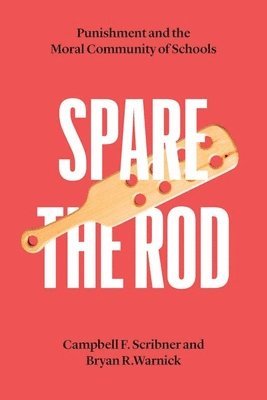
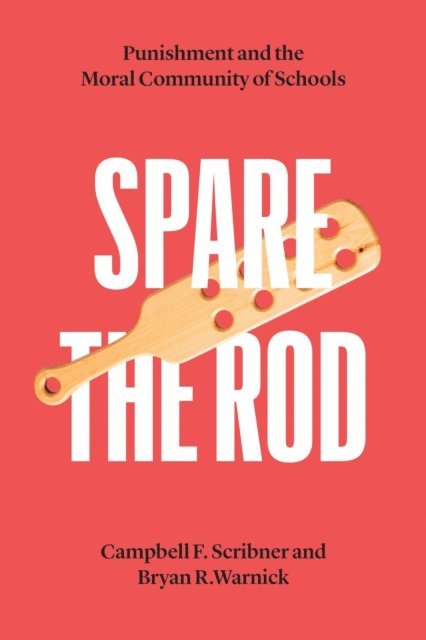
Spare the Rod traces the history of discipline in schools and its ever increasing integration with prison and policing, ultimately arguing for an approach to discipline that aligns with the moral community that schools could and should be.In Spare the Rod, historian Campbell F. Scribner and philosopher Bryan R. Warnick investigate the history and philosophy of America’s punishment and discipline practices in schools. To delve into this controversial subject, they first ask questions of meaning. How have concepts of discipline and punishment in schools changed over time? What purposes are they supposed to serve? And what can they tell us about our assumptions about education? They then explore the justifications. Are public school educators ever justified in punishing or disciplining students? Are discipline and punishment necessary for students’ moral education, or do they fundamentally have no place in education at all? If some form of punishment is justified in schools, what ethical guidelines should be followed? The authors argue that as schools have grown increasingly bureaucratic over the last century, formalizing disciplinary systems and shifting from physical punishments to forms of spatial or structural punishment such as in-school suspension, school discipline has not only come to resemble the operation of prisons or policing, but has grown increasingly integrated with those institutions. These changes and structures are responsible for the school-to-prison pipeline. They show that these shifts disregard the unique status of schools as spaces of moral growth and community oversight, and are incompatible with the developmental environment of education. What we need, they argue, is an approach to discipline and punishment that fits with the sort of moral community that schools could and should be.
232 kr
Skickas inom 7-10 vardagar
Spare the Rod traces the history of discipline in schools and its ever increasing integration with prison and policing, ultimately arguing for an approach to discipline that aligns with the moral community that schools could and should be.In Spare the Rod, historian Campbell F. Scribner and philosopher Bryan R. Warnick investigate the history and philosophy of America’s punishment and discipline practices in schools. To delve into this controversial subject, they first ask questions of meaning. How have concepts of discipline and punishment in schools changed over time? What purposes are they supposed to serve? And what can they tell us about our assumptions about education? They then explore the justifications. Are public school educators ever justified in punishing or disciplining students? Are discipline and punishment necessary for students’ moral education, or do they fundamentally have no place in education at all? If some form of punishment is justified in schools, what ethical guidelines should be followed? The authors argue that as schools have grown increasingly bureaucratic over the last century, formalizing disciplinary systems and shifting from physical punishments to forms of spatial or structural punishment such as in-school suspension, school discipline has not only come to resemble the operation of prisons or policing, but has grown increasingly integrated with those institutions. These changes and structures are responsible for the school-to-prison pipeline. They show that these shifts disregard the unique status of schools as spaces of moral growth and community oversight, and are incompatible with the developmental environment of education. What we need, they argue, is an approach to discipline and punishment that fits with the sort of moral community that schools could and should be.
1 027 kr
Tillfälligt slut
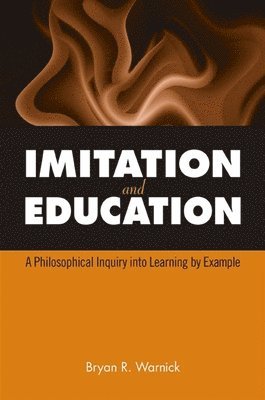
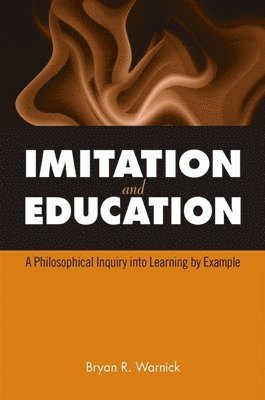
Brings together current research in philosophy, cognitive science, and education to uncover and criticize the traditional assumptions of how and why we should learn through imitation.Imitation and Education provides an in-depth reassessment of learning by example that places imitation in a larger social context. It is the first book to bring together ancient educational thought and startling breakthroughs in the fields of cognitive science, psychology, and philosophy to reconsider how we learn from the lives of others. Bryan R. Warnick addresses how we become exemplars, analyzes how exemplars inspire imitation, and assesses the meaning and value of imitation in education and society, including how teachers can better use examples and what should be done about problems such as the imitation of media violence. Warnick constructs a provocative, cautionary, yet hopeful account of learning by example that acknowledges the power of social contexts in shaping human lives.
337 kr
Skickas inom 7-10 vardagar
Brings together current research in philosophy, cognitive science, and education to uncover and criticize the traditional assumptions of how and why we should learn through imitation.Imitation and Education provides an in-depth reassessment of learning by example that places imitation in a larger social context. It is the first book to bring together ancient educational thought and startling breakthroughs in the fields of cognitive science, psychology, and philosophy to reconsider how we learn from the lives of others. Bryan R. Warnick addresses how we become exemplars, analyzes how exemplars inspire imitation, and assesses the meaning and value of imitation in education and society, including how teachers can better use examples and what should be done about problems such as the imitation of media violence. Warnick constructs a provocative, cautionary, yet hopeful account of learning by example that acknowledges the power of social contexts in shaping human lives.
Understanding Student Rights in Schools
Speech, Religion and Privacy in Educational Settings
Häftad, Engelska, 2012
557 kr
Skickas inom 11-20 vardagar
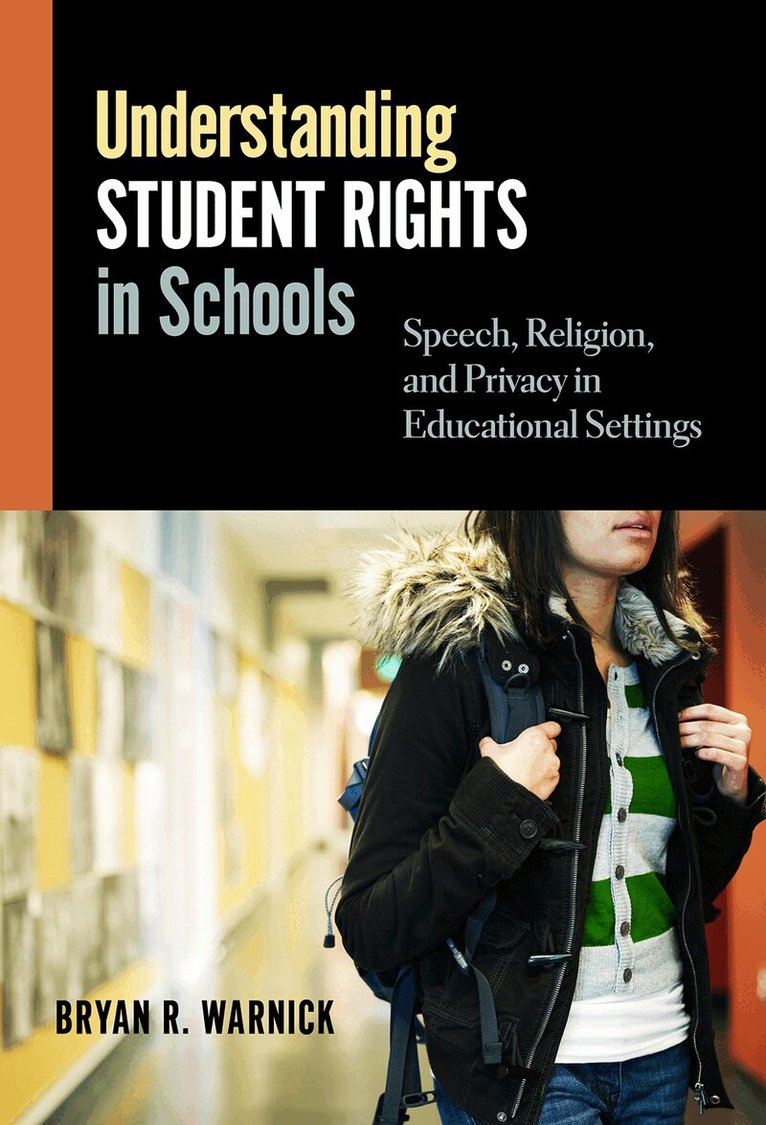
What rights should students expect to exercise in public schools? Should bible study meetings be allowed during free periods? Should students be allowed to wear t-shirts that exhort taking drugs or committing violent acts? Should students be required to participate in drug testing? In this concisely argued book, Bryan Warnick examines how student rights in three areas—free speech, privacy, and religious expression—have been addressed in policy, ethics, and the law.Starting with the Tinker decision, a landmark 1969 U.S. Supreme Court ruling which declared that students in public schools had constitutional rights that must be understood “in light of special characteristics of the school environment,” Warnick develops education criteria that schools can use when facing difficult questions of student rights. Both probing and practical, Warnick explains how student rights can be properly understood and protected.Important reading for anyone concerned with the ethical dimensions of schooling, this book offers:A comprehensive analysis of the relationship between ethics and law in school settings. A specific framework for thinking about individual rights for students in public schools which balances authentic respect for individual liberties with the real need for schools to maintain a proper learning environment. An interdisciplinary approach that looks at legal, philosophical, and psychological issues in education. Practical solutions to real and pressing ethical challenges faced by today’s educators, school leaders, and policymakers.
1 416 kr
Skickas
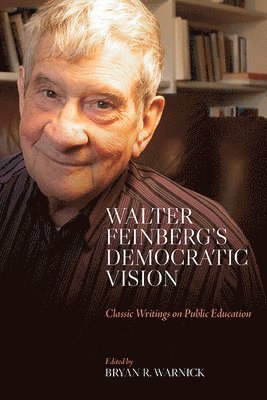
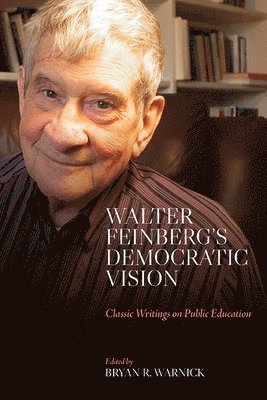
Collects Walter Feinberg's classic writings on the meaning of democracy for public education.For over fifty years, Walter Feinberg has been a leader in interpreting democracy in and its meaning for public education. In this collection, Feinberg explores the question of how to study education, the necessary role of history and philosophy in this endeavor, and the need for educational theorists to engage with the lived realities of students, parents, and teachers through philosophical anthropology. He demonstrates a particular way of paying attention to public education that brings an interpretive sensitivity for others to the big philosophical questions of what public schooling should be in democratic societies. Feinberg explores many of the central questions that vex educational policy and practice: What should be the purpose of public schools? What should we think of school choice proposals? What are the relationships between religion and public schools? Should schools promote an American identity? How should we think about affirmative action? In this tour of educational ideas, democracy is the central concern, as it both presents questions that demand answers and becomes an approach to studying education with rigor and sensitivity.
382 kr
Skickas
Collects Walter Feinberg's classic writings on the meaning of democracy for public education.For over fifty years, Walter Feinberg has been a leader in interpreting democracy in and its meaning for public education. In this collection, Feinberg explores the question of how to study education, the necessary role of history and philosophy in this endeavor, and the need for educational theorists to engage with the lived realities of students, parents, and teachers through philosophical anthropology. He demonstrates a particular way of paying attention to public education that brings an interpretive sensitivity for others to the big philosophical questions of what public schooling should be in democratic societies. Feinberg explores many of the central questions that vex educational policy and practice: What should be the purpose of public schools? What should we think of school choice proposals? What are the relationships between religion and public schools? Should schools promote an American identity? How should we think about affirmative action? In this tour of educational ideas, democracy is the central concern, as it both presents questions that demand answers and becomes an approach to studying education with rigor and sensitivity.