Bryan Sykes - Böcker
Visar alla böcker från författaren Bryan Sykes. Handla med fri frakt och snabb leverans.
11 produkter
11 produkter
1 801 kr
Skickas inom 5-8 vardagar
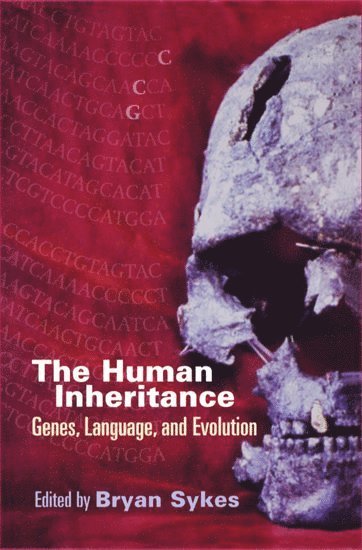
Very little excites human curiosity quite so much as contemplating human origins. More than any other branch of science, evolution - and human evolution in particular - is fraught with controversy. Working from what is essentially the same data, schools of opinion have come to diametrically opposed conclusions. Are we adapted Neanderthals, or a new species altogether which wiped them out? Did the first Americans enter the continent 30,000 or 12,000 years ago? Did the Polynesians sail against wind and current to an unknown fate, or were they just blown across from South America while out fishing? Why do we speak different languages? Is it because language traces our biological history, or are the two things completely unrelated? Evolution, because it deals with a past that can never conclusively be known, was once ideal material for perpetual debate. Enter genetics with a completely new source of objective data. Surely these old questions would soon be settled one way or another. Or would they? Bryan Sykes brings together a world-class set of contributors to debate these questions. The result is eight lively essays, each of which offers a different opinion about what the links between genes, language, and the archaeological record can tell us about human evolution - and indeed, whether they can tell us anything conclusive at all. This stimulating and challenging book poses more questions than it offers answers, eschews jargon, and pursues controversy. Guaranteed to fascinate anyone who has ever wondered how the fossil record, the incredible diversity of human language, and our genetic inheritance might combine to give a glimpse of human origins.
558 kr
Skickas inom 3-6 vardagar
One of the world's leading geneticists, Bryan Sykes has helped thousands find their ancestry in the British Isles. Saxons, Vikings, and Celts, which resulted from a systematic ten-year DNA survey of more than 10,000 volunteers, traces the true genetic makeup of the British Isles and its descendants, taking readers from the Pontnewydd cave in North Wales to the resting place of "The Red Lady" of Paviland and the tomb of King Arthur. Genealogy has become a popular pastime of Americans interested in their heritage, and this is the perfect work for anyone interested in finding their heritage in England, Scotland, or Ireland.
170 kr
Skickas inom 7-10 vardagar
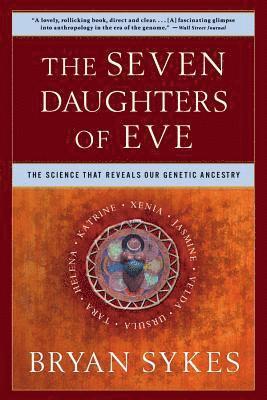
In 1994 Bryan Sykes was called in as an expert to examine the frozen remains of a man trapped in glacial ice in northern Italy for over 5000 years—the Ice Man. Sykes succeeded in extracting DNA from the Ice Man, but even more important, writes Science News, was his "ability to directly link that DNA to Europeans living today." In this groundbreaking book, Sykes reveals how the identification of a particular strand of DNA that passes unbroken through the maternal line allows scientists to trace our genetic makeup all the way back to prehistoric times—to seven primeval women, the "seven daughters of Eve."
286 kr
Skickas inom 5-8 vardagar
By the nationally best-selling author of The Seven Daughters of Eve, Adam's Curse investigates the ultimate evolutionary crisis: a man-free future. How is it possible that the Y chromosome, which separated the sexes and allowed humans to rise to the apex of the animal kingdom, also threatens to destroy sexual reproduction altogether? Bryan Sykes confronts recent advances in evolutionary theory to find the answers to the questions that inexorably follow: Is there a genetic cause for men's greed, aggression, and promiscuity? Could a male homosexual gene possibly exist? A must read for anyone interested in popular science, family genealogy, and today's infertility crisis, Adam's Curse provokes a shocking debate on the nature of sexual reproduction.
342 kr
Skickas inom 3-6 vardagar
One of the world's leading geneticists, Bryan Sykes has helped thousands find their ancestry in the British Isles. Saxons, Vikings, and Celts, which resulted from a systematic ten-year DNA survey of more than 10,000 volunteers, traces the true genetic makeup of the British Isles and its descendants, taking readers from the Pontnewydd cave in North Wales to the resting place of the Red Lady of Paviland and the tomb of King Arthur. This illuminating guide provides a much-needed introduction to the genetic history of the people of the British Isles and their descendants throughout the world.
126 kr
Skickas
In 1994 Professor Bryan Sykes, a leading world authority on DNA and human evolution, was called in to examine the frozen remains of a man trapped in glacial ice in northern Italy. News of the discovery of the Ice Man and his age, which was put at over five thousand years old, fascinated the world. But what made the story particularly extraordinary was that Professor Sykes was also able to track down a living generic relative of the Ice Man, a woman living in Britain today.How was he able to locate a living relative of a man who died thousands of years ago? In The Seven Daughters of Eve, Bryan Sykes gives us a first hand account of his research into a remarkable gene which passes undiluted from generation to generation through the maternal line and shows how it is being used to track our genetic ancestors through time and space. After plotting thousands of DNA sequences from all over the world he found that they had clustered around a handful of distinct groups. In Europe there are only seven. The conclusion: almost everyone of native European descent, wherever they live in the world, can trace their ancestry back to one of seven women, the Seven Daughters of Eve. He has named them Ursula, Xenia, Helena, Velda, Tara, Katrine and Jasmine.In this remarkable scientific adventure story we learn exactly how our origins can be traced, how and where our ancient genetic ancestors lived, what their live were like and how we are each living proof of the almost miraculous strength of our DNA which has survived and prospered over so many thousands of years to reach us today. It is a book that not only presents the story of our evolution in a wholly new light, but also strikes right at the heart of ourselves as individuals and of our sense of identity.
141 kr
Skickas
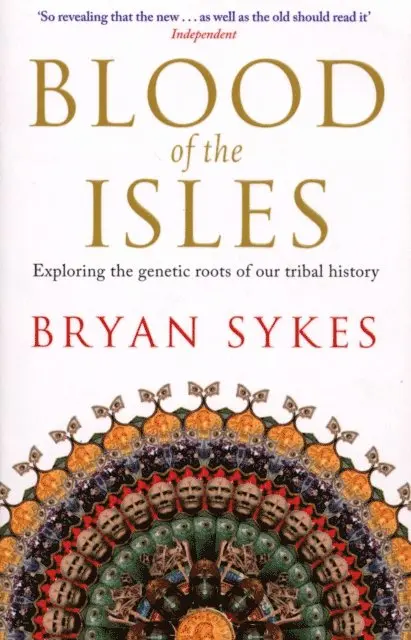
Bryan Sykes, the world's first genetic archaeologist, takes us on a journey around the family tree of Britain and Ireland, to reveal how our tribal history still colours the country today.In 54BC Julius Caesar launched the first Roman invasion of Britain. His was the first detailed account of the Celtic tribes that inhabited the Isles. But where had they come from and how long had they been there? When the Romans eventually left five hundred years later, they were succeeded by invasions of Anglo-Saxons, Vikings and Normans. Did these successive invasions obliterate the genetic legacy of the Celts, or have very little effect?After two decades tracing the genetic origins of peoples from all over the world, Bryan Sykes has now turned the spotlight on his own back yard. In a major research programme, the first of its kind, he set out to test the DNA of over 10,000 volunteers from across Britain and Ireland with the specific aim of answering this very question: what is our modern genetic make-up and what does it tell us of our tribal past? Are the modern people of the Isles a delicious genetic cocktail? Or did the invaders keep mostly to themselves forming separate genetic layers within the Isles? As his findings came in, Bryan Sykes discovered that the genetic evidence revealed often very different stories to the conventional accounts coming from history and archaeology. Blood of the Isles reveals the nature of our genetic make-up as never before and what this says about our attitudes to ourselves, each other, and to our past. It is a gripping story that will fascinate and surprise with its conclusions.
170 kr
Skickas inom 7-10 vardagar
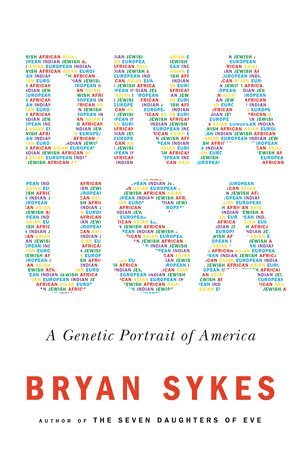
Bryan Sykes, one of the world’s leading geneticists and best-selling author of The Seven Daughters of Eve, sets his sights on America, one of the most genetically variegated countries in the world. Sykes embarks on a road trip—DNA testing kit in tow—interviewing genealogists, anthropologists, and everyday Americans, tracing America’s history along a double helix that stretches from the last Ice Age to the present day. What emerges is an unprecedented look into America’s genetic mosaic that challenges the very notion of how we perceive race and what it means to be an American.
241 kr
Tillfälligt slut
The best-selling author of The Seven Daughters of Eve now turns his sights on the United States, one of the most genetically variegated countries in the world. From the blue-blooded pockets of old-WASP New England to the vast tribal lands of the Navajo, Bryan Sykes takes us on a historical genetic tour, interviewing genealogists, geneticists, anthropologists, and everyday Americans with compelling ancestral stories. His findings suggest:• Of Americans whose ancestors came as slaves, virtually all have some European DNA.• Racial intermixing appears least common among descendants of early New England colonists.• There is clear evidence of Jewish genes among descendants of southwestern Spanish Catholics.• Among white Americans, evidence of African DNA is most common in the South.• European genes appeared among Native Americans as early as ten thousand years ago.An unprecedented look into America's genetic mosaic and how we perceive race, DNA USA challenges the very notion of what we think it means to be American.
249 kr
Skickas inom 7-10 vardagar
170 kr
Skickas inom 7-10 vardagar
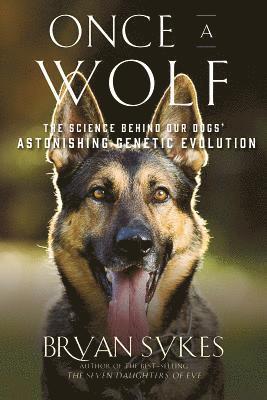
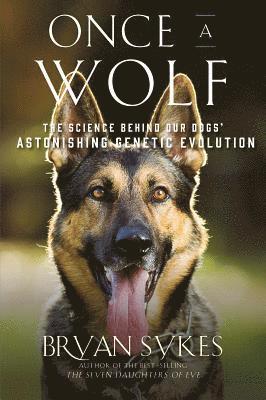
How did wolves evolve into dogs? When did this happen, and what role did humans play? Oxford geneticist Bryan Sykes used the full array of modern technology to explore the canine genetic journey when our ancestors first learned to hunt together with wolves. In the process, he discovered that only a handful of genes have created the huge range of shapes, sizes, and colors in modern dogs. Providing insight into these adaptive stages in “prose both scientific and poetic” (Booklist), Once a Wolf also focuses attention on how human evolution was enhanced by this most improbable ally. Whether examining our obsession with canine purity or delving into the prehistoric past to answer the most fundamental question of all—Why do we love our dog so much?—this book is “a must read for anybody who has ever wondered about the origins of human’s best friend” (Library Journal).