Burr Cartwright Brundage – Författare
Visar alla böcker från författaren Burr Cartwright Brundage. Handla med fri frakt och snabb leverans.
3 produkter
3 produkter
288 kr
Skickas inom 10-15 vardagar
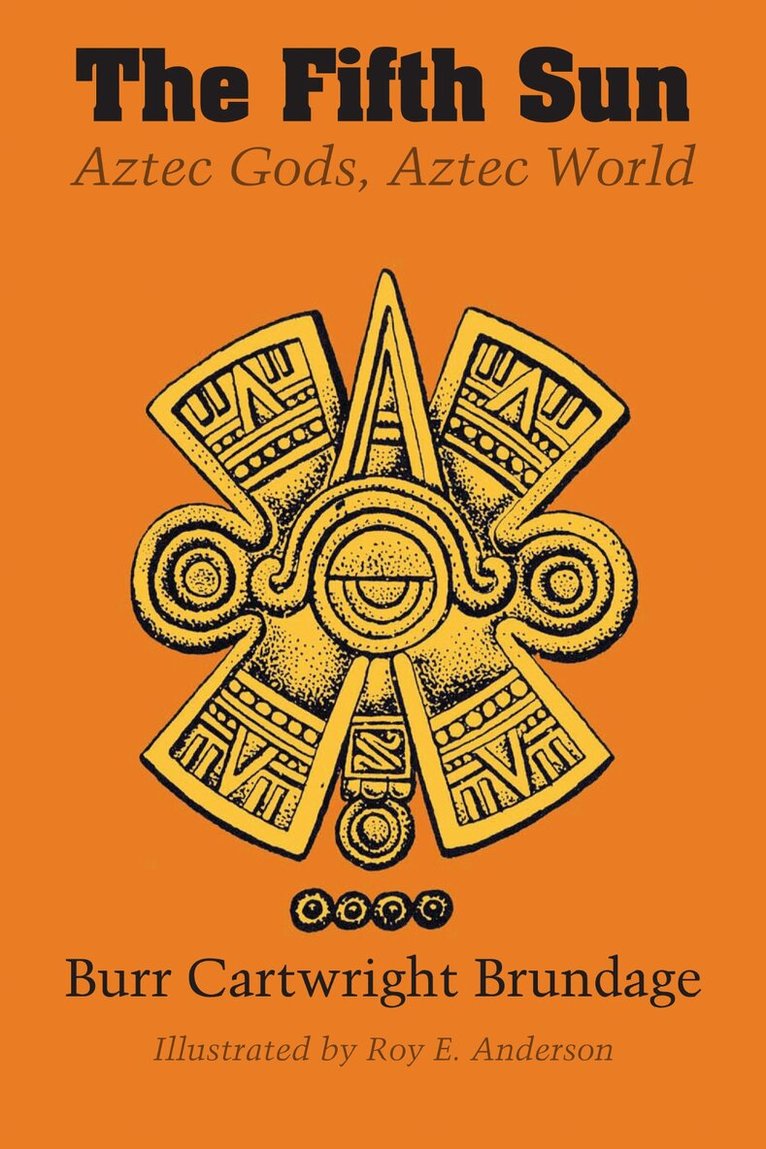
The ancient Aztecs dwelt at the center of a dazzling and complex cosmos. From this position they were acutely receptive to the demands of their gods. The Fifth Sun represents a dramatic overview of the Aztec conception of the universe and the gods who populated it-Quetzalcoatl, the Plumed Serpent; Tezcatlipoca, the Smoking Mirror; and Huitzilopochtli, the Southern Hummingbird. Burr Cartwright Brundage explores the myths behind these and others in the Aztec pantheon in a way that illuminates both the human and the divine in Aztec life.The cult of human sacrifice is a pervasive theme in this study. It is a concept that permeated Aztec mythology and was the central preoccupation of the aggressive Aztec state. Another particularly interesting belief explored here is the “mask pool,” whereby gods could exchange regalia and, thus, identities.This vivid and eminently readable study also covers the use of hallucinogens; cannibalism; the calendars of ancient Mexico; tlachtli, the life-and-death ball game; the flower wars; divine transfiguration; and the evolution of the war god of the Mexica. A splendid introduction to Aztec religion, The Fifth Sun also contains insights for specialists in ethnohistory, mythology, and religion.
393 kr
Skickas inom 10-15 vardagar
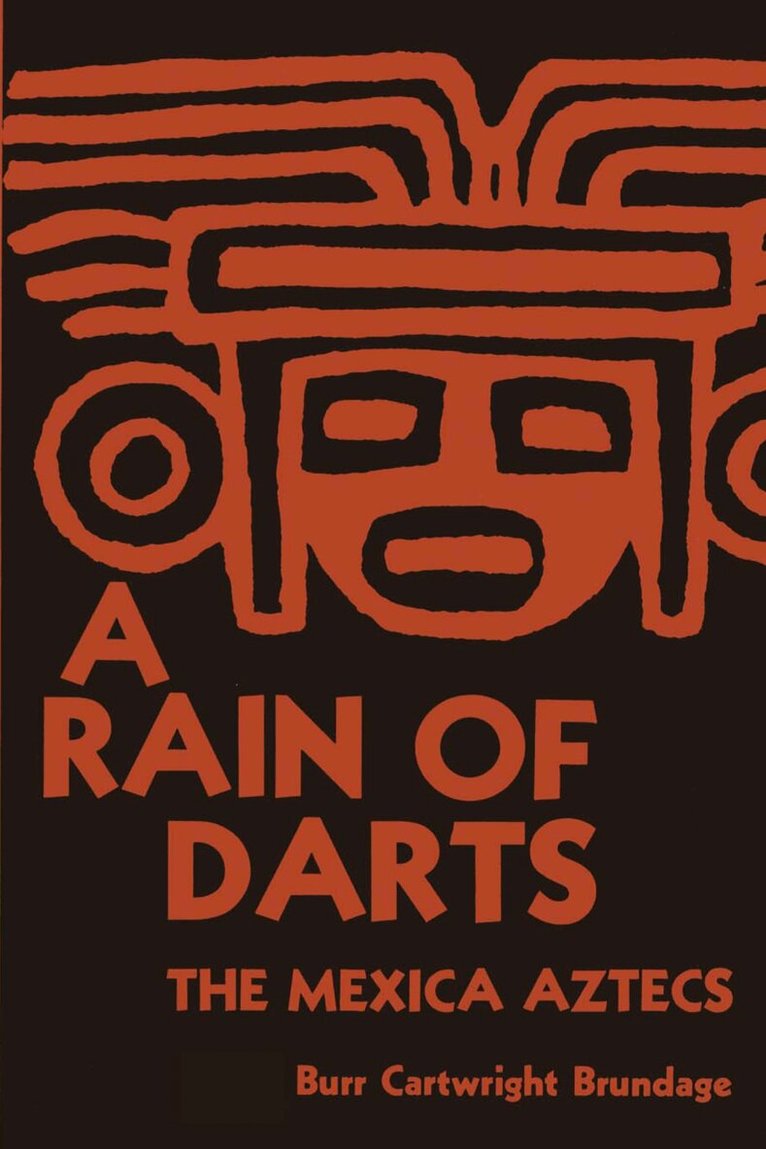
This book was the first serious scholarly attempt in nearly a century to put in narrative form the exciting and important history of the Mexican Indians who founded Tenochtitlan and who created from it what is known as the Aztec empire. Although many native sources, often in translations with scholarly annotations. became available in the twentieth century, the corpus of this material was scattered and uncoordinated. Burr Cartwright Brundage has utilized these sources to produce a consecutive narrative that portrays direction and purpose in the evolution of the Aztec empire. A Rain of Darts is the first one-volume history of the Mexica, historically the most important of the Aztec peoples. The focus of the narrative is on the political state produced by the Mexica during their stormy history. The eleven Mexica reigns that preceded the Spanish Conquest are investigated, their triumphs and errors explained, and the lives of their great leaders illuminated where the sources allow. The narrative opens with the first appearance of the Mexica out of the arid north; it details their aimless wandering, the founding of the city of Mexico in the waters of Lake Tezcoco, their desperate struggle for independence (successfully achieved in 1428), and the flourishing of the new state and its curiously structured empire. This history concludes with an analysis of the character of Moteuczoma II, and investigates the final sickness of the Mexican state. Cortez and his small army of Spaniards are seen here for the first time in historical literature through the eyes of the people they conquered. The Mexica Aztecs remain at the center of the narrative. The Mexica were unable to build a tightly knit empire because of the elitist, international warrior class and its peculiar cult of war and sacrifice. To the Mexica, warfare and bloodshed were sacraments; the teuctli or knightly warrior was the priest of this cult. to which he was as loyal as to the state. In this lay the uniqueness of the Mexican state and the seeds of its tragic end in 1521.
324 kr
Skickas inom 10-15 vardagar
A great account of a classic Indian civilization, this book tells the story of a people who, hatched in a small pocket of the Peruvian sierra, rose in the end to become the architects and chief beneficiaries of an empire they called Tahuantinsuyo, the Four Quarters. Tahuantinsuyo, with Cuzco as its highly respected seat of government and the official residence of the ruling Inca, was a sacred empire. Its territorial aggrandizement was a function of its religious mission, while, reciprocally, its thirst for power dictated what were to be the lineaments of its most holy beliefs. When the sense of divine mission began to fail, the empire incontinently collapsed.But the history of the Inca Empire was more than just a prelude to the Spanish conquest under Francisco Pizarro in 1532. The swift creation of the remarkable state is important in that it is in no way related to the traditions of the European and Asiatic empires. Further, even though the Incas were a people few in numbers, they succeeded in creating a highly bureaucratic organization exceedingly rich in religious ceremonialism.The Incas, dwelling in the highlands of modern Peru, were consolidated by Manco Capac perhaps as early as the eleventh century. Under the rule of a despotic head, known as the Inca, the empire was expanded by Pachacuti, Topa Inca, Huayna Capac, and others up to Atahualpa, until it extended from northern Ecuador to central Chile.The story of this expansion and the description of all the Incas' life, from their religious beliefs and rituals to a discussion of their engineering prowess in their still-existent Royal Road, is fascinating reading.