C. J. Fuller - Böcker
Visar alla böcker från författaren C. J. Fuller. Handla med fri frakt och snabb leverans.
8 produkter
8 produkter
786 kr
Skickas inom 7-10 vardagar
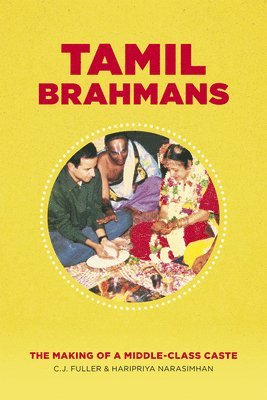
A cruise along the streets of Chennai - or Silicon Valley - filled with professional young Indian men and women, reveals the new face of India. In the twenty-first century, Indians have acquired a new kind of global visibility, one of rapid economic advancement and, in the information technology industry, spectacular prowess. In this book, C. J. Fuller and Haripriya Narasimhan examine one particularly striking group who have taken part in this development: Tamil Brahmans - a formerly traditional, rural, high-caste elite who have transformed themselves into a new middle-class caste in India, the United States, and elsewhere. Fuller and Narasimhan offer one of the most comprehensive looks at Tamil Brahmans around the world to date. They examine Brahman migration from rural to urban areas, more recent transnational migration, and how the Brahman way of life has translated to both Indian cities and American suburbs. They look at modern education and the new employment opportunities afforded by engineering and IT.They examine how Sanskritic Hinduism and traditional music and dance have shaped Tamil Brahmans' particular middle-class sensibilities and how middle-class status is related to the changing position of women. Above all, they explore the complex relationship between class and caste systems and the ways in which hierarchy has persisted in modernized India.
259 kr
Skickas inom 7-10 vardagar
A cruise along the streets of Chennai - or Silicon Valley - filled with professional young Indian men and women, reveals the new face of India. In the twenty-first century, Indians have acquired a new kind of global visibility, one of rapid economic advancement and, in the information technology industry, spectacular prowess. In this book, C. J. Fuller and Haripriya Narasimhan examine one particularly striking group who have taken part in this development: Tamil Brahmans - a formerly traditional, rural, high-caste elite who have transformed themselves into a new middle-class caste in India, the United States, and elsewhere. Fuller and Narasimhan offer one of the most comprehensive looks at Tamil Brahmans around the world to date. They examine Brahman migration from rural to urban areas, more recent transnational migration, and how the Brahman way of life has translated to both Indian cities and American suburbs. They look at modern education and the new employment opportunities afforded by engineering and IT.They examine how Sanskritic Hinduism and traditional music and dance have shaped Tamil Brahmans' particular middle-class sensibilities and how middle-class status is related to the changing position of women. Above all, they explore the complex relationship between class and caste systems and the ways in which hierarchy has persisted in modernized India.
Del 47 - Cambridge Studies in Social and Cultural Anthropology
Servants of the Goddess
The Priests of a South Indian Temple
Häftad, Engelska, 2007
573 kr
Skickas inom 7-10 vardagar
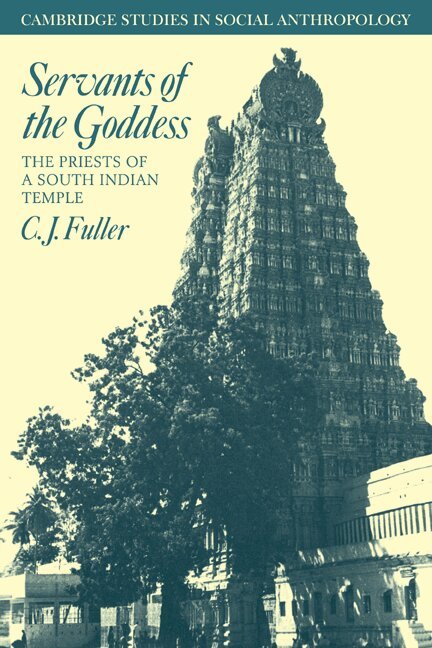
The Minaksi Temple is one of the largest, most celebrated and most popular Hindu temples in India. Situated in the ancient south Indian city of Madurai, it is dedicated to the goddess Minaksi and her husband the god Sundaresvara, a form of the great god Śiva. Minaksi's principal servants in the Temple are the priests who carry out all the elaborate rituals for her and Sundaresvara, and these priests are the subject of this book. Drawing upon his extensive field research in the Temple, Dr Fuller discusses the role of the priests in the Temple and their place in the wider society. He looks at their rights and duties in the Temple, and at the changes in their position that have occurred since the establishment of a modern government and legal system. Throughout his book, the author situates his detailed analysis of the Minaksi Temple priesthood within its wider social and historical context, and relates it to the previous work of anthropologists, as well as of historians, Sanskritists and legal scholars.
428 kr
Skickas inom 7-10 vardagar
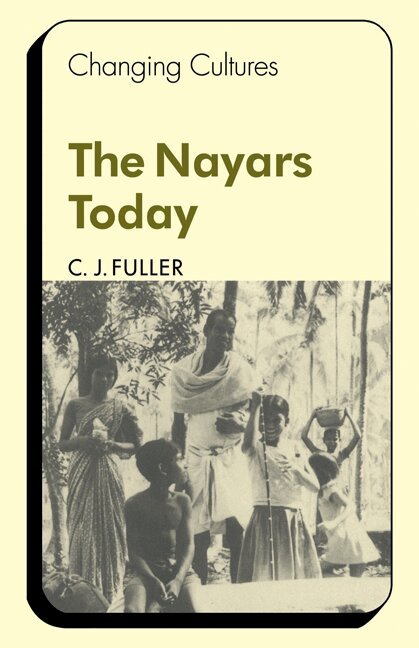
The Nayars of Kerala, south-west India, unusually trace descent through the female line and, in the past, had a marriage system in which women were allowed several husbands simultaneously. This system has brought the Nayars continuing fame in anthropological circles. In this 1976 study, Dr Fuller analyses fieldwork data collected among Nayars in a village in southern Kerala, a region on which there is practically no modern anthropological information. In the final section of the book, Dr Fuller looks at the 'traditional' marriage system of the Nayars and offers some suggestions about its operation. He also discusses the collapse of the old joint-family system and, with the aid of his data from southern Kerala, proposes some arguments about the process of its disintegration. More fully than previous authors, he situates his analysis in its historical context throughout, as befits an account of a rapidly changing society.
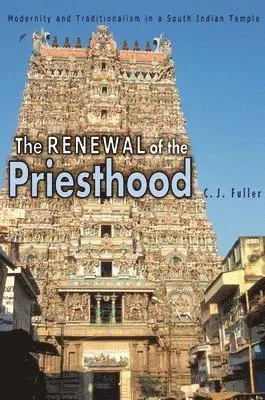
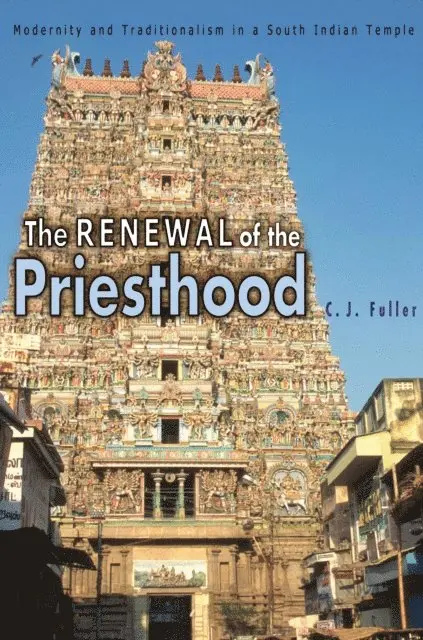
Renewal of the Priesthood
Modernity and Traditionalism in a South Indian Temple
Häftad, Engelska, 2003
377 kr
Skickas inom 7-10 vardagar
Much has changed for the priests at the Minakshi Temple, one of the most famous Hindu temples in India. In The Renewal of the Priesthood, C. J. Fuller traces their improving fortunes over the past 25 years. This fluidly written book is unique in showing that traditionalism and modernity are actually reinforcing each other among these priests, a process in which the state has played a crucial role. Since the mid-1980s, growing urban affluence has seen more people spend more money on rituals in the Minakshi Temple, which is in the southern city of Madurai. The priests have thus become better-off, and some have also found new earnings opportunities in temples as far away as America. During the same period, due partly to growing Hindu nationalism in India, the Tamilnadu state government's religious policies have become more favorable toward Hinduism and Brahman temple priests. More priests' sons now study in religious schools where they learn authoritative Sanskrit ritual texts by heart, and overall educational standards have markedly improved. Fuller shows that the priests have become more "professional" and modern-minded while also insisting on the legitimacy of tradition.He concludes by critiquing the analysis of modernity and tradition in social science. In showing how the priests are authentic representatives of modern India, this book tells a story whose significance extends far beyond the confines of the Minakshi Temple itself.
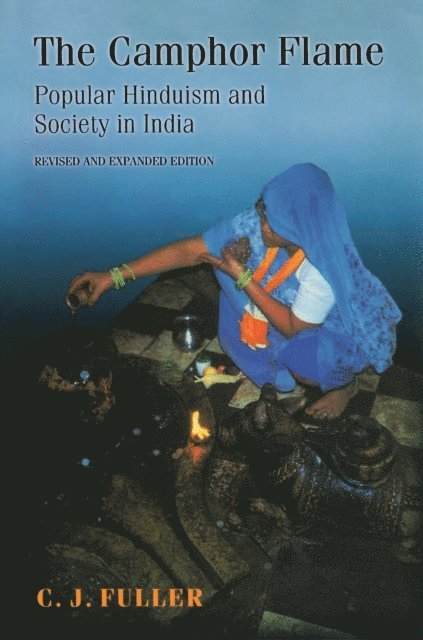
Camphor Flame
Popular Hinduism and Society in India - Revised and Expanded Edition
Häftad, Engelska, 2004
424 kr
Skickas inom 7-10 vardagar
Popular Hinduism is shaped, above all, by worship of a multitude of powerful divine beings--a superabundance indicated by the proverbial total of 330 million gods and goddesses. The fluid relationship between these beings and humans is a central theme of this rich and accessible study of popular Hinduism in the context of the society of contemporary India. Lucidly organized and skillfully written, The Camphor Flame brings clarity to an immensely complicated subject. C. J. Fuller combines ethnographic case studies with comparative anthropological analysis and draws on textual and historical scholarship as well. The book's new afterword brings the study up-to-date by examining the relationship between popular Hinduism and contemporary Hindu nationalism.
2 150 kr
Skickas inom 10-15 vardagar
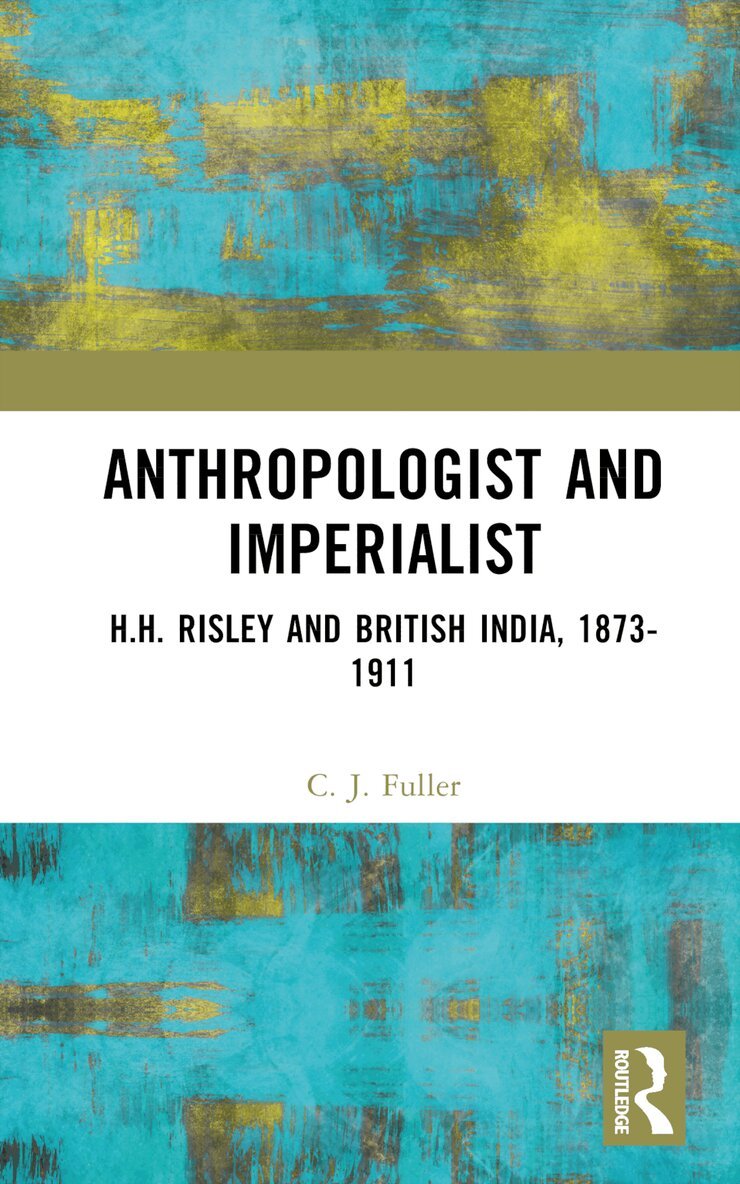
Sir Herbert Hope Risley (1851 - 1911) - 'H. H. Risley', as he always signed himself - was a member of the Indian Civil Service (ICS) from 1873 to 1910 who served in Bengal and became a senior administrator and policymaker in the colonial government, as well as the pre-eminent anthropologist in British India. He was also an imperialist, who was convinced of the rightness of 'civilising' British rule and its benefits for both India and Britain, and one of this book's objectives is to render his simultaneous commitment to anthropology and imperialism intelligible to present-day readers. More specifically, Anthropologist and Imperialist: H. H. Risley and British India, 1873–1911 documents the two sides of Risley’s career, which is used as a case-study to investigate, first, the production and circulation of colonial knowledge, specifically anthropological knowledge, and secondly, its often loose and inconsistent connection with administration and policymaking, and with the government and state overall.Risley, like other officials engaged in anthropology in India, as well as the government itself, insisted that ethnography and anthropology had both ‘administrative’ and ‘scientific’ value; unlike previous works on Indian colonial anthropology, this book carefully examines its ‘scientific’ contributions in relation to contemporary metropolitan anthropology. It does not attempt to reinvent ‘greatman’ political or intellectual history, but does demonstrate the importance of studying the powerful officials who ruled British India, as well as the minor provincial politicians and subaltern subjects – or the abstract forces, such as colonialism and resistance – that have dominated recent historical scholarship. This book shows, too, that a detailed inquiry into Risley’s career, and his ideas and actions, can open new perspectives on a variety of continuing debates, including those over the colonial construction of caste and race in ‘traditional’ India, orientalism and forms of colonial knowledge, Victorian anthropology’s close relationship with the British empire, and the modern discipline’s uneasy links with its colonial past.Print edition not for sale in South Asia (India, Sri Lanka, Nepal, Bangladesh, Pakistan and Bhutan)
649 kr
Skickas inom 10-15 vardagar
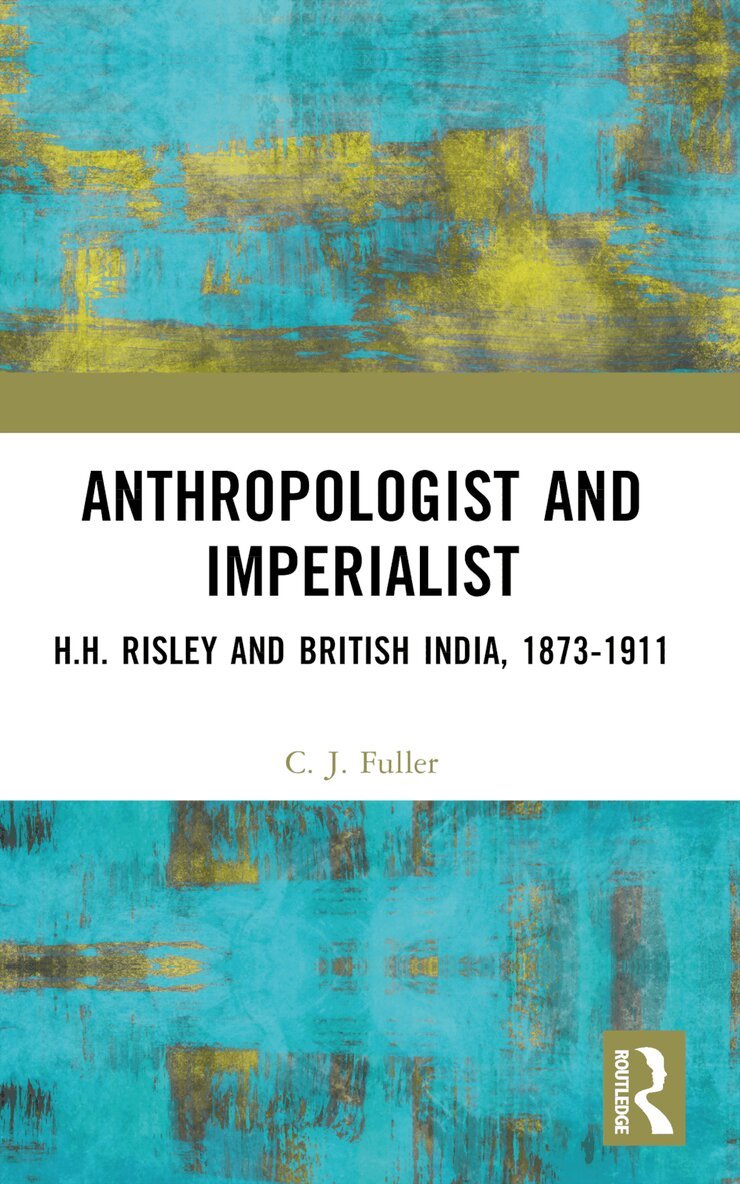
Sir Herbert Hope Risley (1851 - 1911) - 'H. H. Risley', as he always signed himself - was a member of the Indian Civil Service (ICS) from 1873 to 1910 who served in Bengal and became a senior administrator and policymaker in the colonial government, as well as the pre-eminent anthropologist in British India. He was also an imperialist, who was convinced of the rightness of 'civilising' British rule and its benefits for both India and Britain, and one of this book's objectives is to render his simultaneous commitment to anthropology and imperialism intelligible to present-day readers. More specifically, Anthropologist and Imperialist: H. H. Risley and British India, 1873–1911 documents the two sides of Risley’s career, which is used as a case-study to investigate, first, the production and circulation of colonial knowledge, specifically anthropological knowledge, and secondly, its often loose and inconsistent connection with administration and policymaking, and with the government and state overall.Risley, like other officials engaged in anthropology in India, as well as the government itself, insisted that ethnography and anthropology had both ‘administrative’ and ‘scientific’ value; unlike previous works on Indian colonial anthropology, this book carefully examines its ‘scientific’ contributions in relation to contemporary metropolitan anthropology. It does not attempt to reinvent ‘greatman’ political or intellectual history, but does demonstrate the importance of studying the powerful officials who ruled British India, as well as the minor provincial politicians and subaltern subjects – or the abstract forces, such as colonialism and resistance – that have dominated recent historical scholarship. This book shows, too, that a detailed inquiry into Risley’s career, and his ideas and actions, can open new perspectives on a variety of continuing debates, including those over the colonial construction of caste and race in ‘traditional’ India, orientalism and forms of colonial knowledge, Victorian anthropology’s close relationship with the British empire, and the modern discipline’s uneasy links with its colonial past.Print edition not for sale in South Asia (India, Sri Lanka, Nepal, Bangladesh, Pakistan and Bhutan)