C. Oropeza – författare
Visar alla böcker från författaren C. Oropeza. Handla med fri frakt och snabb leverans.
6 produkter
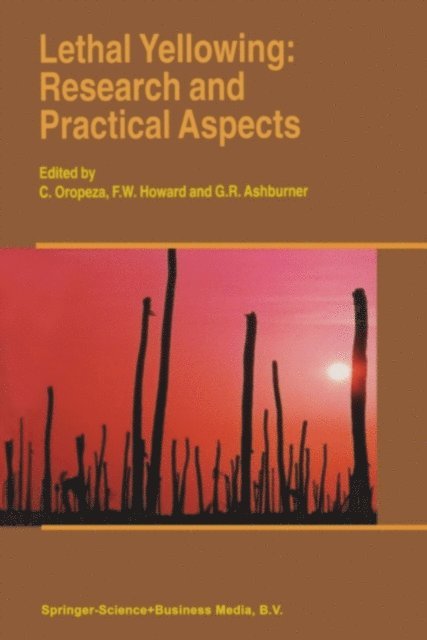
Lethal Yellowing
Research and Practical Aspects
Av C. Oropeza, etc.
Inbunden, 1995
1207 kr
Lägg i varukorg
The coconut palm is a very important plant in the tropical regions, both as a cash crop and in subsistence agriculture. Although most coconut production is dedicated to copra and its subsequent oil extraction, the number of products that can be obtained from the palm is seemingly limitless. …
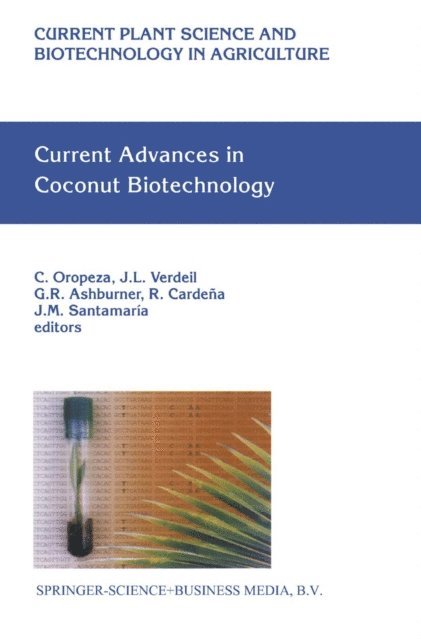
Current Advances in Coconut Biotechnology
Av C. Oropeza, J.L. Verdeil m. fl.
Inbunden, 1999
2188 kr
Lägg i varukorg
The coconut palm occupies a significant place in the world economy as an important subsistence crop in all the areas in which it is grown. Relatively few countries are able to export any quantity of coconut products because of increasing home demands coupled with low productivity. Yields are …
Current Advances in Coconut Biotechnology
Av C. Oropeza, J.L. Verdeil m. fl.
Häftad, 2010
2188 kr
Lägg i varukorg
The coconut palm occupies a significant place in the world economy as an important subsistence crop in all the areas in which it is grown. Relatively few countries are able to export any quantity of coconut products because of increasing home demands coupled with low productivity. Yields are …
Lethal Yellowing: Research and Practical Aspects
Av C. Oropeza, F.W. Howard m. fl.
Häftad, 2012
1098 kr
Lägg i varukorg
When I received an invitation to attend the International Symposium on Lethal Yellowing being organised by the Centro de Investigacion Cientifica de Yucatan (CICy), I was excited and a little nostalgic. During the 1970s, a series of similar symposia had been held under the auspices of the …
Lethal Yellowing: Research and Practical Aspects
Av G.R. Ashburner, F.W. Howard m. fl.
E-bok, 2012
1459 kr
Lägg i varukorg
When I received an invitation to attend the International Symposium on Lethal Yellowing being organised by the Centro de Investigacion Cientifica de Yucatan (CICy), I was excited and a little nostalgic. During the 1970s, a series of similar symposia had been held under the auspices of the …
Current Advances in Coconut Biotechnology
Av J.M. Santamaria, R. Cardena m. fl.
E-bok, 2013
2925 kr
Lägg i varukorg
The coconut palm occupies a significant place in the world economy as an important subsistence crop in all the areas in which it is grown. Relatively few countries are able to export any quantity of coconut products because of increasing home demands coupled with low productivity. Yields are …