J.L. Verdeil – författare
Visar alla böcker från författaren J.L. Verdeil. Handla med fri frakt och snabb leverans.
3 produkter
3 produkter
Inbunden, Engelska, 1999
2 159 kr
Skickas inom 10-15 vardagar
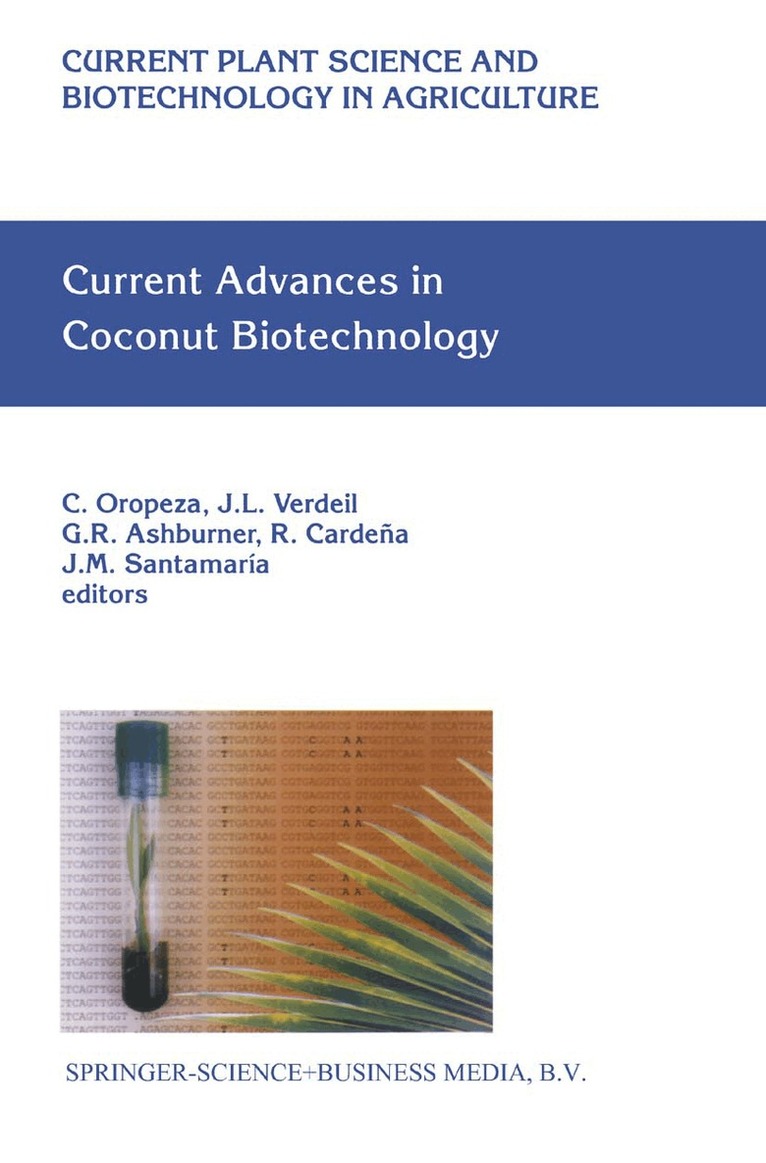
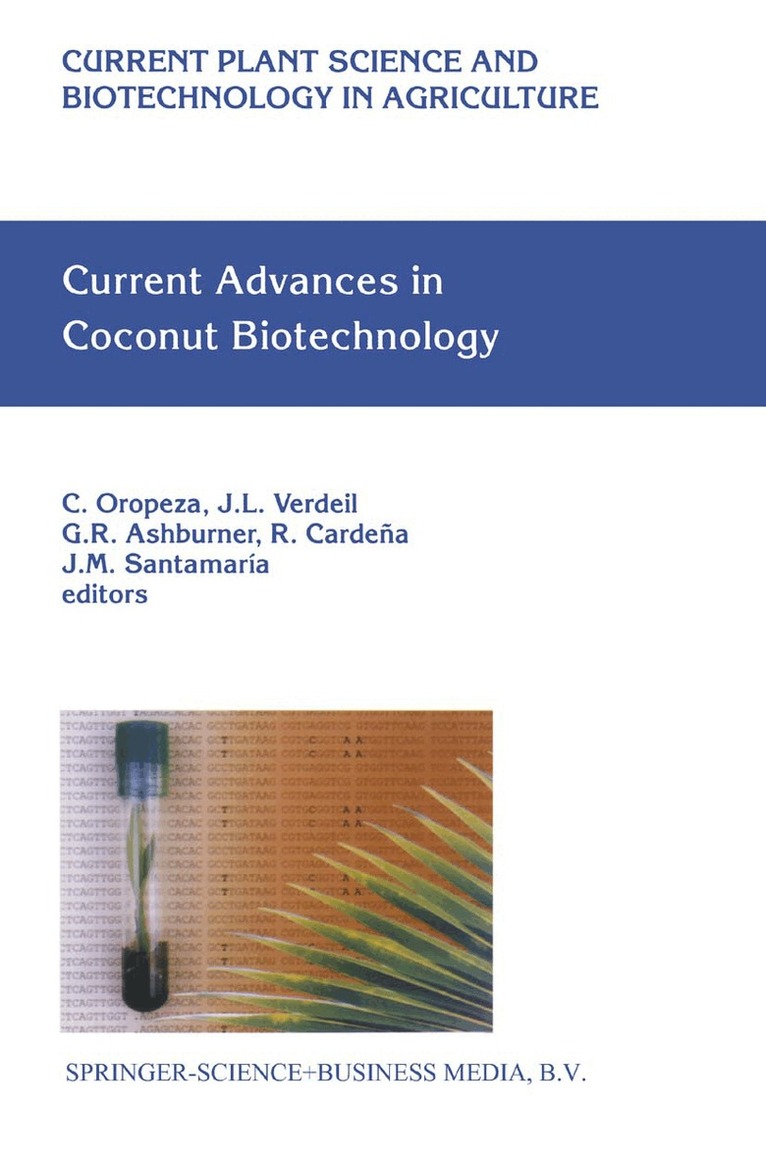
The coconut palm occupies a significant place in the world economy as an important subsistence and cash crop in all the areas where it is cultivated. Unfortunately, yields are generally well below potential, despite recent developments with improved planting stock and agronomic practices. Since the 1950s, both aspects have received considerable attention, but the focus is shifting to investigate how the use of recently developed biotechnological techniques can benefit the coconut industry. These papers on coconut biotechnology were presented at a symposium on this subject held in Mexico in December 1997. They describe research in three important areas of this field: molecular markers, diversity and genetic improvement; molecular detection and diagnosis of diseases; and in vitro propagation. They also deal with the impact of biotechnology on the coconut industry, weighing the advantages and pointing out areas where work should be directed to stimulate further research.
Häftad, Engelska, 2010
2 171 kr
Skickas inom 10-15 vardagar
The coconut palm occupies a significant place in the world economy as an important subsistence and cash crop in all the areas where it is cultivated. Unfortunately, yields are generally well below potential, despite recent developments with improved planting stock and agronomic practices. In the last 50 years, both aspects have received considerable attention, but the focus is shifting to investigate how the use of recently developed biotechnological techniques can benefit the coconut industry. This volume is the first one published on coconut biotechnology; the papers were presented at a symposium on this subject held in Mexico in December 1997. The book describes recent research in three important areas of this field: (a) molecular markers, diversity and genetic improvement; (b) molecular detection and diagnosis of diseases; and (c) in vitro propagation. It also deals with the impact of biotechnology on the coconut industry, weighing the advantages and pointing out areas where work should be directed to stimulate further research.
E-bok
PDF, Engelska, 20132 741 kr
Läs direkt efter köp
The coconut palm occupies a significant place in the world economy as an important subsistence crop in all the areas in which it is grown. Relatively few countries are able to export any quantity of coconut products because of increasing home demands coupled with low productivity. Yields are generally well below potential despite recent developments with improved planting stock and agronomic practices. In the last 50 years, both these aspects have received considerable attention, but the focus is shifting to investigate how the use of recently developed biotechnological techniques- can benefit the coconut industry. This volume, the result of the International Symposium on Coconut Biotechnology (held in December 1997 in Merida, Yucatan, Mexico), describes recent research in three important areas. Standard plant breeding techniques used with coconut have produced improved planting material, but progress is inevitably very slow. Can more rapid genetic improvement be obtained using molecular techniques? The papers presented in this section suggest that such techniques will open up exciting new prospects, but only after basic information has been gathered on the genetic status of existing coconut stocks. Research using microsatellite techniques seems to provide a useful tool to help to classifying these stocks. However, only a combination of classical breeding methods with modem techniques will lead to the rapid improvement which is required to supply material for urgent replanting programs.