C.A. Davids – författare
Visar alla böcker från författaren C.A. Davids. Handla med fri frakt och snabb leverans.
3 produkter
How to Be a Revolutionary
A Novel
Av C.A. Davids
Häftad, 2022
158 kr
Lägg i varukorg
Fleeing her moribund marriage in Cape Town, Beth accepts a diplomatic posting to Shanghai. In this anonymous city she hopes to lose herself in books, wine, and solitude, and to dodge whatever pangs of conscience she feels for her fealty to a South African regime that, by the 21st century, has …
How to Be a Revolutionary
A Novel
Av C.A. Davids
E-bok, 2022
115 kr
Lägg i varukorg
Fleeing her moribund marriage in Cape Town, Beth accepts a diplomatic posting to Shanghai. In this anonymous city she hopes to lose herself in books, wine, and solitude, and to dodge whatever pangs of conscience she feels for her fealty to a South African regime that, by the 21st century, has …
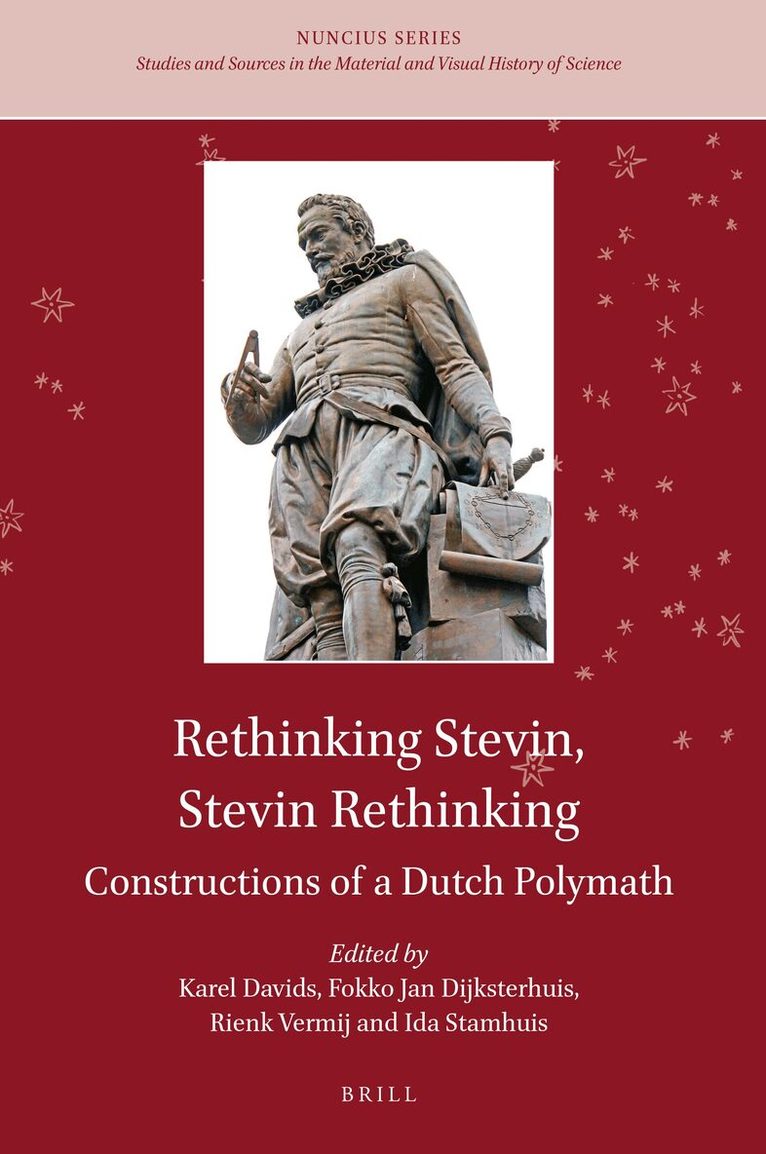
Rethinking Stevin, Stevin Rethinking
Constructions of a Dutch Polymath
Av C.A. Davids
Inbunden, 2020
2539 kr
Lägg i varukorg
This book studies the Dutch mathematician Simon Stevin (1548-1620) as a new type of ‘man of knowledge’. Traditionally, Stevin is best known for his contributions to the ‘Archimedean turn’. This innovative volume moves beyond this conventional image by bringing many other aspects of his work into …