Caddie Alford - Böcker
Visar alla böcker från författaren Caddie Alford. Handla med fri frakt och snabb leverans.
4 produkter
4 produkter
1 196 kr
Skickas inom 7-10 vardagar
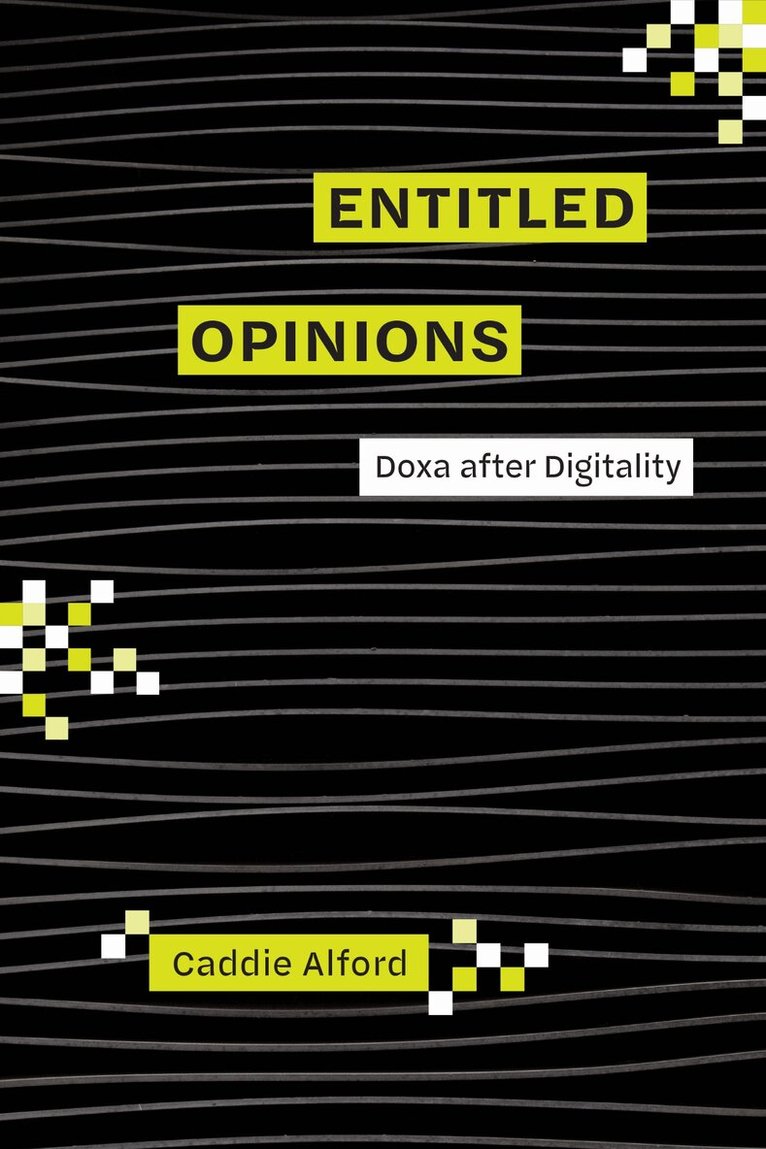
A landmark rhetorical theory of the formation and functioning of opinions in social media contextsEntitled Opinions: Doxa After Digitality offers a rhetorical theory of opinions, especially as opinions operate within social media. Many urgent contemporary issues—from demagoguery to white ethno-nationalism—compel us to consider opinions seriously. Yet while clichÉs like “he tells it like it is” and newer imperatives such as #BlackLivesMatter seem straightforward, haptics, emoji, and “like” buttons belie unexamined collective assumptions about how opinions in the digital realm function. Caddie Alford illuminates this function by deploying the ancient Greek term for opinions: doxa. Doxa translates to “opinion,” but the term can also signal seemingness and expectations. Doxa’s capacious meanings reveal opinions to be more than static or monolithic: With doxa, opinions become emergent, dynamic, relational, and pluralistic. Masterfully combining rhetorical frameworks as well as scholarship on opinions and digital media entanglements, Alford puts opinions into conversation with such case studies as algorithms, infrastructure, digital illiteracy, virality, and activism. She shows how “doxa” reveals gradations of opinions, from more reputable to less reputable. She demonstrates that these gradations are multifaceted and susceptible to interventions. Entitled Opinions sheds much of the baggage associated with opinions while opening up more fertile pathways of inquiry. In a world that says, “don’t read the comments,” this book reads the comments, taking seriously content that could be easily dismissed otherwise and alchemizing judgments into implications.
372 kr
Skickas inom 7-10 vardagar
A landmark rhetorical theory of the formation and functioning of opinions in social media contextsEntitled Opinions: Doxa After Digitality offers a rhetorical theory of opinions, especially as opinions operate within social media. Many urgent contemporary issues—from demagoguery to white ethno-nationalism—compel us to consider opinions seriously. Yet while clichÉs like “he tells it like it is” and newer imperatives such as #BlackLivesMatter seem straightforward, haptics, emoji, and “like” buttons belie unexamined collective assumptions about how opinions in the digital realm function. Caddie Alford illuminates this function by deploying the ancient Greek term for opinions: doxa. Doxa translates to “opinion,” but the term can also signal seemingness and expectations. Doxa’s capacious meanings reveal opinions to be more than static or monolithic: With doxa, opinions become emergent, dynamic, relational, and pluralistic.Masterfully combining rhetorical frameworks as well as scholarship on opinions and digital media entanglements, Alford puts opinions into conversation with such case studies as algorithms, infrastructure, digital illiteracy, virality, and activism. She shows how “doxa” reveals gradations of opinions, from more reputable to less reputable. She demonstrates that these gradations are multifaceted and susceptible to interventions. Entitled Opinions sheds much of the baggage associated with opinions while opening up more fertile pathways of inquiry. In a world that says, “don’t read the comments,” this book reads the comments, taking seriously content that could be easily dismissed otherwise and alchemizing judgments into implications.
1 890 kr
Kommande
Rhetoric has been concerned with truth from the beginning. Beginning at least with Plato, rhetoric often has been blamed for the death of truth. And the field of contemporary rhetorical studies has been skeptical of easy understandings of truth. Meanwhile, hostility to truth seems to be doing a lot of damage, even if truth itself may never have been as reliable as hoped. The idea of post-truth poses systemic problems for rhetoric’s traditional concerns. Active obfuscation, negation of truth, and even truth-indifference are certainly not new. But the past couple of decades have seen a proliferation and pervasiveness of falsities, rendering the term “post-truth” an identifiable marker of the contemporary moment. Everyday public life regularly throws up examples of both post-truth in action and efforts to combat it by invoking truth. This edited volume draws on the resources of rhetoric to understand what here is new, what is old, and what may be done about the problem.
625 kr
Kommande
Rhetoric has been concerned with truth from the beginning. Beginning at least with Plato, rhetoric often has been blamed for the death of truth. And the field of contemporary rhetorical studies has been skeptical of easy understandings of truth. Meanwhile, hostility to truth seems to be doing a lot of damage, even if truth itself may never have been as reliable as hoped. The idea of post-truth poses systemic problems for rhetoric’s traditional concerns. Active obfuscation, negation of truth, and even truth-indifference are certainly not new. But the past couple of decades have seen a proliferation and pervasiveness of falsities, rendering the term “post-truth” an identifiable marker of the contemporary moment. Everyday public life regularly throws up examples of both post-truth in action and efforts to combat it by invoking truth. This edited volume draws on the resources of rhetoric to understand what here is new, what is old, and what may be done about the problem.