Calvin Schermerhorn - Böcker
Visar alla böcker från författaren Calvin Schermerhorn. Handla med fri frakt och snabb leverans.
8 produkter
8 produkter
693 kr
Tillfälligt slut
235 kr
Skickas inom 7-10 vardagar
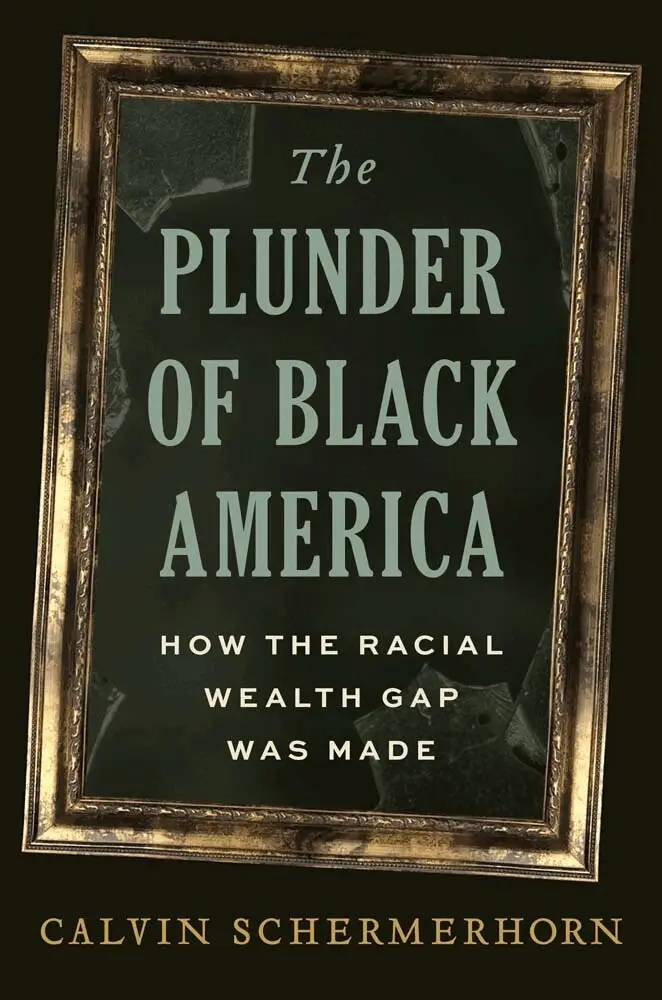
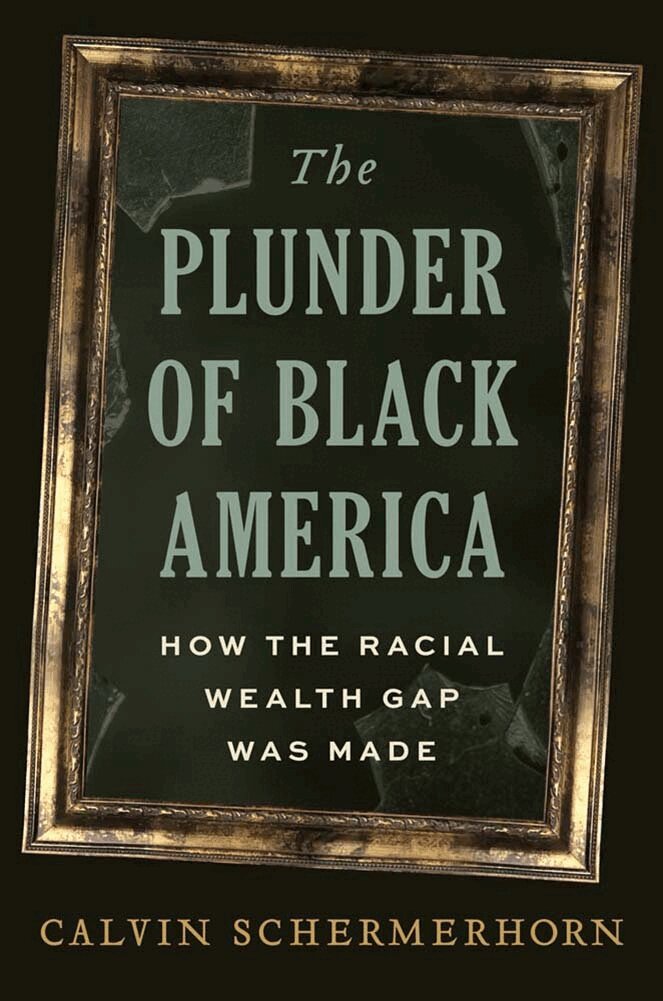
The long history of the racial wealth gap in America told through the stories of seven Black families who struggled to build wealth over multiple generationsWealth is central to the American pursuit of happiness and is an overriding measure of well-being. Yet wealth is conspicuously absent from African American households. Why do some 3.5 million Black American families have zero or negative wealth?Historian Calvin Schermerhorn traces four hundred years of Black dispossession and decapitalization—what Frederick Douglass called plunder—through the stories of families who have strived to earn and keep the fruits of their toils. Their struggles reveal that the ever-evolving strategies to strip Black income and wealth have been critical to sustaining a structure of racialized disadvantage. These accounts also tell of the quiet heroism of those who worked to overcome obstacles and defy the plunder.From the story of Anthony and Mary Johnson, abducted from Angola and brought to Virginia in 1619, to the enslaved Black workers dispossessed by the Custis-Washington family, to Venture Smith (born Broteer Furro), who purchased his freedom, to three generations of a family enslaved in the South who moved north after Emancipation, to the Tulsa massacre and the subprime lending crisis, Schermerhorn shows that we cannot reckon with today’s racial wealth inequality without understanding its unrelenting role in American history.
258 kr
Kommande
The long history of the racial wealth gap in America told through the stories of seven Black families who struggled to build wealth over multiple generationsWealth is central to the American pursuit of happiness and is an overriding measure of well-being. Yet wealth is conspicuously absent from African American households. Why do some 3.5 million Black American families have zero or negative wealth?Historian Calvin Schermerhorn traces four hundred years of Black dispossession and decapitalization—what Frederick Douglass called plunder—through the stories of families who have strived to earn and keep the fruits of their toils. Their struggles reveal that the ever-evolving strategies to strip Black income and wealth have been critical to sustaining a structure of racialized disadvantage. These accounts also tell of the quiet heroism of those who worked to overcome obstacles and defy the plunder.From the story of Anthony and Mary Johnson, abducted from Angola and brought to Virginia in 1619, to the enslaved Black workers dispossessed by the Custis-Washington family, to Venture Smith (born Broteer Furro), who purchased his freedom, to three generations of a family enslaved in the South who moved north after Emancipation, to the Tulsa massacre and the subprime lending crisis, Schermerhorn shows that we cannot reckon with today’s racial wealth inequality without understanding its unrelenting role in American history.
375 kr
Skickas inom 10-15 vardagar
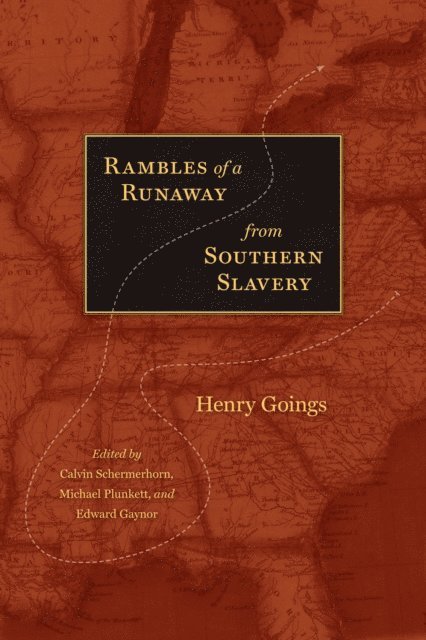
Rambles of a Runaway from Southern Slavery tells of an extraordinary life in and out of slavery in the United States and Canada. Born Elijah Turner in the Virginia Tidewater, circa 1810, the author eventually procured freedom papers from a man he resembled and took the man’s name, Henry Goings. His life story takes us on an epic journey, traveling from his Virginia birthplace through the cotton kingdom of the Lower South, and upon his escape from slavery, through Tennessee and Kentucky, then on to the Great Lakes region of the North and to Canada. His Rambles show that slaves were found not only in fields but also on the nation’s roads and rivers, perpetually in motion in massive coffles or as solitary runaways.A freedom narrative as well as a slave narrative, this compact yet detailed book illustrates many important developments in antebellum America, such as the large-scale forced migration of enslaved people from long-established slave societies in the eastern United States to new settlements on the cotton frontier, the political-economic processes that framed that migration, and the accompanying human anguish. Goings’s life and reflections serve as important primary documents of African American life and of American national expansion, the Civil War, and Reconstruction. This edition features an informative and insightful introduction by Calvin Schermerhorn.
1 133 kr
Skickas inom 7-10 vardagar
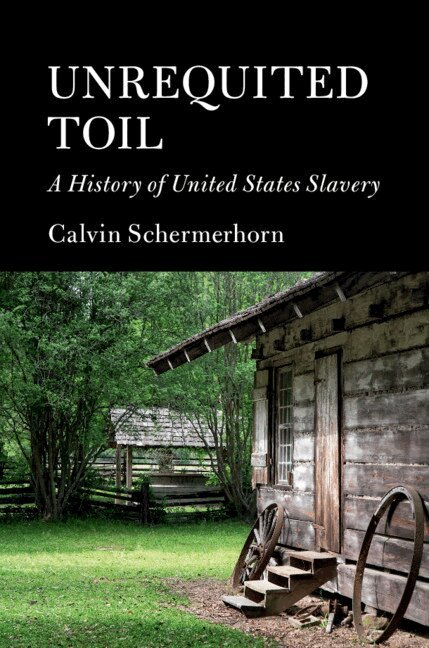
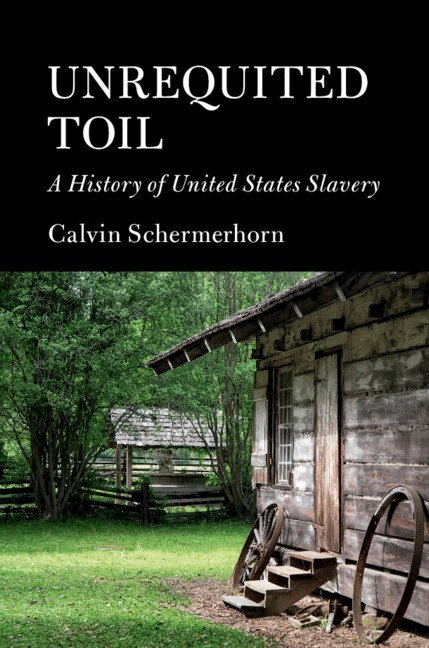
Written as a narrative history of slavery within the United States, Unrequited Toil details how an institution that seemed to be disappearing at the end of the American Revolution rose to become the most contested and valuable economic interest in the nation by 1850. Calvin Schermerhorn charts changes in the family lives of enslaved Americans, exploring the broader processes of nation-building in the United States, growth and intensification of national and international markets, the institutionalization of chattel slavery, and the growing relevance of race in the politics and society of the republic. In chapters organized chronologically, Schermerhorn argues that American economic development relied upon African Americans' social reproduction while simultaneously destroying their intergenerational cultural continuity. He explores the personal narratives of enslaved people and develops themes such as politics, economics, labor, literature, rebellion, and social conditions.
280 kr
Skickas inom 7-10 vardagar
Written as a narrative history of slavery within the United States, Unrequited Toil details how an institution that seemed to be disappearing at the end of the American Revolution rose to become the most contested and valuable economic interest in the nation by 1850. Calvin Schermerhorn charts changes in the family lives of enslaved Americans, exploring the broader processes of nation-building in the United States, growth and intensification of national and international markets, the institutionalization of chattel slavery, and the growing relevance of race in the politics and society of the republic. In chapters organized chronologically, Schermerhorn argues that American economic development relied upon African Americans' social reproduction while simultaneously destroying their intergenerational cultural continuity. He explores the personal narratives of enslaved people and develops themes such as politics, economics, labor, literature, rebellion, and social conditions.
Money over Mastery, Family over Freedom
Slavery in the Antebellum Upper South
Inbunden, Engelska, 2011
719 kr
Skickas inom 11-20 vardagar
Once a sleepy plantation society, the region from the Chesapeake Bay to coastal North Carolina modernized and diversified its economy in the years before the Civil War. Central to this industrializing process was slave labor. Money over Mastery, Family over Freedom tells the story of how slaves seized opportunities in these conditions to protect their family members from the auction block. Calvin Schermerhorn argues that the African American family provided the key to economic growth in the antebellum Chesapeake. To maximize profits in the burgeoning regional industries, slaveholders needed to employ or hire out a healthy supply of strong slaves, which tended to scatter family members. From each generation, they also selected the young, fit, and fertile for sale or removal to the cotton South. Conscious of this pattern, the enslaved were sometimes able to negotiate mutually beneficial labor terms-to save their families despite that new economy.Moving focus away from the traditional master-slave relationship in a staple-crop setting, Schermerhorn demonstrates through extensive primary research that the slaves in the upper South were integral to the development of the region's modern political economy, whose architects embraced invention and ingenuity even while deploying slaves to shoulder the burdens of its construction, production, and maintenance. Money over Mastery, Family over Freedom proposes a new way of understanding the role of American slaves in the antebellum marketplace. Rather than work against it, as one might suppose, enslaved people engaged with the market somewhat as did free Americans. Slaves focused their energy and attention, however, not on making money, as slaveholders increasingly did, but on keeping their kin out of the human coffles of the slave trade.
391 kr
Skickas inom 11-20 vardagar
Once a sleepy plantation society, the region from the Chesapeake Bay to coastal North Carolina modernized and diversified its economy in the years before the Civil War. Central to this industrializing process was slave labor. Money over Mastery, Family over Freedom tells the story of how slaves seized opportunities in these conditions to protect their family members from the auction block. Calvin Schermerhorn argues that the African American family provided the key to economic growth in the antebellum Chesapeake. To maximize profits in the burgeoning regional industries, slaveholders needed to employ or hire out a healthy supply of strong slaves, which tended to scatter family members. From each generation, they also selected the young, fit, and fertile for sale or removal to the cotton South. Conscious of this pattern, the enslaved were sometimes able to negotiate mutually beneficial labor terms-to save their families despite that new economy.Moving focus away from the traditional master-slave relationship in a staple-crop setting, Schermerhorn demonstrates through extensive primary research that the slaves in the upper South were integral to the development of the region's modern political economy, whose architects embraced invention and ingenuity even while deploying slaves to shoulder the burdens of its construction, production, and maintenance. Money over Mastery, Family over Freedom proposes a new way of understanding the role of American slaves in the antebellum marketplace. Rather than work against it, as one might suppose, enslaved people engaged with the market somewhat as did free Americans. Slaves focused their energy and attention, however, not on making money, as slaveholders increasingly did, but on keeping their kin out of the human coffles of the slave trade.