Candace Lukasik – författare
Visar alla böcker från författaren Candace Lukasik. Handla med fri frakt och snabb leverans.
7 produkter
7 produkter
Häftad, Engelska, 2025
367 kr
Skickas inom 5-8 vardagar
Uses case studies from America, broadly conceived, to ask trenchant theoretical questions that are of interest to scholars and students within and beyond the subfield of American religious history.
Häftad, Engelska, 2026
613 kr
Kommande
Orthodox Christianity in America: An Introduction offers a thematically driven, anthropological account of how Orthodox Christian life has been shaped in the United States through migration, empire, and racial formation. Rather than presenting a single linear history, the book examines Orthodoxy as a dynamic and contested field of transnational religious practice, institutional development, and cultural negotiation.Drawing on historical and ethnographic approaches, the book traces how Orthodox communities—from Eastern Europe, the Middle East, Africa, and South Asia—have established religious worlds across the United States while navigating shifting conditions of belonging and exclusion. It foregrounds key forces—colonialism, capitalism, and communism—that have structured Orthodox subjectivities and institutions across homelands and diaspora. Through case studies and thematic chapters, the book explores migration infrastructures, racialization, jurisdictional tensions, conversion, and digital religious publics. It demonstrates that Orthodoxy’s presence in America is both enduring and unevenly recognized, shaped by overlapping national affiliations, transnational ecclesial authority, and the racial and political conditions that determine when Orthodoxy becomes visible or remains marginal within dominant narratives of American religion.This book is designed for advanced undergraduate and graduate students in religious studies, anthropology, history, theology, and American studies, as well as scholars of Christianity, migration, and Middle Eastern and Eastern European diasporas. It also serves as an accessible resource for readers seeking a critical anthropological introduction to Orthodox Christian histories in the United States.
Inbunden, Engelska, 2026
2 225 kr
Kommande
Orthodox Christianity in America: An Introduction offers a thematically driven, anthropological account of how Orthodox Christian life has been shaped in the United States through migration, empire, and racial formation. Rather than presenting a single linear history, the book examines Orthodoxy as a dynamic and contested field of transnational religious practice, institutional development, and cultural negotiation.Drawing on historical and ethnographic approaches, the book traces how Orthodox communities—from Eastern Europe, the Middle East, Africa, and South Asia—have established religious worlds across the United States while navigating shifting conditions of belonging and exclusion. It foregrounds key forces—colonialism, capitalism, and communism—that have structured Orthodox subjectivities and institutions across homelands and diaspora. Through case studies and thematic chapters, the book explores migration infrastructures, racialization, jurisdictional tensions, conversion, and digital religious publics. It demonstrates that Orthodoxy’s presence in America is both enduring and unevenly recognized, shaped by overlapping national affiliations, transnational ecclesial authority, and the racial and political conditions that determine when Orthodoxy becomes visible or remains marginal within dominant narratives of American religion.This book is designed for advanced undergraduate and graduate students in religious studies, anthropology, history, theology, and American studies, as well as scholars of Christianity, migration, and Middle Eastern and Eastern European diasporas. It also serves as an accessible resource for readers seeking a critical anthropological introduction to Orthodox Christian histories in the United States.
Inbunden, Engelska, 2025
967 kr
Skickas inom 10-15 vardagar
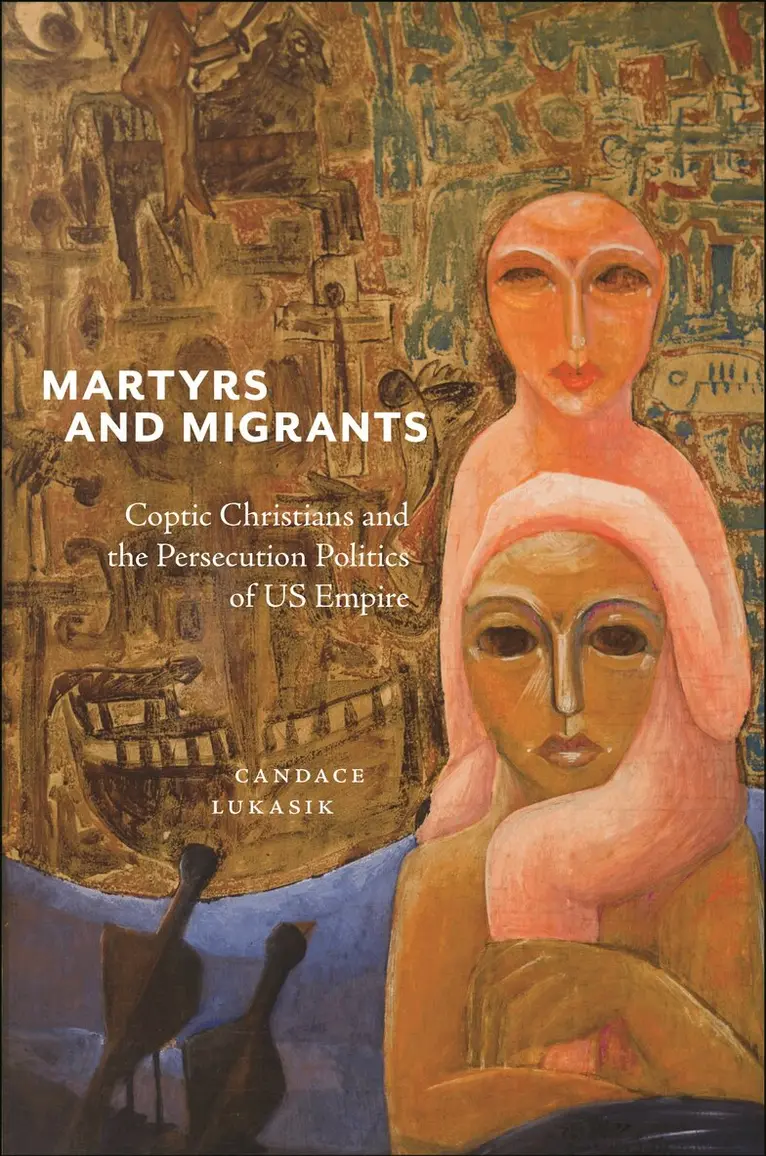
How Coptic Christian migrants reshape religious identity through the imagination of US empireCoptic Orthodox Christians comprise the largest Christian community in the Middle East and are among the oldest Christian communities in the world. While once the objects of American missionary efforts, in recent years Copts have been in the spotlight for their Christianity. A spate of ISIS-related bombings and attacks have garnered worldwide attention, leading to a series of efforts from US politicians, think tanks, and NGOs to re-channel their efforts into "saving" these Middle Eastern Christians from Muslims. The increased targeting of Copts has also contributed to the moral imaginary of the "Persecuted Church," particularly among American evangelicals, which embraces the idea that Christians around the globe are currently being persecuted more than any other time in history.Drawing on years of extensive fieldwork among Coptic migrants between Egypt and the United States, Martyrs and Migrants examines how American religious imaginaries of global Christian persecution have remapped Coptic collective memory of martyrdom. Transnational Copts have navigated the sociopolitical conditions in Egypt and the global consequences of the US "war on terror" by translating their suffering into the ambiguous forms of religious and political visibility. Candace Lukasik argues that the commingling of American conservatives and Copts has shaped a new kind of Christian kinship in blood, operating through a double movement between glorification and racialization. Occupying a position between threat and victim, Copts from the Middle East have been subject to anti-terror surveillance in the US even as they have leveraged their roles as "persecuted Christians." Through Lukasik's careful examination of the everyday processes shaping Coptic communal formation, Martyrs and Migrants broadly reveals how ideologies of spiritual kinship are forged through theological histories of martyrdom and of blood, demonstrating the global dynamics and imperial politics of contemporary Christianity.
Häftad, Engelska, 2025
317 kr
Skickas
How Coptic Christian migrants reshape religious identity through the imagination of US empireCoptic Orthodox Christians comprise the largest Christian community in the Middle East and are among the oldest Christian communities in the world. While once the objects of American missionary efforts, in recent years Copts have been in the spotlight for their Christianity. A spate of ISIS-related bombings and attacks have garnered worldwide attention, leading to a series of efforts from US politicians, think tanks, and NGOs to re-channel their efforts into "saving" these Middle Eastern Christians from Muslims. The increased targeting of Copts has also contributed to the moral imaginary of the "Persecuted Church," particularly among American evangelicals, which embraces the idea that Christians around the globe are currently being persecuted more than any other time in history.Drawing on years of extensive fieldwork among Coptic migrants between Egypt and the United States, Martyrs and Migrants examines how American religious imaginaries of global Christian persecution have remapped Coptic collective memory of martyrdom. Transnational Copts have navigated the sociopolitical conditions in Egypt and the global consequences of the US "war on terror" by translating their suffering into the ambiguous forms of religious and political visibility. Candace Lukasik argues that the commingling of American conservatives and Copts has shaped a new kind of Christian kinship in blood, operating through a double movement between glorification and racialization. Occupying a position between threat and victim, Copts from the Middle East have been subject to anti-terror surveillance in the US even as they have leveraged their roles as "persecuted Christians." Through Lukasik's careful examination of the everyday processes shaping Coptic communal formation, Martyrs and Migrants broadly reveals how ideologies of spiritual kinship are forged through theological histories of martyrdom and of blood, demonstrating the global dynamics and imperial politics of contemporary Christianity.
Inbunden, Engelska, 2025
1 522 kr
Skickas inom 10-15 vardagar
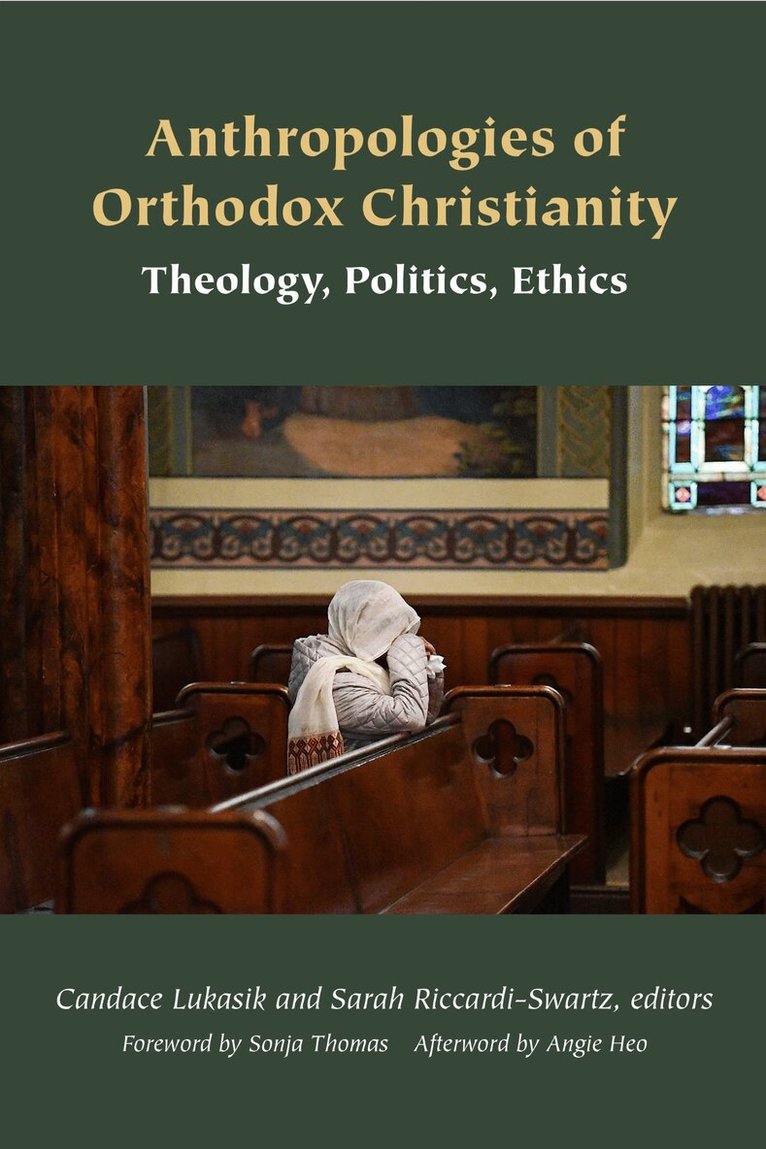
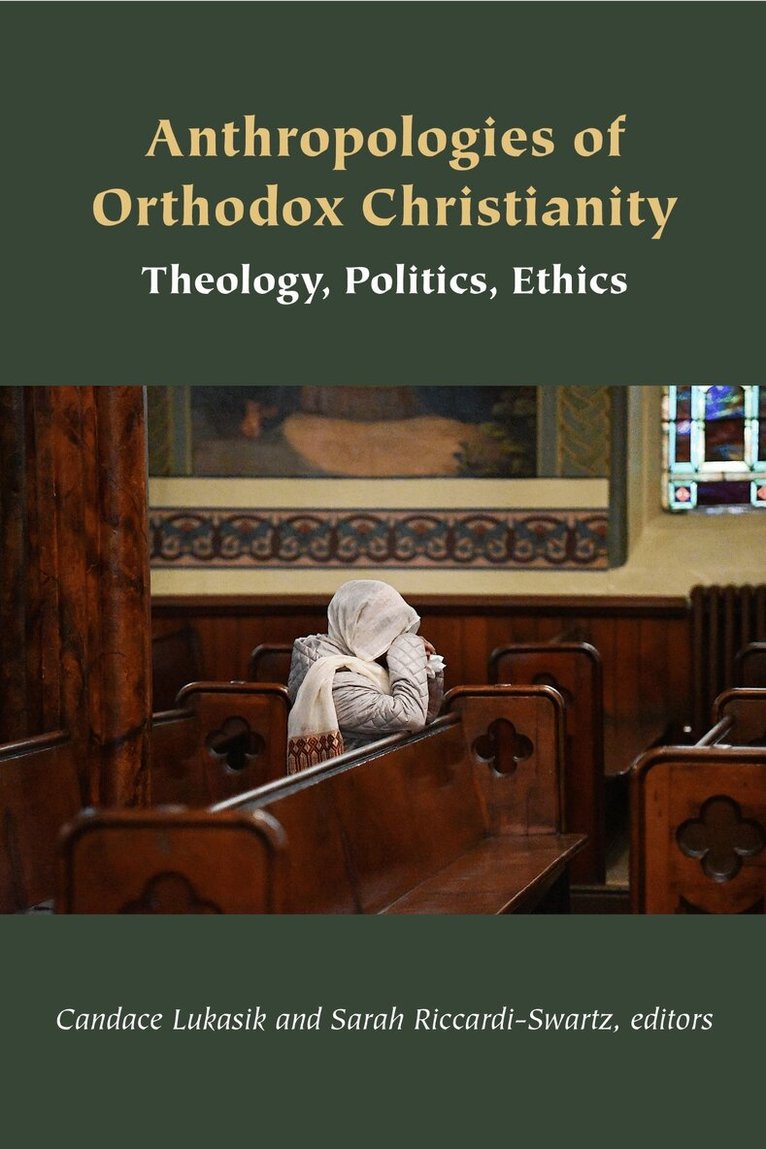
Anthropologically explores the entanglement of theology and politics among contemporary Orthodox Christians.Much of the anthropological literature on Christianity tends to concentrate on Protestants and Catholics in the Global South. The contemporary scholarly interest in such communities descends from histories of missionization and colonization of these regions, as well as a sense of their theological kinship with the secularized visions of Western political and social life. Orthodox Christianity, however, has largely been rendered marginal in mainstream anthropological engagement because of its theological and social alterity from such Western anthropological traditions of knowledge production. Because of this, Orthodox Christian lifeworlds in and beyond the academy are created, contested, and transformed in relation to various "others," whether they be religious, political, secular, or historical, with an eye toward a discursive opposition between modernity and Orthodoxy. Each of the essays in Anthropologies of Orthodox Christianity texture a new trajectory in the study of this religious tradition that take seriously the theopolitical aspects of Orthodox life through anthropological inquiry. The volume engages and moves beyond the tension between populist and institutional framings of religion, and critically addresses the ontological gap in both anthropology and theology as social, cultural, and geopolitical interest in Orthodox Christianity continues to expand and grow.
Häftad, Engelska, 2025
420 kr
Skickas inom 5-8 vardagar
Anthropologically explores the entanglement of theology and politics among contemporary Orthodox Christians.Much of the anthropological literature on Christianity tends to concentrate on Protestants and Catholics in the Global South. The contemporary scholarly interest in such communities descends from histories of missionization and colonization of these regions, as well as a sense of their theological kinship with the secularized visions of Western political and social life. Orthodox Christianity, however, has largely been rendered marginal in mainstream anthropological engagement because of its theological and social alterity from such Western anthropological traditions of knowledge production. Because of this, Orthodox Christian lifeworlds in and beyond the academy are created, contested, and transformed in relation to various "others," whether they be religious, political, secular, or historical, with an eye toward a discursive opposition between modernity and Orthodoxy. Each of the essays in Anthropologies of Orthodox Christianity texture a new trajectory in the study of this religious tradition that take seriously the theopolitical aspects of Orthodox life through anthropological inquiry. The volume engages and moves beyond the tension between populist and institutional framings of religion, and critically addresses the ontological gap in both anthropology and theology as social, cultural, and geopolitical interest in Orthodox Christianity continues to expand and grow.