Carl L. Bankston III - Böcker
Visar alla böcker från författaren Carl L. Bankston III. Handla med fri frakt och snabb leverans.
13 produkter
13 produkter
1 039 kr
Skickas inom 10-15 vardagar
Although the French language and the traditional rural way of life are disappearing among Louisiana Cajuns, identification with Cajun ethnicity is flourishing. Henry and Bankston draw on historical documents, ethnographic observations and interviews, and statistical sources to investigate and explain this phenomenon. They argue that while Cajun ethnicity developed from and consisted of the French-speaking, rural poor of the region, it has been transformed, during the 20th century, into a regional class with common interests and outlooks. A substantial minority of Cajuns have risen out of the blue collar niche and into the middle class, creating more complicated problems of adjustment, role redefinition, and the changing nature of relationships with friends and family who remain part of the working class. The authors detail and describe the way the working class Cajun majority and the white collar Cajun minority draw on images and ideas from a reconstructed past to make sense of their present conditions and changes in their community. This comprehensive structural analysis of Cajun ethnicity suggests a new emphasis on structural conditions in understanding ethnic phenomena and introduces the concept of an economy of ethnicity.In analyzing and exploring the creation and maintenance of Cajun ethnicity, Henry and Bankston also point toward a general theory of contemporary ethnic groups. Why, for instance, have more and more people claimed to be of Native American ancestry? How did the population of people calling themselves Irish soar over the course of a very brief period of time? Arguing that as the cultural basis of difference subsides, ethnic claims increase, and that such claims are based on a number of factors including socioeconomic and regional concerns, the authors contend that the same factors at play in the maintenance of the Cajun ethnicity are also at play in other ethnic communities and subcultures within the United States. They conclude that in claiming an ethnic identity, group members rework ideas of history and ancestry in order to apply these ideas to modern life.
656 kr
Skickas inom 10-15 vardagar
Caldas and Bankston provide a critical, dispassionate analysis of why desegregation in the United States has failed to achieve the goal of providing equal educational opportunities for all students. They offer case histories through dozens of examples of failed desegregation plans from all over the country. The book takes a very broad perspective on race and education, situated in the larger context of the development of individual rights in Western civiliztion.The book traces the long legal history of first racial segregation, and then racial desegregation in America. The authors explain how rapidly changing demographics and family structure in the United States have greatly complicated the project of top-down government efforts to achieve an ideal racial balance in schools. It describes how social capital—a positive outcome of social interaction between and among parents, children, and teachers—creates strong bonds that lead to high academic achievement.The authors show how coercive desegregation weakens bonds and hurts not only students and schools, but also entire communities. Examples from all parts of the United States show how parents undermined desegregation plans by seeking better educational alternatives for their children rather than supporting the public schools to which their children were assigned. Most important, this book offers an alternative, more realistic viewpoint on class, race, and education in America.
637 kr
Skickas inom 7-10 vardagar
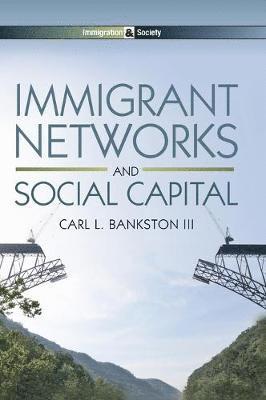
Choice Outstanding Academic Title for 2015In recent years, immigration researchers have increasingly drawn on the concept of social capital and the role of social networks to understand the dynamics of immigrant experiences. How can they help to explain what brings migrants from some countries to others, or why members of different immigrant groups experience widely varying outcomes in their community settings, occupational opportunities, and educational outcomes?This timely book examines the major issues in social capital research, showing how economic and social contexts shape networks in the process of migration, and assesses the strengths and weaknesses of this approach to the study of international migration. By drawing on a broad range of examples from major immigrant groups, the book takes network-based social capital theory out of the realm of abstraction and reveals the insights it offers.Written in a readily comprehensible, jargon-free style, Immigrant Networks and Social Capital is appropriate for undergraduate and graduate classes in international migration, networks, and political and social theory in general. It provides both a theoretical synthesis for professional social scientists and a clear introduction to network approaches to social capital for students, policy-makers, and anyone interested in contemporary social trends and issues.
216 kr
Skickas inom 7-10 vardagar
Choice Outstanding Academic Title for 2015In recent years, immigration researchers have increasingly drawn on the concept of social capital and the role of social networks to understand the dynamics of immigrant experiences. How can they help to explain what brings migrants from some countries to others, or why members of different immigrant groups experience widely varying outcomes in their community settings, occupational opportunities, and educational outcomes?This timely book examines the major issues in social capital research, showing how economic and social contexts shape networks in the process of migration, and assesses the strengths and weaknesses of this approach to the study of international migration. By drawing on a broad range of examples from major immigrant groups, the book takes network-based social capital theory out of the realm of abstraction and reveals the insights it offers.Written in a readily comprehensible, jargon-free style, Immigrant Networks and Social Capital is appropriate for undergraduate and graduate classes in international migration, networks, and political and social theory in general. It provides both a theoretical synthesis for professional social scientists and a clear introduction to network approaches to social capital for students, policy-makers, and anyone interested in contemporary social trends and issues.
686 kr
Skickas inom 7-10 vardagar
The Rise of the New Second GenerationIn this age of migration, more and more children are growing up in immigrant or transnational families. The "new second generation" refers to foreign-born and native-born children of immigrants who have come of age at the turn of the twenty-first century. This book is about this new generation in the world's largest host country of international migration—the United States.Recognizing that immigration is an intergenerational phenomenon—and one that is always evolving—the authors begin by asking "Do members of the new second generation follow the same pathways taken by the 'old' second generation?" They consider the relevance of assimilation approaches to understanding the lived experiences of the new second generation, and show that the demographic characteristics of today's immigrant groups and changing social, economic, and cultural contexts require new thinking and paradigms. Ultimately, the book offers a view of how American society is shaping the life chances of members of this new second generation and how today's second generation, in turn, is shaping a new America.Designed as a rich overview for general readers and students, and as a concise summary for scholars, this book will be an essential work for all interested in contemporary issues of race, ethnicity, and migration.
216 kr
Skickas inom 7-10 vardagar
The Rise of the New Second GenerationIn this age of migration, more and more children are growing up in immigrant or transnational families. The "new second generation" refers to foreign-born and native-born children of immigrants who have come of age at the turn of the twenty-first century. This book is about this new generation in the world's largest host country of international migration—the United States.Recognizing that immigration is an intergenerational phenomenon—and one that is always evolving—the authors begin by asking "Do members of the new second generation follow the same pathways taken by the 'old' second generation?" They consider the relevance of assimilation approaches to understanding the lived experiences of the new second generation, and show that the demographic characteristics of today's immigrant groups and changing social, economic, and cultural contexts require new thinking and paradigms. Ultimately, the book offers a view of how American society is shaping the life chances of members of this new second generation and how today's second generation, in turn, is shaping a new America.Designed as a rich overview for general readers and students, and as a concise summary for scholars, this book will be an essential work for all interested in contemporary issues of race, ethnicity, and migration.
1 214 kr
Skickas inom 3-6 vardagar
Despite decades of effort to reverse such trends, disproportionate numbers of African American students continue to grow up in poverty, in single-parent households, raised by adults with limited education and skills - characteristics that are widely acknowledged as detrimental to academic success. The attempt to improve academic performance by merely rearranging the racial mix through desegregation has proven to be an overly simplistic and inadequate means of providing disadvantaged children with the skills and support they so desperately need. In fact, it appears that coercive desegregation efforts have actually caused school systems to re-segregate, by driving out large numbers of middle-class white students. Using extensive interviews and a wealth of statistical information, this text examines the failed desegregation efforts in Louisiana as a case study of how desegregation has followed the same unsuccessful pattern across the US. It shows that the practical difficulty with desegregation is that academic environments are created by all the students in a school from the the backgrounds that all the students bring with them.
556 kr
Skickas inom 5-8 vardagar
Despite decades of effort to reverse such trends, disproportionate numbers of African American students continue to grow up in poverty, in single-parent households, raised by adults with limited education and skills - characteristics that are widely acknowledged as detrimental to academic success. The attempt to improve academic performance by merely rearranging the racial mix through desegregation has proven to be an overly simplistic and inadequate means of providing disadvantaged children with the skills and support they so desperately need. In fact, it appears that coercive desegregation efforts have actually caused school systems to re-segregate, by driving out large numbers of middle-class white students. Using extensive interviews and a wealth of statistical information, this text examines the failed desegregation efforts in Louisiana as a case study of how desegregation has followed the same unsuccessful pattern across the US. It shows that the practical difficulty with desegregation is that academic environments are created by all the students in a school from the the backgrounds that all the students bring with them.
Controls and Choices
The Educational Marketplace and the Failure of School Desegregation
Inbunden, Engelska, 2015
851 kr
Skickas inom 10-15 vardagar
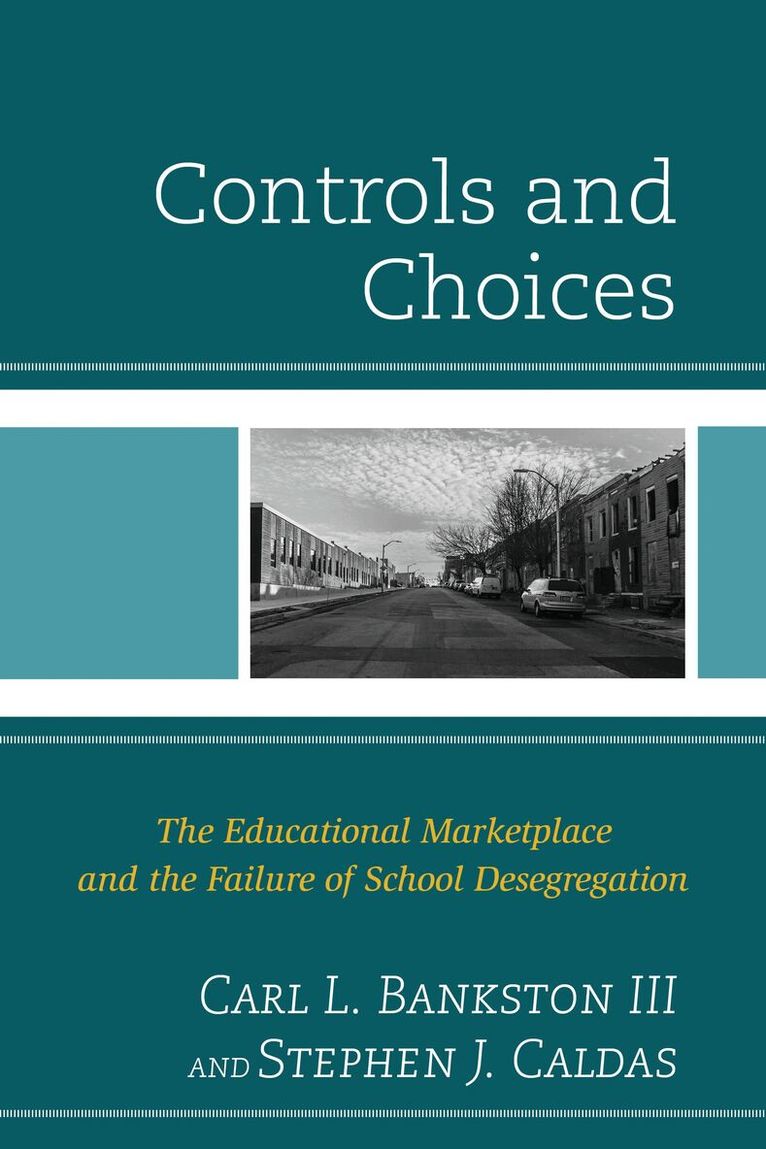
Many activists and writers have ascribed continuing racial segregation in American schools to a failure of will. In this view, forced transfers of students and other aggressive judicially mandated policies would lead to greater equality in education if only legislators and judges had the will to continue trying to make school districts conform to plans for redesigning schools and even American society. Controls and Choices: The Educational Marketplace and the Failure of School Desegregation provides a detailed examination of the nature of the educational marketplace, supported by historical evidence, to argue that school desegregation failed because it involved monopolistic efforts at redistributing opportunities. These efforts were fundamentally at odds with the self-interest of the families who had the greatest ability to make choices in the educational marketplace. The authors use the concept of the educational marketplace to explain how market-based attempts at school reform, notably vouchers and charter schools, have grown out of the failure of desegregation and remain hampered by lack of recognition of how the schools really function as markets. Some additional key features of this book include:Gives a clear understanding of how schools function as marketsIllustrates the argument with histories of specific school districtsLinks the history of school desegregation to school vouchers and charter schoolsIncludes easy to read and interpret graphs and figures Includes most up-to-date school population and census information
Controls and Choices
The Educational Marketplace and the Failure of School Desegregation
Häftad, Engelska, 2015
474 kr
Skickas inom 10-15 vardagar
Many activists and writers have ascribed continuing racial segregation in American schools to a failure of will. In this view, forced transfers of students and other aggressive judicially mandated policies would lead to greater equality in education if only legislators and judges had the will to continue trying to make school districts conform to plans for redesigning schools and even American society. Controls and Choices: The Educational Marketplace and the Failure of School Desegregation provides a detailed examination of the nature of the educational marketplace, supported by historical evidence, to argue that school desegregation failed because it involved monopolistic efforts at redistributing opportunities. These efforts were fundamentally at odds with the self-interest of the families who had the greatest ability to make choices in the educational marketplace. The authors use the concept of the educational marketplace to explain how market-based attempts at school reform, notably vouchers and charter schools, have grown out of the failure of desegregation and remain hampered by lack of recognition of how the schools really function as markets. Some additional key features of this book include:Gives a clear understanding of how schools function as marketsIllustrates the argument with histories of specific school districtsLinks the history of school desegregation to school vouchers and charter schoolsIncludes easy to read and interpret graphs and figures Includes most up-to-date school population and census information
916 kr
Skickas inom 10-15 vardagar
Still Failing: The Continuing Paradox of School Desegregation is a significantly updated and revised version of Caldas and Bankston’s previous book Forced to Fail: The Paradox of School Desegregation. The book includes an analysis of the most significant Supreme Court cases that have been decided in the ten years since the first edition of the book appeared. The authors consider the important implications of these recent rulings for the future of school desegregation in America’s schools. Social capital theory is used to explain why schools and communities continue to be segregated along racial and ethnic lines. Still Failing also provides the most recent U.S. census and Department of Education statistics documenting the continuing segregation of American schools and districts. The book also continues to track the persistent racial achievement gap, using the newest ACT, SAT, and NAEP testing figures. Finally, the book considers what present segregation trends portend for future efforts to racially and ethnically integrate schools, and close achievement gaps. Additional key features of this book include:Historical antecedents showing how and why American schooling became racially segregatedSocial capital theory to explain school and community segregationThe legal history of all important supreme court cases, congressional laws and presidential executive orders related to school segregation and desegregationEasy-to-read and interpret graphs and figuresThe most up-to-date school population and census information
500 kr
Skickas inom 10-15 vardagar
Still Failing: The Continuing Paradox of School Desegregation is a significantly updated and revised version of Caldas and Bankston’s previous book Forced to Fail: The Paradox of School Desegregation. The book includes an analysis of the most significant Supreme Court cases that have been decided in the ten years since the first edition of the book appeared. The authors consider the important implications of these recent rulings for the future of school desegregation in America’s schools. Social capital theory is used to explain why schools and communities continue to be segregated along racial and ethnic lines. Still Failing also provides the most recent U.S. census and Department of Education statistics documenting the continuing segregation of American schools and districts. The book also continues to track the persistent racial achievement gap, using the newest ACT, SAT, and NAEP testing figures. Finally, the book considers what present segregation trends portend for future efforts to racially and ethnically integrate schools, and close achievement gaps. Additional key features of this book include:Historical antecedents showing how and why American schooling became racially segregatedSocial capital theory to explain school and community segregationThe legal history of all important supreme court cases, congressional laws and presidential executive orders related to school segregation and desegregationEasy-to-read and interpret graphs and figuresThe most up-to-date school population and census information
1 423 kr
Skickas inom 7-10 vardagar
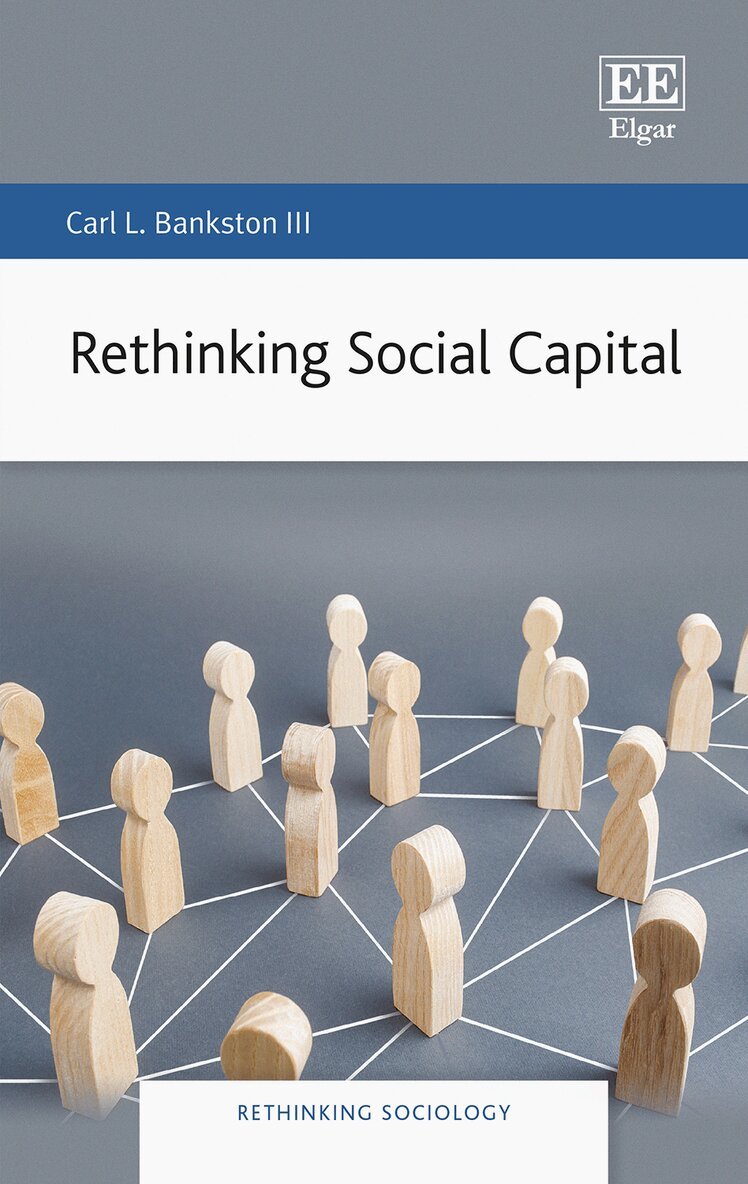
Combining theoretical approaches with practical applications, Rethinking Social Capital delineates the meaning, uses, and problems surrounding the concept of social capital. Carl Bankston, a leading scholar in the field, offers a fresh take on the topic, presenting an original way of understanding social capital as a process.The book provides key definitions of social capital, describing its functionality, the surrounding theoretical issues, and its relationship with social structure. Examining capital in its various forms, Bankston discusses the complications of defining social relationships in a financial resource analogy as investments in future outcomes, and proposes an alternative of an original structural model that approaches social capital as a process. Chapters then explore the major applications of social capital theory: to families, communities and education; to formal organizations and informal networks; to class, race, ethnicity and inequality; and to the nation-state. This cutting-edge book is invaluable in clarifying ambiguities surrounding the concept of social capital to students and scholars of the social sciences. Its practical applications will also prove useful to policy makers and public policy institutes.