Carla Calargé - Böcker
Visar alla böcker från författaren Carla Calargé. Handla med fri frakt och snabb leverans.
3 produkter
3 produkter
741 kr
Skickas inom 10-15 vardagar
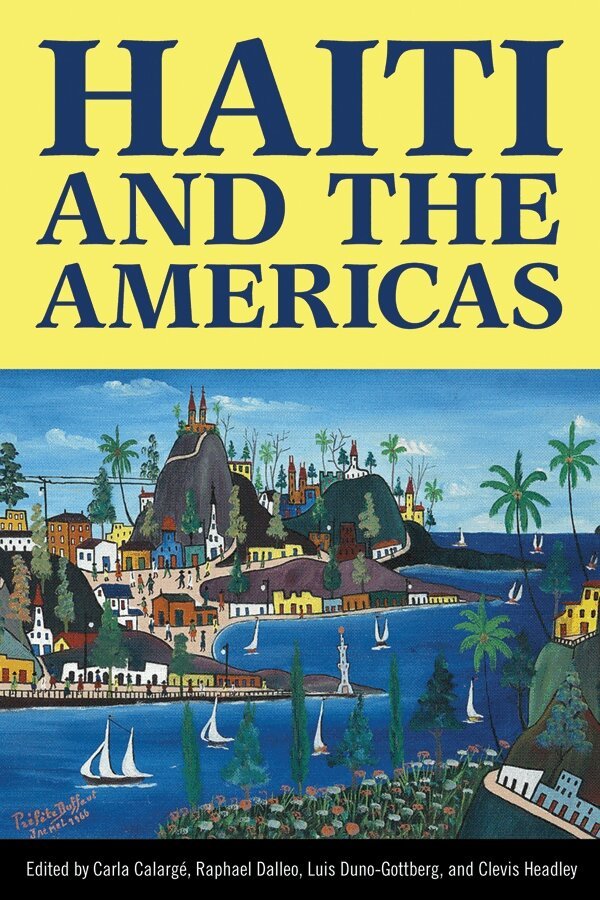
Haiti has long played an important role in global perception of the western hemisphere, but ideas about Haiti often appear paradoxical. Is it a land of tyranny and oppression or a beacon of freedom as site of the world's only successful slave revolution? A bastion of devilish practices or a devoutly religious island? Does its status as the second independent nation in the hemisphere give it special lessons to teach about postcolonialism, or is its main lesson one of failure? Haiti and the Americas brings together an interdisciplinary group of essays to examine the influence of Haiti throughout the hemisphere, to contextualize the ways that Haiti has been represented over time, and to look at Haiti's own cultural expressions in order to think about alternative ways of imagining its culture and history. Thinking about Haiti requires breaking through a thick layer of stereotypes. Haiti is often represented as the region's nadir of poverty, of political dysfunction, and of savagery. Contemporary media coverage fits very easily into the narrative of Haiti as a dependent nation, unable to govern or even fend for itself, a site of lawlessness that is in need of more powerful neighbors to take control. Essayists in Haiti and the Americas present a fuller picture developing approaches that can account for the complexity of Haitian history and culture.
191 kr
Tillfälligt slut
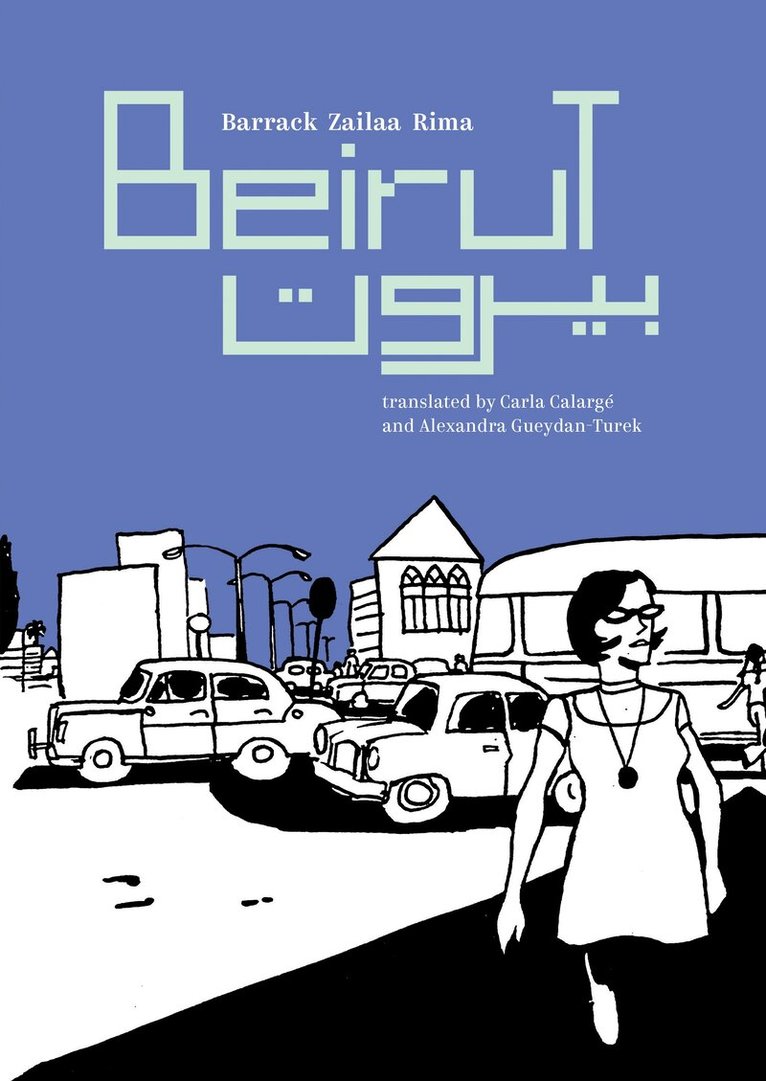
Barrack Zailaa Rima’s celebrated graphic novel trilogy, gathered together and available in English for the first time.Beirut is an intimate and poetic look at a beloved city that is at once autobiographical, documentary, and fantastic in nature. In Rima’s hands, Beirut is a labyrinth of alleyways and stories, a theater teeming with revolts, and a cenotaph to buried memories. With Rima and her family serving as our guides, and through chance encounters with incongruous figures (a librarian, a garbage collector—or the city's last storyteller), we discover a city that longs for its Golden Age even as it is transformed by neoliberal forces in the aftermath of the Civil War—an evolution whose future remains uncertain.Dreamlike, tender, and ever-attentive to the beauty of the line, Beirut offers a glimpse into Lebanon's past and present, which must be pieced together to form a whole. From the promise of the political activism of its youth in the 1950s and 1960s, to the grating difficulties of the 2015 garbage crisis and the struggle to accommodate and assimilate refugees, this is a journey through a city, and an expedition into the idea of home, that only Rima could shepherd. No matter the detours.
Del 22 - Francopolyphonies
Liban. Mémoires fragmentées d’une guerre obsédante
L’anamnèse dans la production culturelle francophone (2000-2015)
Inbunden, Franska, 2017
2 500 kr
Skickas inom 5-8 vardagar
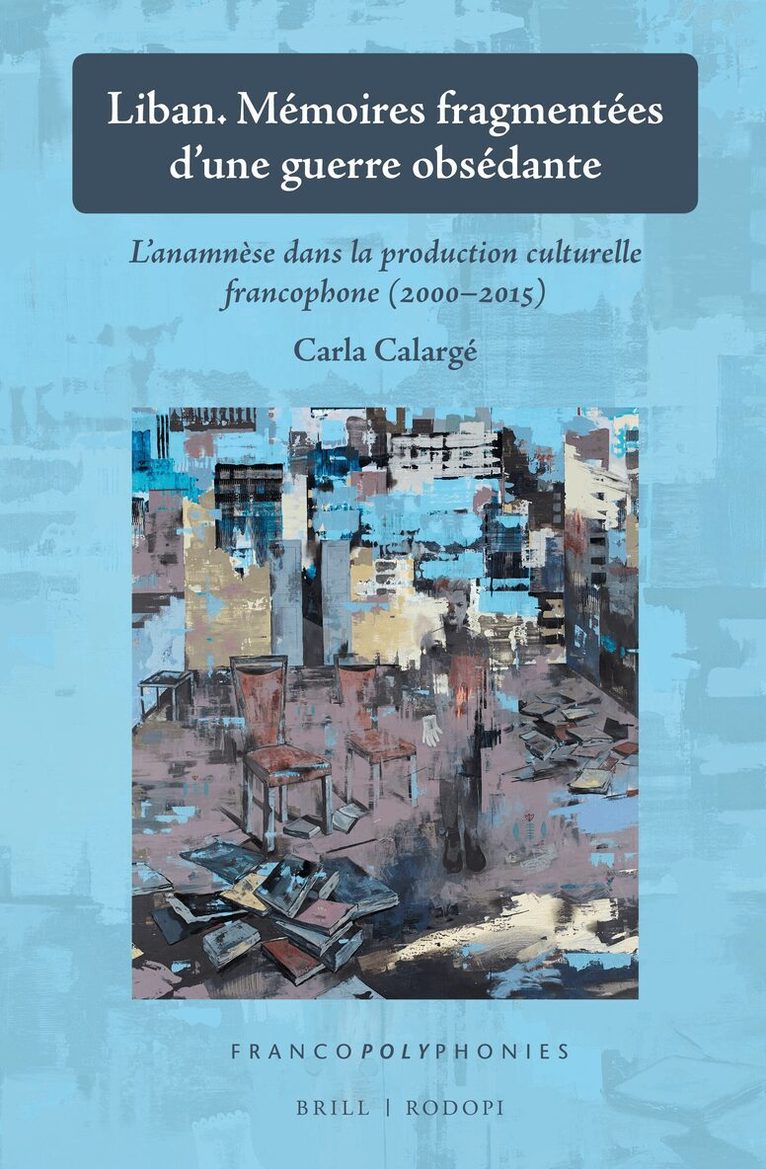
Liban. Mémoires fragmentées d’une guerre obsédante examine les œuvres d’artistes, d’écrivains et de cinéastes francophones qui tentent d’initier un travail d’anamnèse de la guerre « civile » qui a ravagé le Liban entre 1975 et 1990. Calargé postule que la production culturelle des années 2000-2015 tente de combler le vide généré par l’absence d’un récit national qui raconte l’histoire contemporaine du pays. L’ouvrage explore des questionnements en rapport avec la nécessité de l’anamnèse mais aussi de ses limites dans une situation marquée à la fois par des traumatismes collectifs, par une compétition de mémoires partisanes en conflit et par une volonté officielle d’étouffer le passé récent et d’en gommer les traces. In Liban. Mémoires fragmentées d’une guerre obsédante, Calargé focuses attention on the ways in which Francophone artists, writers, and filmmakers have revived the collective memory of the (un)civil war that ravaged Lebanon between 1975 and 1990. Their works both defy and critique the politics of forgetting that was actively pursued by the post-war leadership and attempt to fill a gaping void in the country’s national historical narrative. Nonetheless, such efforts are necessarily limited. They are limited by both the persistent feeling that the war is not (yet) over and by the limits of personal narratives in the absence of a national project that ensures and facilitates a collective memorialization of the war.