Carla Hesse – författare
Visar alla böcker från författaren Carla Hesse. Handla med fri frakt och snabb leverans.
5 produkter
5 produkter
Del 12 - Studies on the History of Society and Culture
Publishing and Cultural Politics in Revolutionary Paris, 1789-1810
Häftad, Engelska, 2022
835 kr
Skickas inom 3-6 vardagar
In 1789, French revolutionaries initiated a cultural experiment that radically transformed the three basic elements of French literary civilization—authorship, printing, and publishing. In a panoramic analysis, Carla Hesse tells how the Revolution shook the Parisian printing and publishing world from top to bottom, liberating the trade from absolutist institutions and inaugurating a free-market exchange of ideas. Historians and literary critics have traditionally viewed the French Revolution as a catastrophe for French literary culture. Combing through extensive archival sources, Hesse finds instead that revolutionaries intentionally dismantled the elite literary civilization of the Old Regime to create unprecedented access to the printed word. Exploring the uncharted terrains of popular fiction, authors' rights, and literary life under the Terror, Hesse offers a new perspective on the relationship between democratic revolutions and modern cultural life.This title is part of UC Press's Voices Revived program, which commemorates University of California Press’s mission to seek out and cultivate the brightest minds and give them voice, reach, and impact. Drawing on a backlist dating to 1893, Voices Revived makes high-quality, peer-reviewed scholarship accessible once again using print-on-demand technology. This title was originally published in 1991.
Del 12 - Studies on the History of Society and Culture
Publishing and Cultural Politics in Revolutionary Paris, 1789-1810
Inbunden, Engelska, 2022
1 513 kr
Skickas inom 3-6 vardagar
In 1789, French revolutionaries initiated a cultural experiment that radically transformed the three basic elements of French literary civilization—authorship, printing, and publishing. In a panoramic analysis, Carla Hesse tells how the Revolution shook the Parisian printing and publishing world from top to bottom, liberating the trade from absolutist institutions and inaugurating a free-market exchange of ideas. Historians and literary critics have traditionally viewed the French Revolution as a catastrophe for French literary culture. Combing through extensive archival sources, Hesse finds instead that revolutionaries intentionally dismantled the elite literary civilization of the Old Regime to create unprecedented access to the printed word. Exploring the uncharted terrains of popular fiction, authors' rights, and literary life under the Terror, Hesse offers a new perspective on the relationship between democratic revolutions and modern cultural life.This title is part of UC Press's Voices Revived program, which commemorates University of California Press’s mission to seek out and cultivate the brightest minds and give them voice, reach, and impact. Drawing on a backlist dating to 1893, Voices Revived makes high-quality, peer-reviewed scholarship accessible once again using print-on-demand technology. This title was originally published in 1991.
508 kr
Skickas inom 7-10 vardagar
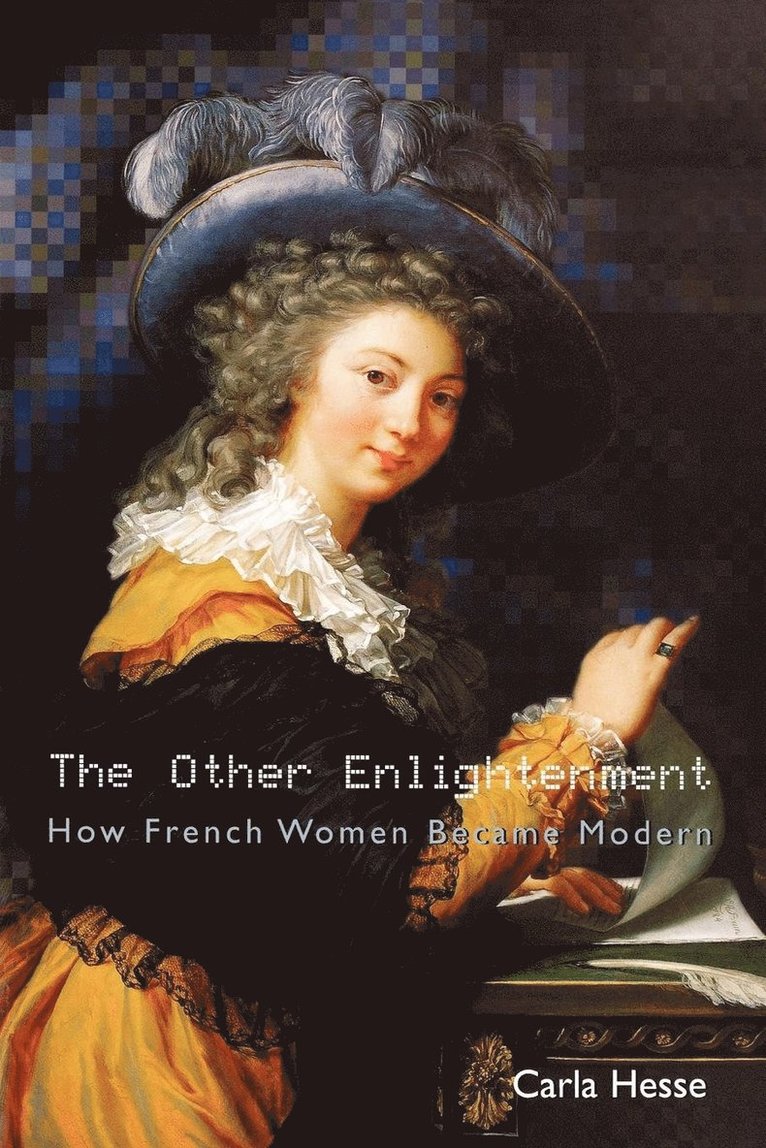
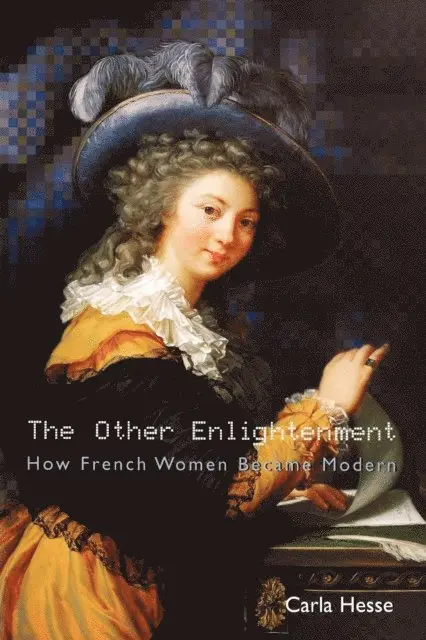
The French Revolution created a new cultural world that freed women from the constraints of corporate privilege, aristocratic salons, and patriarchal censorship, even though it failed to grant them legal equality. Women burst into print in unprecedented numbers and became active participants in the great political, ethical, and aesthetic debates that gave birth to our understanding of the individual as a self-creating, self-determining agent. Carla Hesse tells this story, delivering a capacious history of how French women have used writing to create themselves as modern individuals. Beginning with the marketplace fishwives and salon hostesses whose eloquence shaped French culture low and high and leading us through the accomplishments of Simone de Beauvoir, Hesse shows what it meant to make an independent intellectual life as a woman in France. She offers exquisitely constructed portraits of the work and mental lives of many fascinating women--including both well-known novelists and now-obscure pamphleteers--who put pen to paper during and after the Revolution.We learn how they negotiated control over their work and authorial identity--whether choosing pseudonyms like Georges Sand or forsaking profits to sign their own names. We encounter the extraordinary Louise de Keralio-Robert, a critically admired historian who re-created herself as a revolutionary novelist. We meet aristocratic women whose literary criticism subjected them to slander as well as writers whose rhetoric cost them not only reputation but marriage, citizenship, and even their heads. Crucially, their stories reveal how the unequal terms on which women entered the modern era shaped how they wrote and thought. Though women writers and thinkers championed the full range of political and social positions--from royalist to Jacobin, from ultraconservative to fully feminist--they shared common moral perspectives and representational strategies. Unlike the Enlightenment of their male peers, theirs was more skeptical than idealist, more situationalist than universalist. And this alternative project lies at the very heart of modern French letters.
434 kr
Kommande
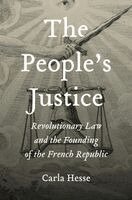
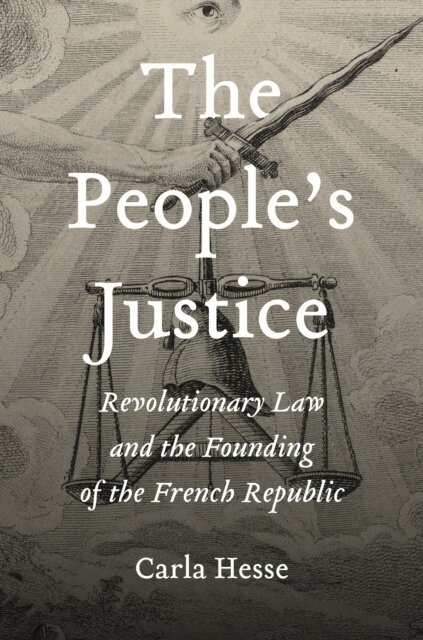
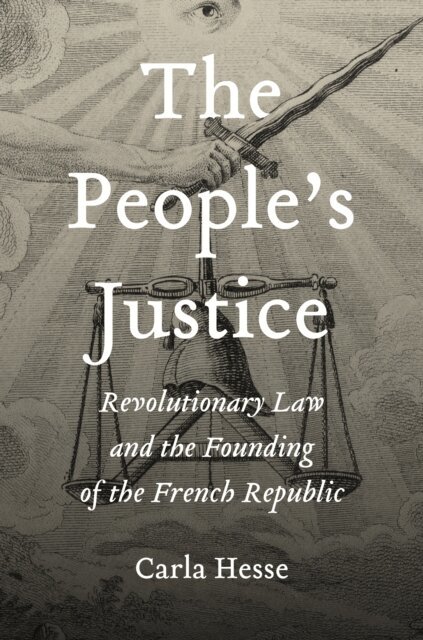
A major new interpretation of the French Revolution that brings to life the criminal tribunals at the heart of the Republic’s political culture In The People’s Justice, Carla Hesse offers a sweeping reappraisal of political violence in the French Revolution. From Charles Dickens to Hannah Arendt, the Revolution of 1789–1799 in France has been depicted as the bloodiest of the eighteenth-century democratic revolutions. Through extensive new archival research, Hesse shows that, to the contrary, what set the French Revolution apart was neither the scale nor the intensity of its violence but rather the ubiquity of its political tribunals and the use of novel forms of criminal law and procedure as a means of adjudicating political conflict.More than 5,000 political trials were prosecuted by the Revolutionary Tribunal in Paris alone, and, with an acquittal rate of more than 50 percent, these were neither perfunctory nor foregone in their outcomes. They had a repressive function, to be sure, but more importantly, they played a critical role in founding a republic in France and in shaping its social and political norms. Through jury deliberation, public witnessing, and media coverage, these political trials legitimated a republic and the revolutionary struggle that brought it into being. They were animated less by class warfare, factional hatreds, or utopian ideology than by a patriotic, albeit tragic, effort to hold fellow citizens accountable. Over the course of the last two centuries, France, of course, has successfully established itself as a constitutional regime, but this constitutional tradition is still rooted in and haunted by its revolutionary past. Since 1793, the French Republic has, to some extent or another, kept itself alive by keeping itself perpetually on trial.
224 kr
Skickas
The eighteenth century, in which the Royal Academy of Letters was created in Stockholm, was a time of intense political discussion. Concepts such as human rights and social equality were beginning to take shape in Europe and North America. Critical views spread through a variety of media which undermined the power structures of the Old Regime, gossip, newspapers, libels, memoirs, chroniques scandaleuses, engravings, etc. When the Royal Academy of Letters celebrated its 250th anniversary in 2003, one of the events was a symposium in Stockholm entitled ‘Media and Political Culture in the Eighteenth Century’. The present volume includes the contributions of the four keynote lecturers, John Brewer, Robert Darnton, Carla Hesse and Jean Sgard. The British historian JOHN BREWER is currently Professor of Humanities and Social Sciences at California Institute of Technology. The American scholar ROBERT DARNTON is Professor of European History at Princeton University. The American scholar CARLA HESSE is Professor of History at the University of California, Berkeley. The French press historian JEAN SGARD has been Professor of French Literature at the Université Stendhal in Grenoble 1969-1994. The editor, MARIE-CHRISTINE SKUNCKE, is Professor of Comparative Literature at Uppsala University.