Carla Yanni - Böcker
Visar alla böcker från författaren Carla Yanni. Handla med fri frakt och snabb leverans.
2 produkter
2 produkter
292 kr
Skickas inom 7-10 vardagar
Elaborately conceived, grandly constructed insane asylums-ranging in appearance from classical temples to Gothic castles-were once a common sight looming on the outskirts of American towns and cities. Many of these buildings were razed long ago, and those that remain stand as grim reminders of an often cruel system. For much of the nineteenth century, however, these asylums epitomized the widely held belief among doctors and social reformers that insanity was a curable disease and that environment-architecture in particular-was the most effective means of treatment. In The Architecture of Madness, Carla Yanni tells a compelling story of therapeutic design, from America’s earliest purpose-built institutions for the insane to the asylum construction frenzy in the second half of the century. At the center of Yanni’s inquiry is Dr. Thomas Kirkbride, a Pennsylvania-born Quaker, who in the 1840s devised a novel way to house the mentally diseased that emphasized segregation by severity of illness, ease of treatment and surveillance, and ventilation. After the Civil War, American architects designed Kirkbride-plan hospitals across the country. Before the end of the century, interest in the Kirkbride plan had begun to decline. Many of the asylums had deteriorated into human warehouses, strengthening arguments against the monolithic structures advocated by Kirkbride. At the same time, the medical profession began embracing a more neurological approach to mental disease that considered architecture as largely irrelevant to its treatment. Generously illustrated, The Architecture of Madness is a fresh and original look at the American medical establishment’s century-long preoccupation with therapeutic architecture as a way to cure social ills. Carla Yanni is associate professor of art history at Rutgers University and the author of Nature’s Museums: Victorian Science and the Architecture of Display.
384 kr
Skickas inom 11-20 vardagar
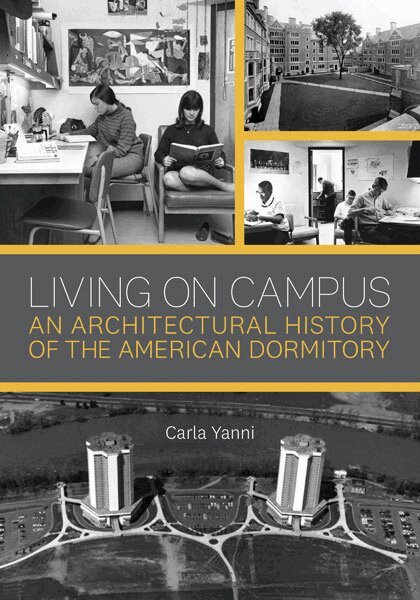
An exploration of the architecture of dormitories that exposes deeply held American beliefs about education, youth, and citizenshipEvery fall on move-in day, parents tearfully bid farewell to their beloved sons and daughters at college dormitories: it is an age-old ritual. The residence hall has come to mark the threshold between childhood and adulthood, housing young people during a transformational time in their lives. Whether a Gothic stone pile, a quaint Colonial box, or a concrete slab, the dormitory is decidedly unhomelike, yet it takes center stage in the dramatic arc of many American families. This richly illustrated book examines the architecture of dormitories in the United States from the eighteenth century to 1968, asking fundamental questions: Why have American educators believed for so long that housing students is essential to educating them? And how has architecture validated that idea? Living on Campus is the first architectural history of this critical building type. Grounded in extensive archival research, Carla Yanni’s study highlights the opinions of architects, professors, and deans, and also includes the voices of students. For centuries, academic leaders in the United States asserted that on-campus living enhanced the moral character of youth; that somewhat dubious claim nonetheless influenced the design and planning of these ubiquitous yet often overlooked campus buildings. Through nuanced architectural analysis and detailed social history, Yanni offers unexpected glimpses into the past: double-loaded corridors (which made surveillance easy but echoed with noise), staircase plans (which prevented roughhousing but offered no communal space), lavish lounges in women’s halls (intended to civilize male visitors), specially designed upholstered benches for courting couples, mixed-gender saunas for students in the radical 1960s, and lazy rivers for the twenty-first century’s stressed-out undergraduates. Against the backdrop of sweeping societal changes, communal living endured because it bolstered networking, if not studying. Housing policies often enabled discrimination according to class, race, and gender, despite the fact that deans envisioned the residence hall as a democratic alternative to the elitist fraternity. Yanni focuses on the dormitory as a place of exclusion as much as a site of fellowship, and considers the uncertain future of residence halls in the age of distance learning.