Carlo Fusaro - Böcker
Visar alla böcker från författaren Carlo Fusaro. Handla med fri frakt och snabb leverans.
3 produkter
3 produkter
1 052 kr
Skickas inom 3-6 vardagar
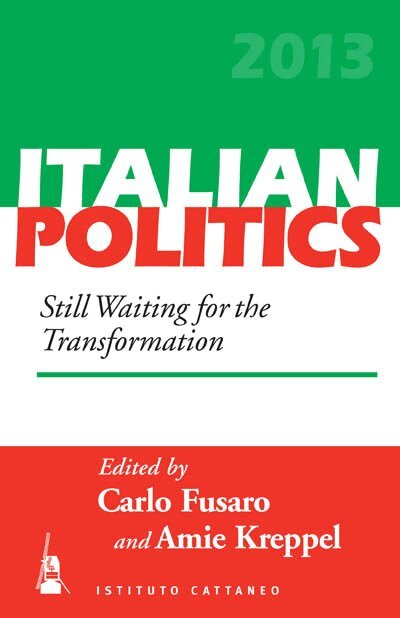
Italy in 2013 seemed to be continually on the cusp of substantive reform and forward motion, but never quite achieved it. The previous two years had seen the fall of the Berlusconi government and the beginning of the end of the Second Republic, followed by the predominance of technocrats in office. In contrast, 2013 proved to be a year of incomplete transitions, marked by a period during which the Italian political and institutional system reached a near complete stalemate. Grand coalitions were incapable of substantive decision-making, bold initiatives languished in the legislature, foreign policy actions faltered and failed, and the government showed a continued inability to effectively tackle the real economic and social issues that faced the country. Thus, in many ways, Italy has been muddling through as it did following the fall of the First Republic. Although some of the political developments that took place in the waning months of the year may prove to be the foundation for future momentous changes, it is very likely that 2014 will prove to be a further continuation of the seemingly endless transitional period in Italy.
1 235 kr
Skickas inom 10-15 vardagar
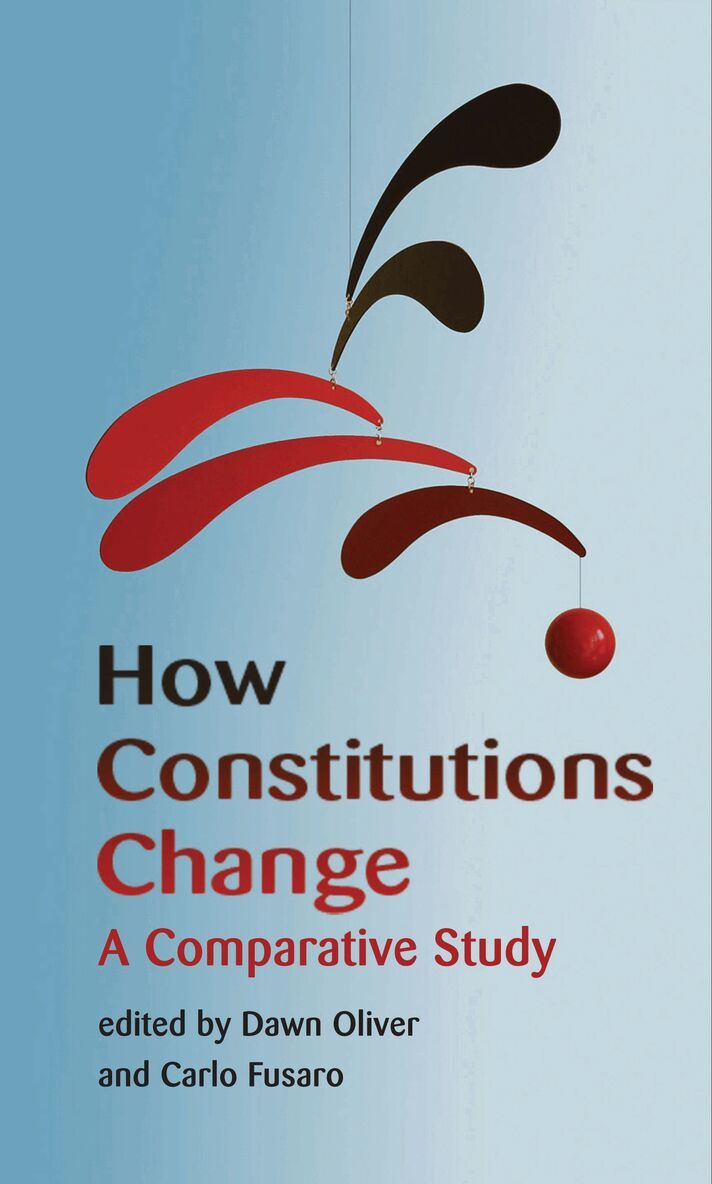
This set of essays explores how constitutions change and are changed in a number of countries, and how the 'constitution' of the EU changes and is changed. For a range of reasons, including internal and external pressures, the constitutional arrangements in many countries are changing. Constitutional change may be formal, involving amendments to the texts of Constitutions or the passage of legislation of a clearly constitutional kind, or informal and organic, as where court decisions affect the operation of the system of government, or where new administrative and other arrangements (eg agencification) affect or articulate or alter the operation of the constitution of the country, without the need to resort to formal change.The countries in this study include, from the EU, a common law country, a Nordic one, a former communist state, several civil law systems, parliamentary systems and a hybrid one (France). Chapters on non EU countries include two on developing countries (India and South Africa), two on common law countries without entrenched written constitutions (Israel and New Zealand), a presidential system (the USA) and three federal ones (Switzerland, the USA and Canada). In the last two chapters the editors conduct a detailed comparative analysis of the jurisdiction-based chapters and explore the question whether any overarching theory or theories about constitutional change in liberal democracies emerge from the study.
424 kr
Skickas inom 10-15 vardagar
This set of essays explores how constitutions change and are changed in a number of countries, and how the 'constitution' of the EU changes and is changed. For a range of reasons, including internal and external pressures, the constitutional arrangements in many countries are changing. Constitutional change may be formal, involving amendments to the texts of Constitutions or the passage of legislation of a clearly constitutional kind, or informal and organic, as where court decisions affect the operation of the system of government, or where new administrative and other arrangements (eg agencification) affect or articulate or alter the operation of the constitution of the country, without the need to resort to formal change.The countries in this study include, from the EU, a common law country, a Nordic one, a former communist state, several civil law systems, parliamentary systems and a hybrid one (France). Chapters on non EU countries include two on developing countries (India and South Africa), two on common law countries without entrenched written constitutions (Israel and New Zealand), a presidential system (the USA) and three federal ones (Switzerland, the USA and Canada). In the last two chapters the editors conduct a detailed comparative analysis of the jurisdiction-based chapters and explore the question whether any overarching theory or theories about constitutional change in liberal democracies emerge from the study.