Carlo Ierna – författare
Visar alla böcker från författaren Carlo Ierna. Handla med fri frakt och snabb leverans.
5 produkter
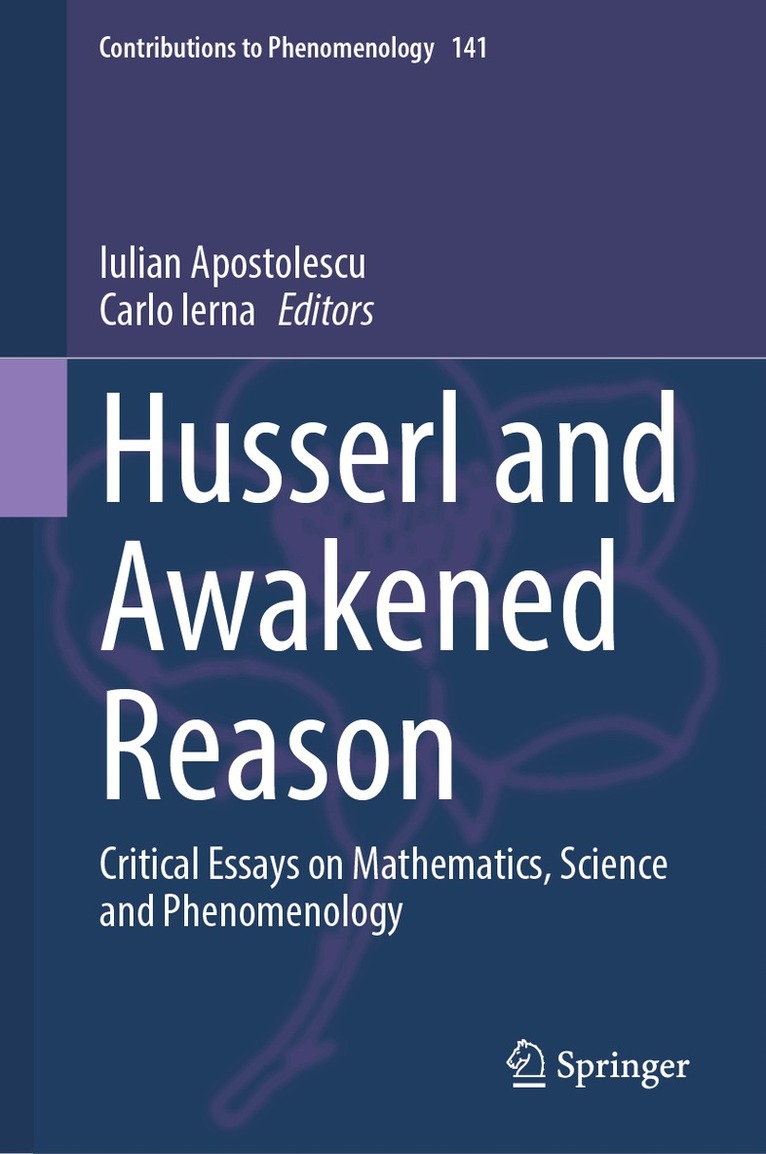
Husserl and Awakened Reason
Critical Essays on Mathematics, Science and Phenomenology
Av Iulian Apostolescu, Carlo Ierna
Inbunden, 2026
1316 kr
Lägg i varukorg
The main objectives of this book are to critically evaluate the problem of scientificity in Edmund Husserl’s phenomenology, to argue that his phenomenological reflection further awakens possibilities for the rational sciences and finally, to question the standard narratives of his theory of reason …
Husserl and Awakened Reason
Critical Essays on Mathematics, Science and Phenomenology
Av Carlo Ierna, Iulian Apostolescu
E-bok, 2026
1785 kr
Lägg i varukorg
The main objectives of this book are to critically evaluate the problem of scientificity in Edmund Husserl's phenomenology, to argue that his phenomenological reflection further awakens possibilities for the rational sciences and finally, to question the standard narratives of his theory of reason …
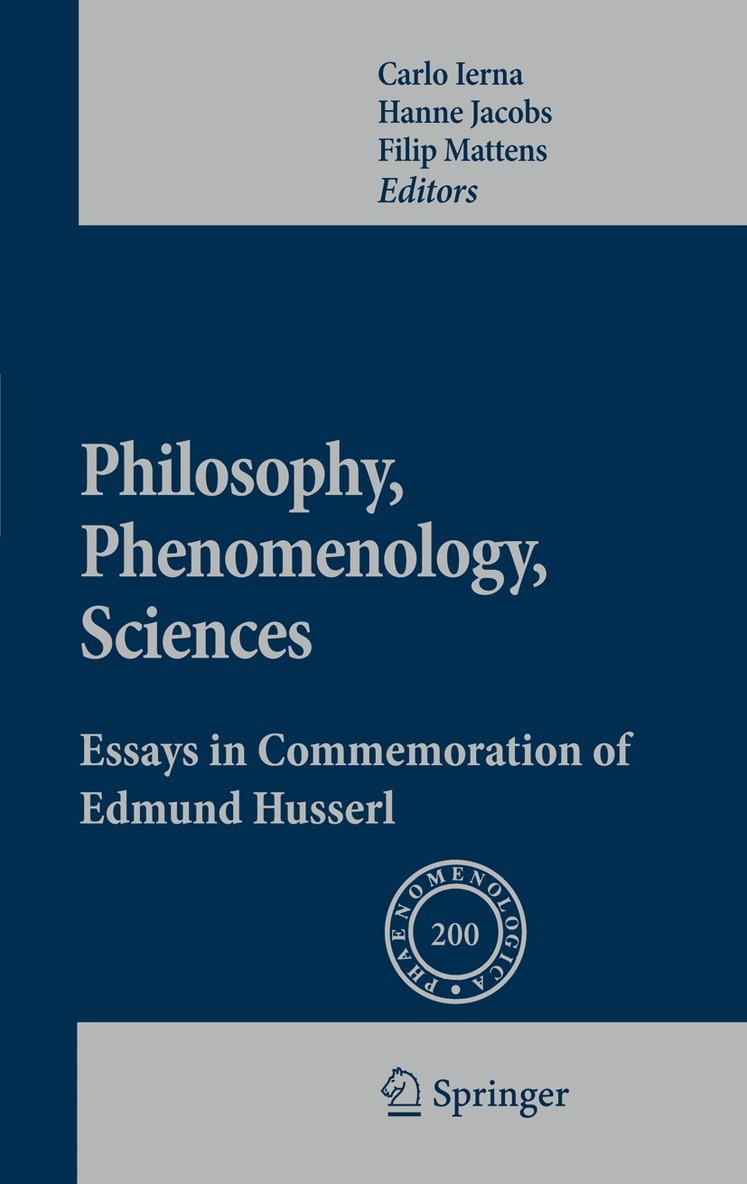
Philosophy, Phenomenology, Sciences
Essays in Commemoration of Edmund Husserl
Av Carlo Ierna, Hanne Jacobs m. fl.
Inbunden, 2010
2407 kr
Lägg i varukorg
The present volume contains many of the papers presented at a four-day conference held by the Husserl-Archives in Leuven in April 2009 to c- memorate the one hundred and ?ftieth anniversary of Edmund Husserl’s birth. The conference was organized to facilitate the critical evaluation of Husserl’s …
Philosophy, Phenomenology, Sciences
Essays in Commemoration of Edmund Husserl
Av Filip Mattens, Hanne Jacobs m. fl.
E-bok, 2011
2575 kr
Lägg i varukorg
The present volume contains many of the papers presented at a four-day conference held by the Husserl-Archives in Leuven in April 2009 to c- memorate the one hundred and ?ftieth anniversary of Edmund Husserl’s birth. The conference was organized to facilitate the critical evaluation of Husserl’s …
Philosophy, Phenomenology, Sciences
Essays in Commemoration of Edmund Husserl
Av Carlo Ierna, Hanne Jacobs m. fl.
Häftad, 2013
1971 kr
Lägg i varukorg
The present volume contains many of the papers presented at a four-day conference held by the Husserl-Archives in Leuven in April 2009 to c- memorate the one hundred and ?ftieth anniversary of Edmund Husserl’s birth. The conference was organized to facilitate the critical evaluation of Husserl’s …