Carlos Pereda – författare
Visar alla böcker från författaren Carlos Pereda. Handla med fri frakt och snabb leverans.
7 produkter
7 produkter
Häftad, Engelska, 2025
294 kr
Skickas inom 5-8 vardagar
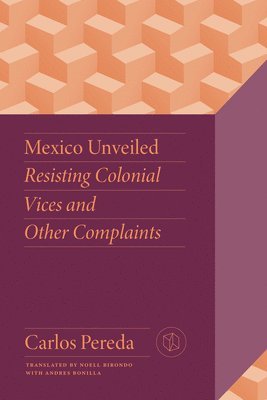
Carlos Pereda’s Mexico Unveiled is a fresh, idiosyncratic synthesis of twentieth-century Mexican philosophy that puts contemporary debates about Mexican identity politics into a critical perspective. This edition—translated, edited, and introduced by Noell Birondo—brings the Mexican thinker’s ideas to a new English-language audience.In three engaging essays written in a peerless prose style, Pereda considers the persistent influence of European colonialism on Mexican intellectual life, the politics of inclusion, and the changing ideas of what it means to be Mexican. He identifies three “vices”—social habits, customs, and beliefs inherited from European colonialism—that have influenced the development of Mexican national identity: subaltern fervor, craving for novelty, and nationalist zeal. Pereda demonstrates that these three tendencies have led Mexican intellectuals, and Mexican society more generally, to uncritically adopt a politics of exclusion and destructive nationalist attitudes.Using a strategy he calls “nomadic” thinking—the act of moving beyond our cultural preconceptions and habits of thinking—Pereda guides readers through a number of examples drawn from Mexican philosophy and culture that illustrate these tendencies. At its core, Mexico Unveiled is an accessible and entertaining introduction to the philosophical themes that have long occupied Pereda’s life and work and Mexican philosophy more generally.
Inbunden, Engelska, 2025
828 kr
Skickas inom 5-8 vardagar
Carlos Pereda’s Mexico Unveiled is a fresh, idiosyncratic synthesis of twentieth-century Mexican philosophy that puts contemporary debates about Mexican identity politics into a critical perspective. This edition—translated, edited, and introduced by Noell Birondo—brings the Mexican thinker’s ideas to a new English-language audience.In three engaging essays written in a peerless prose style, Pereda considers the persistent influence of European colonialism on Mexican intellectual life, the politics of inclusion, and the changing ideas of what it means to be Mexican. He identifies three “vices”—social habits, customs, and beliefs inherited from European colonialism—that have influenced the development of Mexican national identity: subaltern fervor, craving for novelty, and nationalist zeal. Pereda demonstrates that these three tendencies have led Mexican intellectuals, and Mexican society more generally, to uncritically adopt a politics of exclusion and destructive nationalist attitudes.Using a strategy he calls “nomadic” thinking—the act of moving beyond our cultural preconceptions and habits of thinking—Pereda guides readers through a number of examples drawn from Mexican philosophy and culture that illustrate these tendencies. At its core, Mexico Unveiled is an accessible and entertaining introduction to the philosophical themes that have long occupied Pereda’s life and work and Mexican philosophy more generally.
Inbunden, Engelska, 2023
1 096 kr
Skickas inom 10-15 vardagar
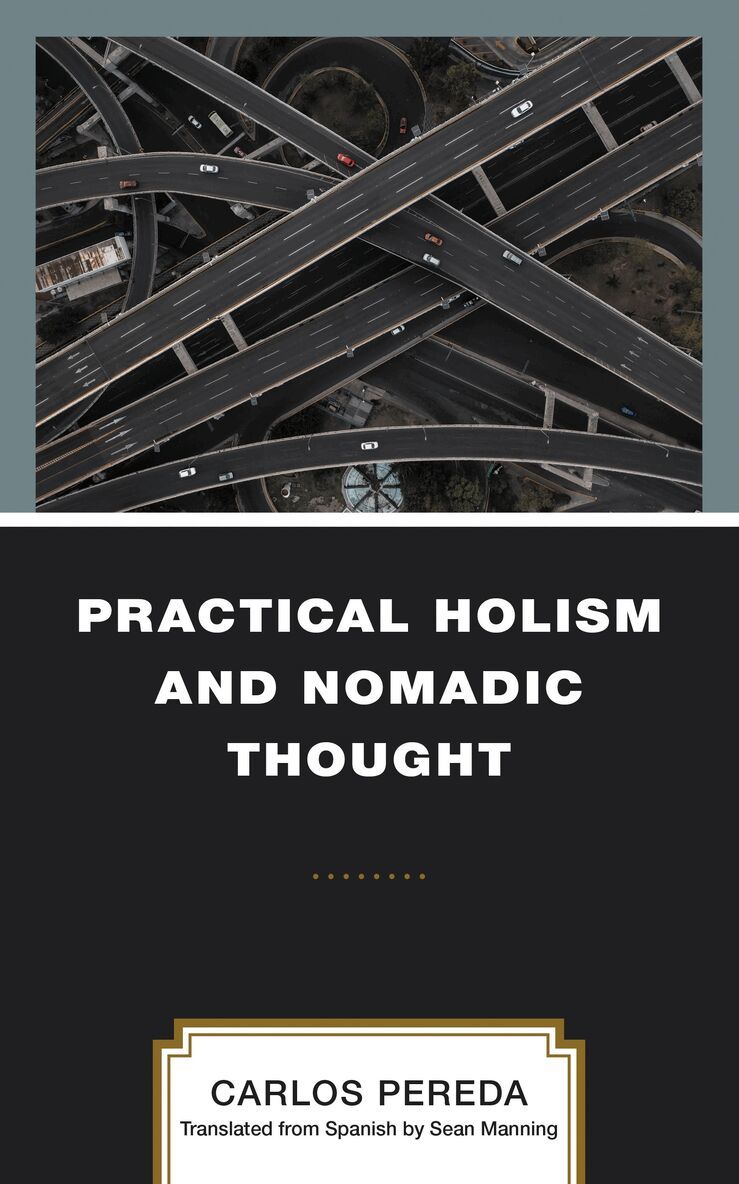
Practical Holism and Nomadic Thought invites us to think of societies as organizations built with moral, legal, political, and economic materials that interact in dynamic, and often simultaneous, ways. According to this view, which Carlos Pereda calls “practical holism,” our practical life is constantly motivated by many different kinds of values that often conflict with one another. This book examines how practical normativity, guiding how we behave from seemingly trivial interactions to the deepest existential dilemmas, is crossed by tensions. Pereda argues that only nomadic thought—willing to transgress received conceptual distinctions or groupings—is capable of capturing those many interactions. No qualitative or quantitative typology is indisputable; leaving behind hitherto well-established pathways is not impossible. At its best, nomadic thought considers all of these as proposals worth pondering and discussing, to be approved or rejected, always in a provisional form.
E-bok
Spanska, 2023209 kr
Läs direkt efter köp
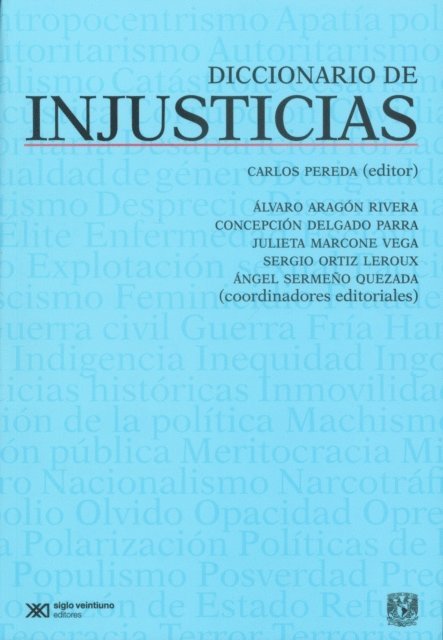
"¡Eso no es justo!": lo dice la familia del joven que un mal día sencillamente no regresa a casa, la profesionista que por el mismo trabajo percibe un salario menor que un colega varón, la persona a la que se le ofrecen recompensas laborales a cambio de algún favor sexual, el migrante al que se le impide circular con libertad, la desempleada a quien se desdeña por el color de su piel. La injusticia está por doquier, nos rodea y nos somete, erosiona la convivencia y castiga de forma injustificada a quien la padece. Peor aún: es algo tan común que terminamos habituados a convivir con ella, y aun a practicarla.En este ambicioso y original volumen, editado por el filósofo Carlos Pereda, se exploran los muchos rostros de este mal que aqueja a las sociedades, tanto abusos conocidos desde hace mucho tiempo, como la xenofobia o el racismo, hasta agravios que definen nuestro tiempo, como el desplazamiento forzado o el feminicidio, y aun otros que sólo en últimas fechas hemos identificado, como la contaminación acústica, el maltrato animal, la gentrificación o el edadismo. En las 146 entradas del diccionario —ensayos concisos y a menudo combativos, con una breve bibliografía para profundizar en cada tema—, académicos de toda Iberoamérica identifican y desgranan una gran variedad de problemas sociales, culturales, políticos, epistémicos y ambientales que no dejarán ileso al lector.Este volumen es una especie de "continuación", en sentido opuesto pero a la vez más motivante, del Diccionario de justicia, también editado por Pereda y publicado por Siglo XXI Editores
E-bok
Spanska, 2010125 kr
Läs direkt efter köp
La confianza es un conglomerado de actitudes, deseos, creencias, emociones y expectativas que impregna nuestra vida. Confiamos en las personas, las instituciones, en la naturaleza y en nosotros mismos. Por supuesto, hay diversas formas y tipos de confianzas con varios correlatos (prácticos y teóricos, concretos y abstractos).Pero si es imprescindible para nuestra vida también es necesaria para el engaño: sin confianza no hay traición. Cuando nos convertimos en víctimas, ponemos en marcha diferentes respuestas para hacer frente a esta ruptura y aparecen malestares porque ¿Acaso confiar no implica establecer dependencias?El filósofo Carlos Pereda se sumerge en este difícil entramado sabiendo, no obstante, que no hay que apostarle ni a una cultura de la confianza ni a una de la desconfianza, sino a una cultura de la argumentación o, lo que es lo mismo, de la responsabilidad.La adquisición de la autonomía es un logro complicado pues consiste en descubrir las mejores razones para creer y actuar en cada situación.
E-bok
Spanska, 2026157 kr
Läs direkt efter köp
Desde la Antiguedad, los desplazamientos de gente desesperada -al encontrarse oprimida por circunstancias politicas, economicas o religiosas- se han convertido en sucesos tan disruptivos como insoslayables.En este libro, Carlos Pereda examina, por un lado, el exilio de los republicanos espanoles en Mexico, atendiendo a las formas en que Jose Gaos, Maria Zambrano y Adolfo Sanchez Vazquez pensaron esa experiencia. Y por otro, analiza detalladamente la migracion mexicana hacia Estados Unidos en los siglos XX y XXI. Para ello, se apoya en expresiones culturales que muestran la dimension humana de la migracion. Entre ellas, los corridos fronterizos y la poesia chicana, que dan voz a miedos, conflictos y esperanzas que los registros historicos no alcanzan a expresar.De este modo, el autor propone una vision mas matizada sobre las fronteras, subrayando que la migracion forzada responde a procesos historicos y estructuras de poder. Tener en cuenta esas causas es clave si no se quiere reducir los argumentos normativos sobre la migracion a mera especulacion, o a la simple reafirmacion de un statu quo injusto y cruel.
Del 323 - Philosophy in Spain
Lessons in Exile
Häftad, Engelska, 2018
1 016 kr
Skickas inom 5-8 vardagar
This book, winner of the 2007 Siglo XXI International Essay Prize, is unique in its approach to exile and offers remarkable insights into the subject. It discusses both human nature and the phenomenon of exile with depth and exactness from the combined perspectives of philosophy, morality, politics, anthropology, and history. After retracing the lessons learned through diverse experiences of exile from antiquity to modern times, it uses poetry as metatestimony to examine exile, subjectivity, and the many moral and political implications involved. The result is a series of thoughtprovoking connections between exile and the way we assume our lives.