Carlos Sandoval-García - Böcker
Visar alla böcker från författaren Carlos Sandoval-García. Handla med fri frakt och snabb leverans.
5 produkter
5 produkter
1 572 kr
Skickas inom 10-15 vardagar
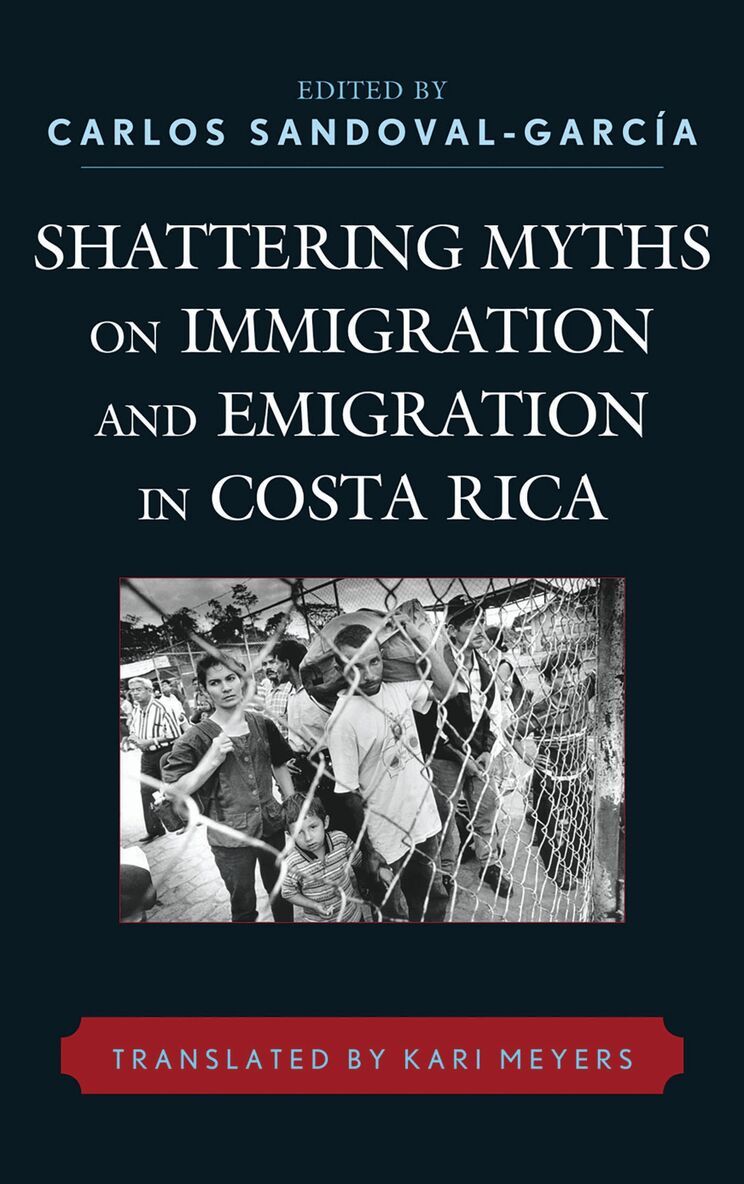
Shattering Myths on Immigration and Emigration in Costa Rica provides the first comprehensive examination of transnational migration patterns into and out of Costa Rica. This impressive edited volume brings together the work of 18 top scholars from diverse social science backgrounds to analyze Costa Rican migration patterns in the era of globalization. The first section focuses on immigration in Costa Rican history, including chapters on Nicaraguan, North American and European immigration to the country as well a chapter on transnational migration within Central America. The second part centers on the social and political status of Nicaraguans in Costa Rica that make up a sizable portion of the working-class similar to Mexican immigrants in the southwestern United States. The third section of the book analyzes outmigration of Costa Ricans with chapters on the role of international remittances sent back to Costa Rica (a major source of income in contemporary Latin America) and particular migration patterns of Costa Ricans living in the northeastern United States. The fourth part of the collection examines the timely topic of gender and cross-border migration with emphases on women in the actual migration transit process and the vulnerability of immigrant women in different industries including agriculture and sex tourism. The concluding chapters emphasize the social and symbolic images of immigrants to Costa Rica including the construction of in-group and out-group identities, the use of symbolic violence and racism against immigrants. This volume was originally published in Costa Rica in 2007 and reprinted in 2008 by the University of Costa Rica Press.
Threatening Others
Nicaraguans and the Formation of National Identities in Costa Rica
Häftad, Engelska, 2004
347 kr
Skickas inom 11-20 vardagar
During the last two decades, a decline in public investment has undermined some of the national values and institutions of Costa Rica. The resulting sense of dislocation and loss is usually projected onto Nicaraguan "immigrants."Threatening Others: Nicaraguans and the Formation of National Identities in Costa Rica explores the representation of the Nicaraguan "other" in the Costa Rican imagery. It also seeks to address more generally why the sense of national belonging constitutes a crucial identification in contemporary societies. Interdisciplinary and based on extensive fieldwork, it looks critically at the "exceptionalism" that Costa Ricans take for granted and view as a part of their national identity.Carlos Sandoval-García argues that Nicaraguan immigrants, once perceived as a "communist threat," are now victims of an invigorated, racialized politics in which the Nicaraguan nationality has become an offense in itself.Threatening Others is a deeply searching book that will interest scholars and students in Latin American studies and politics, cultural studies, and ethnic studies.
944 kr
Skickas inom 5-8 vardagar
A rich interdisciplinary study of the diversity and dynamics of the migrations of displaced peoples across the Global South By the end of 2022, the number of forcibly displaced people worldwide had reached a record high of 100 million, the highest figure since the Second World War. The Russian invasion of Ukraine and the Taliban political takeover in Afghanistan exacerbated an already protracted global refugee situation, but climate-related events also played a part in forcing millions of people to leave their homes in search of more habitable living areas.Making Routes: Mobility and Politics of Migrant in the Global South provides fresh understandings of mobility flows, transnational linkages, and the politics of migration across the Global South, in Africa, Asia, and Latin America. Moving away from North–South, East–West binaries and challenging the conception that migratory movements are primarily unidirectional—from South to North—it explores how state policies, migrants’ trajectories, nationalism and discrimination, and art and knowledge production unfold in places as widespread as Egypt, Turkey, Myanmar, Nicaragua, and Haiti.Seventeen academics, activists, and artists from a range of backgrounds and disciplines, including anthropology, cultural studies, ethnomusicology, and international relations reveal the diverse narratives, migration patterns, forms of agency, and laws that make up the complex reality of South–South migration, offering vital new pathways for research in migration studies today.Contributors:- Chowdhury R. Abrar, Refugee and Migratory Movements Research Unit (RMMRU), Dhaka, Bangladesh- David Bolanos, Independent photographer, Costa Rica- Danyel M. Ferrari, Rutgers University, New Brunswick, United States- Leander Kandilige, University of Ghana, Accra- Mélanie V. Léger-Montinard, Federal University of Rio de Janeiro, Brazil- Duduzile S. Ndlovu, University of the Witwatersrand, Johannesburg, South Africa- Evrim Hikmet Öğüt, Mimar Sinan Fine Arts University, Istanbul, Turkey- Sara Sadek, The American University in Cairo, Egypt- Tasneem Siddiqui, University of Dhaka, Bangladesh- Sally Souraya, Independent artist, London United Kingdom- Allison B. Wolf, Universidad de los Andes, Bogota, Colombia- Kudakwashe Vanyoro, University of the Witwatersrand, Johannesburg, South Africa- Thomas Yeboah, Kwame Nkrumah University of Science and Technology, Kumasi, Ghana
587 kr
Skickas inom 10-15 vardagar
Each year, thousands of Central Americans leave their countries and walk across Mexico, seeking to reach the United States. The author explores the dispossession process that drives these migrants from their homes and argues that they are caught in a kind of trap: forced to emigrate, but impeded to immigrate.
587 kr
Skickas inom 10-15 vardagar
Each year, thousands of Central Americans leave their countries and walk across Mexico, seeking to reach the United States. The author explores the dispossession process that drives these migrants from their homes and argues that they are caught in a kind of trap: forced to emigrate, but impeded to immigrate.