Carlos van Tongeren - Böcker
Visar alla böcker från författaren Carlos van Tongeren. Handla med fri frakt och snabb leverans.
4 produkter
4 produkter
241 kr
Skickas inom 7-10 vardagar
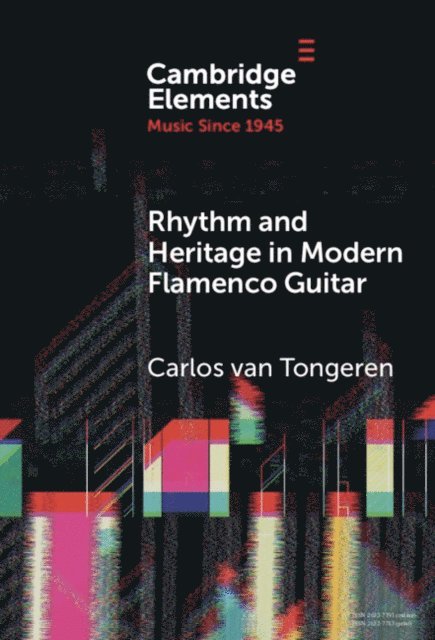
Discourses about rhythmic skill and feel have often been associated with forms of non-Western, and especially African and Afro-diasporic identity and heritage. How can we rethink rhythmic skill for the contemporary world where concepts of heritage and belonging are attaining new meanings across cultural and geographical borders? This Element addresses this question through the case study of modern flamenco guitar, an instrumental practice that has achieved daunting levels of rhythmic sophistication and has been flourishing across the globe for decades, even before flamenco was inscribed into UNESCO's list of Intangible Cultural Heritage in 2010. Drawing on examples from local guitar traditions in Jerez de la Frontera and Morón de la Frontera and from an online guitar contest launched during the Covid-19 pandemic, this Element explores how rhythm can shape new ways of understanding and performing heritage in the global and digital age.
775 kr
Skickas inom 7-10 vardagar
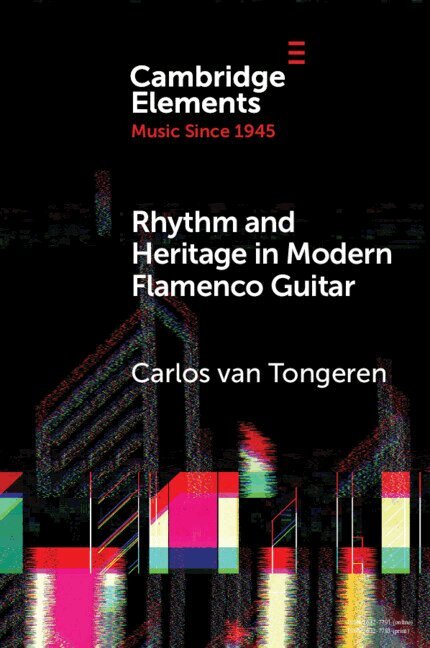
Discourses about rhythmic skill and feel have often been associated with forms of non-Western, and especially African and Afro-diasporic identity and heritage. How can we rethink rhythmic skill for the contemporary world where concepts of heritage and belonging are attaining new meanings across cultural and geographical borders? This Element addresses this question through the case study of modern flamenco guitar, an instrumental practice that has achieved daunting levels of rhythmic sophistication and has been flourishing across the globe for decades, even before flamenco was inscribed into UNESCO's list of Intangible Cultural Heritage in 2010. Drawing on examples from local guitar traditions in Jerez de la Frontera and Morón de la Frontera and from an online guitar contest launched during the Covid-19 pandemic, this Element explores how rhythm can shape new ways of understanding and performing heritage in the global and digital age.
656 kr
Skickas inom 7-10 vardagar
El presente libro se propone explorar los vínculos entre la ironía –y sus formas contiguas como el cinismo, el absurdo, la parodia o el humor negro– y la violencia en la literatura latinoamericana contemporánea. El objetivo consiste en crear un acercamiento novedoso entre dos paradigmas teóricos: el campo de la ironología, por un lado, y los estudios de la violencia y de la memoria, por el otro. Así, last distintas contribuciones se proponen explorar la siguiente pregunta central: ¿cuál es el alcance subversivo de la ironía y cómo debemos apreciar su dimensión ética, afectiva y política en el discurso literario latinoamericano sobre la violencia? El principio de la diversidad es el que rige esta compilación de ensayos. Incluye la variedad de localidades y experiencias de la violencia extrema (desde las dictaduras del Cono Sur pasando por Centroamérica hasta México); las épocas históricas sobre las versan los textos literarios; y las diversas propuestas estéticas que los textos ofrecen. La diversidad, por último, también atañe a las diferentes definiciones manejadas por los autores (desde Hegel, hasta Kierkegaard, De Man, Hutcheon o Rorty) para acercarse a las variadas relaciones entre la ironía y la violencia.~This book aims to explore the links between irony –and its contiguous forms such as cynicism, the absurd, parody or black humor– and violence in contemporary Latin American literature. The objective is to create a novel approach between two theoretical paradigms: the field of ironology, on the one hand, and the studies of violence and memory, on the other. Thus, the different contributions intend to explore the following central question: what is the subversive scope of irony and how should we appreciate its ethical, affective and political dimension in the Latin American literary discourse on violence? The principle of diversity is what governs this compilation of essays. It includes the variety of locations and experiences of extreme violence (from the dictatorships of the Southern Cone through Central America to Mexico); the historical epochs on which the literary texts are concerned; and the various aesthetic proposals that the texts offer. Finally, diversity also concerns the different definitions handled by the authors (from Hegel to Kierkegaard, De Man, Hutcheon or Rorty) to approach the various relationships between irony and violence.
Del 60 - Foro Hispánico
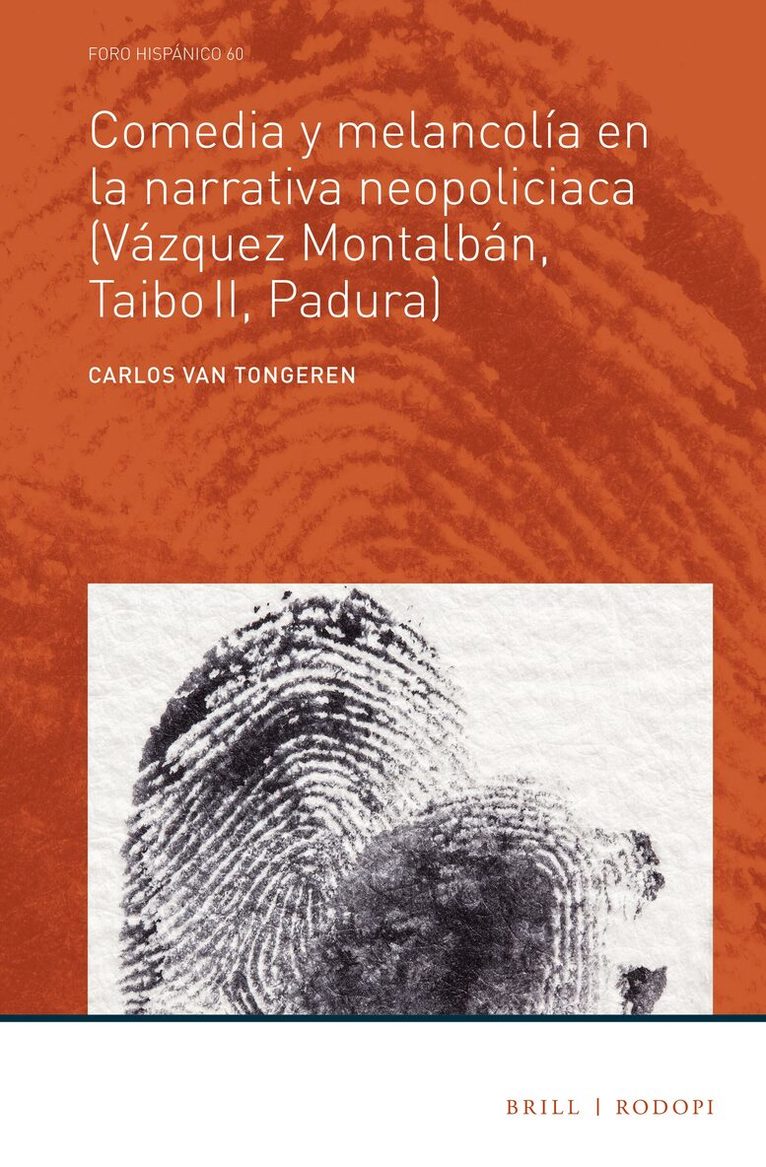
Comedia y melancolía en la narrativa neopoliciaca (Vázquez Montalbán, Taibo II, Padura)
Inbunden, Spanska, 2019
2 201 kr
Skickas inom 5-8 vardagar
In recent years, both the intellectual lucidity of melancholy and the liberating potentials of comedy, irony and humour have emerged as central preoccupations in critical theory and literary criticism. In this book, Carlos van Tongeren offers a thorough and innovative reflection on the intersections between comedy and melancholy. Through detailed readings of almost twenty novels by three key writers of detective fiction in the Spanish-speaking world, he puts diverse melancholic attitudes towards the past and the multiple “surplus” values of comedy into a clear historical perspective. As such, this book provides a profound understanding of how comedy and melancholy have shaped Hispanic detective fiction following wider political and cultural developments in the post-totalitarian contexts of Spain, Mexico and Cuba.En años recientes, la lucidez intelectual de la melancolía y los potenciales liberadores de la comedia, la risa y el humor han emergido como preocupaciones centrales en la teoría crítica y crítica literaria. En este libro, Carlos van Tongeren ofrece una reflexión profunda e innovadora sobre las intersecciones entre la comedia y la melancolía. A través de una lectura detallada de una veintena de novelas de representantes clave de la ficción policiaca en el mundo hispanohablante, el autor muestra cómo la comedia y la melancolía han influido en la ficción policiaca en español, de acuerdo con cambios políticos y culturales más amplios en los contextos postotalitarios de España, México y Cuba.