Carmen Martinez Novo – författare
Visar alla böcker från författaren Carmen Martinez Novo. Handla med fri frakt och snabb leverans.
2 produkter
2 produkter
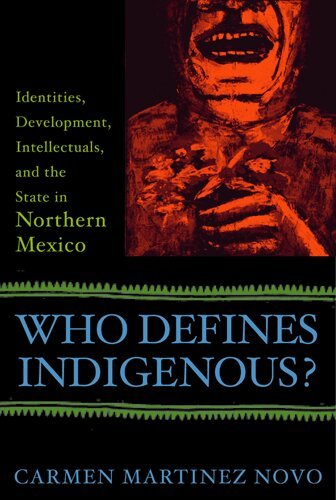
Who Defines Indigenous?
Identities, Development, Intellectuals, and the State in Northern Mexico
Häftad, Engelska, 2005
368 kr
Skickas inom 5-8 vardagar
For years, conventional scholarship has argued that minority groups are better served when the majority groups that absorb them are willing to recognize and allow for the preservation of indigenous identities. But is the reinforcement of ethnic identity among migrant groups always a process of self-liberation? In this surprising study, Carmen MartÍnez Novo draws on her ethnographic research of the Mixtec Indians’ migration from the southwest of Mexico to Baja California to show that sometimes the push for indigenous labels is more a process of external oppression than it is of minority empowerment.In Baja California, many Mixtec Indians have not made efforts to align themselves as a coherent demographic. Instead, MartÍnez Novo finds that the push for indigenous identity in this region has come from local government agencies, economic elites, intellectuals, and other external agents. Their concern has not only been over the loss of rich culture. Rather, the pressure to maintain an indigenous identity has stemmed from the desire to secure a reproducible abundance of cheap “Indian” labor. Meanwhile, many Mixtecs reject their ethnic label precisely because being “Indian” means being a commercial agriculture low-wage worker or an urban informal street vendor-an identity that interferes with their goals of social mobility and economic integration.Bringing a critical new perspective to the complex intersection among government and scholarly agendas, economic development, global identity politics, and the aspirations of local migrants, this provocative book is essential reading for scholars working in the fields of sociology, anthropology, and ethnic studies.
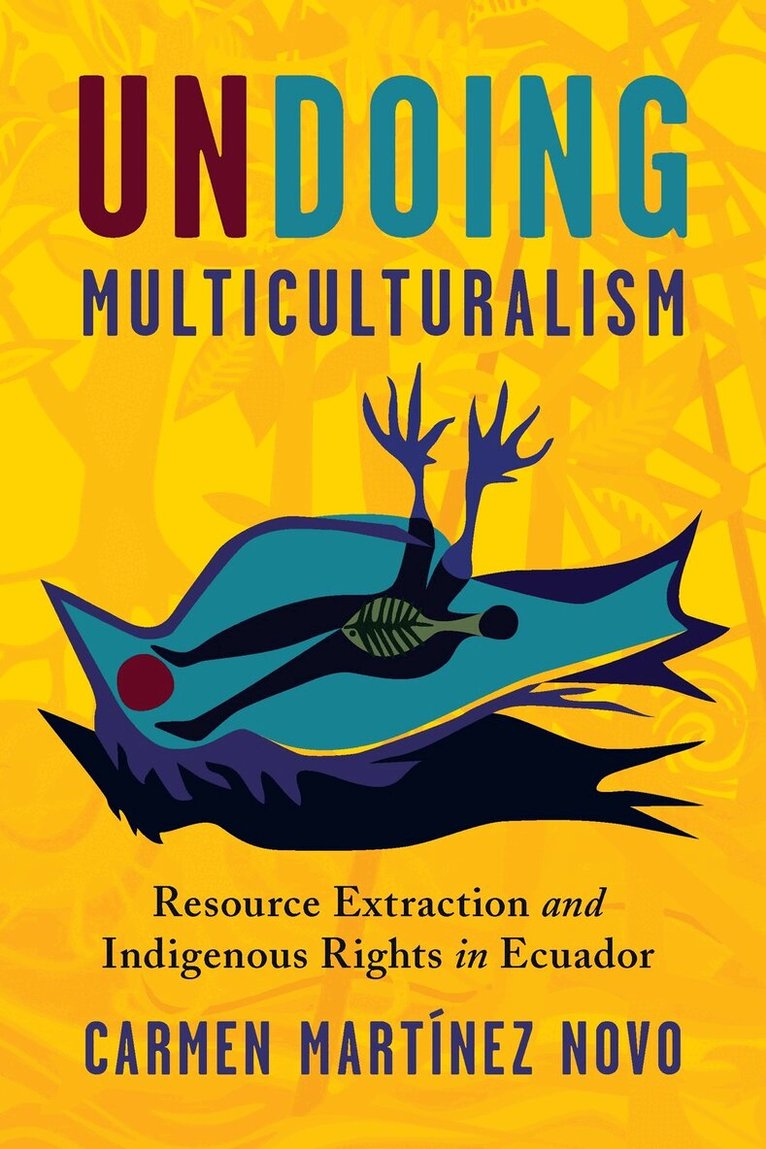
Undoing Multiculturalism
Resource Extraction and Indigenous Rights in Ecuador
Inbunden, Engelska, 2021
746 kr
Skickas inom 5-8 vardagar
President Rafael Correa (2007-2017) led the Ecuadoran Citizens’ Revolution that claimed to challenge the tenets of neoliberalism and the legacies of colonialism. The Correa administration promised to advance Indigenous and Afro-descendant rights and redistribute resources to the most vulnerable. In many cases, these promises proved to be hollow. Using two decades of ethnographic research, Undoing Multiculturalism examines why these intentions did not become a reality, and how the Correa administration undermined the progress of Indigenous people. A main complication was pursuing independence from multilateral organizations in the context of skyrocketing commodity prices, which caused a new reliance on natural resource extraction. Indigenous, Afro-descendant, and other organized groups resisted the expansion of extractive industries into their territories because they threatened their livelihoods and safety. As the Citizens’ Revolution and other “Pink Tide” governments struggled to finance budgets and maintain power, they watered down subnational forms of self-government, slowed down land redistribution, weakened the politicized cultural identities that gave strength to social movements, and reversed other fundamental gains of the multicultural era.