Carol A. O'Connor - Böcker
Visar alla böcker från författaren Carol A. O'Connor. Handla med fri frakt och snabb leverans.
5 produkter
5 produkter
559 kr
Skickas inom 7-10 vardagar
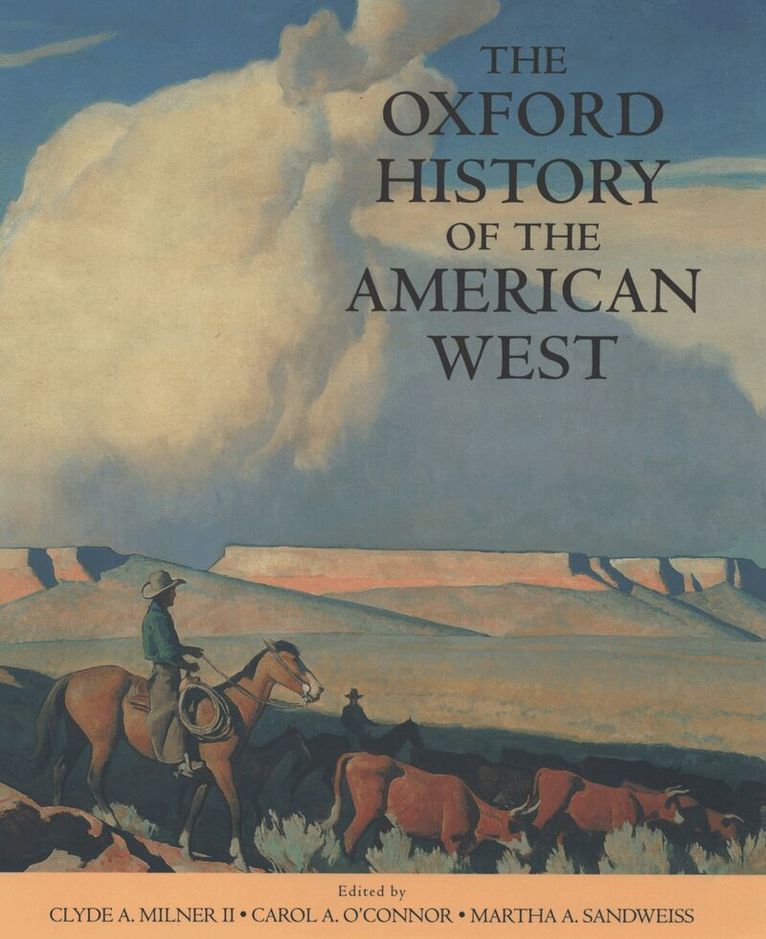
When we think of the American West, we tend to conjure up images that are known the world over: bearded forty-niners leading pack mules up a mountain trail, the Oklahoma land stampede, Custer's Last Stand, and especially the range-riding, quick-shooting cowboy. But these familiar images are only a small part of western history. From the arrival of the Navajos in the Southwest more than seven hundred years ago, to the first Spanish settlements in New Mexico in the late sixteenth century, to the large Mormon migration to the Great Salt Lake, to the tourists flocking to the neon landscape of modern Las Vegas, the complex story of the West stretches across centuries, embracing many voices and contrasting cultures. The West is in fact as varied as America itself. Indeed, to enlarge on Wallace Stegner's singular phrase, the West is America, only more so.Lavishly illustrated and based on the finest scholarship, The Oxford History of the American West is the first comprehensive study to do full justice to the rich complexity of this region. It brings together the work of twenty-eight leading western historians who explore this area from a dazzling number of perspectives. They provide insightful portraits of the West as a distinctive place of varied peoples - native and non-native, European and Asian, African and Latino - and of varied terrain - from the timbered Pacific Northwest to the Dakota Badlands, and from the fires of Kilauea to the ice cliffs of Glacier Bay, Alaska. They describe the great wealth generated by a series of spectacular bonanzas, such as gold at Sutter's Mill, copper in Butte, Montana, and oil on Alaska's north shore; illuminate the role of the West in the national and global economy; and consider the environmental challenges created by replacing buffalo with cattle or by designating national parks and military test sites. The book also examines the social forces behind the violence of the West, the great political movements that affected the region (most notably, the Populist Party), and the importance of families in settling the West (for instance, tracing one family's westward migration over 150 years). The authors provide important insights about many longstanding controversies, and they offer not only the fruits of the latest thinking about the West, but also a vivid sense of how people actually lived. For instance, we read of pioneers who grated green corn to make pudding they flavored with berries and grasshoppers, and who ate the culms (the soft inner linings of the stalks) like asparagus. Finally, each chapter concludes with an extensive annotated bibliography, offering a full review of related material, and there is a comprehensive index to guide readers to topics of special interest.Ranging from a thoughtful analysis of John Ford's classic My Darling Clementine, to a revisionist look at cattle grandee Granville Stuart (once Montana's most revered pioneer), to a survey of Western art and literature (including figures as diverse as Francis Parkman, Frederic Remington, Willa Cather, Georgia O'Keeffe, and N. Scott Momaday), this lively, authoritative volume continually challenges the familiar as it broadens the reader's understanding of a vast and varied region.
461 kr
Skickas inom 7-10 vardagar
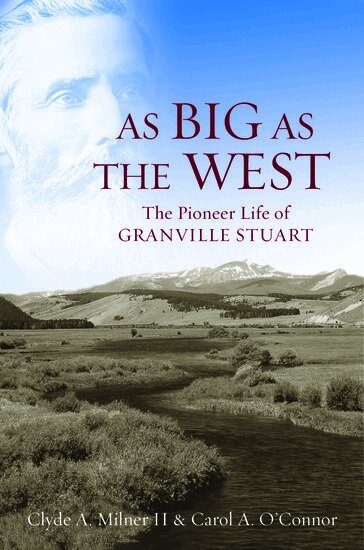
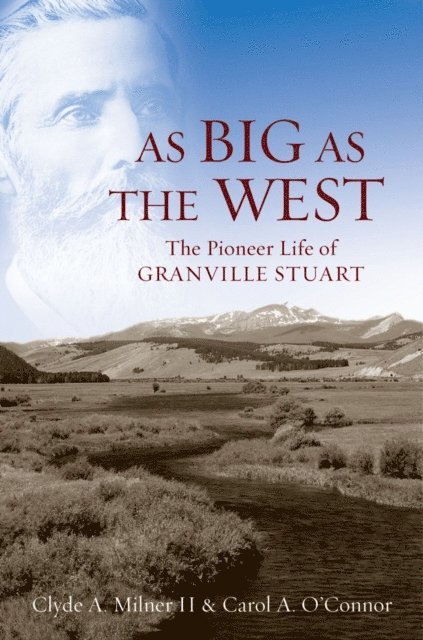
Granville Stuart (1834-1918) is a quintessential Western figure, a man whose adventures rival those of Wyatt Earp, Buffalo Bill, or Sitting Bull, and who embodied many of the contradictions of America's westward expansion. Stuart collected guns, herded cattle, mined for gold, and killed men he thought outlaws. But he also taught himself Shoshone, French, and Spanish, denounced formal religion, married a Shoshone woman, and eventually became a United States diplomat.In this fascinating biography, Clyde A. Milner II and Carol A. O'Connor, co-editors of the acclaimed Oxford History of the American West, trace Stuart's remarkable trajectory from his birth in Virginia, through his formative years in the agricultural settlements of Iowa and the mining camps of Gold Rush California, to his rough-and-tumble life in Montana and his rise to prominence as a public figure. Along the way, we see Granville and his brother James battling bandits and horsethieves and becoming leaders of the new Montana territory. The authors explore Granville's life as a cattleman, including his role as the leader of a vigilante force, known as "Stuart's Stranglers," responsible for several hangings in 1884, his abandonment of his half-Shoshone children after his second marriage, his government service in offices ranging from the head of the Butte Public Library to U.S. Minister to Paraguay and Uruguay, and his final years, during which he composed a memoir, Forty Years on the Frontier, still widely read for its dramatic account of the era.Written with narrative flair and a lively awareness of current issues in Western history, As Big as the West fully illuminates the conflicting realities of the frontier, where a man could speak of wiping out "half-breeds" while fathering 11 mixed-race children, and go from vigilante to diplomat in the space of a few years.
206 kr
Skickas inom 3-6 vardagar
1 088 kr
Tillfälligt slut
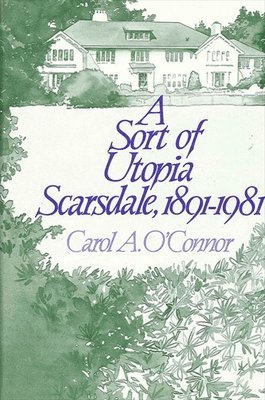
Scarsdale, New York, is a small community with a large reputation. Long before it had gained general recognition as a source of fad diets and the presumed site of sensational murders, it was well-known in upper-middle-class circles for the rigor of its zoning, the excellence of its schools, the splendor of its houses, and the wealth of its residents. Indeed, Scarsdale is, what one observer has called, "a sort of utopia"-a capitalistic version of the ideal community.In this clear and well-written study, Professor Carol O'Connor explains how Scarsdale came to be the classic rich suburb. Using a wide range of sources-from local newspapers, to village and school board records, to real estate deeds and census tracts-she shows how its residents have invested time, effort, and their own tax dollars in making Scarsdale a wealthy, attractive, convenient community. She also discusses the question of who rules in Scarsdale and examines one group, its domestic servants, who, at least in the past, have played an important but invisible role. Professor O'Connor analyzes the reaction of residents to national events, from their unquestioning nationalism in the First World War to the deep divisiveness of the Vietnam era. What emerges in these pages is not simply a chronicle of what occurred in Scarsdale, but an insightful perspective on many national trends of the twentieth century.
394 kr
Tillfälligt slut
Scarsdale, New York, is a small community with a large reputation. Long before it had gained general recognition as a source of fad diets and the presumed site of sensational murders, it was well-known in upper-middle-class circles for the rigor of its zoning, the excellence of its schools, the splendor of its houses, and the wealth of its residents. Indeed, Scarsdale is, what one observer has called, "a sort of utopia"-a capitalistic version of the ideal community.In this clear and well-written study, Professor Carol O'Connor explains how Scarsdale came to be the classic rich suburb. Using a wide range of sources-from local newspapers, to village and school board records, to real estate deeds and census tracts-she shows how its residents have invested time, effort, and their own tax dollars in making Scarsdale a wealthy, attractive, convenient community. She also discusses the question of who rules in Scarsdale and examines one group, its domestic servants, who, at least in the past, have played an important but invisible role. Professor O'Connor analyzes the reaction of residents to national events, from their unquestioning nationalism in the First World War to the deep divisiveness of the Vietnam era. What emerges in these pages is not simply a chronicle of what occurred in Scarsdale, but an insightful perspective on many national trends of the twentieth century.